
Corticosteroids
Learning Objectives
At the end of this chapter, the Phase II MBBS student will be able to:
- Outline corticosteroid synthesis, zonal anatomy and the ACTH-cortisol circadian control loop. (PH1.38 — Knows)
- Explain the genomic mechanism, distinguishing transrepression (anti-inflammatory) from transactivation (metabolic) — the selectivity concept. (PH1.38 — Knows)
- Reproduce the relative potency, equivalent-dose and duration table and convert between steroids in prescriptions. (PH1.38 — Knows-how)
- Apply corticosteroids across specialties with correct drug, dose, route and duration choices. (PH1.38 — Knows-how)
- Enumerate adverse effects by system and attach a prophylaxis or monitoring plan to each. (PH1.38 — Knows-how)
- Apply the HPA suppression rules: who tapers, how fast, and who needs stress dosing. (PH1.38 — Knows-how)
- Manage adrenal crisis and design sick-day and perioperative coverage for steroid-dependent patients. (PH1.38 — Knows-how)
- Detail fludrocortisone therapy and the anticorticosteroid drugs used in Cushing syndrome. (PH1.38 — Knows)
- Screen for contraindications and interactions before starting long-term therapy (tuberculosis, live vaccines, CYP3A4 inhibitors, NSAIDs, diabetes). (PH1.38 — Knows-how)
Must-Know Summary
Corticosteroids are steroid hormones of the adrenal cortex with two therapeutic personalities: physiological replacement (hydrocortisone with fludrocortisone in Addison's disease) and pharmacological anti-inflammatory/immunosuppressive therapy across every specialty. The genomic mechanism explains both faces: the steroid crosses the cell membrane, binds the cytoplasmic glucocorticoid receptor and translocates to the nucleus, where transrepression (inhibition of NF-kB, AP-1 and cytokine genes) delivers the anti-inflammatory benefit while transactivation via glucocorticoid response elements drives the metabolic toxicity — hyperglycaemia, catabolism, osteoporosis. The equivalence table is exam currency: hydrocortisone 20 mg = cortisone 25 = prednisolone 5 = methylprednisolone 4 = triamcinolone 4 = dexamethasone 0.75 = betamethasone 0.75 mg; durations short (hydrocortisone), intermediate (prednisolone group) and long (dexamethasone); sodium retention maximal with hydrocortisone, nil with dexamethasone; deflazacort is bone-sparing and child-friendlier. Drug-choice logic: dexamethasone for cerebral oedema, severe COVID-19 (RECOVERY — benefit only in oxygen/ventilated patients) and ALL (CNS penetration); hydrocortisone for physiological replacement and adrenal crisis; betamethasone to the mother for preterm lung maturation. Long-term toxicity is dose × duration — Cushingoid habitus, steroid diabetes, osteoporosis (calcium + vitamin D for all; assess fracture risk from prednisolone 2.5 mg daily per the 2022 ACR update, bisphosphonate by risk — classically at 7.5 mg or more for 3 months or longer), TB reactivation (screen), posterior subcapsular cataract, proximal myopathy, avascular necrosis, peptic ulcer with NSAIDs. The rules that kill if unknown: prednisolone 5 mg or more daily for 2–3 weeks or longer suppresses the HPA axis — withdraw gradually; ACTH does not hasten recovery; intercurrent illness — double the dose; major surgery — IV hydrocortisone 100 mg at induction; adrenal crisis — hydrocortisone 100 mg IV plus saline. Anticorticosteroid drugs for Cushing: mifepristone (receptor antagonist), ketoconazole and metyrapone (synthesis inhibitors), osilodrostat (modern 11-beta-hydroxylase blocker), pasireotide (pituitary), mitotane (adrenolytic).
- Potency equivalence — hydrocortisone 20 = prednisolone 5 = methylprednisolone 4 = dexamethasone 0.75 mg
- Sodium retention — maximal with hydrocortisone; absent with dexamethasone and betamethasone
- Duration — hydrocortisone short (under 12 h); prednisolone group intermediate (12–36 h); dexamethasone long (36–72 h)
- Deflazacort — 6 mg equals prednisolone 5 mg; bone-sparing, growth-friendlier
- Transrepression — blocks NF-kB and AP-1 (anti-inflammatory, wanted); transactivation — metabolic genes (toxicity)
- Dexamethasone choices — cerebral oedema, severe COVID-19, ALL (CNS penetration), croup
- Addison's replacement — divided hydrocortisone PLUS fludrocortisone; steroid card and sick-day rules
- Preterm lung maturation — betamethasone IM to the mother
- Bone prophylaxis — calcium and vitamin D for all long courses; fracture-risk assessment from prednisolone 2.5 mg/day (ACR 2022); bisphosphonate by risk — classically at 7.5 mg or more for 3 months or more
- Infection screen — tuberculosis before long therapy; no live vaccines on immunosuppressive doses
- Eye toxicity — posterior subcapsular cataract and raised intraocular pressure
- HPA suppression rule — prednisolone 5 mg or more daily for 2–3 weeks or longer: taper, never stop (2024 ESE/ES joint guideline stratifies risk by potency, route, dose and duration)
- ACTH in withdrawal — does NOT hasten recovery (the adrenal recovers before the pituitary)
- Sick-day rule — fever or illness: double the oral dose for 2–3 days (triple at high fever per Endocrine Society)
- Major surgery — IV hydrocortisone 100 mg at induction, taper over 24–72 h
- Adrenal crisis — hydrocortisone 100 mg IV bolus plus saline; steroid alert card
- Fludrocortisone — monitor blood pressure and potassium (hypertension, hypokalaemia)
- Mifepristone — glucocorticoid receptor antagonist; ketoconazole/metyrapone/osilodrostat — synthesis blockers
Classification
BOX 1 — CORTICOSTEROID PREPARATIONS
Short-Acting (under 12 h)
- Hydrocortisone (cortisol); cortisone acetate (prodrug)
Intermediate-Acting (12–36 h)
- Prednisone (prodrug), prednisolone, methylprednisolone, triamcinolone, deflazacort
Long-Acting (36–72 h)
- Dexamethasone, betamethasone
Mineralocorticoid
- Fludrocortisone
Local-Delivery Preparations (systemic-sparing)
- Inhaled: beclomethasone, budesonide, fluticasone, ciclesonide
- Intranasal: mometasone, fluticasone
- Topical (potency ladder): hydrocortisone to clobetasol propionate
- Intra-articular/lesional depot: triamcinolone acetonide, methylprednisolone acetate
- Rectal retention enema (distal UC); ophthalmic drops
BOX 2 — ANTICORTICOSTEROID DRUGS
Glucocorticoid Receptor Antagonist
- Mifepristone
Steroidogenesis Inhibitors
- Ketoconazole (multiple CYP enzymes); levoketoconazole (the single-enantiomer successor)
- Metyrapone (11-beta-hydroxylase)
- Osilodrostat (11-beta-hydroxylase, modern)
- Trilostane (historical)
Adrenolytic
- Mitotane (adrenocortical carcinoma)
Pituitary-Directed
- Pasireotide (SST5 agonist); cabergoline (adjunct)
Rapid IV Control
- Etomidate (sub-hypnotic infusion)
Mineralocorticoid Antagonists (cross-reference CH30)
- Spironolactone, eplerenone
Core Concepts
1. Corticosteroid synthesis and physiology
The adrenal cortex is three functional zones: the zona glomerulosa (aldosterone — driven by angiotensin II and potassium), the zona fasciculata (cortisol — driven by ACTH) and the zona reticularis (androgens). All three build steroids from cholesterol through the pregnenolone intermediate; ACTH acts through cAMP to mobilise cholesterol into the pathway — which is why the axis can be suppressed and atrophied by feedback, and why a blocked enzyme step shunts precursors into androgens (congenital adrenal hyperplasia).
Cortisol secretion is circadian: it peaks at 6–8 a.m. and troughs near midnight, locked to the sleep-wake cycle by hypothalamic CRH. Therapeutic corollaries: morning dosing mimics the peak and spares the axis; blood tests for axis assessment are time-anchored; night dosing suppresses the axis hardest (and causes most insomnia).
Physiological actions of cortisol are permissive rather than dramatic: it maintains gluconeogenesis and hepatic glycogen, permits catecholamine vascular tone (without cortisol, vessels become unresponsive and shock follows), supports renal water excretion, restrains inflammation and immunity at basal tone, and supports the CNS stress response. The enzyme 11-beta-hydroxysteroid dehydrogenase (11-beta-HSD) interconverts active cortisol and inactive cortisone in kidney and placenta — protecting the mineralocorticoid receptor from cortisol overload; its inhibition by liquorice produces apparent mineralocorticoid excess (hypertension, hypokalaemia) with low aldosterone — a classic integration question.
Cortisol circulates mostly bound to cortisol-binding globulin; the small free fraction is the active drug — the basis for dose adjustment in critical illness and the interpretation of total cortisol in pregnancy (raised CBG).
2. Glucocorticoid pharmacology and relative potency
Mechanism — one receptor, two programs. Corticosteroids are lipophilic and diffuse into cells, binding the cytoplasmic glucocorticoid receptor (released from its heat-shock-protein chaperones), translocating to the nucleus. There the complex does two distinct things. Transrepression: it interferes with the transcription factors NF-kB and AP-1, switching OFF interleukin-1, 2, 6, TNF-alpha, chemokines, COX-2 and inducible NO synthase; mast cells, eosinophils and T-lymphocyte traffic fall — this is the anti-inflammatory program, largely the wanted effect. Transactivation: binding to glucocorticoid response elements (GREs) turns ON metabolic genes — gluconeogenic enzymes, proteolytic and lipolytic programs — producing much of the toxicity profile (hyperglycaemia, muscle catabolism, osteoporosis). The selectivity concept: modest doses achieve substantial transrepression, while toxicity climbs disproportionately at high dose — and drug development has spent decades seeking dissociated steroids. Very high doses add non-genomic membrane effects within minutes (relevant to pulse therapy and cerebral oedema).
The potency table (learn verbatim). Anti-inflammatory equivalences: hydrocortisone 20 mg = cortisone 25 mg = prednisolone 5 mg = methylprednisolone 4 mg = triamcinolone 4 mg = deflazacort 6 mg = dexamethasone 0.75 mg = betamethasone 0.75 mg.
Selection logic drawn from the table: need zero sodium retention and long action (cerebral oedema, elevated intracranial pressure, severe COVID-19, oncology CNS protocols) — dexamethasone; need physiological replacement with mineralocorticoid tone — hydrocortisone (plus fludrocortisone); hepatic disease — use prednisolone rather than prednisone (and hydrocortisone rather than cortisone) because the liver must activate the prodrugs; children needing long therapy — deflazacort (bone-sparing, less growth suppression).
Kinetics: excellent oral bioavailability for all commonly used agents; hepatic metabolism (CYP3A4) — biological duration far outlasts plasma half-life (dexamethasone's plasma half-life is hours, its action 2–3 days). Routes and formulations: oral tablets; IV hydrocortisone (crisis) and methylprednisolone (pulse therapy); IM/depot triamcinolone acetonide (intra-articular, lesional — weeks of local action); inhaled (beclomethasone, budesonide, fluticasone, ciclesonide — CH33), intranasal; topical potency ladder from hydrocortisone to clobetasol (strongest); retention enemas (distal UC — CH36); ophthalmic.
3. Therapeutic uses across specialties
Replacement therapy. Addison's disease: hydrocortisone 15–25 mg/day in divided doses (two-thirds in the morning, one-third mid-afternoon) PLUS fludrocortisone 50–100 mcg daily — the glucocorticoid mimics the circadian curve, the mineralocorticoid replaces aldosterone (monitor weight, blood pressure, potassium). Congenital adrenal hyperplasia: hydrocortisone suppresses excess ACTH (and fludrocortisone in salt-wasting forms), with androgen-blocker add-ons in adult women. Secondary (pituitary) insufficiency needs hydrocortisone alone — the zona glomerulosa survives ACTH loss.
Respiratory and allergy (cross-reference CH33). Severe asthma exacerbation — hydrocortisone 100 mg IV 6–8-hourly or prednisolone 40–50 mg orally for 5 days; COPD exacerbations similarly; anaphylaxis adjunct after adrenaline and fluid; status migrainosus and cluster headache.
Infection-modulation landmark. Severe COVID-19: dexamethasone 6 mg daily (orally or IV) for up to 10 days reduced mortality — but only in patients on oxygen or ventilated; harm signal in those not requiring oxygen (RECOVERY trial). The generalisable rule: steroids help the inflammatory phase of infection, not the replicative phase — and worsen outcomes when given for viral replication or uncomplicated disease.
Neurological and oedema states. Cerebral oedema from tumours and mass lesions — dexamethasone (no sodium retention, long action; 4–16 mg/day). Bacterial meningitis adjunct (dexamethasone before or with the first antibiotic dose, especially pneumococcal). High-dose methylprednisolone pulse in spinal cord injury is historical and largely abandoned (harm in some analyses). Duchenne muscular dystrophy — daily prednisolone (0.75 mg/kg) or deflazacort prolongs ambulation — the classic paediatric long-term steroid indication, where the bone-sparing choice matters.
Renal, rheumatological, haematological, oncological. Nephrotic syndrome (paediatric relapse: daily prednisolone until remission, then alternate-day); ITP (first-line along with IVIg); SLE flares (including pulse methylprednisolone for lupus nephritis induction, with immunomodulators); polymyalgia rheumatica (low-dose prednisolone, slow taper); giant cell arteritis — high-dose prednisolone immediately (never delay or stop abruptly: risk of blindness); rheumatoid flares (local injections preferred); acute lymphoblastic leukaemia — dexamethasone preferred over prednisolone (better CNS penetration, longer CSF action); lymphomas and myeloma protocols; solid-organ transplantation (as one leg of triple therapy with calcineurin inhibitors and antiproliferatives).
Obstetric and paediatric. Preterm labour before 34 weeks: betamethasone (or dexamethasone) IM to the MOTHER — 2 doses 24 h apart — accelerates fetal surfactant maturation and cuts neonatal respiratory distress, IVH and mortality; croup — single oral dexamethasone 0.15 mg/kg.
Local therapy principle: inhaled, intranasal, topical, intra-articular, peri-ocular and enema routes deliver high local concentration with minimal systemic exposure — "local first, lowest effective potency, shortest duration" (with inhaled-steroid counsel from CH33: rinse and spacer).
4. Adverse effects of long-term therapy
Toxicity is a function of dose × duration (and route). Organ by organ, each with its prophylaxis or monitoring partner:
- Endocrine-metabolic: hyperglycaemia and steroid diabetes (monitor glucose; adjust diet and antidiabetics — cross-reference CH38), weight gain and Cushingoid habitus (moon facies, buffalo hump, central obesity), hyperlipidaemia, sodium-water retention contributing to hypertension.
- Bone: glucocorticoid-induced osteoporosis — increased resorption, decreased formation, calcium malabsorption, hypogonadism — vertebral and hip fractures; prophylaxis: calcium plus vitamin D for all long courses; the 2022 ACR guideline update recommends formal fracture-risk assessment for anyone on prednisone 2.5 mg/day or more for over 3 months, with bisphosphonate (first-line oral agent) added by fracture-risk category — classically at prednisolone 7.5 mg or more daily for 3 months or longer or high fracture risk (DEXA/FRAX to stratify); teriparatide for high-risk alternatives; growth suppression in children (deflazacort consideration).
- Infection: reactivation tuberculosis (screen before long therapy in endemic India), opportunistic infections (fungal, Pneumocystis with high-dose combinations), strongyloides hyperinfection in endemic areas; live vaccines contraindicated on immunosuppressive doses (and antibody responses blunted — cross-reference CH36 vaccination-before-immunosuppression rule).
- Gastrointestinal: peptic ulcer risk — synergy with NSAIDs (PPI co-therapy when combined or high-risk); pancreatitis (rare); fatty liver.
- Eye: posterior subcapsular cataract (characteristic location), raised intraocular pressure and glaucoma — periodic ophthalmology review on long therapy; central serous retinopathy.
- Neuropsychiatric: euphoria, insomnia (dose in the morning), irritability, depression, steroid psychosis (dose-related, women slightly higher risk), steroid withdrawal syndrome (below).
- Muscle: proximal myopathy (pelvic-girdle weakness — difficulty rising from a chair/stairs; improves slowly after withdrawal).
- Cardiovascular-renal-fluid: hypertension, oedema, hypokalaemia (worse with thiazide/loop diuretics — monitor and replace), accelerated atherosclerosis with years of use.
- Skin: atrophy, striae, easy bruising, hirsutism, acne, poor wound healing.
- Vascular: avascular necrosis of the femoral head (also shoulder) — the young-patient hazard of even short high-dose courses; presents as hip/groin pain — MRI early.
- Haematological-immune: leucocytosis with neutrophilia (a known confounder in infection assessment), lymphopenia.
The steroid prescription checklist at every long-term review: blood pressure, weight, glucose/HbA1c, potassium, bone protection, eye review, TB symptom screen, mental health question, growth (children), and the taper/stress plan on record.
5. HPA axis suppression and withdrawal
Exogenous glucocorticoid feeds back on the hypothalamus (CRH) and pituitary (ACTH) — the adrenal, unpromoted, atrophies. The rule set:
- Who is suppressed: anyone on prednisolone 5 mg daily or more (or equivalent) for 2–3 weeks or longer; also high-dose inhaled steroids in susceptible patients, and all long-acting agents at night. Below that exposure (short courses under 2–3 weeks, even high dose), the axis recovers rapidly and abrupt cessation is acceptable. The 2024 ESE/Endocrine Society joint guideline on glucocorticoid-induced adrenal insufficiency refines this into a risk matrix: lowest risk with short duration (under 3–4 weeks), low dose and less potent agents; highest with over 3 months of systemic, high-dose or long-acting (dexamethasone, betamethasone) therapy, intra-articular routes and combinations.
- How to withdraw: gradual taper — reduce quickly to the physiological range (prednisolone about 5 mg), then slowly (for example 1 mg cuts every 2–4 weeks) while watching for relapse of the underlying disease (the other reason tapers fail); alternate-day dosing during withdrawal can help.
- Steroid withdrawal syndrome: myalgia, malaise, anorexia, nausea, orthostatic dizziness and arthralgia without biochemical adrenal crisis — managed by slowing the taper and reassurance; it is distinct from true adrenal insufficiency.
- ACTH injections do NOT hasten axis recovery — the adrenal recovers before the pituitary, so stimulating an unpituitary-driven adrenal is futile (a favourite question).
- Axis recovery takes weeks to months — stress coverage must continue meanwhile.
Stress coverage (the rules that prevent death):
- Mild intercurrent illness (fever, influenza-like illness): double the usual oral glucocorticoid dose for 2–3 days — the "sick-day rule" (Endocrine Society: double for fever about 38 degrees, triple at 39 or more) — then back to maintenance. The 2024 joint guideline frames stress dosing as double the physiologic replacement (about hydrocortisone 40 mg/day in divided doses) for febrile illness.
- Vomiting or diarrhoea (oral intake unreliable): parenteral hydrocortisone (IM 100 mg) and medical review — do not wait.
- Surgery: minor — hydrocortisone 25–50 mg IV at induction; major — hydrocortisone 100 mg IV at induction, then 50–100 mg every 6–8 h or 200 mg per 24 h infusion, tapering over 24–72 h as recovery allows.
- Adrenal crisis: nausea, vomiting, abdominal pain, hypotension, hyponatraemia, hyperkalaemia, hypoglycaemia, confusion — hydrocortisone 100 mg IV bolus, then 200 mg/24 h infusion, PLUS aggressive normal saline and glucose correction; treat the precipitant; cross-reference the myxoedema rule (steroid before thyroid hormone — CH37). Fludrocortisone is unnecessary at these hydrocortisone doses.
- Every long-term patient carries a steroid alert card or medical bracelet and, where feasible, a hydrocortisone emergency injection kit with family instruction.
- Suspected suppression can be confirmed by the short Synacthen (cosyntropin) test (cross-reference PR06 and CH37) — cortisol under 500 nmol/L at 30–60 min suggests inadequate reserve.
Dose-timing strategy to limit suppression: single morning dosing (mimics the circadian peak), the shortest effective duration, local routes first, and alternate-day dosing (which preserves axis function and growth in children needing months of therapy — at the cost of disease-control smoothness).
6. Mineralocorticoids and their antagonists
Fludrocortisone is the therapeutic mineralocorticoid — a potent aldosterone analogue (with substantial glucocorticoid activity at high dose, irrelevant at replacement doses). Uses: Addison's disease (50–100 mcg daily), salt-wasting congenital adrenal hyperplasia, and neurogenic orthostatic hypotension (its volume expansion is exploited). Monitoring is the inverse of Addison's therapy: blood pressure (including supine hypertension), oedema, potassium, headache — overtreatment produces oedema, hypertension and hypokalaemia with alkalosis. Mineralocorticoid antagonists (spironolactone, eplerenone — cross-reference CH30) treat the other side: hyperaldosteronism, ascites, steroid-related potassium loss.
Anticorticosteroid and synthesis-inhibitor drugs for Cushing syndrome (medical control before, after or instead of surgery):
- Mifepristone — a glucocorticoid receptor antagonist (and progesterone antagonist — CH40); useful when rapid control of diabetes or psychosis dominates; no cortisol assay follow-up possible (levels rise), monitor clinically.
- Ketoconazole — inhibits multiple CYP steroidogenic enzymes; effective but hepatotoxic (monitor LFTs) and multiple drug interactions (levoketoconazole, the single-enantiomer formulation, carries the same hepatic caution).
- Metyrapone — 11-beta-hydroxylase inhibitor; cortisol falls, precursors shunt to androgens (hirsutism, acne) and 11-deoxycorticosterone (sodium retention and hypertension); useful in severe hypercortisolism and pre-surgical control.
- Osilodrostat — the modern 11-beta-hydroxylase inhibitor, effective and better tolerated in Cushing disease trials.
- Pasireotide — SST5-predominant somatostatin analogue suppressing ACTH in Cushing disease; signature toxicity hyperglycaemia (cross-reference CH37).
- Etomidate — an IV anaesthetic that blocks steroidogenesis; the intensive-care option for acute severe hypercortisolism (as infusion, sub-hypnotic doses).
- Mitotane — adrenolytic for adrenocortical carcinoma; requires glucocorticoid replacement cover during use.
Selection frame: control severe hypercortisolism quickly (metyrapone, etomidate), chronic control of Cushing disease (osilodrostat, pasireotide), cortisol-receptor blockade for glucose/psychosis (mifepristone), cancer (mitotane) — with definitive treatment being surgical.
Tables
Table 1 — Relative potency, equivalent dose, duration and sodium retention
| Drug | Equivalent anti-inflammatory dose | Duration of action | Sodium retention | Distinctions |
|---|---|---|---|---|
| Hydrocortisone | 20 mg | Short (under 12 h) | Maximal | Physiological; replacement and crisis |
| Cortisone acetate | 25 mg | Short | Marked | Prodrug — needs hepatic activation |
| Prednisolone | 5 mg | Intermediate (12–36 h) | Moderate | The workhorse oral steroid |
| Prednisone | 5 mg | Intermediate | Moderate | Prodrug of prednisolone |
| Methylprednisolone | 4 mg | Intermediate | Low | IV pulse therapy |
| Triamcinolone | 4 mg | Intermediate | None | Depot injections (intra-articular, lesional) |
| Deflazacort | 6 mg | Intermediate | Low | Bone-sparing; child-friendlier |
| Dexamethasone | 0.75 mg | Long (36–72 h) | None | Cerebral oedema, COVID-19, ALL, croup; HPA suppression test |
| Betamethasone | 0.75 mg | Long | None | Fetal lung maturation |
Table 2 — Therapeutic uses with drug-choice reasoning
| Indication | Drug and typical regimen | Why this drug |
|---|---|---|
| Addison's disease | Hydrocortisone 15–25 mg/day divided + fludrocortisone | Physiological + mineralocorticoid tone |
| Adrenal crisis | Hydrocortisone 100 mg IV + saline | Fast, mineralocorticoid activity at dose |
| Severe asthma/COPD flare | Prednisolone 40–50 mg 5 days / hydrocortisone IV | Intermediate, oral-friendly |
| Severe COVID-19 | Dexamethasone 6 mg × up to 10 days | Long action, no Na retention; mortality in O2/ventilated only |
| Cerebral oedema (tumour) | Dexamethasone 4–16 mg/day | No Na retention, sustained |
| Preterm lung maturation | Betamethasone IM × 2, 24 h apart, to mother | Long-acting, fetal transfer |
| ALL protocols | Dexamethasone | CNS penetration, longer CSF action |
| Nephrotic syndrome (child) | Prednisolone daily then alternate-day | Balance of efficacy and growth |
| Duchenne dystrophy | Prednisolone or deflazacort daily | Deflazacort bone-sparing for years of use |
| Giant cell arteritis | Prednisolone 40–60 mg, start immediately | Never delay (blindness); taper by ESR/symptoms |
| Transplantation | Prednisolone as triple-therapy leg | Standard maintenance partner |
| Local disease (asthma, skin, joint) | Inhaled/topical/intra-articular | High local, low systemic |
Table 3 — Adverse effects with paired prophylaxis/monitoring
| System | Effect | Prophylaxis or monitoring |
|---|---|---|
| Metabolic | Hyperglycaemia/steroid diabetes, weight, lipids | Glucose/HbA1c, diet, antidiabetic adjustment |
| Bone | Osteoporosis, fractures; growth arrest | Calcium + vitamin D all; fracture-risk assessment from prednisolone 2.5 mg/day (ACR 2022); bisphosphonate by risk — classically at 7.5 mg or more × 3 months; DEXA; deflazacort in children |
| Infection | TB reactivation, opportunists, live vaccines fail | Screen TB before long therapy; treat latent TB; no live vaccines on immunosuppressive doses |
| GI | Ulcer (NSAID synergy), pancreatitis | PPI with NSAIDs or ulcer history |
| Eye | Posterior subcapsular cataract, glaucoma | Periodic ophthalmology; intraocular pressure |
| Neuropsychiatric | Insomnia, euphoria, psychosis, withdrawal syndrome | Morning dosing; psychiatric review when severe |
| Muscle | Proximal myopathy | Resistance exercise; wean |
| CVS-renal | Hypertension, oedema, hypokalaemia | BP, potassium (esp. with diuretics) |
| Skin/vascular | Striae, bruising; femoral head avascular necrosis | Counsel; early MRI for hip pain |
| HPA axis | Suppression, crisis on abrupt stop | Taper; sick-day rules; steroid card |
Table 4 — HPA suppression, taper and stress-coverage rules
| Situation | Rule |
|---|---|
| Prednisolone 5 mg or more daily for 2–3 weeks or more | Assume suppression — withdraw gradually (2024 ESE/ES joint guideline: risk rises with potency, systemic route, dose and duration beyond 3–4 weeks) |
| Short course under 2–3 weeks | May stop abruptly (if disease allows) |
| Taper design | Quick reduction to physiological (5 mg), then 1 mg cuts every 2–4 weeks; watch for disease relapse |
| Steroid withdrawal syndrome | Myalgia, malaise, orthostatic symptoms without crisis — slow the taper |
| ACTH injections | Do NOT hasten axis recovery (adrenal recovers before pituitary) |
| Morning vs night dosing | Morning mimics circadian peak, spares axis; alternate-day dosing spares most |
| Sick day (fever/illness) | Double the oral dose for 2–3 days (triple at high fever per Endocrine Society; ~double physiologic replacement per 2024 joint guideline) |
| Vomiting/diarrhoea | Parenteral hydrocortisone; medical review |
| Minor surgery | Hydrocortisone 25–50 mg IV at induction |
| Major surgery | Hydrocortisone 100 mg IV at induction, then 200 mg/24 h, taper 24–72 h |
| Adrenal crisis | Hydrocortisone 100 mg IV bolus + saline (+ glucose); treat precipitant |
| Axis testing | Short Synacthen test; steroid alert card for all |
Table 5 — Cushing pharmacotherapy
| Drug | Mechanism | Best use | Key toxicity |
|---|---|---|---|
| Mifepristone | GR antagonist | Diabetes/psychosis-dominant control | Hypokalaemia, endometrial effect; no assay follow |
| Ketoconazole | Multi-CYP blockade | Chronic control | Hepatotoxicity, interactions |
| Metyrapone | 11-beta-hydroxylase | Rapid control, pre-surgery | Hirsutism, hypertension (DOC shunt) |
| Osilodrostat | 11-beta-hydroxylase (modern) | Cushing disease control | Adrenal insufficiency, hypokalaemia |
| Pasireotide | SST5 agonist (pituitary) | Cushing disease | Hyperglycaemia |
| Etomidate | IV steroidogenesis block | ICU acute control | Sedation (sub-hypnotic dosing) |
| Mitotane | Adrenolytic | Adrenocortical carcinoma | Adrenal insufficiency — replace steroids |
Figures
Figure 1 — One receptor, two programs
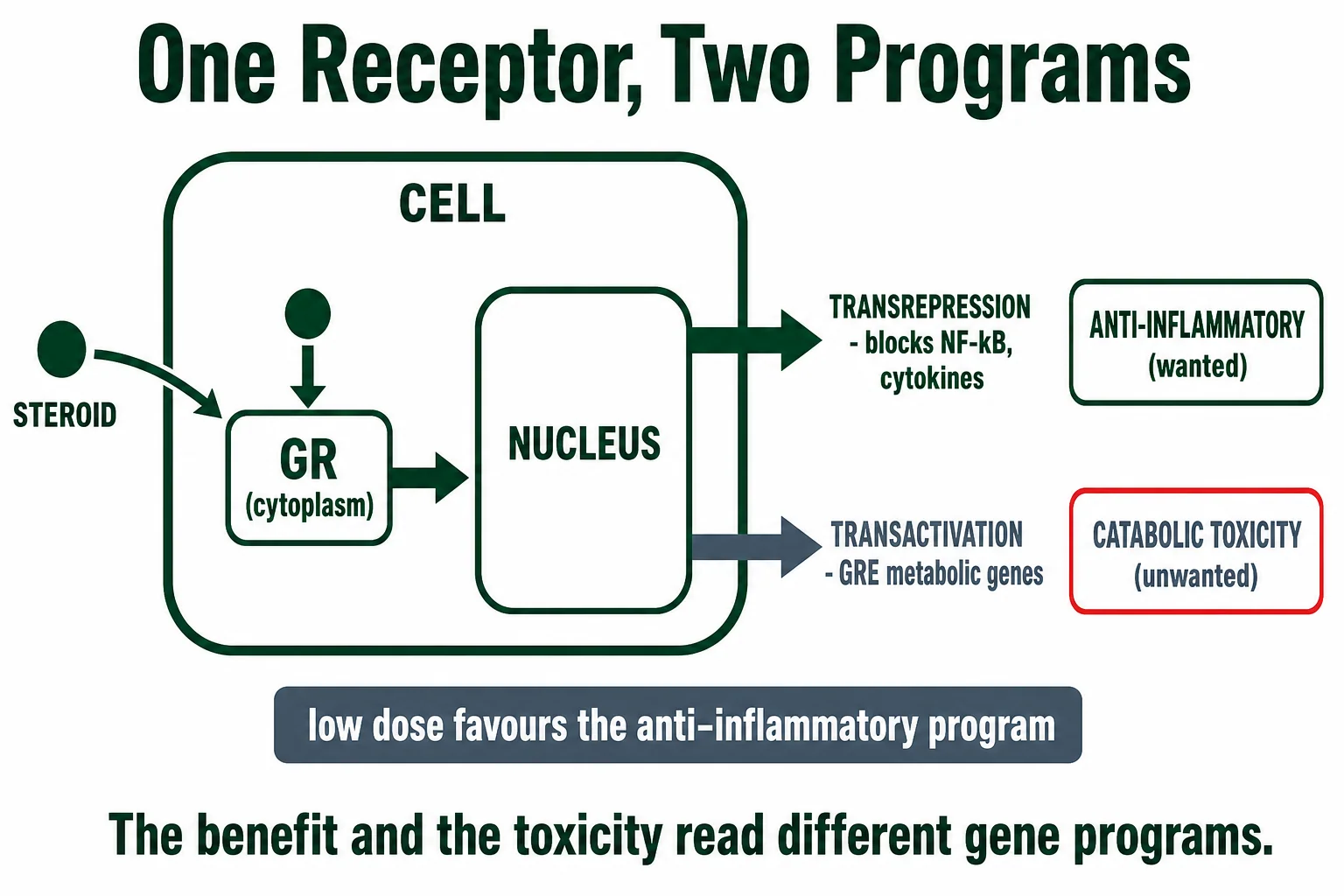
Simplified mechanism diagram of glucocorticoid genomic action showing transrepression of NF-kB and cytokines as the wanted anti-inflammatory program and transactivation through glucocorticoid response elements as the unwanted metabolic program.
Figure 2 — HPA axis: suppression and sick-day rules
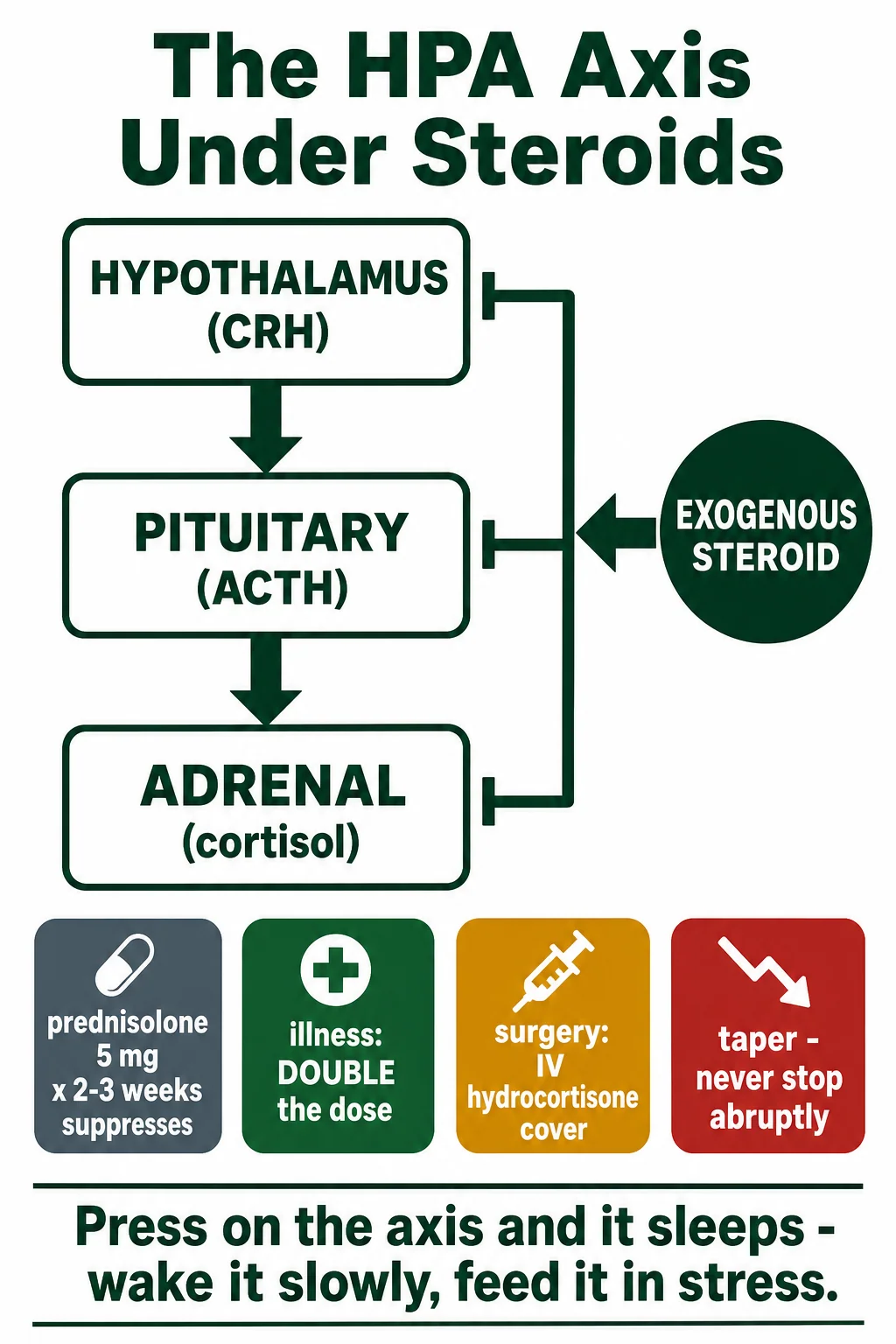
Hypothalamic-pituitary-adrenal axis with exogenous steroid suppressing CRH, ACTH and cortisol, and the clinical rules of the 5-mg-2-to-3-week threshold, sick-day doubling, surgical coverage and gradual taper.
Figure 3 — The steroid adverse-effect body map
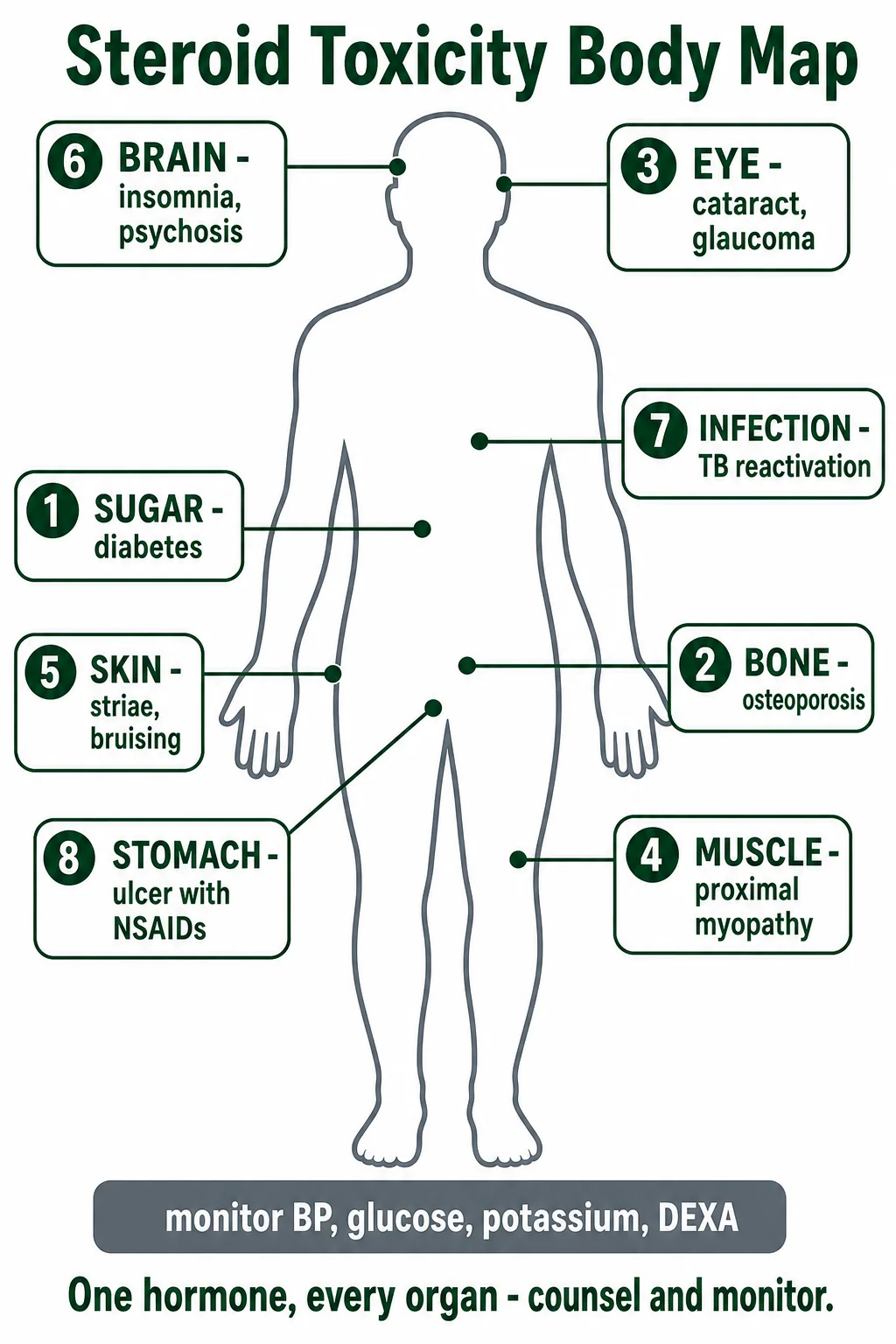
Body-map infographic of long-term corticosteroid adverse effects — diabetes, osteoporosis, cataract and glaucoma, proximal myopathy, skin striae, neuropsychiatric effects, tuberculosis reactivation and peptic ulcer — with the monitoring checklist.
Clinical Correlation
Vignette 1 — Newly diagnosed Addison's disease
A 34-year-old woman has 6 months of fatigue, 7 kg weight loss, dizziness on standing and darkening of skin creases; sodium 128 mEq/L, potassium 5.3, morning cortisol under 1 mcg/dL with high ACTH — primary adrenal insufficiency. Therapy: hydrocortisone 20 mg on waking and 10 mg mid-afternoon plus fludrocortisone 100 mcg daily; she is taught the sick-day rules (double the dose for fever or illness; injectable hydrocortisone and hospital if vomiting), given a steroid alert card and bracelet with an emergency hydrocortisone 100 mg IM kit for home, and reviewed at 2–4 weeks for blood pressure, weight and potassium — fludrocortisone adjusted to keep her normotensive and normokalaemic.
Reasoning: Replacement imitates physiology — circadian-split hydrocortisone for the glucocorticoid curve, fludrocortisone for the aldosterone the destroyed cortex cannot make. The education bundle (sick days, card, kit) is as life-preserving as the prescription itself: an Addisonian who doubles the dose for illness averts crisis; one who does not may die of a gastroenteritis.
Vignette 2 — Adrenal crisis after abrupt cessation
A 22-year-old with steroid-sensitive nephrotic syndrome, on prednisolone 40 mg for 3 months, stops his tablets on his own when the facial swelling frightens him. Ten days later he is brought in vomiting, dizzy and confused: BP 84/50, sodium 126, potassium 5.6, glucose 58 mg/dL — acute adrenal crisis precipitated by withdrawal. Management: hydrocortisone 100 mg IV immediately, then 200 mg over 24 hours, aggressive normal saline with glucose, and treatment of no precipitant beyond the withdrawal itself. He recovers over 48 hours. Future plan: prednisolone reintroduced for the nephrotic syndrome with a structured taper (40 to 20 mg over weeks, then slower cuts below 10 mg), steroid card and sick-day counselling, and a Synacthen test before final withdrawal.
Reasoning: Three months of supraphysiological prednisolone suppressed and atrophied his axis; abrupt removal exposed the gap. The crisis protocol is muscle-memory material; the prevention is the 5-mg-2–3-week taper rule plus education at every dispensing.
Vignette 3 — The long-term steroid review
A 58-year-old with rheumatoid arthritis has taken prednisolone 10 mg daily for 8 months. Review finds: moon facies and central obesity, HbA1c now 7.8 percent, BP 152/94, potassium 3.4 (on hydrochlorothiazide), DEXA T-score minus 2.5 at the spine, and no ophthalmology visit. Intervention bundle: add calcium and vitamin D plus a bisphosphonate (she is well past the 7.5-mg-3-month threshold), PPI (she also takes diclofenac — the ulcer synergy), diabetes management intensification, antihypertensive review with diuretic reconsideration and potassium correction, ophthalmology for cataract and pressure, TB screen documentation, mental-health and sleep question, and a de-escalation plan toward methotrexate as steroid-sparer with slow prednisolone taper and sick-day cover throughout.
Reasoning: Long-term steroid care is a checklist discipline — every known toxicity has a cheap prophylaxis or monitoring action, and the review visit should generate a complete order set, not a renewal alone.
Vignette 4 — Cushing disease awaiting surgery
A 42-year-old woman with Cushing disease (pituitary ACTH adenoma) has diabetes, hypertension and proximal myopathy while awaiting trans-sphenoidal surgery; cortisol remains very high. Metyrapone is started to control hypercortisolism pre-operatively, titrated to urinary free cortisol; her hypertension worsens briefly (11-deoxycorticosterone shunt) and requires spironolactone; alternatives discussed: osilodrostat (better tolerated, modern), ketoconazole (rejected — hepatotoxicity risk with her fatty liver), pasireotide (rejected — worsens her diabetes), mifepristone (an option were diabetes the sole target, but it blocks assay follow-up). Surgery proceeds 6 weeks later with perioperative hydrocortisone coverage and planned post-operative replacement until the axis recovers.
Reasoning: Pre-surgical control of severe hypercortisolism is a bridge decision — drug choice follows each drug's toxicity profile mapped against the patient's comorbidities; every Cushing patient operated on will need steroids after (the suppressed normal tissue), and the perioperative cover mirrors the stress rules of Section 5.
Practical Linkage
Steroid Prescribing Station (PH1.38)
Equivalent-Dose Conversion Worksheet
Convert across the table (show working): (1) prednisolone 40 mg to dexamethasone (40/5 × 0.75 = 6 mg); (2) hydrocortisone 100 mg to prednisolone (25 mg); (3) methylprednisolone pulse 500 mg to prednisolone equivalents (625 mg); (4) deflazacort 36 mg to prednisolone (30 mg); (5) choose and justify the steroid for: cerebral oedema (dexamethasone — no Na retention, long), hepatic failure flare (prednisolone — no prodrug), Addison's (hydrocortisone + fludrocortisone), severe COVID-19 on oxygen (dexamethasone 6 mg — RECOVERY).
Taper-Plan Design
Write a withdrawal schedule for prednisolone 40 mg used 3 months for ulcerative colitis now in remission: reduce 5 mg every 1–2 weeks to 20 mg, then 2.5 mg every 2 weeks to 10 mg, then 1 mg every 2–4 weeks with relapse watch and stress cover; state the two failure modes (disease relapse, withdrawal syndrome) and their differing management.
Steroid Card and Sick-Day Counselling Script
Demonstrate: the card's content; the double-dose rule for fever; the vomiting rule (injectable, same day); the surgical question to ask before any procedure; the bracelet; the emergency kit teaching for a family member.
Monitoring Order Set (6-month review)
Write the complete order set: blood pressure and weight, glucose or HbA1c, potassium and sodium, DEXA where due, ophthalmology review, TB symptom screen, growth chart in children, mental-health screen — plus the documented taper/stress plan.
MCQ Bank
35 questions · tagged by topic, exam pattern & difficulty · full explanations
A pharmacology class discusses why long-term glucocorticoid tablets are dosed once daily in the morning. Which physiological property justifies morning dosing?
Rapid Revision
- Potency table — hydrocortisone 20 = cortisone 25 = prednisolone 5 = methylprednisolone 4 = triamcinolone 4 = dexamethasone 0.75 = betamethasone 0.75 mg.
- Deflazacort — 6 mg equals prednisolone 5 mg; bone-sparing, growth-friendlier.
- Sodium retention — maximal hydrocortisone; none with dexamethasone and betamethasone.
- Duration classes — short hydrocortisone (under 12 h); intermediate prednisolone group (12–36 h); long dexamethasone (36–72 h).
- Circadian cortisol — peak 6–8 a.m.; dose steroids in the morning to spare the axis.
- 11-beta-HSD — inactivates cortisol to cortisone in kidney and placenta; liquorice blocks it (apparent mineralocorticoid excess).
- Mechanism — cytoplasmic GR, nucleus: transrepression (NF-kB/AP-1 — anti-inflammatory) vs transactivation (GRE — metabolic toxicity).
- Liver disease — use active forms: prednisolone not prednisone; hydrocortisone not cortisone.
- Addison's replacement — divided hydrocortisone PLUS fludrocortisone; steroid card and sick-day kit.
- Cerebral oedema — dexamethasone (no sodium retention, long action).
- Severe COVID-19 — dexamethasone 6 mg; benefit only in oxygen or ventilated patients (RECOVERY).
- Preterm lung maturation — betamethasone IM to the mother, two doses 24 h apart.
- ALL — dexamethasone (better CNS penetration and CSF action).
- Duchenne dystrophy — daily prednisolone or deflazacort prolongs ambulation.
- Giant cell arteritis — start prednisolone immediately; never delay (blindness); taper over 1–2 years.
- Steroid diabetes — monitor glucose; transactivation-driven gluconeogenesis and insulin resistance.
- Bone prophylaxis — calcium + vitamin D for all; fracture-risk assessment from prednisolone 2.5 mg/day (ACR 2022); bisphosphonate by risk — classically at 7.5 mg or more × 3 months.
- Infection — screen TB before long courses; no live vaccines on immunosuppressive doses.
- Eye — posterior subcapsular cataract and raised intraocular pressure.
- Muscle — painless proximal myopathy (chair-rise fails first; creatine kinase normal).
- NSAID synergy — steroid + NSAID ulceration: add a PPI.
- Avascular necrosis — femoral head, even after short high-dose courses; early MRI.
- HPA suppression rule — prednisolone 5 mg or more daily for 2–3 weeks or longer: taper, never stop (2024 ESE/ES joint guideline stratifies risk by potency, route, dose, duration).
- ACTH in withdrawal — does NOT hasten recovery (adrenal recovers before pituitary).
- Sick-day rule — fever or illness: double the oral dose 2–3 days (triple at high fever).
- Vomiting — parenteral hydrocortisone the same day.
- Major surgery — hydrocortisone 100 mg IV at induction, then 200 mg/24 h, taper 24–72 h.
- Adrenal crisis — hydrocortisone 100 mg IV + saline (+ glucose); treat precipitant.
- Alternate-day dosing — spares the axis and growth in children.
- Fludrocortisone monitoring — blood pressure and potassium (hypertension, oedema, hypokalaemia).
- Mifepristone — GR antagonist; cortisol assays unusable for monitoring.
- Metyrapone — 11-beta-hydroxylase block: hypertension (DOC) + hirsutism (androgens).
- Ketoconazole — steroidogenesis blockade with hepatotoxicity; osilodrostat — modern, better tolerated.
- Pasireotide — SST5 for Cushing disease; hyperglycaemia. Mitotane — adrenolytic for adrenal cancer.
Viva Questions
- Recite the corticosteroid equivalence table. — Hydrocortisone 20 = cortisone 25 = prednisolone 5 = methylprednisolone 4 = triamcinolone 4 = dexamethasone 0.75 = betamethasone 0.75 mg, with durations short/intermediate/long and sodium retention maximal to none.
- Why dexamethasone for cerebral oedema and severe COVID-19? — Long action with zero mineralocorticoid sodium retention (oedema contexts) and the RECOVERY mortality evidence limited to oxygen-supported patients.
- What is the mechanism of glucocorticoid anti-inflammatory action? — Genomic: cytoplasmic GR translocates to the nucleus and TRANSREPRESSES NF-kB and AP-1 (cytokines, COX-2, iNOS fall), while TRANSACTIVATION through GREs produces the metabolic adverse program.
- How is Addison's disease treated and why two drugs? — Divided hydrocortisone imitating the circadian curve plus fludrocortisone replacing aldosterone (the glomerulosa is destroyed too); education: sick-day rules, card, emergency kit.
- Who needs a steroid taper? — Anyone at prednisolone 5 mg or more daily (or equivalent) for 2–3 weeks or longer; short courses may stop; taper quickly to physiological then slowly, watching for disease relapse and the steroid withdrawal syndrome. The 2024 ESE/ES joint guideline stratifies risk by potency, route, dose and duration.
- Why doesn't ACTH speed withdrawal recovery? — The adrenal recovers before the pituitary; the bottleneck is central, so exogenous ACTH adds nothing beyond time and stress cover.
- What are the sick-day and surgical rules? — Illness with preserved intake: double the oral dose 2–3 days (triple at high fever); vomiting: parenteral hydrocortisone same day; minor surgery 25–50 mg, major surgery 100 mg at induction then 200 mg/24 h tapering.
- Describe the adrenal crisis protocol. — Hydrocortisone 100 mg IV bolus then infusion, isotonic saline with glucose, treat the precipitant; fludrocortisone unnecessary at these hydrocortisone doses.
- Which prophylaxis accompanies long-term steroids? — Calcium and vitamin D (fracture-risk assessment from 2.5 mg/day and bisphosphonate by risk — classically 7.5 mg × 3 months or more), glucose and blood pressure monitoring, potassium with diuretics, PPI with NSAIDs, ophthalmology, TB screen, no live vaccines, mental-health review.
- Why deflazacort in children? — Equivalent efficacy with less bone loss and less growth suppression than prednisolone at 6 mg-to-5 mg equivalence.
- What interacts dangerously with prednisolone? — CYP3A4 inhibitors (itraconazole, ritonavir) raise steroid levels; NSAIDs add ulcer risk; diuretics add hypokalaemia; antidiabetics and antihypertensives lose effect as steroid dose rises.
- Compare the Cushing drugs. — Mifepristone blocks the receptor (clinical monitoring only); ketoconazole blocks multiple CYP steps (liver); metyrapone and osilodrostat block 11-beta-hydroxylase (DOC-shunt hypertension, androgen hirsutism — less with osilodrostat); pasireotide suppresses ACTH via SST5 (hyperglycaemia); mitotane is adrenolytic in carcinoma; etomidate gives IV control in ICU.
- Why is morning dosing preferred and alternate-day dosing used? — Morning mimics the circadian peak, minimising incremental suppression; alternate-day allows interposed ACTH secretion, sparing the axis and growth in children.
- What is the liquorice connection? — It inhibits 11-beta-HSD, letting cortisol act on mineralocorticoid receptors: hypertension and hypokalaemia with LOW aldosterone — apparent mineralocorticoid excess.
References
- Tripathi KD. Essentials of Medical Pharmacology. 9th ed. New Delhi: Jaypee Brothers Medical Publishers; 2024. Chapter 20 (Corticosteroids).
- Katzung BG, Vanderah TW. Basic & Clinical Pharmacology. 16th ed. New York: McGraw Hill; 2024. Chapter 39: Adrenocorticosteroids and Adrenocortical Antagonists.
- Brunton LL, Knollmann BC (eds). Goodman & Gilman's Pharmacological Basis of Therapeutics. 14th ed. New York: McGraw Hill; 2023. Endocrine pharmacology section.
- Bornstein SR, Allolio B, Arlt W, et al. Diagnosis and treatment of primary adrenal insufficiency: an Endocrine Society clinical practice guideline. J Clin Endocrinol Metab. 2016;101(2):364–389.
- Fleseriu M, Hashim IA, Karavitaki N, et al. Hormonal replacement in glucocorticoid-induced adrenal insufficiency — ESE/Endocrine Society Joint Clinical Guideline (Diagnosis and Therapy of Glucocorticoid-induced Adrenal Insufficiency). J Clin Endocrinol Metab. 2024;109(7):1657–1689. (Risk stratification by potency/route/dose/duration; stress dose = double physiologic replacement.)
- Buckley L, Guyatt G, Fink HA, et al. 2017 ACR guideline for the prevention and treatment of glucocorticoid-induced osteoporosis. Arthritis Rheumatol. 2017;69(8):1521–1537.
- Buckley L, et al. 2022 ACR Guideline Update for the Prevention and Treatment of Glucocorticoid-Induced Osteoporosis. Arthritis Rheumatol. 2022 (fracture-risk assessment from prednisone 2.5 mg/day for over 3 months; risk-stratified treatment; oral bisphosphonate first-line).
- RECOVERY Collaborative Group. Dexamethasone in hospitalised patients with COVID-19. N Engl J Med. 2021;384(8):693–704.
- Nieman LK, Biller BMK, Findling JW, et al. Treatment of Cushing's syndrome: an Endocrine Society clinical practice guideline. J Clin Endocrinol Metab. 2015;100(8):2807–2831.
- Fleseriu M, Auchus R, Bancos I, et al. Consensus on diagnosis and management of Cushing's disease: a guideline update. Lancet Diabetes Endocrinol. 2021;9(12):847–858.
- National Medical Commission (NMC). Competency Based Undergraduate Curriculum: Pharmacology. Competency PH1.38; 2019.
Downloads
All deliverables & printable revision sheets for CH39
Printable Chapter Handout & Study Notes
Generate a clean, high-yield PDF or print directly without sidebars and navigation menus.