
Insulin & Oral Antidiabetic Drugs
Learning Objectives
At the end of this chapter, the Phase II MBBS student will be able to:
- Describe insulin synthesis, receptor signalling (tyrosine kinase, GLUT4 translocation) and tissue actions. (PH1.36 — Knows)
- Classify insulin preparations by onset, peak and duration, and construct basal-bolus and premixed regimens. (PH1.36 — Knows-how)
- Counsel on insulin injection technique, site rotation, storage and sick-day rules. (PH1.36 — Knows-how)
- Explain metformin's mechanism, its lactic acidosis risk profile and the contrast-hold protocol. (PH1.36 — Knows-how)
- Compare sulfonylureas and meglitinides (K-ATP pharmacology, hypoglycaemia risk, elderly cautions). (PH1.36 — Knows)
- Detail DPP-4 inhibitors, GLP-1/GIP receptor agonists (incl. tirzepatide) and SGLT2 inhibitors with their outcome benefits and hazards. (PH1.36 — Knows)
- Position thiazolidinediones and alpha-glucosidase inhibitors in therapy with their adverse-effect profiles. (PH1.36 — Knows)
- Manage hypoglycaemia by severity — rule of 15, IV dextrose, glucagon. (PH1.36 — Knows-how)
- Sequence the diabetic ketoacidosis protocol correctly — fluids, potassium gate, insulin infusion, dextrose switch, precipitant. (PH1.36 — Knows-how)
- Select glucose-lowering therapy by patient profile — atherosclerotic disease, heart failure, chronic kidney disease, obesity, elderly, cost. (PH1.36 — Knows-how)
Must-Know Summary
Diabetes therapy has two eras: the glucose era and the outcome era. Insulin remains irreplaceable in type 1 diabetes: a tyrosine-kinase receptor driving GLUT4 translocation, given as rapid analogues (lispro, aspart — 10–30 minutes), regular (30–60 minutes — the only IV insulin), NPH (intermediate), and peakless long-acting glargine and degludec (beyond 42 hours; once-weekly icodec approved in many markets) in basal-bolus regimens. Storage: unopened insulin refrigerated (never frozen); in-use pens kept at room temperature for about 28 days; site rotation prevents lipohypertrophy and erratic absorption. Metformin (AMPK activator cutting hepatic gluconeogenesis) is first line in type 2 diabetes — no hypoglycaemia, no weight gain — but carries lactic acidosis risk: stop when eGFR falls below 30, do not start below 45, hold at iodinated contrast and recheck renal function at 48 hours, watch B12. Sulfonylureas close the beta-cell K-ATP channel, forcing insulin release — powerful but hypoglycaemic (glibenclamide banned in the elderly), weight-gaining, and their warnings are masked by beta-blockers. The modern trio: DPP-4 inhibitors (gentle, weight-neutral, no hypoglycaemia, arthralgia-pancreatitis warnings), incretin receptor agonists — semaglutide, liraglutide and the dual GIP/GLP-1 tirzepatide (weight loss, cardiovascular benefit, nausea, contraindicated in medullary thyroid carcinoma and MEN-2) — and SGLT2 inhibitors (empagliflozin, dapagliflozin — glycosuria with genital infections, euglycaemic DKA and Fournier gangrene, but proven heart-failure and kidney protection even without diabetes). Pioglitazone is banned in heart failure; acarbose goes with the first bite and its hypoglycaemia is treated with glucose, not sucrose. Emergencies: hypoglycaemia — rule of 15 (15 g glucose, recheck at 15 minutes); unconscious — IV 50% dextrose or glucagon 1 mg IM; sulfonylurea cases admitted 24–72 hours. DKA — fluids first, potassium above 3.3 mmol/L before insulin, insulin infusion 0.1 U/kg/h, add dextrose at glucose below 200 mg/dL WITHOUT stopping insulin until the gap closes; bicarbonate only below pH 6.9.
- Insulin receptor — membrane tyrosine kinase; GLUT4 translocation in muscle and adipose tissue
- Rapid analogues — lispro, aspart, glulisine: 10–30 min onset, 4–6 h duration, prandial use
- Regular insulin — the ONLY intravenous insulin (DKA, perioperative)
- Long-acting — glargine peakless about 24 h; detemir 12–24 h; degludec beyond 42 h; icodec once-weekly (approved EU/Canada/Japan/Australia/China; FDA declined 2024)
- Basal-bolus — about 50% basal + 50% prandial; the type 1 gold standard; ADA 2026 — automated insulin delivery now the preferred insulin-delivery mode
- In-use insulin — room temperature up to 28 days; unopened refrigerated, never frozen
- Lipohypertrophy — repeated same-site injection; rotate sites
- Metformin — AMPK: hepatic gluconeogenesis down; no hypoglycaemia, weight-neutral
- Metformin stops — eGFR below 30; hold at contrast, recheck 48 h; annual vitamin B12
- Sulfonylureas — close SUR1 K-ATP channels; need working beta cells; hypoglycaemia + weight gain
- Glibenclamide — long-acting; avoided in elderly and CKD
- Beta-blockers — mask the adrenergic warning of hypoglycaemia
- DPP-4 inhibitors — glucose-dependent, weight-neutral; arthralgia, pancreatitis warnings
- GLP-1 agonists — weight loss 3–6 kg (tirzepatide up to ~20%); nausea; no go in medullary thyroid carcinoma and MEN-2
- Tirzepatide — dual GIP/GLP-1 receptor agonist (Mounjaro/Zepbound); SURPASS glycaemia, SURPASS-CVOT (2025) cardiovascular noninferiority, SURMOUNT obesity
- SGLT2 inhibitors — glycosuria; genital mycosis, euglycaemic DKA, Fournier gangrene
- SGLT2 outcome stars — heart failure and CKD protection (EMPA-REG, DAPA-HF, CREDENCE)
- Pioglitazone — PPAR-gamma; oedema, heart failure contraindication, fractures, bladder caution
- Acarbose — with the FIRST bite; hypoglycaemia treated with glucose, never sucrose
- Hypoglycaemia — rule of 15; unconscious: IV 50% dextrose or glucagon 1 mg IM
- Sulfonylurea hypoglycaemia — admit 24–72 h (prolonged relapse)
- DKA order — fluids, potassium gate (above 3.3), then insulin 0.1 U/kg/h
- Dextrose at 200 mg/dL — continue insulin until the anion gap closes; never stop early
- Bicarbonate in DKA — only if pH below 6.9
- ADA 2026 — GLP-1/tirzepatide-class adjuncts endorsed in T1DM with obesity (BMI ≥30; ≥27.5 Asian) with hypoglycaemia/DKA education
Classification
BOX 1 — INSULIN AND INJECTABLE ANTIDIABETIC DRUGS
Rapid-Acting Insulin Analogues
- Lispro, aspart, glulisine; faster-aspart (Fiasp)
Short-Acting Insulin
- Regular (soluble) insulin — the only intravenous insulin
Intermediate-Acting Insulin
- NPH (isophane) insulin
Long-Acting Insulin Analogues
- Glargine (U-100, U-300), detemir, degludec
- Icodec (Awiqli) — once-weekly basal (albumin-bound, half-life ~196 h; approved EU/Canada/Japan/Australia/China; FDA declined 2024 on manufacturing and T1DM hypoglycaemia concerns)
Premixed and Co-formulated
- 30/70, 50/50, 25/75 premixes; degludec-aspart
Other Injectables
- GLP-1 receptor agonists: exenatide, lixisenatide, liraglutide, semaglutide (SC and oral), dulaglutide
- Dual GIP/GLP-1 receptor agonist: tirzepatide (Mounjaro — T2DM; Zepbound — obesity, sleep apnoea)
- Amylin analogue: pramlintide (type 1 adjunct)
BOX 2 — ORAL ANTIDIABETIC DRUGS
Biguanide
- Metformin (immediate-release, extended-release)
Sulfonylureas
- Glibenclamide (glyburide), gliclazide, glipizide, glimepiride
Meglitinides (Prandial Insulin Releasers)
- Repaglinide, nateglinide
Thiazolidinedione (PPAR-gamma Agonist)
- Pioglitazone
Alpha-Glucosidase Inhibitors
- Acarbose, voglibose, miglitol
DPP-4 Inhibitors
- Sitagliptin, vildagliptin, saxagliptin, linagliptin, alogliptin
SGLT2 Inhibitors
- Dapagliflozin, empagliflozin, canagliflozin
Miscellaneous
- Bromocriptine quick-release (niche); colesevelam (niche)
Core Concepts
1. Insulin: physiology, preparations and regimens
Synthesis and secretion. The beta cell translates preproinsulin, cleaved to proinsulin, packaged and split into insulin and C-peptide. Insulin secretion is triggered by glucose entry through GLUT2 with glucokinase sensing, and amplified after meals by the incretins GLP-1 and GIP (the targets of modern drug classes). Measuring C-peptide distinguishes endogenous production from injected insulin (factitious hypoglycaemia, T1DM vs T2DM).
Receptor and actions. The insulin receptor is a membrane tyrosine kinase: insulin binding autophosphorylates the receptor, phosphorylates IRS-1, and activates the PI3K-Akt pathway — driving GLUT4 transporter translocation to the surface of muscle and adipose tissue. In the liver insulin promotes glycogen synthesis and lipogenesis and shuts down gluconeogenesis; it inhibits lipolysis and proteolysis. The brain takes glucose by insulin-independent GLUT1 transport — which is why the brain survives insulin deficiency, but not hypoglycaemia.
The preparations (memorise the table). Timings below are subcutaneous:
- Rapid-acting analogues — insulin lispro, aspart, glulisine (proline-substituted engineered monomers): onset 10–30 minutes, peak 1–2 hours, duration 4–6 hours; injected just before meals; the prandial workhorses.
- Short-acting — regular (soluble) insulin: onset 30–60 minutes, peak 2–4 hours, duration 6–8 hours; injected 30 minutes before food; the only insulin usable intravenously (DKA, perioperative) and in pregnancy-proven regimens.
- Intermediate — NPH (isophane) insulin: regular insulin complexed with protamine and zinc: onset 1–2 hours, peak 4–10 hours, duration 10–18 hours; twice-daily background; the classic mixing partner (draw clear before cloudy; roll, never shake).
- Long-acting: glargine (soluble at acid pH, microprecipitates at tissue pH) — onset 1–2 hours, no pronounced peak, duration about 24 hours; detemir (acylated, albumin-bound) — 12–24 hours, dose-dependent; degludec (multi-hexamer depot) — beyond 42 hours, the flattest daily profile — lower nocturnal hypoglycaemia. Newest: insulin icodec — once-WEEKLY basal (albumin-bound, half-life about 196 h), approved in the EU, Canada, Japan, Australia, Switzerland and China (T2DM; T1DM in several markets); the US FDA declined approval in July 2024 (manufacturing queries plus T1DM hypoglycaemia concerns from ONWARDS 6).
- Premixed 30/70 (30% regular or analogue + 70% NPH) and 50/50 — convenience at the cost of flexibility; co-formulated degludec-aspart exists. U-500 concentrated insulin for severe obesity-resistance; inhaled technosphere insulin (rapid, avoid in asthma/COPD — bronchospasm and cough, lung function monitoring).
Regimens. Basal-bolus — the type 1 gold standard: about 50% as long-acting basal (glargine/degludec at night) + 50% as rapid analogue split across meals, with correction doses. Basal-plus — basal + one prandial (the biggest meal). Split-mixed or premixed twice daily — adherence-friendly for type 2. Correction (sensitivity) scale preferred over traditional sliding scale for in-hospital control. Type 2 stepwise insulinisation: add basal 10 units at night, titrate by 2 units weekly to fasting target — the SIMPLE approach; prandial or premixed when basal exceeds about 0.5 units/kg or postprandial excursions dominate. Pumps (CSII) with continuous glucose monitoring and hybrid closed-loop systems are now the preferred insulin-delivery mode in the ADA 2026 Standards for type 1 diabetes and insulin-treated type 2 diabetes.
Dawn versus Somogyi. Dawn phenomenon — counter-regulatory hormones (growth hormone, cortisol) raise fasting glucose: increase basal or shift timing. Somogyi effect — nocturnal hypoglycaemia triggering rebound morning hyperglycaemia: reduce evening insulin. A 3 a.m. glucose check separates them.
2. Insulin delivery, storage and complications
Devices: vial and syringe (cheapest; U-100), pen devices (dial-a-dose, 4–6 mm needles, prime with a 2-unit airshot), prefilled disposables, smart pens with dose memory, pumps (CSII), jet injectors.
Technique (the practical station): pinch a skin fold, insert at 90 degrees, inject, hold 5–10 seconds, release. Rotation is the discipline — repeated use of one spot causes lipohypertrophy (fatty lumps): absorption from these sites is erratic and delayed, causing unexplained glucose swings; rotate systematically within abdomen (fastest), thigh, upper arm, buttock.
Storage: unopened insulin 2–8 degrees C in the refrigerator — never frozen (frozen insulin is degraded and discarded); the in-use pen or vial stays at room temperature up to about 28 days (check the product leaflet), away from heat and sunlight; travel with cool wallets; insulin left in a hot car or on a windowsill is ruined. Sick-day rules: never stop insulin in illness (especially type 1) — more insulin is usually needed; check ketones.
Complications of therapy: hypoglycaemia (the dose-limiting toxicity — Section 6), weight gain (anabolic; mitigate by diet and metformin co-therapy), oedema at initiation, lipodystrophy — hypertrophy (rotation prevents; avoid injecting into lumps) and rare immune atrophy (analogues), allergy — local wheal (antihistamine, switch preparation) or systemic (desensitisation, rare with human/analogues), transient refraction change (lens swelling at initiation — warn the patient), and treatment-induced neuropathy with very rapid glucose normalisation.
3. Biguanides and sulfonylureas
Metformin — the foundation of type 2 therapy. Mechanism: activates AMP-activated protein kinase (AMPK) in the liver — suppresses hepatic gluconeogenesis (the dominant diabetic defect), improves peripheral insulin sensitivity and intestinal glucose handling; does not stimulate insulin secretion — no hypoglycaemia as monotherapy, weight-neutral or mildly weight-losing, improves lipids. UKPDS heritage: the only early drug associated with macrovascular (MI) reduction in overweight T2DM.
Practicalities: start 500 mg once-twice daily with meals, titrate weekly to 2 g/day (GI tolerance is the limit — metallic taste, anorexia, diarrhoea; the XR formulation and taking with food reduce this).
Safety set (the exam trio): lactic acidosis — rare (about 5 per 100,000 patient-years) but mortality near 50%; risk factors: eGFR below 30 (stop), below 45 (do not initiate; halve dose with caution), acute heart failure or shock, sepsis, dehydration, heavy alcohol, cirrhosis; iodinated contrast rule — hold metformin at the time of the scan, resume 48 hours later only after confirming stable creatinine. Vitamin B12 malabsorption with long-term use — check B12 annually in long users (megaloblastic anaemia, neuropathy). Also hold perioperatively (fasting states).
Sulfonylureas — glibenclamide (glyburide), gliclazide, glipizide, glimepiride. Mechanism: bind SUR1, the regulatory subunit of the beta-cell K-ATP channel — channel closes — membrane depolarises — voltage-gated calcium opens — calcium influx — insulin exocytosis. The class therefore requires functioning beta cells (fails in long T2DM and T1DM) and releases insulin regardless of glucose (hence hypoglycaemia).
Efficacy is strong (HbA1c fall 1–2%) and cost is low — still widely used in India. Once-daily glimepiride (also extrapancreatic effects) to twice-daily gliclazide; glibenclamide has long-acting active metabolites — the worst hypoglycaemia; avoid in the elderly and in CKD (hypoglycaemia, sometimes fatal, from accumulation).
Adverse effects: hypoglycaemia (class-defining), weight gain 2–3 kg, rash, rare haemolysis in G6PD deficiency, hyponatraemia in the elderly. Interactions to recite: beta-blockers (and clonidine) mask the adrenergic warning symptoms of hypoglycaemia — the patient slides from wellness to neuroglycopenia; CYP2C9 inhibitors (fluconazole, fluvastatin) raise sulfonylurea levels; ACE inhibitors, NSAIDs and MAO inhibitors potentiate. Sulfonylurea hypoglycaemia in the elderly is an admission — relapse occurs for days.
4. DPP-4 inhibitors, incretin receptor agonists and SGLT2 inhibitors
The incretin axis. After meals, L-cells release GLP-1 and K-cells GIP — they amplify glucose-dependent insulin release, suppress glucagon and (GLP-1) slow gastric emptying; both are degraded within minutes by dipeptidyl peptidase-4 (DPP-4). Three drug strategies: block the degrading enzyme (DPP-4 inhibitors), give GLP-1 receptor agonists resistant to it, or activate both incretin receptors at once (tirzepatide).
DPP-4 inhibitors — sitagliptin, vildagliptin, saxagliptin, linagliptin, alogliptin ("gliptins"). Oral, once daily; HbA1c fall 0.5–0.8%; glucose-dependent mechanism — no hypoglycaemia; weight-neutral — the gentle, elderly-friendly class. Adverse: nasopharyngitis (mild), severe arthralgia (FDA warning), pancreatitis warning, rare angioedema (higher with concurrent ACE inhibitor); vildagliptin needs liver monitoring (hepatotoxicity); saxagliptin associated with heart-failure hospitalisation in SAVOR-TIMI (avoid in HF); dose adjust by eGFR except linagliptin (bile-excreted — no renal adjustment). No cardiovascular outcome benefit — a glucose drug, not an outcome drug.
GLP-1 receptor agonists — exenatide (twice daily), lixisenatide (daily), liraglutide (daily), semaglutide (weekly SC; oral daily exists), dulaglutide (weekly). Resistant to DPP-4. Effects: HbA1c fall 1–1.8% (semaglutide strongest), weight loss 3–6 kg (central appetite suppression in hypothalamus/hindbrain + slowed gastric emptying + nausea), glucagon suppression. Cardiovascular benefit proven: LEADER (liraglutide), SUSTAIN-6 (semaglutide), REWIND (dulaglutide) — reduced major adverse cardiovascular events. Semaglutide 2.4 mg is licensed for obesity itself (STEP trials; SELECT — cardiovascular benefit in obesity without diabetes) — pharmacology crossing specialties. Adverse: nausea, vomiting, early satiety — mitigate by slow dose escalation and small meals; gallstones and cholecystitis; pancreatitis (warn, stop if suspected); delayed gastric emptying — hold before anaesthesia/surgery; retinopathy worsening with rapid glucose fall (early semaglutide); injection-site reactions. Absolute contraindication: personal or family history of medullary thyroid carcinoma or MEN-2 (RET mutations) — boxed warning from rodent C-cell tumours; also avoid in severe gastroparesis.
Tirzepatide — the dual GIP/GLP-1 receptor agonist. A single peptide activating both incretin receptors: the strongest glycaemic and weight effect in the injectable class (HbA1c fall up to ~2.5%, weight loss up to ~20% in SURMOUNT trials — superior to semaglutide head-to-head in SURMOUNT-5). Licensed as Mounjaro (T2DM, 2022) and Zepbound (obesity 2023; also obesity-related obstructive sleep apnoea). SURPASS-CVOT (published 2025) confirmed cardiovascular noninferiority versus dulaglutide with a trend to benefit. Same GI adverse-effect profile (nausea, vomiting, slowed gastric emptying), same MTC/MEN-2 contraindication and gallstone/pancreatitis warnings. The ADA 2026 Standards for the first time endorse incretin therapy (GLP-1 RA or tirzepatide) as adjunct in adults with type 1 diabetes and obesity (BMI ≥30, or ≥27.5 in Asian Americans), with hypoglycaemia/DKA-risk education — insulin remains mandatory in T1DM.
SGLT2 inhibitors — dapagliflozin, empagliflozin, canagliflozin. Mechanism: block the sodium-glucose cotransporter-2 in the proximal tubule — the kidney excretes 60–100 g glucose daily in urine (glycosuria). Insulin-independent (works at any disease stage), with modest diuresis, blood-pressure and weight reduction; HbA1c fall 0.7–1% — weaker in advanced CKD (less filtered glucose). The outcome revolution: EMPA-REG OUTCOME (empagliflozin — cardiovascular death down), DECLARE (dapagliflozin — HF hospitalisation down), DAPA-HF and EMPEROR-Reduced (heart failure with reduced ejection fraction — benefit with or without diabetes), CREDENCE and DAPA-CKD (chronic kidney disease progression slowed). SGLT2 inhibitors are now heart-failure and CKD drugs that also lower glucose. Adverse effects: genital mycotic infections (candida — 5–10%, hygiene counselling), urinary tract infections, volume depletion and hypotension (especially with loops, in the elderly), euglycaemic DKA — glucose near-normal but ketosis acidosis (glucagon rise, volume contraction, carbohydrate restriction) — check ketones, not just glucose, in any unwell patient; sick-day rules: hold during acute illness, fasting, or major surgery (3–4 days before); Fournier gangrene (rare, FDA warning); small LDL rise; amputation and fracture signals (canagliflozin, dose-related, debated).
5. Thiazolidinediones, meglitinides and alpha-glucosidase inhibitors
Pioglitazone — the surviving thiazolidinedione (troglitazone withdrawn for hepatotoxicity; rosiglitazone restricted for cardiovascular events). Mechanism: PPAR-gamma nuclear receptor agonist — reprograms adipocyte differentiation and fatty-acid storage, secondarily sensitising liver and muscle to insulin (the "insulin sensitiser"); onset slow (8–12 weeks to full effect); durable HbA1c fall 1–1.4%; improves triglycerides and HDL. Adverse-effect list (a viva favourite): weight gain (fat + fluid), oedema — and heart failure exacerbation: contraindicated in NYHA class III–IV and active heart failure (and avoid in any symptomatic HF); bone loss and distal fractures in women; bladder cancer signal — avoid with current or past bladder cancer; macular oedema; resumption of ovulation in PCOS — contraception counselling; hepatic enzyme monitoring by legacy. Once daily 15–45 mg; useful when hypoglycaemia must be avoided and cost is constrained — provided the heart is sound.
Meglitinides — repaglinide, nateglinide. Bind the K-ATP channel at a different SUR1 site than sulfonylureas — short-acting prandial insulin releasers: take 0–30 minutes before each meal; skip the meal, skip the tablet. Profiles: sharp 2-hour insulin pulse blunting postprandial peaks; hypoglycaemia shorter but real; weight gain less than sulfonylureas. Niche: irregular meal timings (shift workers), renal impairment (nateglinide safest). Interaction to remember: gemfibrozil plus repaglinide causes severe prolonged hypoglycaemia — contraindicated combination (CYP2C8/3A4 and transport inhibition).
Alpha-glucosidase inhibitors — acarbose, voglibose, miglitol. Delay enzymatic cleavage of complex carbohydrates at the intestinal brush border — starch and sucrose absorb slower — blunting postprandial glucose excursions; monotherapy HbA1c fall 0.5–0.8%; weight-neutral; no hypoglycaemia alone. Rules: take with the FIRST BITE of a carbohydrate-containing meal; start at a tiny dose and titrate slowly — the adverse effects are flatulence, bloating, borborygmi and diarrhoea from colonic fermentation of undigested starch (withdrawal rate high). If hypoglycaemia occurs in combination therapy, treat with GLUCOSE (dextrose) — sucrose (table sugar, juice) is blocked along with the starches and delays rescue. Acarbose is unabsorbed (hepatic transaminitis at high doses — monitor LFT); miglitol is absorbed.
6. Hypoglycaemia and diabetic ketoacidosis
Hypoglycaemia — the dose-limiting toxicity of glucose-lowering therapy. Levels: level 1 — 54 to below 70 mg/dL; level 2 — below 54 mg/dL (clinically significant); level 3 — severe (altered mental or physical status needing assistance, regardless of the number). Symptoms: adrenergic warning first (tremor, sweating, palpitations, hunger — the body's alarm) then neuroglycopenia (confusion, slurred speech, diplopia, seizures, coma). Long-standing diabetes loses the adrenergic warning (hypoglycaemia unawareness) — and beta-blockers mask it; a beta-blocked diabetic can walk from normal into convulsions. Whipple's triad confirms true hypoglycaemia (symptoms + low value + relief with glucose).
Management: conscious — Rule of 15: 15–20 g fast carbohydrate (4 glucose tablets, 150 mL juice, 3 teaspoons sugar) — recheck at 15 minutes — repeat if still below 70 — then a mixed snack to prevent relapse. Unconscious or unable to swallow — IV 50% dextrose 25 g bolus (then 5–10% dextrose infusion) or glucagon 1 mg IM/SC when no IV access (glycogenolysis — fails in starvation, alcohol excess and severe liver disease; nasal glucagon available). Sulfonylurea (especially glibenclamide) or long-acting insulin hypoglycaemia = hospital admission with dextrose infusion for 24–72 hours — the drug keeps releasing insulin long after the bolus; octreotide is the adjunct for sulfonylurea overdose. After any episode: review drugs, renal function, meal-insulin mismatch, alcohol, exercise; hypoglycaemia unawareness — relax HbA1c targets for several weeks to retrain warnings; driving rules.
Diabetic ketoacidosis (DKA). Absolute insulin lack (omission, infection, MI, new-onset T1DM; also SGLT2 inhibitor euglycaemic DKA) — hyperglycaemia, unopposed lipolysis to ketones, high anion-gap metabolic acidosis, osmotic diuresis and total-body potassium depletion despite normal-or-high serum K. Presentation: polyuria, thirst, Kussmaul breathing with acetone breath, abdominal pain, dehydration, altered sensorium. Euglycaemic DKA: glucose may be near 200 mg/dL (SGLT2 drugs, pregnancy) — order KETONES whenever suspicion exists.
The protocol (exam sequence):
- IV FLUIDS FIRST — normal saline 15–20 mL/kg in the first hour, then corrected-sodium-guided; fluids alone begin to lower glucose and restore insulin sensitivity.
- Potassium gate: if serum K is below 3.3 mmol/L — replace potassium FIRST and DELAY insulin (insulin drives potassium into cells; firing it into hypokalaemia causes fatal arrhythmia). If K is 3.3–5.2, add 20–30 mEq K to each litre; if above 5.2, start insulin and check hourly.
- Regular insulin 0.1 units/kg/hour IV infusion (an optional 0.1 unit/kg IV priming bolus); target glucose fall 50–75 mg/dL per hour (faster risks osmolar shifts).
- When glucose falls below 200 mg/dL — ADD 5% dextrose to fluids (or switch to D5 half-normal saline) and REDUCE the insulin rate (to 0.02–0.05 U/kg/h) — DO NOT STOP; insulin is continued until the anion gap closes and ketones clear (stopping at the glucose target re-ketoses — glucose is fixed, acidosis is not).
- Bicarbonate ONLY if pH below 6.9 (dilute, slow) — risks hypokalaemia, cerebral oedema, paradoxic CNS acidosis.
- Transition to subcutaneous insulin when the gap is closed AND the patient eats — overlap the first SC dose with 2–4 hours of ongoing infusion.
- Treat the precipitant (cultures, ECG, chest X-ray); monitor hourly glucose, 2–4-hourly potassium and gap; cerebral oedema (mainly children — headache, bradycardia, falling sensorium: mannitol or hypertonic saline) — avoid over-rapid correction.
Hyperosmolar hyperglycaemic state (HHS) contrast: extreme hyperglycaemia (over 600 mg/dL), osmolality over 320 mOsm/kg, no significant ketosis/acidosis, profound dehydration, slower onset — corrected more slowly (osmolality-guided), insulin after initial fluids, thrombosis prophylaxis.
7. Rational choice and cardiorenal outcomes
Metformin first for all type 2 patients who tolerate it and clear it (eGFR above 45; caution 30–44). Thereafter, comorbidity chooses the partner (ADA 2026 algorithm):
- Established atherosclerotic disease or high risk — GLP-1 RA or tirzepatide-class with proven benefit (semaglutide, liraglutide, dulaglutide; tirzepatide noninferior in SURPASS-CVOT) or empagliflozin.
- Heart failure — SGLT2 inhibitor (dapagliflozin or empagliflozin), independent of diabetes status; avoid saxagliptin and thiazolidinediones.
- Chronic kidney disease with albuminuria — SGLT2 inhibitor (CREDENCE/DAPA-CKD; ADA 2026 extends glucose-lowering guidance to patients on dialysis), finerenone add-on; GLP-1 RA if SGLT2 not tolerated; metformin dose by eGFR.
- Obesity or weight priority — tirzepatide (strongest) or semaglutide; avoid sulfonylureas, TZDs and insulin weight gain where possible. In T1DM with obesity, ADA 2026 permits adjunct GLP-1/tirzepatide with education on hypoglycaemia and DKA risk.
- Elderly, frail, hypoglycaemia-averse — DPP-4 inhibitor (no hypoglycaemia, weight-neutral); NEVER glibenclamide; relax HbA1c target to below 8%.
- Cost-limited settings — sulfonylurea + metformin with hypoglycaemia counselling; pioglitazone if the heart is sound.
- Postprandial-dominant hyperglycaemia — alpha-glucosidase inhibitor or meglitinide; rapid analogue if on insulin.
- Type 1 diabetes — insulin only (adjunct metformin for obesity/insulin-sparing under specialist care; GLP-1/tirzepatide adjunct per ADA 2026 in obesity; SGLT2 off-label with euglycaemic-DKA risk).
Targets: HbA1c below 7% for most adults; below 8% for elderly, frail, limited life-expectancy, hypoglycaemia-prone; pregnancy — tight control. Combination logic: agents should complement mechanism and adverse-effect profile (metformin + SGLT2i + GLP-1 RA/tirzepatide is the modern triple); never combine DPP-4 inhibitor with GLP-1 RA (same axis); sulfonylurea + insulin in the elderly doubles hypoglycaemia risk.
The big picture for the viva: glucose control protects the microvasculature (retina, kidney, nerve); cardiorenal drug choice protects life — the modern prescription does both.
Tables
Table 1 — Insulin preparations: onset, peak and duration (subcutaneous)
| Class | Onset | Peak | Duration | Role |
|---|---|---|---|---|
| Rapid (lispro, aspart, glulisine) | 10–30 min | 1–2 h | 4–6 h | Prandial cover; just before meals |
| Short (regular) | 30–60 min | 2–4 h | 6–8 h | Prandial (30 min before); IV use |
| Intermediate (NPH) | 1–2 h | 4–10 h | 10–18 h | Twice-daily basal; mixing partner |
| Long (glargine) | 1–2 h | No pronounced peak | About 24 h | Once-daily basal |
| Long (detemir) | 1–2 h | Minimal | 12–24 h | Basal (dose-dependent) |
| Ultra-long (degludec) | About 1 h | None | Beyond 42 h | Flattest daily basal; low nocturnal hypoglycaemia |
| Weekly (icodec) | About 1 h | None | About 1 week (half-life ~196 h) | Once-weekly basal (EU/Canada/Japan/Australia/China; not FDA-approved) |
| Premix 30/70 | 30 min | Dual | 10–16 h | Twice-daily convenience |
| Inhaled technosphere | 5–10 min | 1 h | 2–3 h | Prandial; avoid in asthma/COPD |
Table 2 — Insulin regimens
| Regimen | Composition | Best suited |
|---|---|---|
| Basal-bolus | 50% basal (glargine/degludec) + 50% prandial rapid split by meal size | Type 1 gold standard; motivated T2DM |
| Basal-plus | Basal + one prandial (largest meal) | T2DM failing basal-only |
| Premixed twice daily | 30/70 before breakfast and dinner | Adherence-priority T2DM; stable routines |
| T2DM stepwise | Add basal 10 U nocte; titrate +2 U weekly to fasting target | SIMPLE protocol |
| CSII pump / AID | Continuous rapid-analogue infusion; hybrid closed-loop | Type 1; glucose-lability — ADA 2026 preferred delivery mode |
Table 3 — Metformin versus sulfonylureas
| Parameter | Metformin | Sulfonylureas |
|---|---|---|
| Mechanism | AMPK activation; hepatic gluconeogenesis down | Closes SUR1 K-ATP channel; insulin release |
| Needs beta cells | No | Yes |
| Hypoglycaemia | None (monotherapy) | Yes — class-defining |
| Weight | Neutral / mild loss | Gain 2–3 kg |
| Key adverse effects | GI intolerance, B12 deficiency, lactic acidosis | Hypoglycaemia, weight, rash, G6PD haemolysis |
| Contraindications | eGFR below 30; acute HF/shock; contrast protocol; alcoholism | Elderly + CKD (glibenclamide); severe hepatic disease |
| Signature interaction | Contrast media (hold-recheck 48 h) | Beta-blockers mask warning; CYP2C9 inhibitors; fluconazole |
Table 4 — Newer classes head-to-head
| Parameter | DPP-4 inhibitors | GLP-1 receptor agonists | Tirzepatide (dual GIP/GLP-1) | SGLT2 inhibitors |
|---|---|---|---|---|
| Route | Oral daily | SC (semaglutide also oral) | SC weekly | Oral daily |
| HbA1c fall | 0.5–0.8% | 1–1.8% | Up to ~2.5% | 0.7–1% (less in CKD) |
| Weight | Neutral | Loss 3–6 kg | Loss up to ~20% | Loss 2–3 kg |
| Hypoglycaemia | None | None (alone) | None (alone) | None (alone) |
| CV/HF/CKD outcomes | None (SAVOR: HF signal with saxagliptin) | CV benefit: LEADER, SUSTAIN-6, REWIND | SURPASS-CVOT: noninferior to dulaglutide | CV death, HF hospitalisation, CKD slowing: EMPA-REG, DAPA-HF, CREDENCE |
| Key adverse effects | Arthralgia, pancreatitis, angioedema | Nausea, gallstones, pancreatitis | Nausea (as GLP-1), gallstones | Genital mycosis, volume depletion, euglycaemic DKA, Fournier gangrene |
| Contraindication / caution | Saxagliptin in HF | Medullary thyroid carcinoma, MEN-2; gastroparesis; preoperative hold | Same MTC/MEN-2 boxed caution | Sick-day hold; perioperative hold 3–4 days; hypovolaemia |
| Renal note | Dose adjust (except linagliptin) | Safe (liraglutide, dulaglutide) | Effective across eGFR | Weaker glycaemia in CKD but organ-protected |
Table 5 — Thiazolidinedione, meglitinide, alpha-glucosidase inhibitor rules
| Drug | Rule | Hazard |
|---|---|---|
| Pioglitazone | Slow onset; once daily | Heart failure contraindication; fractures in women; bladder cancer history; weight, oedema, macular oedema |
| Repaglinide | 0–30 min before meals; no meal, no tablet | Hypoglycaemia; gemfibrozil — contraindicated combination |
| Acarbose / voglibose | With the FIRST BITE; start low, titrate slow | Flatulence, diarrhoea; hypoglycaemia treated with GLUCOSE not sucrose |
Table 6 — DKA versus HHS
| Feature | DKA | HHS |
|---|---|---|
| Glucose | 350–500 mg/dL (may be lower — euglycaemic DKA) | Over 600 mg/dL |
| Ketones | Present (large) | Absent or trace |
| Acidosis | pH below 7.3, anion gap over 12 | pH near normal |
| Osmolality | Variable | Over 320 mOsm/kg |
| Onset | Hours–days (often T1DM) | Days–weeks (elderly T2DM) |
| Correction pace | Glucose 50–75 mg/dL/h | Slower, osmolality-guided |
| Special | Cerebral oedema (children) | Thrombosis prophylaxis |
Table 7 — Hypoglycaemia management tiers
| Tier | Definition | Action |
|---|---|---|
| Level 1 | 54 to under 70 mg/dL, conscious | Rule of 15: 15–20 g fast carbohydrate; recheck 15 min; repeat; then snack |
| Level 2 | Below 54 mg/dL, conscious | Same, plus review regimen the same day |
| Level 3 (severe) | Unconscious, seizing, cannot swallow | IV 50% dextrose 25 g then infusion; or glucagon 1 mg IM/SC (fails in starvation, alcohol, cirrhosis) |
| Special | Sulfonylurea or long-acting insulin cause | Admit; dextrose infusion 24–72 h; octreotide adjunct for SU overdose |
| Prevention | Hypoglycaemia unawareness | Relax HbA1c target several weeks; review beta-blocker; education |
Figures
Figure 1 — Insulin action timeline
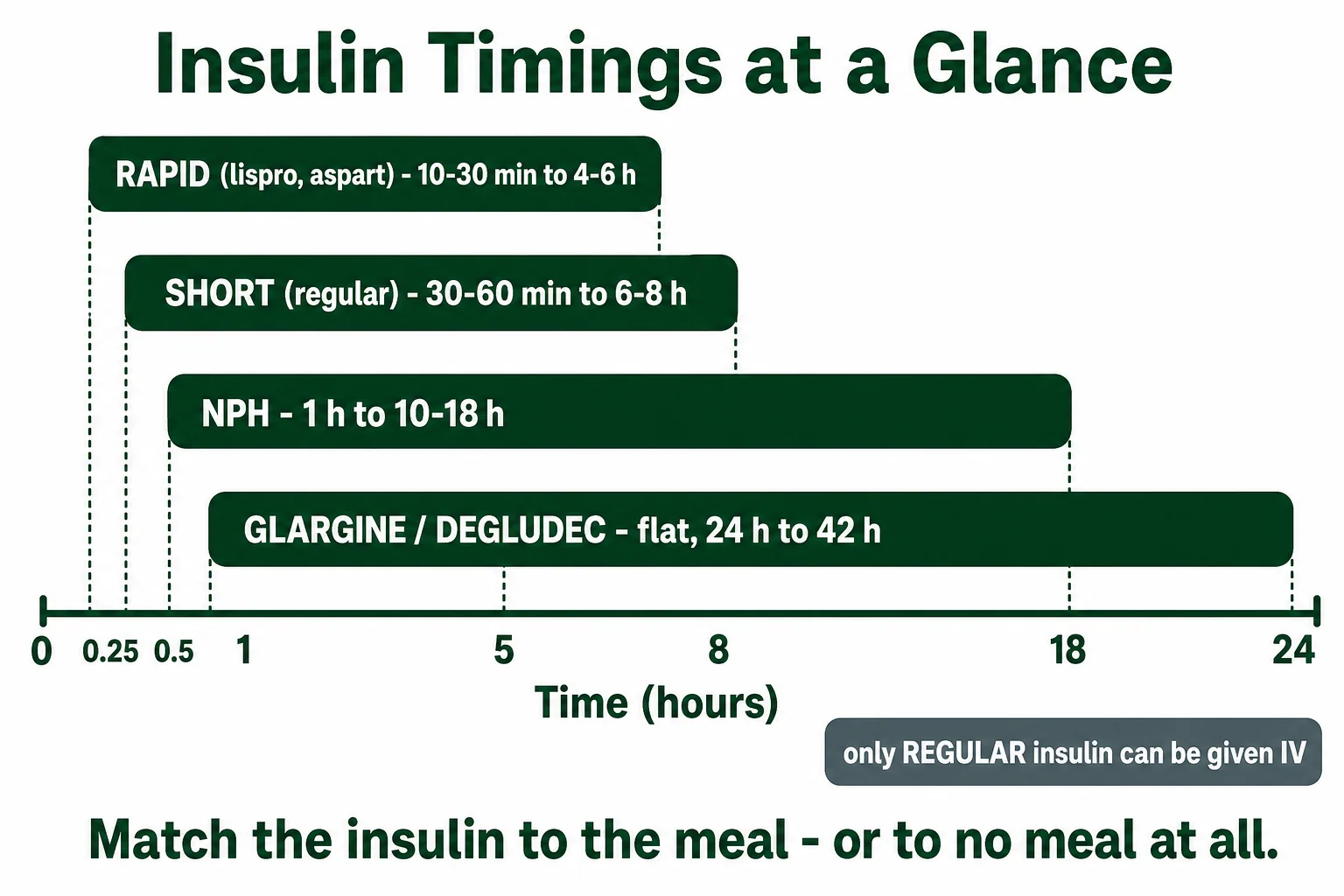
Timeline of insulin preparations from rapid and short to NPH and long-acting analogues with onset and duration bars, noting that only regular insulin is suitable for intravenous use.
Figure 2 — The beta-cell K-ATP switch
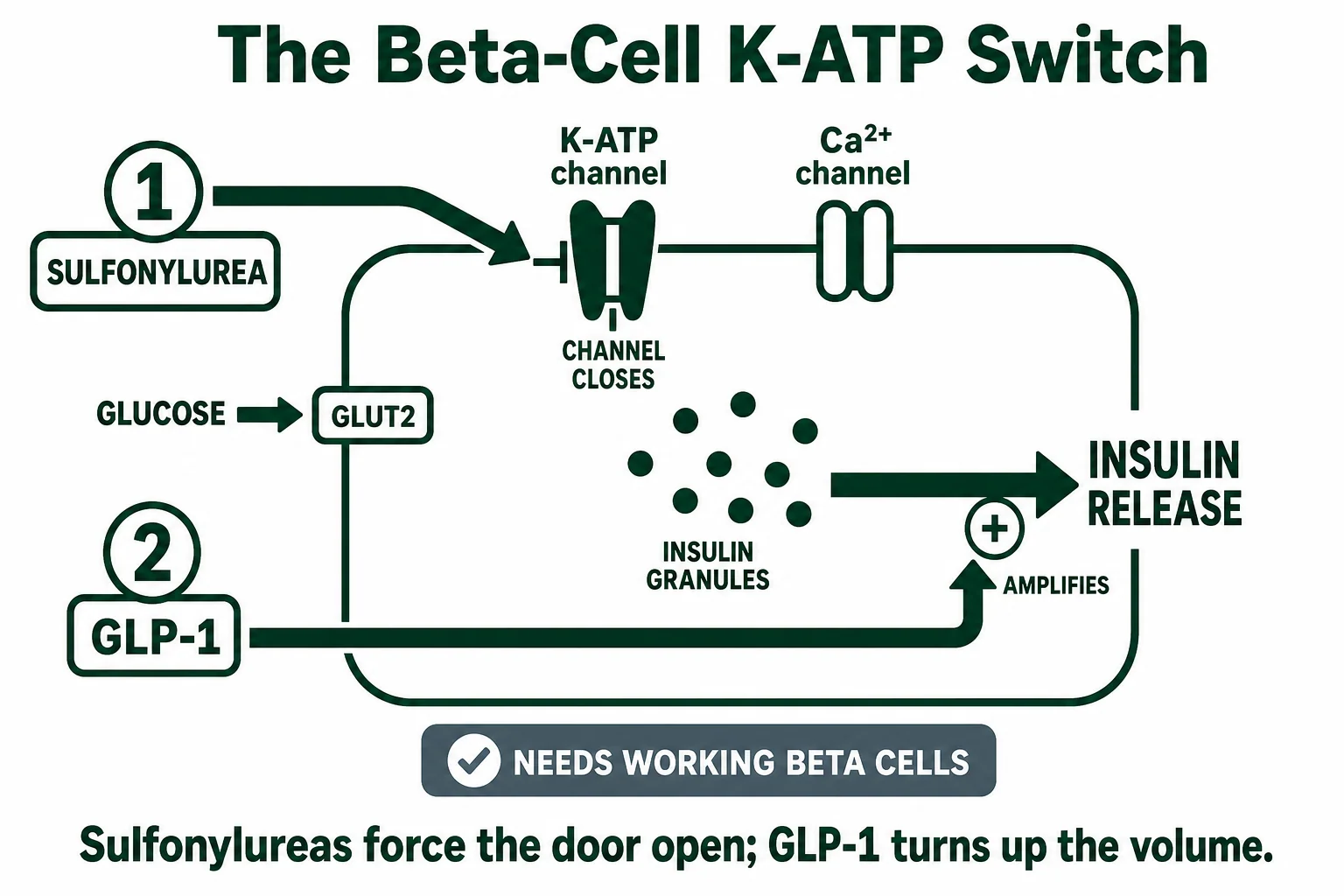
Beta-cell diagram showing glucose entry, the K-ATP channel closed by sulfonylureas, calcium influx, and insulin granule release amplified by GLP-1 receptor agonists.
Figure 3 — Choose the second drug by comorbidity
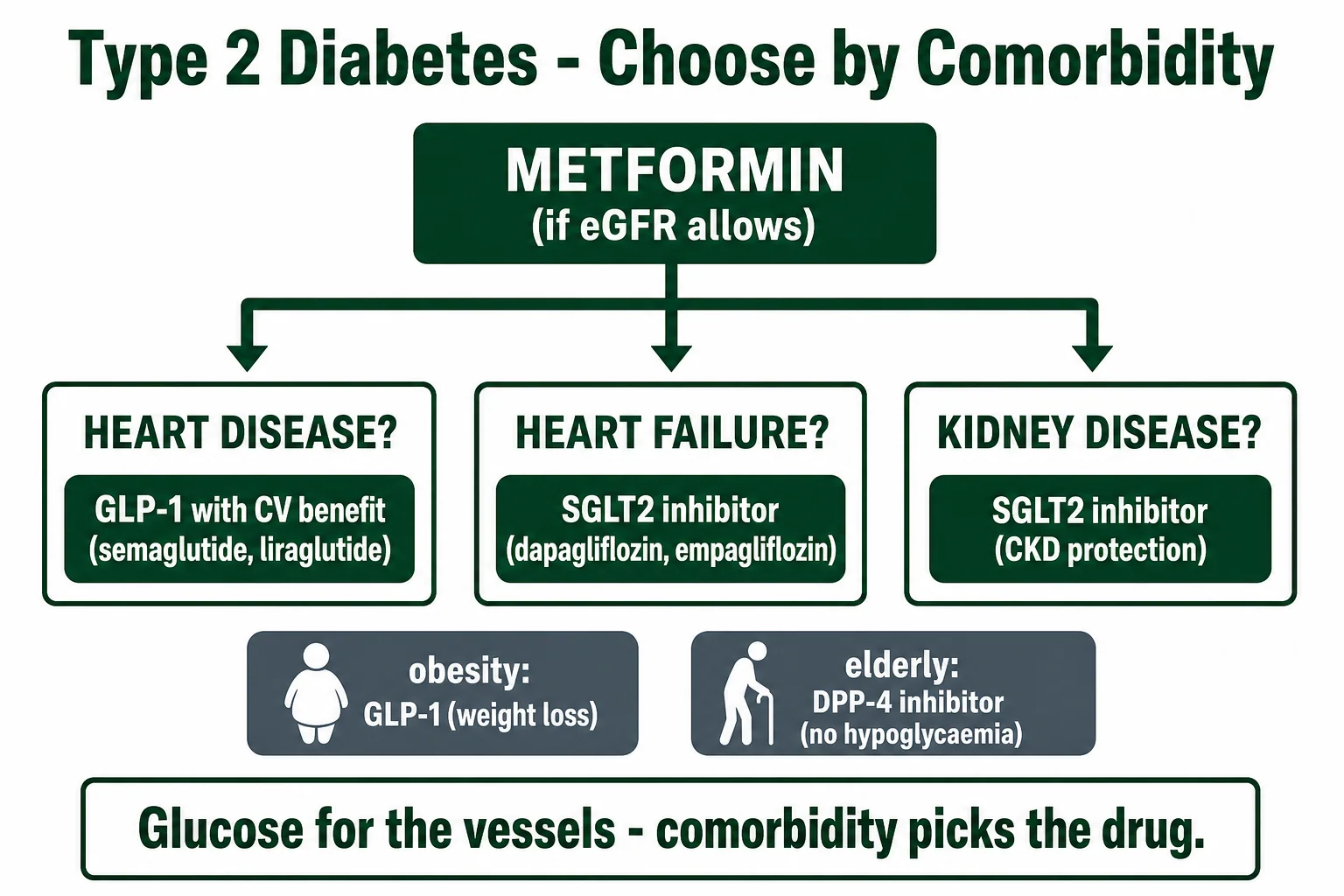
Comorbidity-driven treatment algorithm for type 2 diabetes starting from metformin and branching to GLP-1 agonists for cardiovascular disease, SGLT2 inhibitors for heart failure and chronic kidney disease, with obesity and elderly options.
Figure 4 — DKA protocol: five ordered steps
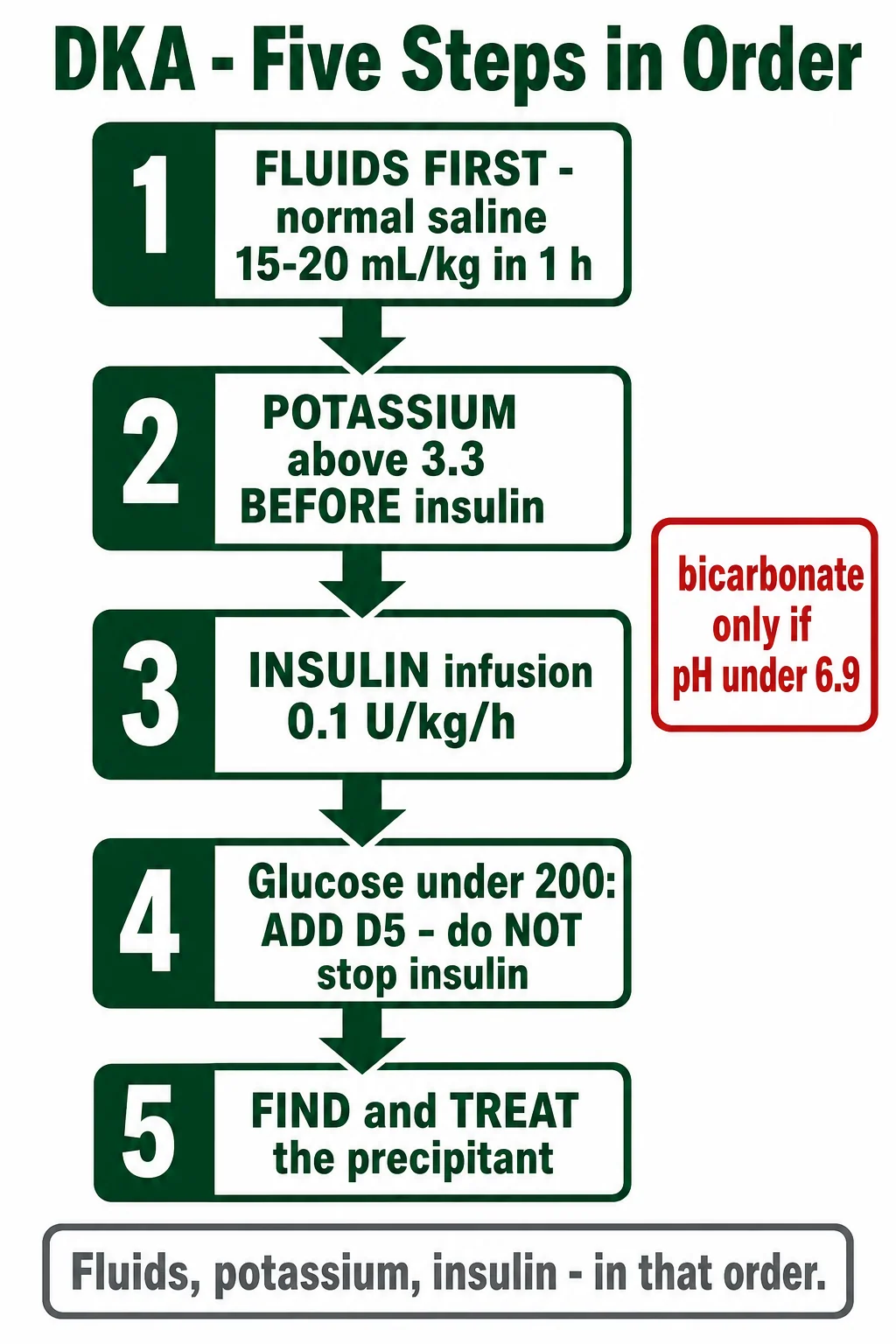
Five-step diabetic ketoacidosis protocol showing fluids first, the potassium gate before insulin, insulin infusion, dextrose addition without stopping insulin at glucose below 200 mg/dL, and precipitant treatment.
Figure 5 — Hypoglycaemia rescue
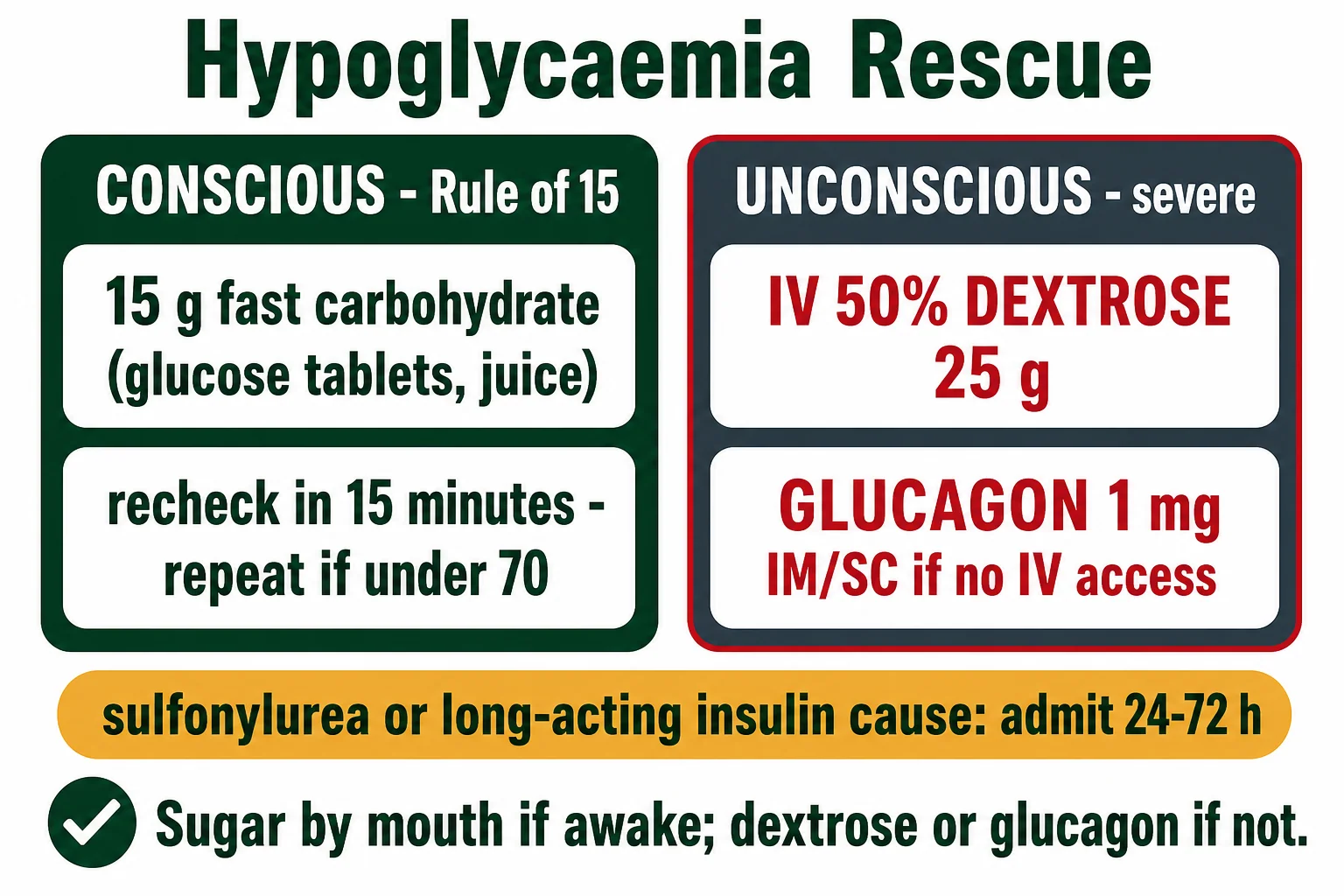
Two-tier hypoglycaemia rescue algorithm — the rule of 15 for conscious patients and intravenous dextrose or intramuscular glucagon for severe cases, with the sulfonylurea admission rule.
Clinical Correlation
Vignette 1 — New type 1 diabetes presenting as DKA
A 16-year-old boy has 3 weeks of polyuria, 6 kg weight loss and 2 days of vomiting; he is Kussmaul-breathing with acetone breath and drowsy. Glucose 480 mg/dL, pH 7.10, anion gap 22, ketones large — DKA, first presentation of type 1 diabetes. Management: fluids (normal saline 1 L in the first hour), potassium 3.8 mmol/L — 20 mEq added to fluids before insulin, then regular insulin infusion 0.1 U/kg/h; glucose reaches 190 mg/dL at hour 4 — fluid switched to D5 with insulin halved but continued until the gap closes at hour 12; cultures sterile; education begins. Discharge regimen: basal-bolus — insulin glargine 18 units at night plus aspart 6 units with each meal (50:50), carbohydrate counting, site-rotation map, glucose 4+ times daily, home glucagon kit, sick-day ketone rules, school liaison, driving counselling. An automated insulin delivery system is discussed as the preferred next step (ADA 2026).
Reasoning: DKA at onset needs the protocol, then a durable physiological regimen — basal-bolus mimics the pancreas. The education bundle (rotation, storage, glucagon, sick days) is as survival-critical as the prescription itself.
Vignette 2 — Metformin and the contrast scan in CKD
A 62-year-old with type 2 diabetes (eGFR 47, metformin 1 g twice daily) is scheduled for CT coronary angiography with iodinated contrast. Plan: hold metformin on the day of the scan, hydrate orally before and after, recheck serum creatinine at 48 hours — restart metformin only if renal function is unchanged. She is counselled on why: in a kidney already filtering at the margin, contrast can tip function down, and metformin accumulating in acidotic tissue is the setting of lactic acidosis — a rare complication with near-50% mortality.
Reasoning: The hold-recheck rule costs nothing and removes the catastrophic tail risk. The vignette also revisits the eGFR ladder: above 60 no restriction; 45–59 monitor; 30–44 — do not start, halve and caution; below 30 — stop.
Vignette 3 — Euglycaemic DKA on an SGLT2 inhibitor
A 54-year-old on empagliflozin for diabetic kidney disease undergoes emergency cholecystectomy; the drug was not held before surgery. On post-op day 2 she is tachypnoeic and vomiting: glucose only 185 mg/dL — but ketones 4+, pH 7.18, anion gap 21 — euglycaemic DKA. Management: fluids, potassium check, insulin infusion at reduced dose with dextrose-containing fluids from the outset (glucose is already low — the acidosis is the target), carbohydrate intake, stop the SGLT2 inhibitor permanently in favour of a GLP-1 RA. Protocol note added to her chart: SGLT2 inhibitors are held 3–4 days before elective surgery and during any acute illness or fasting (sick-day rules).
Reasoning: SGLT2 inhibition lowers glucose but raises glucagon and ketogenesis; surgery-fasting compounds it — glucose looks safe while acidosis mounts. When an SGLT2-treated patient is unwell, order ketones regardless of the glucose number.
Vignette 4 — Nocturnal hypoglycaemia on glibenclamide
A 74-year-old on glibenclamide 10 mg daily (plus metoproll for hypertension) is found confused and sweating at 3 a.m.; capillary glucose 38 mg/dL. She is given IV 50% dextrose 40 mL and wakes, but drops again to 46 mg/dL six hours later — the long-acting sulfonylurea keeps releasing insulin. Plan: admission with a 10% dextrose infusion for 48 hours, hourly-to-2-hourly glucose, octreotide 50 mcg SC thrice ready if refractory; at discharge glibenclamide is stopped permanently — replaced by linagliptin (no renal dosing, no hypoglycaemia) with HbA1c target relaxed below 8%; the metoprolol is flagged as having masked her adrenergic warnings — counselling for the family on recognising neuroglycopenia instead.
Reasoning: Elderly plus glibenclamide plus beta-blocker is the classic lethal triad for hypoglycaemia. Sulfonylurea hypoglycaemia is never a "treat-and-street": prolonged observation with dextrose infusion (and octreotide if needed) is the standard, and the discharge prescription must change the drug, not the dose.
Practical Linkage
Diabetes Care Station (PH1.36)
Insulin Technique Station
Demonstrate on a trainer: hand hygiene; draw clear (regular) before cloudy (NPH), roll not shake; pen prime with a 2-unit airshot; pinch-fold, 90-degree insertion with a 4–6 mm needle, 5–10 second hold; rotation map — draw the abdomen as a clock-grid and mark used quadrants; storage — unopened 2–8 degrees C, in-use room temperature 28 days, never frozen or sun-lit; sharps into a puncture-proof container. Write a basal-bolus prescription for a scripted 70 kg patient (calculate 0.5 U/kg/day split 50:50).
Hypoglycaemia Drill
Identify the tier; apply the rule of 15 with real items (4 glucose tablets; 150 mL juice); write the severe-hypoglycaemia order (50% dextrose 25 g IV; glucagon 1 mg IM); state two situations where glucagon fails (starvation, alcohol); write the admission order-set for sulfonylurea hypoglycaemia (dextrose infusion 24–72 h, monitoring frequency, octreotide if refractory).
DKA Worksheet
Sequence all steps with doses; calculate the first-hour fluid for a 60 kg patient (15–20 mL/kg = 900–1200 mL normal saline); state the potassium gate (above 3.3 mmol/L) and what to do at each potassium band; explain the dextrose switch in one sentence ("glucose is fixed before acidosis — insulin continues on dextrose until the gap closes"); list three DKA-versus-HHS discriminators; name the euglycaemic-DKA trap.
MCQ Bank
40 questions · tagged by topic, exam pattern & difficulty · full explanations
Which intracellular event immediately follows insulin binding to its receptor in skeletal muscle?
Rapid Revision
- Insulin receptor — tyrosine kinase; IRS-1; PI3K-Akt; GLUT4 to the surface of muscle and fat.
- Brain glucose uptake — GLUT1, insulin-independent (hypoglycaemia hurts the brain, not insulin lack).
- C-peptide high with high insulin — insulinoma or sulfonylurea; low with high insulin — injected insulin.
- Rapid analogues — lispro, aspart, glulisine: 10–30 min, 1–2 h peak, 4–6 h duration.
- Regular insulin — 30–60 min onset; the ONLY intravenous insulin (DKA).
- NPH — 1–2 h, peak 4–10 h, 10–18 h; clear drawn before cloudy; roll, never shake.
- Glargine — peakless, about 24 h; detemir 12–24 h; degludec beyond 42 h — flattest daily.
- Icodec — once-weekly basal (half-life ~196 h); EU/Canada/Japan/Australia/China approved; FDA declined 2024.
- Basal-bolus — 50% basal + 50% prandial; type 1 gold standard.
- ADA 2026 — automated insulin delivery (hybrid closed-loop) the preferred insulin delivery for T1DM and insulin-treated T2DM.
- Type 2 insulin initiation — basal 10 U nocte; titrate +2 U weekly to fasting target.
- Dawn phenomenon — morning hormones; MORE basal. Somogyi — night hypo rebound; LESS evening insulin.
- Storage — unopened 2–8 degrees C, never frozen; in-use pen room temperature about 28 days.
- Lipohypertrophy — same-site injecting; rotate to fix erratic control.
- Metformin — AMPK; hepatic gluconeogenesis down; no hypoglycaemia; weight-neutral.
- Metformin eGFR ladder — above 45 fine; 30–44 caution, do not start; below 30 stop.
- Contrast rule — hold metformin, recheck creatinine at 48 h before restarting.
- Metformin long-term — annual vitamin B12.
- Sulfonylureas — SUR1 K-ATP closure, calcium influx, insulin release; need beta cells.
- Glibenclamide — long-acting metabolites; banned in elderly and CKD.
- Beta-blockers mask the adrenergic alarm of hypoglycaemia.
- DPP-4 inhibitors — gliptins: mild, weight-neutral, no hypoglycaemia; arthralgia, pancreatitis warnings.
- Linagliptin — no renal dose adjustment (biliary); saxagliptin — heart failure signal.
- GLP-1 RAs — HbA1c 1–1.8% down, weight 3–6 kg down; nausea titration.
- GLP-1 contraindication — medullary thyroid carcinoma history and MEN-2 (boxed).
- GLP-1 CV benefit — LEADER (liraglutide), SUSTAIN-6 (semaglutide), REWIND (dulaglutide).
- Tirzepatide — dual GIP/GLP-1 agonist (Mounjaro/Zepbound): HbA1c up to ~2.5% down, weight up to ~20% down; SURPASS-CVOT 2025 noninferior; same MTC/MEN-2 caution.
- Semaglutide 2.4 mg — obesity licence (STEP); SELECT — CV benefit in obesity without diabetes.
- ADA 2026 — GLP-1/tirzepatide adjuncts endorsed in T1DM with obesity (BMI ≥30; ≥27.5 Asian) with DKA/hypoglycaemia education.
- SGLT2 inhibitors — glycosuria 60–100 g/day; genital mycosis; volume depletion.
- SGLT2 dangers — euglycaemic DKA, Fournier gangrene; sick-day and preoperative (3–4 day) holds.
- SGLT2 outcomes — EMPA-REG, DAPA-HF, CREDENCE: heart failure and CKD protection (with or without diabetes).
- Pioglitazone — PPAR-gamma; heart failure contraindication; fractures; bladder cancer caution.
- Repaglinide — prandial releaser; no meal, no tablet; gemfibrozil contraindicated.
- Acarbose — with the FIRST bite; gas and diarrhoea; hypoglycaemia rescued with GLUCOSE not sucrose.
- Hypoglycaemia — rule of 15; unconscious: IV 50% dextrose 25 g or glucagon 1 mg IM.
- Glucagon fails — starvation, alcohol, cirrhosis (no glycogen).
- Sulfonylurea hypoglycaemia — admit 24–72 h; octreotide adjunct.
- DKA order — fluids (NS 15–20 mL/kg first hour), potassium gate 3.3, insulin 0.1 U/kg/h.
- DKA at glucose 200 — add D5, reduce insulin, continue until the anion gap closes.
- DKA bicarbonate — only below pH 6.9.
- Euglycaemic DKA — SGLT2 inhibitors, pregnancy: check KETONES, not just glucose.
- HHS — glucose over 600, osmolality over 320, no ketosis; slow, osmolality-guided correction.
- HbA1c targets — below 7% most adults; below 8% elderly or frail.
Viva Questions
- Recite the insulin preparation timings. — Rapid (lispro/aspart/glulisine) 10–30 min, 1–2 h, 4–6 h; Regular 30–60 min, 2–4 h, 6–8 h; NPH 1–2 h, 4–10 h, 10–18 h; glargine peakless about 24 h; detemir 12–24 h; degludec beyond 42 h; icodec once weekly (~196 h half-life).
- Why can only regular insulin be given IV? — It is the only formulation in true solution without depot modifications (protamine, zinc, precipitation or acylation engineering), so IV kinetics are predictable — the DKA standard.
- How do you counsel on insulin storage? — Unopened 2–8 degrees C (never frozen, discard if frozen); in-use pen room temperature up to about 28 days away from heat and light; never leave in a hot vehicle.
- Distinguish dawn phenomenon from the Somogyi effect. — Dawn: counter-regulatory morning hormones with normal overnight glucose (increase or delay basal); Somogyi: nocturnal hypoglycaemia with rebound morning hyperglycaemia (reduce evening insulin); a 3 a.m. glucose settles it.
- What is the metformin lactic acidosis set and the contrast rule? — Risk with eGFR below 30, acute heart failure or shock, sepsis, dehydration, alcohol excess, cirrhosis; hold at iodinated contrast, recheck renal function at 48 hours before restarting.
- Why is glibenclamide dangerous in the elderly? — Long-acting active metabolites accumulate (especially in renal impairment), causing deep prolonged hypoglycaemia with relapses for days — choose short-acting gliclazide or a gliptin instead.
- How do beta-blockers complicate sulfonylurea therapy? — They mask the adrenergic warning (tremor, sweating, palpitations) of hypoglycaemia so the patient slips directly into neuroglycopenia — teach the family the late signs.
- Contrast GLP-1 agonists with DPP-4 inhibitors. — Same incretin axis: gliptins prolong native GLP-1 mildly (weight-neutral, no outcomes); GLP-1 RAs give pharmacologic levels (weight loss 3–6 kg, CV benefit, GI upset, injections) — and the two are never combined.
- What is tirzepatide? — A dual GIP/GLP-1 receptor agonist: the strongest glycaemic (up to ~2.5% HbA1c) and weight (up to ~20%) effect in the class; SURPASS-CVOT (2025) showed cardiovascular noninferiority to dulaglutide; same GI effects and MTC/MEN-2 contraindication as GLP-1 RAs; ADA 2026 permits it as an adjunct in obese T1DM.
- What are the SGLT2 sick-day rules and why? — Hold during acute illness, fasting and 3–4 days before surgery: carbohydrate lack plus glucagon rise triggers euglycaemic ketoacidosis while the glucose looks deceptively safe.
- Why does pioglitazone not suit heart failure? — PPAR-gamma-driven renal sodium and water retention precipitates and worsens heart failure (NYHA III–IV contraindication) — plus fractures in women and the bladder-cancer caution.
- State the hypoglycaemia rescue ladder. — Conscious: rule of 15 (15–20 g quick carbohydrate, recheck 15 min, repeat, then snack); unconscious: IV 50% dextrose 25 g then infusion, or glucagon 1 mg IM/SC; sulfonylurea or long-acting insulin cause: admit 24–72 h with dextrose infusion, octreotide if refractory.
- Why is potassium checked before insulin in DKA? — Insulin shifts potassium intracellularly; if serum K is below 3.3 mmol/L, insulin first can precipitate fatal arrhythmia — replete potassium and delay the infusion.
- Why is insulin NOT stopped when glucose reaches 200 mg/dL in DKA? — Glucose corrects before acidosis; stopping insulin restarts ketogenesis — add 5% dextrose and continue a reduced infusion until the anion gap closes.
- When is bicarbonate used in DKA? — Only below pH 6.9, dilute and slow — it worsens hypokalaemia, causes paradoxical CNS acidosis and cerebral oedema.
- How does modern drug choice move beyond HbA1c? — Metformin first, then comorbidity: atherosclerotic disease — GLP-1 RA/tirzepatide with CV benefit; heart failure — SGLT2 inhibitor; CKD with albuminuria — SGLT2 inhibitor; obesity — tirzepatide/semaglutide; elderly — DPP-4 inhibitor with relaxed targets.
References
- Tripathi KD. Essentials of Medical Pharmacology. 9th ed. New Delhi: Jaypee Brothers Medical Publishers; 2024. Chapter 19 (Insulin, oral hypoglycaemic drugs and diabetic emergencies).
- Katzung BG, Vanderah TW. Basic & Clinical Pharmacology. 16th ed. New York: McGraw Hill; 2024. Chapter 41: Pancreatic Hormones and Antidiabetic Drugs.
- Brunton LL, Knollmann BC (eds). Goodman & Gilman's Pharmacological Basis of Therapeutics. 14th ed. New York: McGraw Hill; 2023. Endocrine pharmacology section.
- American Diabetes Association. Standards of Care in Diabetes — 2026. Diabetes Care. 2026;49(Suppl 1). (AID preferred insulin delivery; GLP-1/tirzepatide adjuncts in obese T1DM; CKD/dialysis glucose-lowering guidance; obesity pharmacotherapy individualisation.)
- UK Prospective Diabetes Study (UKPDS) Group. Effect of intensive blood-glucose control with metformin on complications in overweight patients with type 2 diabetes (UKPDS 34). Lancet. 1998;352(9131):854–865.
- Zinman B, Wanner C, Lachin JM, et al. Empagliflozin, cardiovascular outcomes, and mortality in type 2 diabetes (EMPA-REG OUTCOME). N Engl J Med. 2015;373(22):2117–2128.
- Marso SP, Daniels GH, Brown-Frandsen K, et al. Semaglutide and cardiovascular outcomes in type 2 diabetes (SUSTAIN-6). N Engl J Med. 2016;375(19):1834–1844.
- Lincoff AM, Brown-Frandsen K, Colhoun HM, et al. Semaglutide and cardiovascular outcomes in obesity without diabetes (SELECT). N Engl J Med. 2023;389(24):2221–2232.
- Frias JP, Davies MJ, Rosenstock J, et al. Tirzepatide versus semaglutide once weekly in type 2 diabetes (SURPASS-2). N Engl J Med. 2021;385(6):503–515.
- Nicholls SJ, et al. Tirzepatide cardiovascular outcomes versus dulaglutide (SURPASS-CVOT). N Engl J Med. 2025. (Noninferiority with trend to benefit.)
- Jastreboff AM, Aronne LJ, Ahmad NN, et al. Tirzepatide once weekly for the treatment of obesity (SURMOUNT-1). N Engl J Med. 2022;387(3):205–216.
- McMurray JJV, Solomon SD, Inzucchi SE, et al. Dapagliflozin in patients with heart failure and reduced ejection fraction (DAPA-HF). N Engl J Med. 2019;381(21):1995–2008.
- Perkovic V, Jardine MJ, Neal B, et al. Canagliflozin and renal outcomes in type 2 diabetes and nephropathy (CREDENCE). N Engl J Med. 2019;380(24):2295–2306.
- Philis-Tsimikas A, et al.; ONWARDS programme of once-weekly insulin icodec. Lancet/Diabetes Care. 2023. Regulatory status: approved EU/Canada/Japan/Australia/China (Awiqli); FDA complete response letter July 2024.
- National Medical Commission (NMC). Competency Based Undergraduate Curriculum: Pharmacology. Competency PH1.36; 2019.
Downloads
All deliverables & printable revision sheets for CH38
Printable Chapter Handout & Study Notes
Generate a clean, high-yield PDF or print directly without sidebars and navigation menus.