
Hypothalamic-Pituitary Hormones & Thyroid/Antithyroid Drugs
Learning Objectives
At the end of this chapter, the Phase II MBBS student will be able to:
- Outline the hypothalamic-pituitary-target axis and predict the effect of pulsatile versus continuous GnRH stimulation. (PH1.36 — Knows)
- Detail the therapeutic hormones of the anterior pituitary (somatropin, cosyntropin, gonadotrophins) with indications and hazards. (PH1.36 — Knows)
- Select acromegaly therapy (octreotide, lanreotide, pegvisomant, cabergoline) with mechanisms and adverse effects. (PH1.36 — Knows-how)
- Treat hyperprolactinaemia rationally (cabergoline versus bromocriptine; antipsychotic-induced cases). (PH1.36 — Knows-how)
- Apply desmopressin and oxytocin pharmacology (diabetes insipidus, enuresis, von Willebrand disease, labour induction) with their hazards. (PH1.36 — Knows-how)
- Map each step of thyroid hormone synthesis to its blocking drug. (PH1.37 — Knows)
- Prescribe levothyroxine correctly — timing, interactions, special doses (elderly, ischaemic heart disease, pregnancy) and monitoring. (PH1.37 — Knows-how)
- Compare thionamides (carbimazole versus propylthiouracil) including pregnancy logic and boxed warnings. (PH1.37 — Knows)
- Manage thyroid storm and myxoedema coma step-by-step. (PH1.37 — Knows-how)
- Counsel a patient chosen for radioactive iodine — indications, contraindications and expectations. (PH1.37 — Knows-how)
Must-Know Summary
The pituitary is a switchboard: hypothalamic releasing hormones turn its outputs on, and inhibitory hormones (somatostatin, dopamine) turn them off — drugs work at both. Continuous GnRH agonist exposure desensitises the gonadotroph (leuprolide: chemical castration in prostate cancer, precocious puberty, IVF down-regulation), while pulsatile GnRH stimulates. Cabergoline (long-acting dopamine agonist, once or twice weekly) is the first-choice prolactinoma drug — more potent and better tolerated than bromocriptine, whose first dose can syncope the patient (start at night with food); high-dose ergot agonists risk cardiac valvulopathy. Octreotide/lanreotide (somatostatin analogues) suppress growth hormone in acromegaly — expect gallstones, steatorrhoea and glucose intolerance; pegvisomant blocks the GH receptor instead (monitor liver). Desmopressin (V2-selective) treats central diabetes insipidus, enuresis and mild von Willebrand disease — counsel against hyponatraemia with fluid restriction. The thyroid follicular cell makes hormone in six steps, each with a blocker: iodide trapping (NIS) — perchlorate; oxidation-organification-coupling (TPO) — carbimazole/PTU; release — iodide (Wolff-Chaikoff); peripheral T4-to-T3 conversion — PTU, propranolol, hydrocortisone. Levothyroxine rules: empty stomach 30–60 minutes before breakfast, calcium and iron 4 hours apart, TSH at 6–8 weeks, start low in the elderly and ischaemic heart, increase dose about 30% in pregnancy. Carbimazole once daily is the maintenance choice (watch agranulocytosis — sore throat card; first-trimester embryopathy: aplasia cutis, choanal atresia); PTU owns the first trimester and thyroid storm (blocks conversion) but carries the black-box hepatotoxicity — switch at week 16. Thyroid storm sequence: propranolol, then PTU, then iodine one hour later, then hydrocortisone, then cool and treat the cause. Radioiodine I-131 never in pregnancy or breastfeeding; the intended endpoint is hypothyroidism on lifelong levothyroxine.
- GnRH paradox — pulsatile stimulates FSH/LH; continuous agonist exposure switches the axis off (leuprolide)
- Relugolix — the first ORAL GnRH antagonist (prostate cancer 2020; fibroids/endometriosis in combination) — rapid suppression without flare
- Cabergoline — first-choice prolactinoma drug; once-twice weekly; high-dose valvulopathy surveillance
- Bromocriptine — first-dose orthostatic syncope; start at night with food
- Octreotide/lanreotide — acromegaly: gallstones, steatorrhoea, glucose intolerance (insulin suppressed)
- Pegvisomant — GH receptor antagonist; normalises IGF-1; monitor liver enzymes
- Desmopressin — central DI, enuresis, von Willebrand; hazard is hyponatraemia
- Oxytocin overdosage — uterine hyperstimulation, rupture, water retention (antidiuretic effect)
- Thyroid blockers by step — perchlorate (NIS), thionamides (TPO), iodide (release), PTU (conversion)
- Wolff-Chaikoff — iodide briefly shuts synthesis; escape in 2 days (fails in autoimmune thyroid)
- Jod-Basedow — iodine load causes hyperthyroidism in nodular goitre (amiodarone, contrast)
- Levothyroxine — 30–60 min before breakfast; calcium/iron 4 hours apart; TSH at 6–8 weeks
- Levothyroxine in pregnancy — increase dose about 30% on confirmation; TSH target by trimester-specific (locally derived) reference ranges — ATA 2026 pregnancy guideline
- Carbimazole hazards — agranulocytosis (sore throat card), cholestasis, aplasia cutis embryopathy
- PTU — first trimester and storm (conversion block); black-box fulminant hepatitis; ANCA vasculitis
- Thyroid storm — beta-blocker, PTU, iodine one hour AFTER, hydrocortisone, cool, treat precipitant
- Myxoedema coma — IV levothyroxine plus hydrocortisone BEFORE thyroid hormone, warm, treat cause
- Radioiodine — absolute contraindication in pregnancy and breastfeeding; hypothyroidism is the goal
Classification
BOX 1 — HYPOTHALAMIC AND PITUITARY DRUGS
Releasing Hormone Analogues and Antagonists
- GnRH agonists: leuprolide, goserelin, triptorelin, histrelin, nafarelin (nasal)
- GnRH antagonists (injectable): cetrorelix, ganirelix, degarelix
- GnRH antagonists (oral): relugolix — advanced prostate cancer (2020) and, in combination with estradiol/norethindrone (Myfembree/Ryeqo), fibroids and endometriosis
- GnRH (gonadorelin) — diagnostic pulsatile use
Growth Hormone and Modulators
- Recombinant GH: somatropin
- GH receptor antagonist: pegvisomant
- Somatostatin analogues: octreotide (SC / LAR depot), lanreotide autogel, pasireotide
Dopamine Agonists (Prolactin Inhibitors)
- Cabergoline, bromocriptine, quinagolide
ACTH Analogues
- Cosyntropin (tetracosactide) — diagnostic; repository ACTH gel treats infantile spasms
Gonadotrophins
- FSH: follitropin alfa/beta, urofollitropin
- hMG (menotropins); hCG; lutropin alfa
Neurohypophysis
- ADH analogues: desmopressin (DDAVP), vasopressin (aqueous/oil)
- Oxytocin (induction, PPH); atosiban (tocolysis — oxytocin antagonist)
- Vaptans (tolvaptan) — aquaretic ADH antagonists (cross-reference CH30)
BOX 2 — THYROID AND ANTITHYROID DRUGS
Thyroid Hormone Preparations
- Levothyroxine (T4) — drug of choice
- Liothyronine (T3) — storm, coma, rare; liotrix (T4+T3)
- Desiccated thyroid — not recommended
Thionamides (TPO Inhibitors)
- Carbimazole, methimazole (once daily)
- Propylthiouracil (plus peripheral conversion block)
Iodide and Release Blockers
- Lugol's solution, saturated solution of potassium iodide (SSKI)
- Lithium carbonate (alternative release blocker)
Ionic Inhibitors (Historical/Rare)
- Perchlorate, thiocyanate
Adjuncts in Thyrotoxicosis
- Propranolol, esmolol; hydrocortisone, dexamethasone; cholestyramine
Radioiodine
- I-131 (therapeutic), I-123 (diagnostic)
Core Concepts
1. Hypothalamic and anterior pituitary hormones
The hypothalamus controls the anterior pituitary through portal releasing hormones: TRH (TSH, prolactin), CRH (ACTH), GHRH (GH), and GnRH (FSH/LH); two inhibitory hormones restrain it — somatostatin (GH, and TSH, insulin) and dopamine (prolactin — the only anterior pituitary hormone under tonic inhibition).
The GnRH paradox (a favourite concept). Physiological GnRH reaches the gonadotroph pulsatively — each pulse releases FSH/LH. Continuous exposure to a potent agonist (leuprolide, goserelin, triptorelin) first stimulates, then desensitises and down-regulates the receptor — chemical castration: used in advanced prostate cancer, central precocious puberty, endometriosis, fibroids and IVF down-regulation. GnRH antagonists (cetrorelix, ganirelix, degarelix) block immediately without the flare — used in assisted reproduction and prostate cancer. The newest step is relugolix, the first oral GnRH antagonist (FDA-approved December 2020 for advanced prostate cancer on the HERO trial — faster castration than injectable agonists, no flare, cardiovascular advantage in HERO; and as a combination with estradiol/norethindrone — Myfembree/Ryeqo — for uterine fibroids and endometriosis). This stimulant-that-inhibits logic is the single most tested pituitary concept.
Anterior pituitary products and their therapeutic use:
- Somatropin (recombinant GH): GH deficiency in children and adults, Turner syndrome, small-for-gestational-age failure of catch-up, chronic renal insufficiency, Prader-Willi syndrome, and GH-deficient short stature in children; adult replacement after pituitary surgery. Adverse effects: glucose intolerance, oedema, arthralgia, slipped capital femoral epiphysis, benign intracranial hypertension and anti-drug antibodies; Prader-Willi children with severe obesity have suffered sudden respiratory deaths — screen sleep apnoea.
- Cosyntropin (tetracosactide, ACTH 1–24): the short Synacthen test of adrenal reserve (cortisol at 0/30/60 min) — safer than natural ACTH (less allergenic). (Infantile spasms, by contrast, are treated with repository ACTH gel or high-dose glucocorticoids — cosyntropin is the diagnostic agent, not the antispasm drug.)
- Gonadotrophins: FSH preparations (follitropin alfa/beta, urofollitropin) drive multifollicular growth in assisted reproduction and treat hypogonadotrophic hypogonadism; hCG (from pregnancy urine) mimics LH — the ovulation trigger, testosterone induction in boys, and cryptorchidism; menotropins (hMG = FSH + LH). Hazards: ovarian hyperstimulation syndrome (ascites, haemoconcentration, thrombosis), multiple pregnancy.
- Posterior pituitary — ADH and oxytocin (Section 5).
2. Growth hormone and somatostatin analogues
Acromegaly (GH excess from a pituitary adenoma, acting through IGF-1) causes diabetes, hypertension, cardiomyopathy, sleep apnoea and colon neoplasia risk. Trans-sphenoidal surgery is first-line; drugs serve when surgery fails, before surgery to soften the tumour, or when the patient refuses.
Octreotide and lanreotide are somatostatin analogues with high affinity for SST2 and SST5 receptors, suppressing GH (and TSH) secretion — they also shrink 20–40% of tumours modestly. Octreotide: SC 50–100 mcg three times daily, or monthly LAR depot IM; lanreotide autogel monthly deep SC. Adverse effects (the exam list): gallstones and biliary sludge (bile stasis — ultrasound surveillance), steatorrhoea, glucose intolerance (insulin and glucagon suppressed), bradycardia, nausea, injection-site pain. They also control symptoms of carcinoid and VIPoma (cross-reference CH36).
Pegvisomant is a genetically engineered GH-receptor antagonist — it blocks GH action at the liver and periphery so IGF-1 normalises in over 90% without touching the tumour (MRI surveillance still needed). Daily SC; hepatotoxicity — monitor transaminases. It does not shrink the adenoma.
Cabergoline at higher doses is an adjunct (10–20% respond); pasireotide (SST5-predominant multireceptor analogue) also treats Cushing disease — its signature toxicity is hyperglycaemia.
3. Prolactin inhibitors
Hyperprolactinaemia presents with galactorrhoea, amenorrhoea, infertility, loss of libido and (in macroprolactinomas) mass effects. Causes: prolactinoma, D2-blocking drugs (antipsychotics, metoclopramide — cross-reference CH35), pregnancy, hypothyroidism (TRH stimulus), renal failure, stress.
Dopamine agonists are the therapy (dopamine is the physiological prolactin-inhibiting hormone):
- Cabergoline — the first choice: highly potent, long-acting (once or twice weekly), best tolerated (less nausea), and the most effective at shrinking prolactinomas and restoring fertility. Hazard: with high cumulative doses (as in Parkinson's disease) ergot-derived agonists cause cardiac valvulopathy — echocardiographic surveillance for high-dose long-term users; at standard prolactinoma doses the risk appears negligible.
- Bromocriptine — older ergot agonist, short half-life, daily/twice-daily dosing; adverse effects: nausea, vomiting, nasal congestion, orthostatic hypotension with first-dose syncope — start at night with food and rise slowly; also impulse-control disorders and, rarely, psychosis. It is still preferred when fertility-seeking women want the drug with the longest pregnancy safety record (decades of data) or when cabergoline is unavailable. Quinagolide is the non-ergot alternative.
- Suppression of lactation with dopamine agonists is now discouraged postpartum (thromboembolic rebound of milk engorgement, hypertension, strokes reported with historical use).
Antipsychotic-induced hyperprolactinaemia (risperidone, typicals, amisulpride): the correct sequence is dose reduction, switch to a prolactin-sparing agent (aripiprazole — a D2 partial agonist), or treat the hypogonadal consequences — adding a full dopamine agonist may antagonise the antipsychotic and worsen psychosis.
4. Thyroid hormone synthesis and physiology
The follicular cell's six-step assembly line, each step a drug target:
- Iodide trapping — the sodium-iodide symporter (NIS) concentrates iodide 30–40 fold; blocked by competitive anions: perchlorate, thiocyanate (historical/reserve use in iodide hypersensitivity).
- Oxidation — iodide oxidised to iodine by thyroid peroxidase (TPO) with hydrogen peroxide.
- Organification — iodine attached to tyrosine residues on thyroglobulin, forming MIT and DIT.
- Coupling — TPO couples DIT + DIT = T4; MIT + DIT = T3. Steps 2–4 (all TPO-dependent) are blocked by the thionamides — carbimazole, methimazole, propylthiouracil.
- Storage — iodothyronines stored ester-linked in colloid thyroglobulin (the only endocrine gland storing weeks of product).
- Proteolysis and release — thyroglobulin endocytosed, T4/T3 released; excess iodide acutely blocks this (Wolff-Chaikoff effect) and lithium blocks release (both relevant to hyperthyroid therapy).
Secretion and conversion: the gland secretes T4 : T3 at about 80 : 20; the rest of circulating T3 comes from peripheral 5'-deiodination (D1) of T4 — blocked by propylthiouracil, propranolol and glucocorticoids (this is why PTU is preferred in storm), and by amiodarone. Reverse T3 is the inactive clearance product.
Transport: over 99% bound to TBG (thyroxine-binding globulin); only free hormone acts. Oestrogens (pregnancy, OCPs) raise TBG — total T4 rises, free T4 normal (interpretation trap); glucocorticoids and androgens lower binding.
Autoregulation (two named effects):
- Wolff-Chaikoff effect — a large iodide load transiently (24–48 h) shuts down organification and release; the normal gland escapes by downregulating NIS, but autoimmune (Hashimoto's) or surgically reduced glands cannot escape, resulting in iodine-induced hypothyroidism.
- Jod-Basedow phenomenon — an iodine load (amiodarone, contrast, kelp) triggers hyperthyroidism in autonomous nodular goitre — a pharmacology classic.
Actions: genomic — Na/K ATPase (calorigenic), beta-receptor upregulation (sensitivity to catecholamines), LDL-receptor expression, growth and skeletal maturation; fetal and infant neurodevelopment — deficiency causes cretinism; hence newborn screening.
5. Thyroid hormone preparations in hypothyroidism
Levothyroxine (T4) is the drug of choice — a prohormone with a 7-day half-life giving smooth levels; converted peripherally to T3.
Administration rules (the counselling script): take on an empty stomach, 30–60 minutes before breakfast with water (food halves absorption); separate calcium and iron by at least 4 hours (they chelate levothyroxine in the gut); PPIs, soya, coffee, sucralfate, cholestyramine reduce absorption; malabsorption (coeliac, post-bariatric) raises dose needs. Steady state takes 5–6 weeks — check TSH 6–8 weeks after any dose change; goal TSH 0.4–4.0 mIU/L.
Starting doses: young, otherwise healthy adults — full replacement 1.6 mcg/kg/day (about 100–125 mcg); elderly, ischaemic heart disease or severe long-standing hypothyroidism — start 25–50 mcg and titrate slowly (levothyroxine uncovers angina or precipitates arrhythmia when the heart is starved and suddenly driven).
Pregnancy: requirement rises with hCG/TBG dynamics — increase the dose by about 30% on confirmation of pregnancy (practically: two extra tablets weekly or alternate-day doubling), recheck TSH each trimester; adequate maternal T4 is critical for fetal neurodevelopment (the fetal thyroid only starts working at ~12 weeks). The ATA 2026 pregnancy guideline advises targeting trimester-specific, locally derived TSH reference ranges (where no local range exists, the traditional first-trimester ceiling of about 2.5 mIU/L remains a pragmatic fallback).
Liothyronine (T3) — 4 times the potency, half-life under 2 days; reserved for myxoedema coma (faster onset IV) and rare absorption failure; combination T4/T3 and desiccated animal thyroid are not recommended — no consistent benefit, more arrhythmia.
Myxoedema coma (the mirror emergency): winter, elderly woman, hypothermia, bradycardia, hypoventilation (CO2 narcosis), hyponatraemia, obtundation, often precipitated by infection, cold exposure, sedatives or missing doses. Management: IV hydrocortisone 100 mg 8-hourly given BEFORE thyroid hormone (coexisting autoimmune adrenal insufficiency until proven otherwise; steroid also blocks conversion — protective), then IV levothyroxine 200–400 mcg load (or T3 with arrhythmia caution), passive rewarming only (active warming vasodilates shockingly), treat the precipitant, support ventilation, correct hyponatraemia with care, and avoid sedatives.
6. Antithyroid drugs and thyroid storm
Carbimazole (a prodrug rapidly converted to methimazole): the standard thionamide — potent, long-acting, once daily, blocking TPO (oxidation, organification, coupling). Adverse effects: rash and urticaria (5%), arthralgia, agranulocytosis (0.2–0.5% — dose-related with methimazole), cholestatic jaundice, taste disturbance, vasculitis (rare). The counselling card: stop the drug and get an urgent blood count for sore throat, fever or mouth ulcers. Teratogenic — the carbimazole/methimazole embryopathy (aplasia cutis, choanal atresia, facial defects) — avoid in the first trimester.
Propylthiouracil (PTU): also blocks TPO plus peripheral D1 conversion of T4 to T3 — hence the drug of thyroid storm and of the first trimester of pregnancy (least placental transfer, no aplasia-cutis signal). Costs: thrice-daily dosing; FDA black-box fulminant hepatotoxicity (transplant-level failure, especially children — never use chronically where avoidable) and ANCA-positive vasculitis with long use. Practice rule: PTU for the first trimester, switching to carbimazole at about week 16 (after organogenesis, before the liver risk accumulates).
Regimens: (a) Titration — carbimazole 20–40 mg daily, tapering to the maintenance 5–15 mg as the patient becomes euthyroid; (b) Block-replace — carbimazole 40 mg fixed plus levothyroxine 100 mcg (both for 12–18 months; less frequent monitoring; not in pregnancy). Treat 12–18 months, then stop and follow: about half relapse (positive TSH-receptor antibodies, large goitre and smoking predict relapse) — relapsers go to radioiodine or surgery. (The 2016 ATA guideline additionally endorses long-term low-dose methimazole as a reasonable alternative to definitive therapy, with TRAb re-checked to time any withdrawal.)
Adjuncts: propranolol 20–40 mg four times daily for adrenergic symptoms (blocks receptors and conversion); cholestyramine interrupts the enterohepatic circulation of thyroxine (add-on in severe thyrotoxicosis); lithium carbonate blocks hormone release when iodine cannot be used (allergy); perchlorate — the old NIS blocker, reserved for iodide hypersensitivity.
Thyroid storm (thyrotoxic crisis) — hyperthermia, tachyarrhythmia (AF), delirium, heart failure, gastrointestinal symptoms; usually precipitated by infection, surgery, radioiodine, iodine contrast or withdrawal of antithyroid drugs; Burch-Wartofsky score 45 or more supports the diagnosis. The sequence (memorise as five steps):
- Beta-blockade: propranolol 60–80 mg orally (or 1–2 mg IV slowly) — esmolol infusion if asthma or heart failure demands cardiology caution; digitalise if AF with heart failure.
- Thionamide: PTU 500–1000 mg loading, then 200–250 mg every 4–6 hours (conversion block adds to TPO block; carbimazole 60–80 mg/day if PTU unavailable).
- Iodine (Lugol 5–10 drops three times daily or SSKI 5 drops) — START ONE HOUR OR MORE AFTER the thionamide, otherwise the gland simply uses the new iodine to build hormone; iodide blocks release (Wolff-Chaikoff) and shrinks gland vascularity before surgery.
- Hydrocortisone 100 mg IV every 8 hours (or dexamethasone 2 mg 6-hourly) — blocks conversion and covers relative adrenal insufficiency.
- Supportive: cooling blankets and paracetamol (NEVER aspirin — displaces T4 from TBG raising free hormone), oxygen, IV fluids, thiamine; find and treat the precipitant (blood and urine cultures, chest X-ray); anticoagulate AF. Refractory cases: plasmapheresis, cholestyramine, or urgent thyroidectomy.
7. Radioactive iodine (I-131)
Principle: the NIS cannot distinguish radioactive from stable iodide — I-131 is trapped, incorporated, and its beta emission destroys follicular cells over 6 weeks to 6 months. A single oral capsule, given as an outpatient.
Indications: Graves' disease in adults (especially older patients, comorbidity precluding surgery, relapse after a drug course, poor adherence); toxic multinodular goitre and toxic adenoma in older patients; thyroid cancer ablation (higher activities, after thyroidectomy, with rhTSH or withdrawal). I-123 (pure gamma) serves diagnostic scanning.
Contraindications — absolute: pregnancy (fetal thyroid destruction and radiation teratogenesis — pregnancy test within 48 hours before therapy) and breastfeeding (per ATA guidance, defer RAI until at least 3 months after lactation stops, as milk concentrates iodine). Relative: childhood Graves' (drugs first); active moderate-to-severe Graves ophthalmopathy — radioiodine worsens it (give steroid cover or defer; smoking multiplies the risk); inability to comply with radiation precautions.
Practicalities: render the patient near-euthyroid with carbimazole first, stopping about one week before dosing so uptake is high (consider restarting the antithyroid drug 3–7 days after RAI in older/high-risk patients to prevent early worsening); avoid iodine loads (contrast, amiodarone). Effects: transient radiation thyroiditis (pain, transient thyrotoxicosis), mild gland swelling, and the therapeutic endpoint — hypothyroidism is the GOAL, not a complication: lifelong levothyroxine, with TSH checking at 6 weeks then intervals. Long-term follow-up studies show no increase in overall cancer or infertility at treatment activities; safety precautions for family contact (distance from children and pregnancy for days, separate bedding, toilet hygiene) per institutional protocol.
Choosing the door (drug versus surgery versus I-131): drugs for youth, mild disease, pregnancy, likely remission and small glands; surgery for very large goitres, compression, suspicion of malignancy, and patients needing rapid certainty; I-131 for adults with relapse, comorbidity, or preference for definitive non-surgical control — with the pregnancy and eye-disease caveats above.
Tables
Table 1 — Pituitary hormone products and their uses
| Product | Nature | Principal use | Key hazard |
|---|---|---|---|
| Somatropin | Recombinant GH | GH deficiency, Turner, SGA, CKD short stature, Prader-Willi | Glucose intolerance, oedema, slipped epiphysis, intracranial hypertension |
| Cosyntropin | ACTH 1–24 | Short Synacthen test (adrenal reserve) | Allergy (rare) — infantile spasms need repository ACTH gel |
| Follitropins / hMG | FSH ± LH | Ovulation induction, hypogonadotrophic hypogonadism | Ovarian hyperstimulation, multiple pregnancy |
| hCG | LH mimic | Ovulation trigger, testosterone induction, cryptorchidism | Hyperstimulation; gynaecomastia in males |
| Desmopressin | V2-selective ADH analogue | Central DI, enuresis, vWD/haemophilia A | Hyponatraemia — fluid restrict evenings |
| Oxytocin | Posterior pituitary hormone | Induction/augmentation, PPH | Hyperstimulation, rupture, water retention |
| Atosiban | Oxytocin antagonist | Tocolysis | Maternal tachycardia, hypotension |
Table 2 — Acromegaly and hyperprolactinaemia drug options
| Drug | Mechanism | Best role | Signature adverse effect |
|---|---|---|---|
| Octreotide / Lanreotide | SST2/5 agonism — suppresses GH | Acromegaly after surgery; carcinoid/VIPoma | Gallstones, steatorrhoea, glucose intolerance |
| Pegvisomant | GH receptor antagonist | Normalising IGF-1 when analogues fail | Hepatotoxicity — monitor LFT |
| Cabergoline | D2 agonist (long-acting) | First-choice prolactinoma drug; GH adjunct | High-dose cardiac valvulopathy; nausea |
| Bromocriptine | D2 agonist (ergot, short) | Fertility-seeking prolactinoma (longest pregnancy record) | First-dose syncope — night dose with food |
| Quinagolide | Non-ergot D2 agonist | Ergot intolerance | Headache, nausea |
Table 3 — Thyroid synthesis step-by-step with blockers
| Step | Event | Blocker |
|---|---|---|
| 1. Trapping | NIS concentrates iodide | Perchlorate, thiocyanate |
| 2. Oxidation | TPO + H2O2 oxidises iodide | Thionamides (carbimazole, PTU) |
| 3. Organification | Iodine to tyrosine (MIT/DIT) | Thionamides |
| 4. Coupling | DIT+DIT to T4; MIT+DIT to T3 | Thionamides |
| 5. Storage | Colloid thyroglobulin store (weeks) | (No drug; the unique thyroid reserve) |
| 6. Release | Proteolysis frees T4/T3 | Excess iodide (Wolff-Chaikoff), lithium |
| Peripheral conversion | T4 to T3 by D1 (liver) | PTU, propranolol, glucocorticoids, amiodarone |
Table 4 — Carbimazole versus propylthiouracil
| Parameter | Carbimazole (to methimazole) | Propylthiouracil (PTU) |
|---|---|---|
| Dosing | Once daily | Three times daily |
| TPO block | Potent | Potent |
| Peripheral T4-to-T3 block | No | Yes — hence storm and first-trimester choice |
| Pregnancy | Avoid first trimester (aplasia cutis, choanal atresia); preferred after week 16 | First-trimester choice; switch by week 16 |
| Boxed/critical warning | Agranulocytosis (dose-related) | FDA black box: fulminant hepatitis; ANCA vasculitis |
| Other adverse effects | Rash, cholestasis, taste disturbance, arthralgia | Rash, ANCA vasculitis, lupus-like |
Table 5 — Thyroid storm versus myxoedema coma
| Thyroid storm | Myxoedema coma | |
|---|---|---|
| Setting | Untreated hyperthyroidism + precipitant (infection, surgery, contrast) | Long-standing hypothyroidism + winter, infection, sedatives |
| Features | Fever, AF, delirium, heart failure, vomiting (Burch-Wartofsky 45+) | Hypothermia, bradycardia, CO2 narcosis, hyponatraemia, coma |
| Step 1 | Propranolol (esmolol if fragile) — receptors + conversion | IV hydrocortisone 100 mg 8 h — BEFORE thyroid hormone |
| Step 2 | PTU 600 mg load, then 200–250 mg q4–6 h | IV levothyroxine 200–400 mcg load (T3 cautiously) |
| Step 3 | Iodine (Lugol/SSKI) one hour AFTER thionamide | Passive rewarming (never active) |
| Step 4 | Hydrocortisone 100 mg IV q8 h | Treat precipitant; support ventilation; correct Na+ gently |
| Step 5 | Cool (paracetamol — never aspirin), fluids, treat cause | Avoid sedatives; monitor in ICU |
| Why steroid in both | Blocks conversion + relative adrenal insufficiency of thyrotoxicosis | Coexisting autoimmune adrenal failure until excluded |
Figures
Figure 1 — The pituitary switchboard
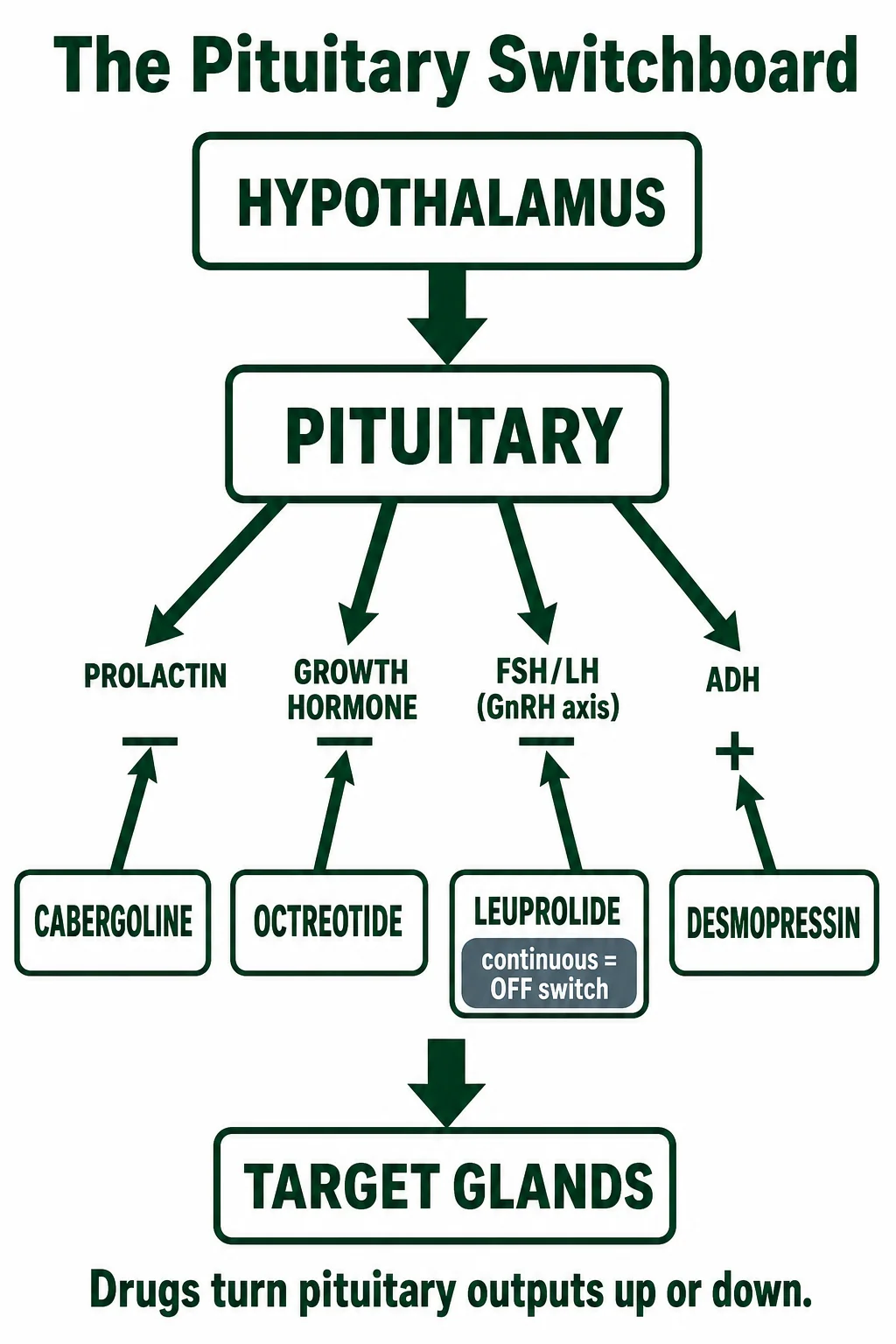
Simplified hypothalamus-pituitary-target axis with drug badges showing cabergoline inhibiting prolactin, octreotide inhibiting growth hormone, leuprolide switching off the GnRH axis under continuous exposure, and desmopressin replacing ADH.
Figure 2 — Thyroid hormone synthesis staircase
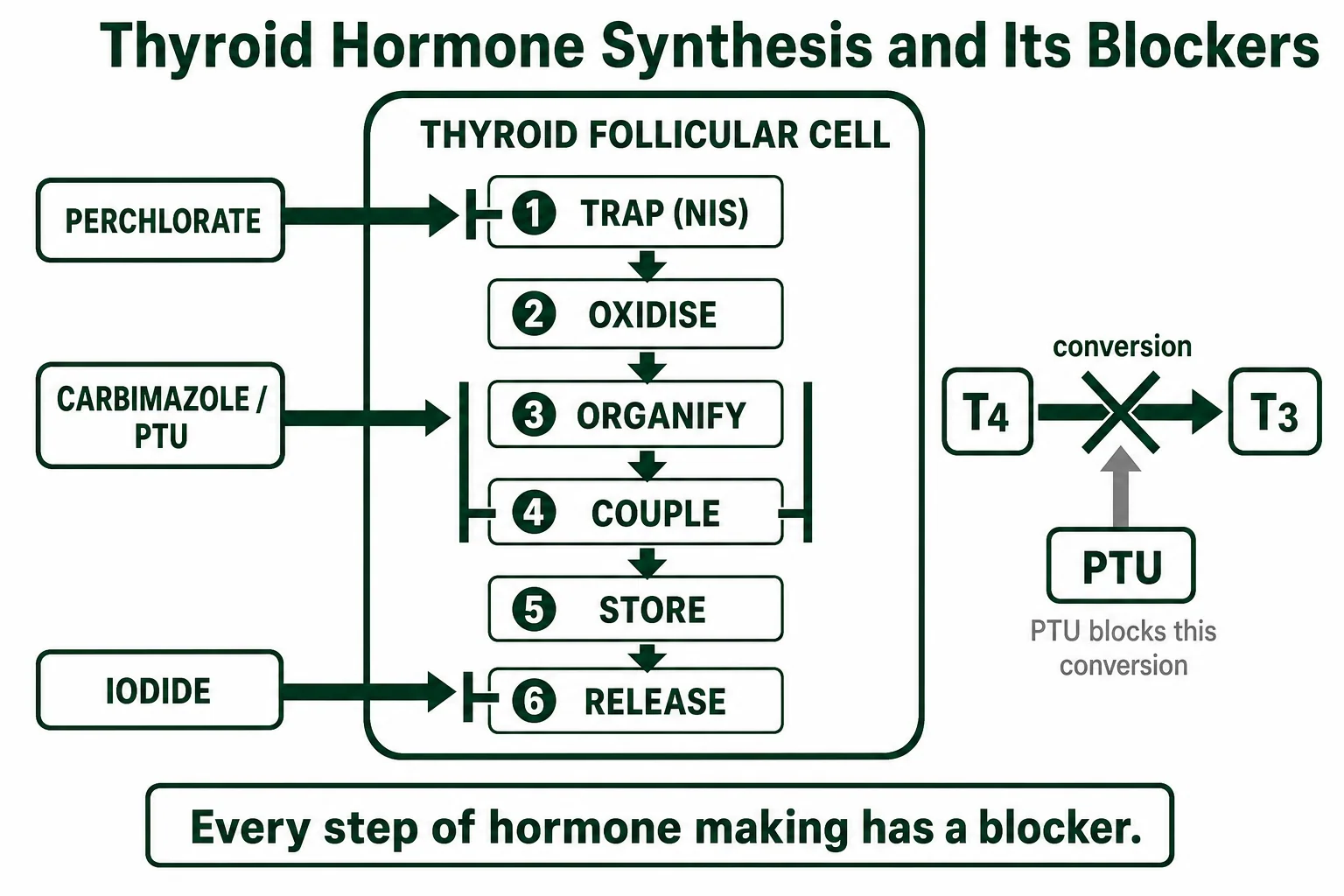
Six-step thyroid synthesis staircase inside the follicular cell with perchlorate blocking trapping, thionamides blocking oxidation-organification-coupling, iodide blocking release, and propylthiouracil blocking peripheral T4-to-T3 conversion.
Figure 3 — Hyperthyroidism: three doors
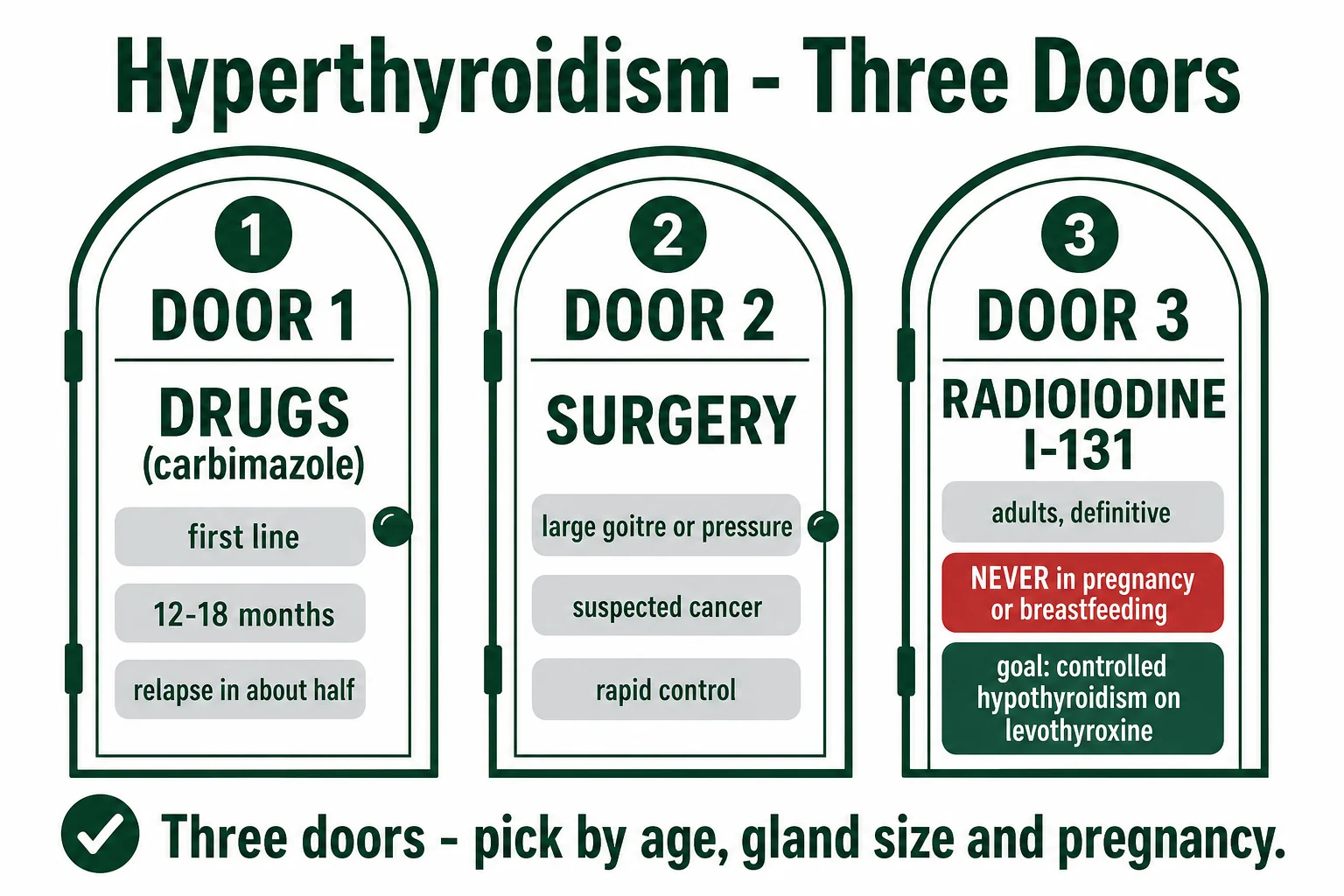
Three treatment doors for hyperthyroidism — antithyroid drugs, surgery and radioiodine — each with its indication chips and the pregnancy contraindication flag on radioiodine.
Figure 4 — Two thyroid emergencies
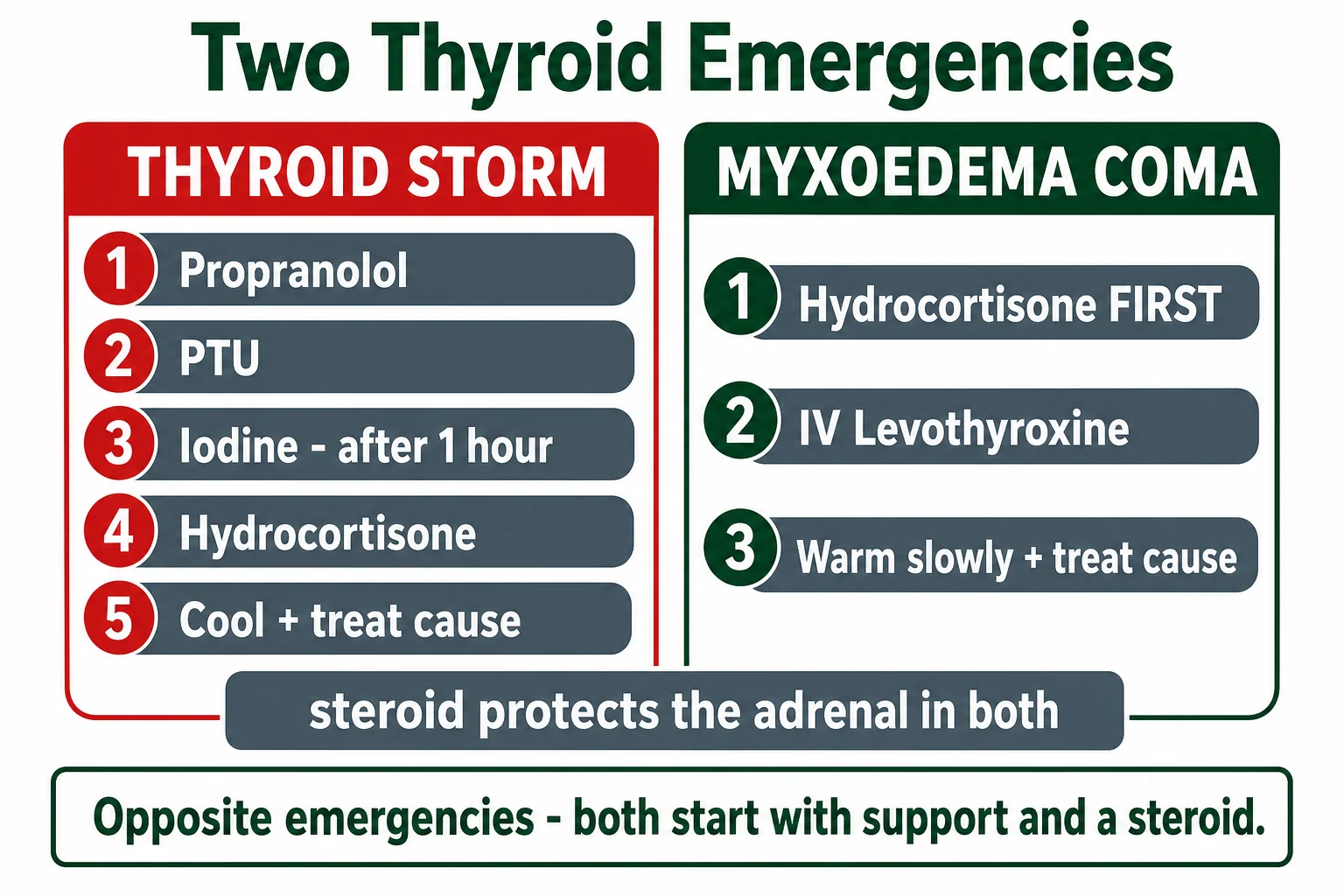
Split-panel comparison of thyroid storm management (propranolol, propylthiouracil, delayed iodine, hydrocortisone, supportive care) and myxoedema coma management (hydrocortisone first, IV levothyroxine, slow rewarming), with the shared steroid rationale.
Clinical Correlation
Vignette 1 — Graves' disease in a 32-year-old woman planning pregnancy
A 32-year-old presents with 3 months of palpitations, heat intolerance, 4 kg weight loss and tremor; TSH is under 0.01 mIU/L with high free T4 and positive TSH-receptor antibodies; a diffuse goitre and mild lid retraction confirm Graves' disease. She wishes to conceive within 2 years. Plan: carbimazole 30 mg daily (titration regimen) plus propranolol 20 mg QID for symptoms for the first weeks; the agranulocytosis counselling card is given (sore throat, fever, mouth ulcers — stop and get an urgent blood count); contraception until euthyroid; if pregnancy occurs during the first trimester, switch immediately to PTU and back to carbimazole after week 16; radioiodine is deferred (future pregnancies planned and mild active eye signs — RAI could worsen ophthalmopathy); surgery reserved for relapse or a large gland. Treatment continues 12–18 months with TSH monitoring every 6–8 weeks.
Reasoning: Fertility planning changes the antithyroid door: thionamide selection pivots on the trimester (PTU in T1, carbimazole after), radioiodine is effectively closed until her family is complete, and propranolol is only a bridge. This vignette rehearses the pregnancy logic in both directions — hyperthyroid drug swaps and the +30% levothyroxine rule.
Vignette 2 — Thyroid storm precipitated by chest infection
A 46-year-old man with untreated Graves' is brought delirious and breathless: temperature 39.8°C, atrial fibrillation at 142/min, wide pulse pressure, vomiting. Burch-Wartofsky score is 55 — thyroid storm, precipitated by a chest infection. Sequence executed: propranolol 2 mg IV slowly (heart rate to 110), PTU 600 mg via nasogastric tube then 250 mg 4-hourly, Lugol 8 drops 8-hourly starting one hour after the first PTU dose, hydrocortisone 100 mg IV 8-hourly, cooling blanket with paracetamol (aspirin explicitly avoided), oxygen, IV fluids, and empirical antibiotics after cultures. He defervesces over 48 hours and steps down to oral carbimazole.
Reasoning: Every element has a mechanism: beta-blockade blunts adrenergic drive and conversion; PTU adds the only peripheral conversion block among thionamides; iodine must wait an hour or it becomes substrate; steroid blocks conversion and covers the relative adrenal insufficiency; aspirin would displace T4 from binding protein and raise free hormone — paracetamol only.
Vignette 3 — Hyperthyroidism at 8 weeks of pregnancy
A 27-year-old at 8 weeks gestation has palpitations and a suppressed TSH with high free T4 — Graves' disease. She is started on PTU 100 mg three times daily (first-trimester choice: least placental transfer, no aplasia-cutis embryopathy), titrated to keep her mildly hyperthyroxinaemic rather than suppressed (overtreatment harms the fetus); switch to carbimazole planned at week 16 to escape PTU's black-box hepatotoxicity; beta-blocker only briefly for symptoms. The mirror lesson is taught at the same visit: a hypothyroid pregnant woman increases levothyroxine by about 30% on confirmation, with TSH tracked against trimester-specific reference ranges (ATA 2026 pregnancy guideline; ~2.5 mIU/L remains the pragmatic first-trimester ceiling where no local range exists).
Reasoning: Pregnancy thyrotoxicosis has a trimester-shaped drug map; PTU's conversion block and placental pharmacokinetics own T1, carbimazole's convenience and safety own T2–T3, and the fetus needs the mother slightly over- rather than under-treated. Both PTU (liver) and carbimazole (agranulocytosis, aplasia cutis) counselling cards change at the switch visit.
Vignette 4 — Myxoedema coma in winter
A 78-year-old woman is found drowsy at home in January: temperature 31°C, pulse 44, respiratory rate 8 with CO2 retention, Na+ 122 mEq/L, and a history of levothyroxine stopped a year ago. Myxoedema coma precipitated by cold exposure and a urinary infection. Management: ICU, IV hydrocortisone 100 mg 8-hourly given before thyroid hormone, then IV levothyroxine 300 mcg, passive rewarming with blankets (no active external warmth), ventilatory support as needed, careful sodium correction, antibiotics for the infection, and no sedatives. She wakes over 48 hours and transitions to oral levothyroxine with TSH rechecking at 6–8 weeks.
Reasoning: Steroid precedes thyroid hormone because autoimmune hypothyroidism clusters with adrenal insufficiency — driving a corticoid-deficient heart with thyroid hormone can precipitate collapse. Active warming causes peripheral vasodilatation and shock; the answer is blankets and thyroid hormone. Gut absorption is unreliable in coma — hence the IV route.
Practical Linkage
Thyroid Function Station (PH1.36, PH1.37)
TFT Pattern Worksheet (8 cards)
Name the pattern and the next therapeutic step: (1) TSH high, free T4 low — primary hypothyroidism: start levothyroxine 1.6 mcg/kg (25–50 mcg if elderly/IHD); (2) TSH low, free T4 high — primary hyperthyroidism: carbimazole (PTU if T1 pregnancy); (3) TSH high, free T4 normal — subclinical hypothyroidism: treat if TSH over 10, pregnancy or high-titre antibodies; (4) TSH low/normal with low free T4 — central hypothyroidism: levothyroxine after assessing adrenal axis; (5) TSH low, free T4 normal, T3 high — T3 toxicosis: antithyroid drug; (6) low T3, low/normal T4, non-thyroid illness — sick euthyroid: treat the illness, not the numbers; (7) high TSH, high free T4 — poor adherence with intermittent ingestion (or assay interference): counsel daily dosing; (8) post-partum painless thyroiditis pattern — transient thyrotoxicosis then hypothyroidism: beta-blocker only in phase one.
Levothyroxine Counselling Script
Empty stomach 30–60 minutes before breakfast with water; calcium, iron and antacids 4 hours apart; PPI and soya reduce absorption; TSH blood test 6–8 weeks after any change; pregnancy — two extra tablets weekly once pregnant, TSH by trimester-specific reference ranges (ATA 2026); do not stop when weight changes or in winter; annual TSH once stable.
Thyroid Storm Drill
Sequence the five interventions with doses and timings (propranolol, PTU load, iodine one hour later, hydrocortisone, cooling plus precipitant search) and state each mechanism aloud; explain why aspirin is forbidden and why the thionamide precedes iodine.
MCQ Bank
35 questions · tagged by topic, exam pattern & difficulty · full explanations
A patient with advanced prostate cancer is started on continuous leuprolide therapy. Initially testosterone rises, then it falls to castrate levels. What explains this biphasic response?
Rapid Revision
- GnRH paradox — pulsatile stimulates; continuous agonist (leuprolide) desensitises — chemical castration.
- GnRH antagonist at the receptor — cetrorelix, ganirelix, degarelix block immediately (no flare); relugolix is the first ORAL antagonist (prostate cancer 2020; fibroids/endometriosis in combination).
- Somatropin uses — GH deficiency, Turner, SGA, chronic renal insufficiency, Prader-Willi.
- Somatropin hazards — glucose intolerance, oedema, slipped epiphysis, intracranial hypertension.
- Cosyntropin — ACTH 1–24 for the short Synacthen test of adrenal reserve (infantile spasms need ACTH gel).
- Ovarian hyperstimulation syndrome — the gonadotrophin hazard (ascites, haemoconcentration, thrombosis).
- Acromegaly drugs — octreotide/lanreotide (SST2/5), pegvisomant (GH receptor), cabergoline (adjunct).
- Octreotide triad — gallstones, steatorrhoea, glucose intolerance.
- Pegvisomant — blocks GH receptor, normalises IGF-1, monitor transaminases.
- Cabergoline — first-choice prolactinoma drug; once-twice weekly; shrinks macroadenomas.
- High-dose ergot agonists — cardiac valvulopathy; echocardiographic surveillance.
- Bromocriptine — first-dose syncope; start at night with food; longest pregnancy record.
- Antipsychotic hyperprolactinaemia — switch to aripiprazole, do not add a full agonist.
- Desmopressin — central DI, enuresis, von Willebrand; hazard hyponatraemia.
- Oxytocin overdosage — hyperstimulation, rupture, water retention; atosiban opposes it.
- NIS trapping — blocked by perchlorate and thiocyanate.
- TPO steps (oxidation, organification, coupling) — blocked by carbimazole and PTU.
- Hormone release — blocked acutely by iodide (Wolff-Chaikoff) and lithium.
- T4-to-T3 conversion — blocked by PTU, propranolol, glucocorticoids.
- Jod-Basedow — iodine-load hyperthyroidism in nodular goitre (amiodarone, contrast).
- Oestrogens raise TBG — total T4 up, free T4 normal (pregnancy interpretation trap).
- Levothyroxine — empty stomach 30–60 min before breakfast; calcium and iron 4 hours apart.
- Levothyroxine half-life 7 days — TSH recheck at 6–8 weeks.
- Elderly or IHD — start 25–50 mcg; full 1.6 mcg/kg only in the young.
- Pregnancy hypothyroid — increase levothyroxine about 30% on confirmation; TSH by trimester-specific ranges (ATA 2026).
- Myxoedema coma — hydrocortisone BEFORE IV levothyroxine; passive warming only.
- Carbimazole — once daily; agranulocytosis sore-throat card; aplasia cutis embryopathy.
- PTU — first trimester and storm; black-box fulminant hepatitis; ANCA vasculitis.
- Storm sequence — propranolol, PTU, iodine 1 hour later, hydrocortisone, cool and treat cause.
- Aspirin is avoided in storm — displaces T4 from TBG (use paracetamol).
- I-131 — never in pregnancy or breastfeeding (defer until 3 months post-lactation); hypothyroidism is the therapeutic goal.
- Radioiodine and Graves' eye disease — can worsen ophthalmopathy; steroid cover or defer.
Viva Questions
- Explain the GnRH paradox. — Physiological pulses release FSH/LH; continuous agonist occupancy desensitises the gonadotroph, switching the axis off — the basis of leuprolide therapy in prostate cancer, precocious puberty and IVF down-regulation.
- Compare cabergoline and bromocriptine. — Cabergoline: potent, weekly, best tolerated, shrinks prolactinomas, first choice (valve surveillance only at high doses); bromocriptine: short-acting, first-dose syncope, longest pregnancy safety record.
- How do the acromegaly drugs differ? — Octreotide and lanreotide suppress GH secretion (gallstones, glucose intolerance); pegvisomant blocks the GH receptor peripherally (liver monitoring); cabergoline is a weak adjunct; surgery remains first line.
- Why can desmopressin cause seizures? — It is antidiuretic; water retention dilutes serum sodium — counsel evening fluid restriction, especially during illness.
- What are the oxytocin hazards in labour? — Uterine hyperstimulation with fetal distress, rupture at high dose, and water intoxication from its antidiuretic effect; monitor with cardiotocography and dilute infusions.
- Map thyroid synthesis to blockers. — Trapping (NIS) by perchlorate; TPO oxidation-organification-coupling by thionamides; release by iodide (Wolff-Chaikoff) and lithium; peripheral conversion by PTU, propranolol and steroids.
- Distinguish Wolff-Chaikoff from Jod-Basedow. — Iodide acutely shuts synthesis and release (escape in 2 days), while an iodine load triggers hyperthyroidism in autonomous nodular goitre — hypofunction versus hyperfunction upon iodine.
- How will you counsel a patient starting levothyroxine? — Empty stomach 30–60 minutes before breakfast, calcium and iron 4 hours apart, PPIs and soya reduce absorption, TSH at 6–8 weeks, dose up 30% in pregnancy (TSH by trimester-specific ranges — ATA 2026), start low if elderly or cardiac.
- Why PTU in the first trimester but carbimazole later? — PTU crosses the placenta least and avoids the methimazole embryopathy (aplasia cutis, choanal atresia), but carries black-box hepatotoxicity — switch at about week 16.
- Recite the thyroid storm sequence and its logic. — Propranolol (receptors plus conversion), PTU (TPO plus conversion), iodine one hour later (release block, after synthesis is shut), hydrocortisone (conversion plus adrenal cover), then cooling, paracetamol, fluids and precipitant treatment.
- Why is aspirin avoided in thyroid storm? — It displaces T4 from thyroxine-binding globulin, raising free hormone — paracetamol is the antipyretic of choice.
- Why is hydrocortisone given before thyroid hormone in myxoedema coma? — Autoimmune adrenal insufficiency may coexist; thyroid hormone in a corticoid-deficient patient can precipitate circulatory collapse; steroids also block conversion.
- What do you tell a patient before I-131? — Pregnancy test first; absolutely no pregnancy, and defer until at least 3 months after breastfeeding stops; near-euthyroid on carbimazole stopped a week before (restarting 3–7 days after in high-risk elders); expect gradual hormone fall; hypothyroidism on levothyroxine is the intended success; distance precautions from children and pregnant women for days.
- Which pituitary drugs need which surveillance? — Cabergoline at high dose (echocardiography for valves), pegvisomant (LFTs), octreotide (gallbladder ultrasound, glucose), somatropin (glucose, fundus, hip symptoms).
- How do oestrogens change thyroid tests? — They raise hepatic TBG: total T4 rises with normal free T4 and TSH — a physiology trap, not hyperthyroidism.
References
- Tripathi KD. Essentials of Medical Pharmacology. 9th ed. New Delhi: Jaypee Brothers Medical Publishers; 2024. Chapters 18–19 (hypothalamic and pituitary hormones; thyroid drugs).
- Katzung BG, Vanderah TW. Basic & Clinical Pharmacology. 16th ed. New York: McGraw Hill; 2024. Chapter 37 (Hypothalamic and Pituitary Hormones) and Chapter 38 (Thyroid and Antithyroid Drugs).
- Brunton LL, Knollmann BC (eds). Goodman & Gilman's Pharmacological Basis of Therapeutics. 14th ed. New York: McGraw Hill; 2023. Endocrine pharmacology section.
- Ross DS, Burch HB, Cooper DS, et al. 2016 American Thyroid Association Guidelines for diagnosis and management of hyperthyroidism and other causes of thyrotoxicosis. Thyroid. 2016;26(10):1343–1421.
- American Thyroid Association. 2026 Guidelines for Thyroid Disease in Preconception, Pregnancy, and Postpartum. Thyroid. 2026. (Trimester-specific TSH reference ranges; iodine; Graves' in pregnancy; postpartum thyroid dysfunction.)
- Jonklaas J, Bianco AC, Bauer AJ, et al. Guidelines for the treatment of hypothyroidism. Thyroid. 2014;24(12):1670–1751.
- US Food and Drug Administration. Propylthiouracil-induced liver failure: boxed warning. Drug Safety Communication; 2009.
- Burch HB, Wartofsky L. Life-threatening thyrotoxicosis: thyroid storm. Endocrinol Metab Clin North Am. 1993;22(2):263–277.
- Akamizu T, Satoh T, Isozaki O, et al. Diagnostic criteria and guidelines for the management of thyroid storm in Japan. Endocr J. 2012;59(12):1041–1051.
- Shore ND, Saad F, Cookson MS, et al. Oral relugolix for androgen-deprivation therapy in advanced prostate cancer (HERO). N Engl J Med. 2020;382(23):2187–2196.
- FDA approvals: relugolix (Orgovyx) for advanced prostate cancer, December 2020; relugolix combination (Myfembree/Ryeqo) for uterine fibroids and endometriosis, 2021–2022.
- National Medical Commission (NMC). Competency Based Undergraduate Curriculum: Pharmacology. Competencies PH1.36 and PH1.37; 2019.
Downloads
All deliverables & printable revision sheets for CH37
Printable Chapter Handout & Study Notes
Generate a clean, high-yield PDF or print directly without sidebars and navigation menus.