
Laxatives, Antidiarrhoeals & Drugs for IBD/IBS
Learning Objectives
At the end of this chapter, the Phase II MBBS student will be able to:
- Classify laxatives by mechanism and match each class to its clinical scenario (chronic constipation, hepatic encephalopathy, pre-procedure preparation, poisoning). (PH1.34 — Knows)
- Anticipate the consequences of laxative misuse (cathartic colon, electrolyte disorders, phosphate nephropathy) and counsel patients accordingly. (PH1.34 — Knows-how)
- State the composition and rationale of WHO low-osmolarity ORS and plan oral rehydration therapy with zinc. (PH1.34 — Knows-how)
- Compare antimotility and antisecretory antidiarrhoeals, and apply the invasive-diarrhoea contraindication rule. (PH1.34 — Knows-how)
- Explain 5-ASA chemistry, site-release systems and sulfasalazine's adverse-effect profile. (PH1.34 — Knows)
- Construct the stepwise IBD ladder (induction, maintenance, steroid-sparing) including biologic pre-screening for tuberculosis and hepatitis B. (PH1.34 — Knows-how)
- Select irritable bowel syndrome therapy by subtype (IBS-C, IBS-D, pain-predominant) with mechanisms. (PH1.34 — Knows-how)
- Describe ursodeoxycholic acid therapy and its limits, and octreotide's gastrointestinal uses. (PH1.34 — Knows)
- Organise chronic pancreatitis care: enzyme replacement timing, fat-soluble vitamin support and analgesia principles. (PH1.34 — Knows-how)
Must-Know Summary
Lower-gut pharmacology runs on three ideas: keep water in the right compartment, replace rather than suppress, and treat inflammation with an escalation ladder. Laxatives either hold water in stool (bulk — psyllium, with fluid mandatory), pull water into the lumen (osmotics — lactulose, PEG) or push the colon (stimulants — senna, bisacodyl, 8–12 h onset). Lactulose is the hepatic-encephalopathy drug (acidification traps ammonia as NH4+, target 2–3 soft stools daily); stimulant abuse causes cathartic colon with hypokalaemia; sodium phosphate enemas cause acute phosphate nephropathy; castor oil is contraindicated in pregnancy. In diarrhoea, the lifesaver is WHO low-osmolarity ORS — sodium 75, glucose 75, total 245 mOsm/L — plus zinc 20 mg for 14 days; the glucose-sodium cotransporter survives toxin-induced secretion, so sugar drags sodium and water follows. Antimotility drugs are conveniences with rules: loperamide is gut-wall-restricted (but QT toxicity in overdose); diphenoxylate-atropine crosses into the brain (dependence) and is contraindicated in young children; and no antimotility drug is given in bloody, febrile diarrhoea (toxic megacolon, HUS risk). IBD therapy climbs a ladder: 5-ASA (mesalamine by site-release systems; rectal for distal UC; sulfasalazine carries sulfa effects and blocks folate) then steroids for flares only, never maintenance, then azathioprine (TPMT first), then biologics — anti-TNF, vedolizumab (gut-selective), ustekinumab — after screening latent TB and hepatitis B. IBS therapy is subtype-matched: linaclotide/plecanatide (GC-C agonists) for IBS-C, rifaximin for IBS-D, peppermint oil and neuromodulators for pain. Ursodeoxycholic acid dissolves only small, radiolucent cholesterol stones; chronic pancreatitis needs enzymes with meals plus a PPI.
- Bulk laxatives — psyllium with plenty of fluid; first line in chronic constipation and safe in pregnancy
- Lactulose — osmotic plus ammonia-trapping: the hepatic encephalopathy drug (2–3 soft stools/day)
- Stimulant laxatives — senna and bisacodyl act in 8–12 h (dose at night for a morning stool)
- Laxative abuse — cathartic colon, hypokalaemia, protein-losing enteropathy
- Sodium phosphate enema — acute phosphate nephropathy; avoid in children and CKD
- WHO low-osmolarity ORS — Na 75, K 20, glucose 75, citrate base, total 245 mOsm/L
- Zinc in childhood diarrhoea — 20 mg daily for 14 days (10 mg under 6 months) shortens and lessens episodes
- Loperamide — gut-restricted mu-opioid; overdose causes QT arrhythmia
- Bloody febrile diarrhoea — no antimotility drugs, ever (toxic megacolon, HUS)
- 5-ASA — mesalamine release systems target ileum (pH) or colon (bacterial azo); rectal for distal UC
- Sulfasalazine — sulfa effects, folate blockade, reversible male infertility; supplement folate
- IBD steroids — induction only; steroid dependence means azathioprine or a biologic
- Pre-biologic screening — latent TB (chest X-ray, IGRA) and hepatitis B before anti-TNF
- Vedolizumab — gut-selective anti-integrin; minimal systemic immunosuppression
- IBS-C secretagogues — linaclotide and plecanatide (guanylate cyclase-C agonists)
- UDCA dissolution — only small radiolucent cholesterol stones; high recurrence
- Obeticholic acid — withdrawn from the US market (Sept 2025) after liver-injury signal and failed confirmatory trial; elafibranor/seladelpar are the new second-line PBC options
- Chronic pancreatitis — pancrelipase WITH meals plus PPI; fat-soluble vitamins A D E K
Classification
BOX 1 — LAXATIVES AND ANTIDIARRHOEALS
Bulk-Forming Laxatives
- Psyllium (isabgol), methylcellulose, sterculia, ispaghula
Osmotic Laxatives
- Lactulose, lactitol, polyethylene glycol (PEG)
- Magnesium hydroxide, magnesium sulfate
- Sodium phosphate (oral/rectal), glycerine suppository
Stimulant Laxatives
- Senna, bisacodyl, sodium picosulfate, castor oil
Stool Softeners and Lubricants
- Docusate, liquid paraffin
Oral Rehydration and Zinc
- WHO low-osmolarity ORS (245 mOsm/L), rice-based ORS, zinc (20 mg × 14 days; 10 mg under 6 months)
Antimotility Antidiarrhoeals
- Loperamide, diphenoxylate + atropine
Antisecretory and Adjunct Antidiarrhoeals
- Racecadotril, bismuth subsalicylate, octreotide, cholestyramine (bile-acid diarrhoea)
Probiotics and Intestinal Antiseptics
- Lactobacillus GG, Saccharomyces boulardii, nifuroxazide
BOX 2 — IBD, IBS AND BILIARY/PANCREATIC DRUGS
5-Aminosalicylates (5-ASA)
- Mesalamine (pH-dependent release, rectal enema/suppository), sulfasalazine, balsalazide, olsalazine
Corticosteroids (induction only)
- Prednisolone, hydrocortisone (IV/rectal), budesonide (MMX / ileal release)
Immunomodulators
- Azathioprine, 6-mercaptopurine (TPMT-guided), methotrexate, ciclosporin (rescue), tacrolimus
Biologics and Small Molecules
- Anti-TNF: infliximab, adalimumab, golimumab, certolizumab
- Anti-integrin: vedolizumab (gut-selective)
- IL-12/23 and IL-23: ustekinumab, risankizumab
- JAK inhibitors: tofacitinib (UC), upadacitinib (UC 2022, Crohn 2023)
IBS Therapy
- Antispasmodics: mebeverine, dicyclomine, drotaverine, peppermint oil
- IBS-C secretagogues: linaclotide, plecanatide (GC-C agonists), lubiprostone (ClC-2), elobixibat (IBAT inhibitor)
- IBS-D: rifaximin, loperamide (prn), alosetron (restricted), cholestyramine
- Neuromodulators: low-dose TCAs, SSRIs
Biliary and Pancreatic
- Ursodeoxycholic acid (UDCA); second-line PBC: elafibranor, seladelpar (2024 approvals) — obeticholic acid withdrawn from the US market (Sept 2025)
- Octreotide (varices, fistula, secretory diarrhoea)
- Pancreatic enzymes (pancrelipase) with PPI co-therapy; fat-soluble vitamins A D E K
Core Concepts
1. Classification of laxatives
Laxatives are grouped by where they put water and how they move the colon.
Bulk-forming agents — psyllium (isabgol), methylcellulose, sterculia. Natural or semi-synthetic fibres that swell in water, increasing stool mass and softness, distending the colon to reflex contraction — the closest imitation of physiology. They are first line in chronic simple constipation, IBS with constipation, diverticular disease and pregnancy, but need 2–3 days and mandatory fluid intake (fibre without water worsens obstruction). Adverse effects: flatulence, bloating; contraindicated in strictures or obstruction (bezoar risk).
Osmotic laxatives. Lactulose, a non-absorbed disaccharide, reaches the colon and is fermented to organic acids — acidifying luminal contents, pulling in water (catharsis in 1–2 days) and, crucially, trapping ammonia as non-absorbable NH4+ — the basis of its use in hepatic encephalopathy (titrate to 2–3 soft stools daily; excess causes dehydration and hypernatraemia). Safe in pregnancy, elderly and renal disease; complaints are flatulence and sweet taste. Polyethylene glycol (PEG) is the non-fermenting osmotic — powerful, tasteless, less bloating; the standard bowel preparation agent and excellent in chronic constipation (including children). Magnesium hydroxide/sulfate act in hours (saline cathartics) — caution in renal impairment (hypermagnesaemia: flushing, hypotension, coma). Sodium phosphate preparations are effective but notorious for acute phosphate nephropathy (older, dehydrated, CKD patients; FDA warnings) — avoid in these groups. Glycerine suppository rectally osmotically irritates and lubricates — useful in children and palliative care (minutes to 1 hour).
Stimulant laxatives — senna, bisacodyl, sodium picosulfate, castor oil. They act on the myenteric plexus to increase propulsive motility and secretion. Onset 8–12 hours — dose at bedtime for a morning stool (bisacodyl also per rectal in 15–60 min). Castor oil (ricinoleic acid) is the fastest (2–6 h) and the harshest — contraindicated in pregnancy (uterine stimulation) and never in suspected poisoning (it accelerates absorption of lipophilic toxins). Chronic misuse of stimulants — the classic laxative-abuse syndrome — produces cathartic colon (barium shows a redundant, atonic colon with loss of haustra), hypokalaemia (secondary hyperaldosteronism), dehydration, and protein-losing enteropathy. Modern evidence absolves intermittent standard-dose use, but daily dependence must be unwound.
Stool softeners and lubricants. Docusate lowers surface tension, letting water penetrate stool — weak, adjunctive in anal fissure/post-operative settings. Liquid paraffin (mineral oil) lubricates but causes fat-soluble vitamin malabsorption, oil pneumonitis on aspiration in the elderly, and anal seepage — largely obsolete.
Enemas and rectal preparations (tap water, phosphate, micro-enemas) work in minutes; phosphate enemas have caused fatal hyperphosphataemia in children — dose discipline is essential.
Choice logic: chronic constipation — fibre and fluid, then PEG or lactulose, then short stimulant courses; pregnancy — bulk and lactulose only; hepatic encephalopathy — lactulose titrated to 2–3 soft stools/day (rectal lactulose or enemas in coma); opioid-induced constipation — osmotic plus stimulant, with peripherally acting opioid antagonists (naloxegol, methylnaltrexone) for refractory cases; bowel preparation — PEG-based; suspected poisoning — never castor oil.
2. Antidiarrhoeals and oral rehydration therapy
The philosophy first: people die of diarrhoea by dehydration, not by motility — so therapy replaces fluid and electrolytes and treats causes; suppressing motion is optional comfort, occasionally dangerous.
Oral rehydration therapy — the cotransport principle. In toxin-mediated secretory diarrhoea (cholera, enterotoxigenic E. coli), the intestinal sodium-glucose cotransporter (SGLT1) remains intact: glucose (or any actively co-transported substrate) drags sodium across the apical membrane, and water follows osmotically. This is the physiological genius of ORS — the gut keeps absorbing even while secreting. The WHO low-osmolarity ORS (2004, now global standard) contains per litre: sodium 75, potassium 20, chloride 65, glucose 75 and citrate 10 mmol/L — total osmolarity 245 mOsm/L (in grams per litre: NaCl 2.6, KCl 1.5, trisodium citrate 2.9, glucose 13.5). Against the old 311 mOsm/L formula it reduces stool output, vomiting and unscheduled IV therapy without hyponatraemia risk. Zinc 20 mg daily for 14 days (10 mg under 6 months) in children shortens episodes and reduces recurrence in developing settings. Continue feeding and breastfeeding throughout. Rice-based ORS adds amylase-resistant starch (more substrate for cotransport, less osmotic load). Rehydration plan: no dehydration — home fluids and continue feeds; some dehydration — ORS 75 mL/kg over 4 hours; severe dehydration — IV Ringer lactate, then ORS.
Antimotility drugs. Loperamide is a mu-opioid receptor agonist with high affinity for gut wall receptors and active P-glycoprotein efflux from the CNS — powerful antimotility and antisecretory action with no analgesia or dependence at therapeutic doses. Adverse effects: constipation, ileus, dizziness; overdose causes QT prolongation and life-threatening arrhythmias (FDA warning — the "dose-stacking" abuse pattern). Diphenoxylate is an opioid that crosses the blood-brain barrier (mild euphoria, dependence potential); it is fixed with atropine to deter abuse (cramping if tablets are taken in excess) and is contraindicated in children under 4 years (respiratory depression deaths). The absolute rule: no antimotility agent in invasive diarrhoea — bloody stool with fever — because slowing the gut in Shigella, Salmonella, Campylobacter or enterohaemorrhagic E. coli infection risks toxic megacolon and, with EHEC, may worsen haemolytic uraemic syndrome.
Antisecretory and adjunct therapy. Racecadotril (an enkephalinase inhibitor) degrades enkephalins more slowly — enhancing physiological antisecretory delta-opioid tone without constipation, ileus or rebound — child-safe and increasingly used. Bismuth subsalicylate antisecretory and antimicrobial (darkens stool and tongue; salicylate caution in children with viral illness). Octreotide controls secretory diarrhoea of hormonal syndromes (VIPoma, carcinoid) and chemotherapy diarrhoea. Cholestyramine binds bile acids — the answer for bile-acid diarrhoea (post-ileal resection, idiopathic) and C. difficile toxin carriage adjunctively. Probiotics — Lactobacillus GG and Saccharomyces boulardii — modestly shorten acute viral and antibiotic-associated diarrhoea. Nifuroxazide, an intestinal antiseptic, is popular in India though evidence is thin. Antibiotics are not routine: azithromycin for severe campylobacter or cholera, metronidazole for giardia/amoebiasis; ciprofloxacin is unreliable for Indian Salmonella typhi (H58 resistance) — azithromycin preferred.
3. Drugs for inflammatory bowel disease
Ulcerative colitis (UC) is continuous mucosal inflammation from the rectum proximally; Crohn's disease (CD) is transmural, skip-limited, anywhere mouth-to-anus — smoking worsens Crohn's but paradoxically protects against UC. Therapy maps to extent, severity and the induction-versus-maintenance distinction.
5-ASA (aminosalicylates). Sulfasalazine is an azo-bonded prodrug: sulfapyridine (carrier) + 5-aminosalicylic acid (5-ASA, the active moiety); colonic bacteria cleave the azo bond, releasing 5-ASA locally. Most of sulfasalazine's toxicity belongs to the sulfapyridine half — sulfa rash, haemolysis (G6PD), bone marrow suppression, male infertility (reversible sperm abnormalities); it also blocks folate absorption — supplement folic acid; orange discolouration of urine is expected. Pure mesalamine (5-ASA) needs delivery cleverness: pH-dependent coatings (Eudragit-S/L) release in the terminal ileum-proximal colon; azo-linked carriers (balsalazide, olsalazine) and bacterial release target the colon; rectal mesalamine (enema, suppository) is the most effective therapy for distal UC/proctitis. Oral plus rectal 5-ASA combination outperforms either alone in extensive UC. Role: induction and maintenance in mild-to-moderate UC; 5-ASA is not an induction agent for Crohn's (weak evidence), with a debated maintenance role post-resection. Adverse effects of mesalamine itself: headache, GI upset, rare interstitial nephritis.
Corticosteroids — induction only, never maintenance. Prednisolone 40 mg daily (or IV hydrocortisone in acute severe UC) rapidly induces remission in flares of UC and Crohn's, but long-term use means toxicity without added efficacy — steroid dependence or resistance signals escalation. Budesonide MMX (multimatrix colonic release) and ileal-release budesonide deliver topical potency with high first-pass clearance — less systemic steroid. Ciclosporin IV rescues acute severe UC unresponsive to steroids (colectomy-sparing; nephrotoxicity limits courses). Steroids are contraindicated when an abscess or fibrostenotic stricture is suspected — in CD they worsen sepsis and obstruction pain.
Immunomodulators — the steroid-sparing backbone. Azathioprine / 6-mercaptopurine (purine antimetabolites) maintain remission in UC and CD and allow steroid withdrawal; check TPMT (thiopurine methyltransferase) activity/genotype before starting (deficiency predicts myelosuppression), then monitor CBC and liver enzymes; adverse effects — leukopenia, pancreatitis, hepatotoxicity, lymphoma and non-melanoma skin cancer risk (sun protection). Methotrexate (25 mg weekly IM/PO with folic acid) maintains steroid-induced CD remission — teratogenic, absolute contraception.
Biologics and small molecules. Anti-TNF agents — infliximab (IV), adalimumab and golimumab (SC) — induce and maintain remission in refractory luminal CD, fistulising CD and moderate-severe UC; before starting: screen for latent tuberculosis (chest X-ray and IGRA), hepatitis B (and C/HIV), exclude active infection, abscess and heart failure; treat latent TB first. Loss of response (antibody formation) means dose shortening, switching within class, or changing mechanism. Vedolizumab blocks the alpha-4 beta-7 integrin — gut-homing lymphocyte traffic only — making it the gut-selective biologic with minimal systemic immunosuppression (no TB reactivation signal; contrast natalizumab, the non-selective alpha-4 blocker whose PML risk keeps it under restricted-access programmes rather than routine IBD use). Ustekinumab blocks IL-12/23 (p40) and risankizumab blocks IL-23 p19 — effective CD/UC maintenance. JAK inhibitors (oral): tofacitinib for UC and upadacitinib (UC 2022; Crohn's 2023 — the first JAK approved for CD) — class boxed warnings for venous thromboembolism, cardiovascular events and malignancy, with lipid monitoring. Supportive: exclusive enteral nutrition induces paediatric CD remission (steroid-free); calcium/vitamin D with steroids; vaccinations before immunosuppression (live vaccines contraindicated once immunosuppressed).
4. Drugs for irritable bowel syndrome
IBS (Rome IV) is recurrent abdominal pain related to defecation with altered stool habit — the pain, not the stool, is the therapeutic centre. Diagnosis is symptom-based with alarm-feature exclusion (weight loss, anaemia, bleeding, onset over 50). Therapy is subtype-matched.
Pain-predominant / antispasmodics: mebeverine (direct smooth-muscle relaxant, no anticholinergic burden), dicyclomine and drotaverine (antispasmodic/anticholinergic), and peppermint oil (enteric-coated — a natural smooth-muscle calcium-channel blocker that also relaxes the sphincter of Oddi; heartburn is the main complaint). Take before meals.
IBS with constipation (IBS-C): fibre and PEG first; then the secretagogues — linaclotide and plecanatide, guanylate cyclase-C (GC-C) receptor agonists: they raise intraluminal cGMP, driving chloride- and bicarbonate-rich secretion plus visceral afferent desensitisation (pain benefit beyond laxation); adverse effect — diarrhoea (contraindicated under 2 years, fatal in juvenile animal models). Lubiprostone activates chloride channel ClC-2; elobixibat inhibits the ileal bile acid transporter (returning bile acids to the colon as a secretory stimulus).
IBS with diarrhoea (IBS-D): rifaximin — a gut-selective, virtually non-absorbed antibiotic (negligible systemic exposure, minimal resistance impact) that improves bloating and loose stools in IBS-D, repeat courses as needed; loperamide for episode control; cholestyramine when bile-acid diarrhoea coexists; alosetron (5-HT3 antagonist) is effective but restricted for severe IBS-D in women — risk of ischaemic colitis and severe constipation.
Central neuromodulation and lifestyle: low-dose tricyclic antidepressants (amitriptyline 10–25 mg at night — neuromodulatory doses for IBS-D and pain), SSRIs (where constipation or anxiety dominates), cognitive behavioural therapy and gut-directed hypnotherapy for refractory symptoms, and dietitian-led low-FODMAP diet (strict then liberalised — long-term restriction harms the microbiome).
5. Drugs in biliary and pancreatic disease
Ursodeoxycholic acid (UDCA, ursodiol) is the hydrophilic bile acid that disperses cholesterol out of mixed micelles and stabilises cholangiocyte secretion. Medical dissolution of gallstones is possible only for SMALL (generally under 10 mm), RADIOLUCENT cholesterol stones in a FUNCTIONING gallbladder with a patent cystic duct — 6–24 months of therapy, checking dissolution by ultrasound, with recurrence in about half of patients within 5 years — which is why laparoscopic cholecystectomy remains definitive. Calcified or pigment stones do not dissolve. Other UDCA roles: primary biliary cholangitis (first line), intrahepatic cholestasis of pregnancy, PSC symptom management, and dissolving sludge post-bariatric surgery. Note the second-line PBC story: obeticholic acid (FXR agonist) was withdrawn from the US market in September 2025 after a failed confirmatory trial and serious liver-injury signals — the newer second-line options are elafibranor and seladelpar (accelerated approval, 2024). ERCP with sphincterotomy is first line for symptomatic common-duct stones.
Octreotide, the somatostatin analogue, curtails splanchnic blood flow and secretion: adjunct in oesophageal variceal bleeding (with terlipressin), control of pancreatic and enterocutaneous fistulas, prophylaxis debates in post-ERCP pancreatitis, acromegaly, and secretory VIPoma diarrhoea.
Acute pancreatitis management is fluids and early feeding — with the fluid strategy now moderate, not aggressive: the WATERFALL trial (2022) showed aggressive resuscitation increased fluid overload (20.5% vs 6.3%) without reducing severity, so current practice is lactated Ringer at about 1.5 mL/kg/h with a 10 mL/kg bolus only if hypovolaemic, plus frequent reassessment. Analgesia (opioids are acceptable), early enteral nutrition within 24–72 hours, and no prophylactic antibiotics (reserved for infected necrosis, ideally culture-proven); ERCP only for gallstone pancreatitis with cholangitis or biliary obstruction; treat the cause (cholecystectomy index admission for gallstone pancreatitis).
Chronic pancreatitis: the fundaments are pancreatic enzyme replacement — pancrelipase (lipase + protease + amylase) taken WITH every meal and snack, dose titrated to steatorrhoea; a PPI is co-prescribed (gastric acid deactivates enzymes and lipase needs an alkaline duodenum); fat-soluble vitamins A D E K; diabetes management (insulin as beta-cell failure advances); alcohol and tobacco cessation (disease-modifying); analgesia ladder — paracetamol/NSAIDs where safe, then neuropathic agents (pregabalin, amitriptyline, sometimes TENS/coeliac plexus block) before long-term opioids; surgery (drainage/resection) for refractory pain with ductal disease.
Tables
Table 1 — Laxative classes master table
| Class | Prototype | Mechanism | Onset | Clinical niche | Key caution |
|---|---|---|---|---|---|
| Bulk | Psyllium (isabgol) | Fibre swells, increases stool mass | 1–3 days | Chronic constipation, IBS-C, pregnancy, diverticulosis | Fluid mandatory; avoid in obstruction |
| Osmotic (fermentable) | Lactulose | Colonic fermentation to acids pulls water; traps ammonia as NH4+ | 1–2 days | Hepatic encephalopathy (2–3 soft stools/day), elderly, pregnancy | Flatulence; hypernatraemia if overdone |
| Osmotic (non-fermentable) | PEG | Osmotic water retention, no gas | 0.5–1 day (prep in hours) | Bowel prep; chronic constipation incl. children | Minimal |
| Saline | Magnesium hydroxide | Osmotic + cholecystokinin release | 0.5–3 h | Occasional rapid evacuation | Renal impairment — hypermagnesaemia |
| Stimulant | Senna, bisacodyl | Myenteric plexus stimulation | 8–12 h (night dose) | Short courses; refractory constipation | Abuse: cathartic colon, hypokalaemia |
| Stimulant (fast) | Castor oil (ricinoleic acid) | Intestinal secretion + motility | 2–6 h | Rarely indicated | Pregnancy contraindicated; never in poisoning |
| Softener/lubricant | Docusate; liquid paraffin | Surface wetting; lubrication | 1–3 days | Adjunct (fissure, post-op) | Paraffin: vitamin loss, aspiration pneumonitis |
| Rectal | Glycerine suppository; phosphate enema | Rectal osmotic/irritant | Minutes–1 h | Children, palliative, faecal impaction | Phosphate enema: fatal hyperphosphataemia in children; nephropathy in CKD |
Table 2 — WHO low-osmolarity ORS (2004) versus old ORS
| Component | Low-osmolarity ORS (current) | Old ORS (1975) |
|---|---|---|
| Sodium | 75 mmol/L | 90 mmol/L |
| Potassium | 20 mmol/L | 20 mmol/L |
| Chloride | 65 mmol/L | 80 mmol/L |
| Glucose | 75 mmol/L (13.5 g/L) | 111 mmol/L |
| Base | Citrate 10 mmol/L (2.9 g/L) | Bicarbonate 30 mmol/L |
| Total osmolarity | 245 mOsm/L | 311 mOsm/L |
| Outcome effect | Less stool output, less vomiting, fewer IV needs | Higher stool output |
| Grams per litre | NaCl 2.6 + KCl 1.5 + trisodium citrate 2.9 + glucose 13.5 | — |
| Zinc (children) | 20 mg daily × 14 days (10 mg if under 6 months) | Not included |
Table 3 — Antidiarrhoeals compared
| Drug | Mechanism | CNS entry | Child safety | Contraindications |
|---|---|---|---|---|
| Loperamide | Mu-opioid agonist (gut wall; P-gp efflux from brain) | None at doses | Over 2 years with caution | Bloody/febrile diarrhoea; overdose: QT arrhythmia |
| Diphenoxylate + atropine | Opioid antimotility; atropine deters abuse | Yes — dependence possible | Contraindicated under 4 years | Bloody diarrhoea; hepatorenal disease; glaucoma |
| Racecadotril | Enkephalinase inhibitor — antisecretory | No | Safe in children | — |
| Bismuth subsalicylate | Antisecretory + antimicrobial | No | Avoid in viral illness (salicylate) | Aspirin allergy; renal impairment |
| Octreotide | Somatostatin analogue — multiple | — | — | Secretory/hormonal diarrhoea, chemotherapy diarrhoea |
| Cholestyramine | Bile-acid binding resin | No | — | Bile-acid diarrhoea; complete biliary obstruction |
Table 4 — IBD stepwise ladder
| Step | Agents | Role | Key rules |
|---|---|---|---|
| 1. 5-ASA | Mesalamine oral + rectal for distal UC; sulfasalazine | UC induction and maintenance (mild-moderate) | Sulfasalazine: folate supplement, G6PD caution; weak in Crohn's |
| 2. Steroids | Prednisolone 40 mg; budesonide MMX (topical) | Induction of flares only | Never maintenance; no steroid if abscess/stricture suspected |
| 3. Immunomodulators | Azathioprine/6-MP; methotrexate (CD) | Steroid-sparing maintenance | TPMT before starting; CBC + LFT monitoring; MTX teratogenic |
| 4. Biologics / JAK | Infliximab, adalimumab; vedolizumab; ustekinumab; tofacitinib, upadacitinib | Refractory/fistulising disease | Pre-screen: TB (CXR + IGRA), HBV; exclude infection; JAK class: VTE/CDV/malignancy warnings |
| Rescue | IV ciclosporin (acute severe UC) | Colectomy-sparing | Nephrotoxicity; short course |
Table 5 — IBS subtype therapy map
| Subtype | First-line drugs | Mechanism | Cautions |
|---|---|---|---|
| Pain-predominant | Mebeverine, dicyclomine, peppermint oil | Smooth-muscle relaxation | Anticholinergic effects (dicyclomine); heartburn (peppermint) |
| IBS-C | Fibre + PEG; linaclotide, plecanatide; lubiprostone; elobixibat | GC-C agonism — chloride secretion + visceral analgesia; ClC-2 activation; IBAT inhibition | Diarrhoea; linaclotide contraindicated under 2 years |
| IBS-D | Rifaximin; loperamide prn; cholestyramine (bile acid) | Gut-selective antibiotic; antimotility; bile binding | Rifaximin minimal systemic effect; loperamide rules as Table 3 |
| Severe IBS-D (women) | Alosetron | 5-HT3 antagonism | Restricted access: ischaemic colitis, severe constipation |
| Central | Low-dose TCA (IBS-D); SSRI; CBT; hypnotherapy; low-FODMAP | Neuromodulation of visceral sensitivity | TCA anticholinergic load; long-term FODMAP restriction harms microbiome |
Figures
Figure 1 — Laxative mechanism map
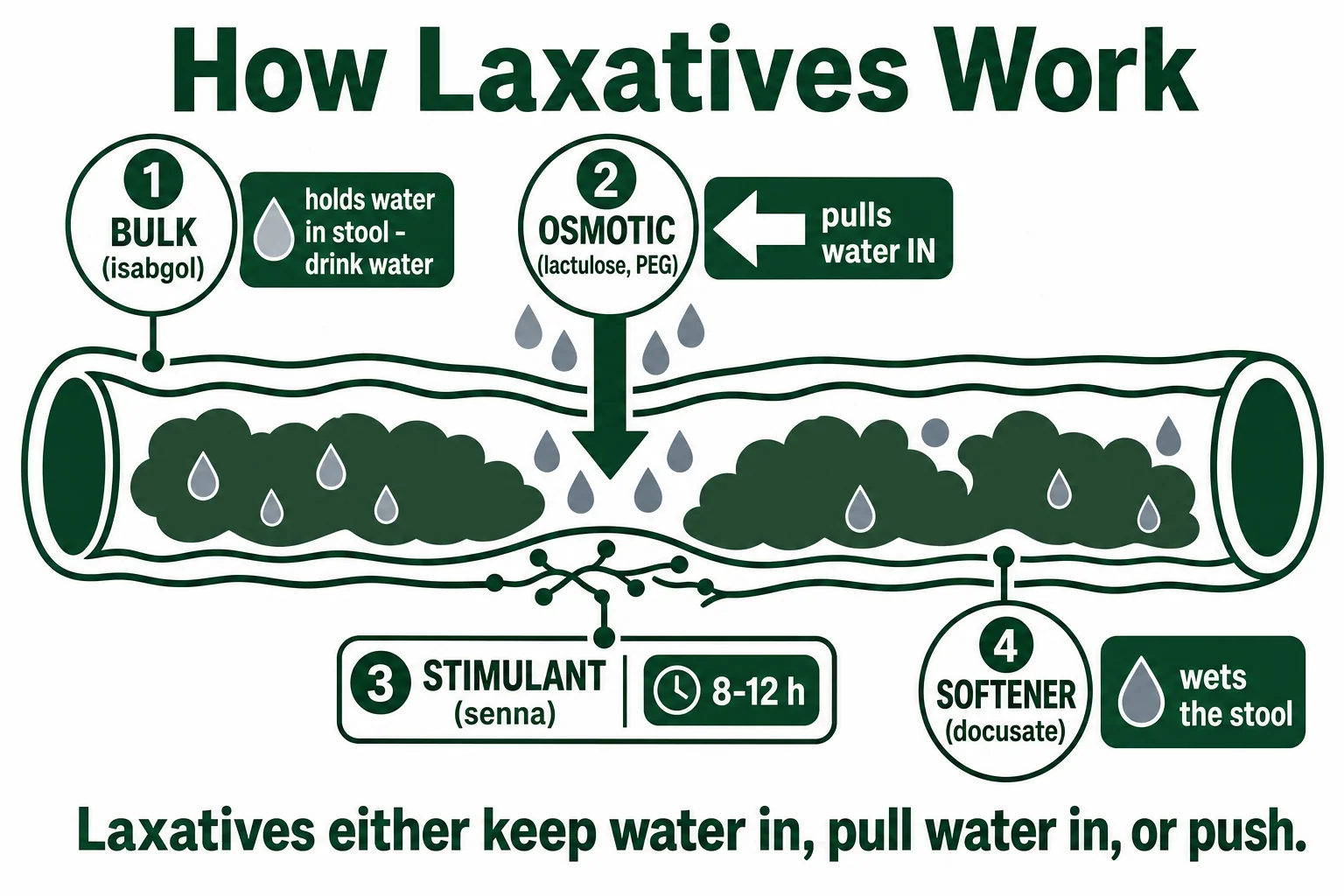
Simplified gut tube with four numbered laxative classes — bulk holding water, osmotics pulling water in, stimulants acting on the nerve plexus, and softeners wetting stool.
Figure 2 — ORS: the cotransport principle
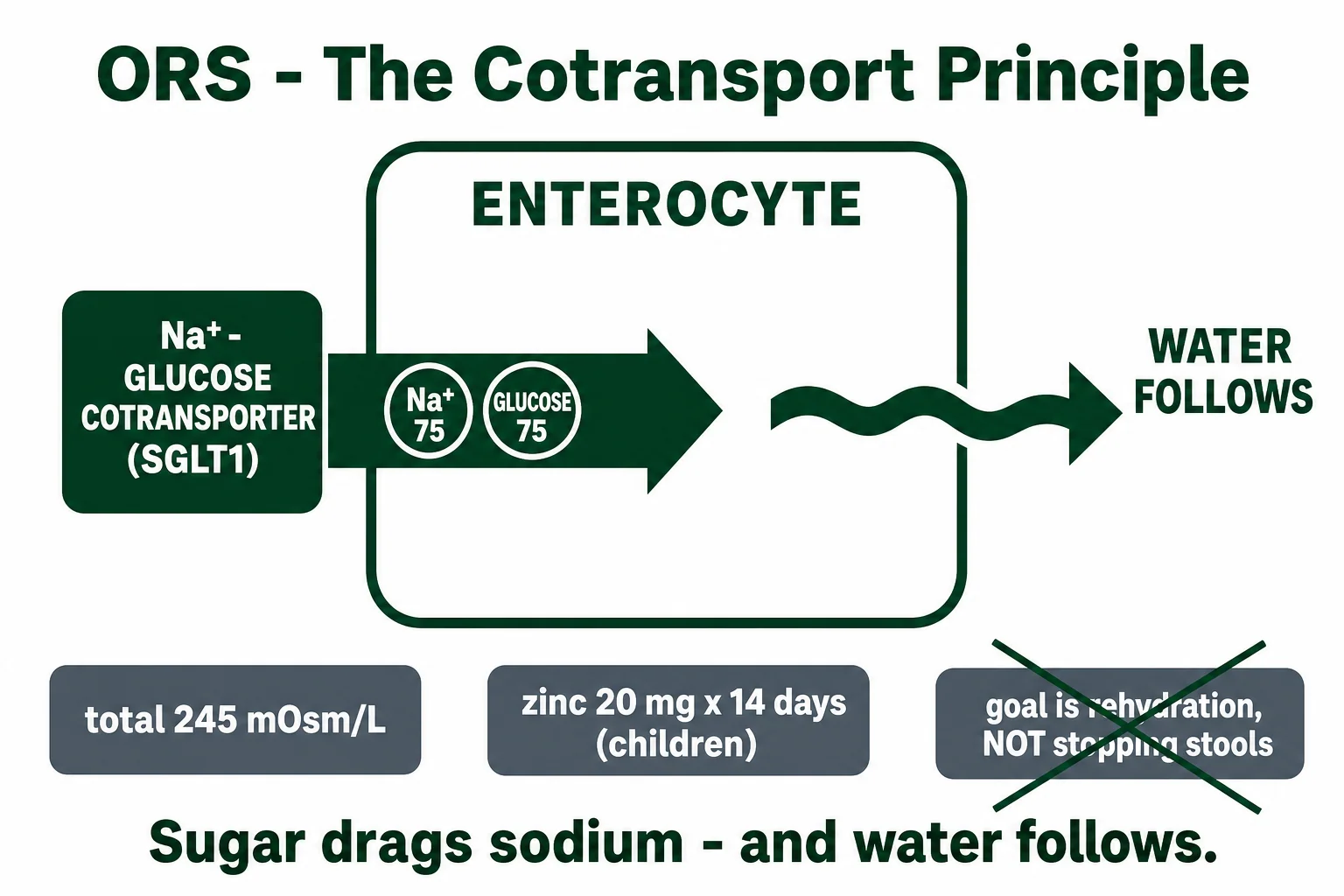
Enterocyte diagram showing the sodium-glucose cotransporter carrying both ORS sodium and glucose into the cell with water following, annotated with the 245 mOsm/L composition and 14-day zinc.
Figure 3 — IBD step-up ladder
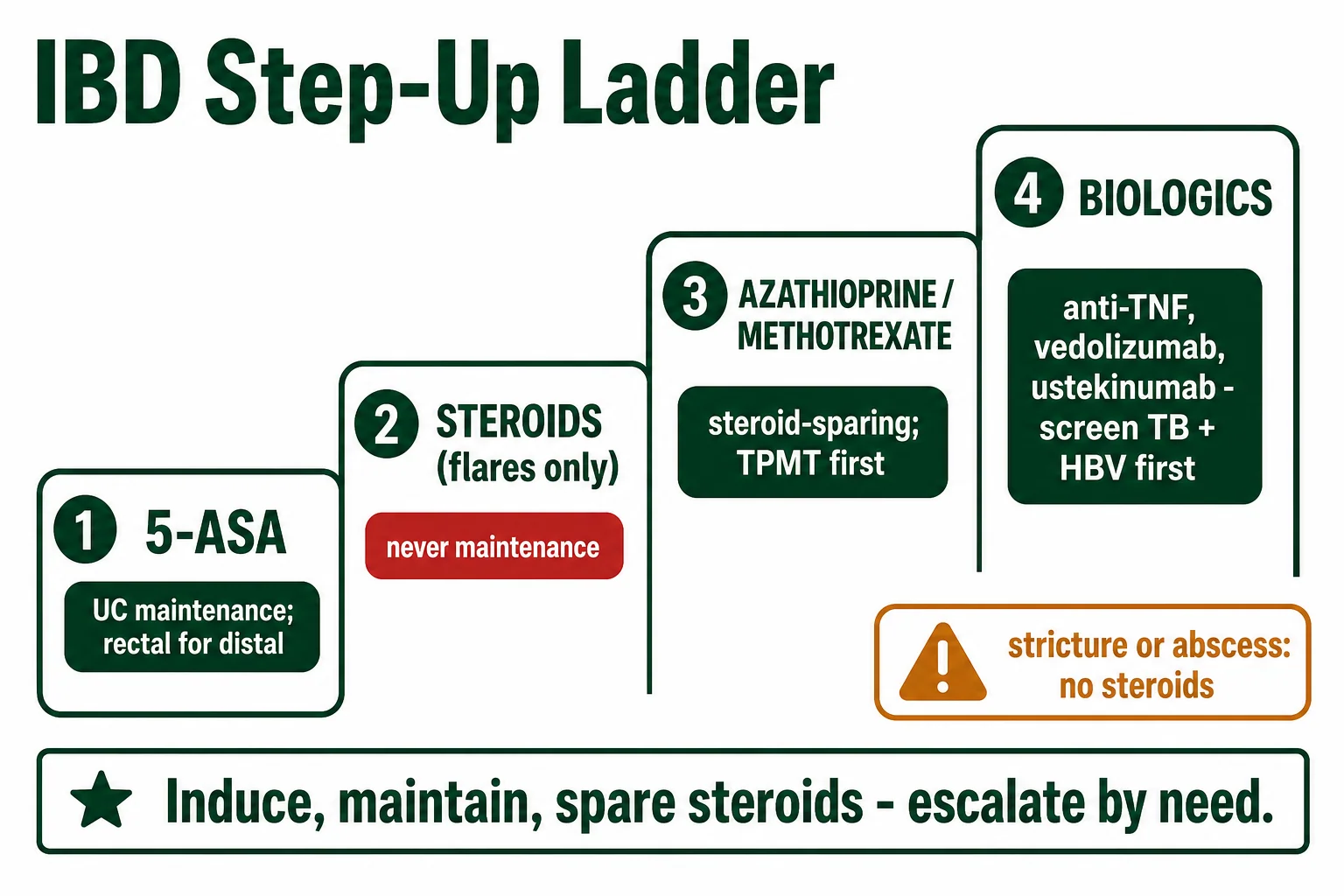
Four-step IBD treatment staircase from 5-ASA through steroids and azathioprine to biologics, with the steroid-never-maintenance and TB/HBV screening warnings.
Clinical Correlation
Vignette 1 — Acute watery diarrhoea in a 2-year-old
A 2-year-old boy has 8 watery stools and two vomits over 24 hours; no blood, no fever, mildly reduced urine, thirsty and slightly irritable — some dehydration (about 5%). Plan: WHO low-osmolarity ORS 75 mL/kg over 4 hours in small, frequent sips (a teaspoon every 1–2 minutes; larger volumes trigger vomiting), continued breastfeeding and feeding, reassessment at 4 hours, then maintenance ORS (10 mL/kg per stool) at home. Zinc 20 mg daily for 14 days is started. The mother requests a "stool-stopping syrup"; she is counselled that loperamide and diphenoxylate are not given to young children (ileus, respiratory depression; diphenoxylate contraindicated under 4 years) and that the aim is safe rehydration — the diarrhoea will stop as the enterocyte lining renews. Danger signs taught: blood in stool, repeated vomiting, sunken eyes, lethargy, no urine for 8 hours.
Reasoning: Most childhood diarrhoea is viral, self-limiting and lethal only through dehydration. ORT with the correct 245 mOsm/L solution exploits the intact SGLT1 cotransporter; zinc shortens and strengthens recovery. Antimotility agents add danger without benefit in this age group.
Vignette 2 — Laxative abuse and cathartic colon
A 24-year-old woman presents with alternating constipation, ankle oedema and weakness; potassium 2.8 mmol/L. For 6 years she has taken senna tablets nightly and bisacodyl "to stay clean", now needing three times the dose. Barium enema shows a redundant, atonic colon with lost haustration — cathartic colon. Management: staged withdrawal of stimulants (taper over weeks, not cold turkey), PEG or lactulose as the bridge, psyllium with enforced fluid intake once stool frequency returns, potassium repletion, dietitian fibre plan, and — critically — an eating-disorder and body-image screen, as laxative misuse clusters with disordered eating.
Reasoning: Chronic stimulant use produces myenteric plexus injury, secondary hyperaldosteronism (from volume and potassium losses — hence the oedema) and a colon that will not propel without drugs. Rehabilitation is slow tapering onto osmotics and bulk, plus psychological support.
Vignette 3 — Distal ulcerative colitis flare
A 29-year-old has 6 bloody stools daily with urgency and tenesmus; cramps ease after defecation. Colonoscopy: continuous inflammation from rectum to 35 cm — distal ulcerative colitis, moderate flare. Plan: rectal mesalamine enema 1 g nightly PLUS oral mesalamine 2.4 g/day (combination beats either alone), with response expected in 2–4 weeks. Maintenance: oral 5-ASA with intermittent rectal dosing. She asks about "steroid courses from the local pharmacy" — counselled that steroids are for induction only, never maintenance, and that azathioprine (after TPMT testing) or a biologic would be the correct escalation if 5-ASA failed; before any anti-TNF, latent TB (chest X-ray, IGRA) and hepatitis B screening are mandatory. Folate is supplemented; annual surveillance colonoscopy is scheduled after 8 years of disease.
Reasoning: Distal disease answers best to topical 5-ASA — the delivery question is the exam question. Escalation follows the ladder, and every escalation step in India must clear TB and HBV screening first.
Vignette 4 — Chronic pancreatitis steatorrhoea
A 45-year-old with a 15-year alcohol history reports bulky, floating, oily stools, 8 kg weight loss and new thirst. Faecal elastase is low; ultrasound shows a calcified, atrophic pancreas. Plan: pancrelipase 40,000 units with every meal and 25,000 with snacks, titrated to stool fat; PPI co-therapy so gastric acid does not inactivate the enzymes; fat-soluble vitamins A D E K; HbA1c confirms diabetes — diet and insulin as beta-cell failure dictates; alcohol and tobacco cessation counselled as the only disease-modifying steps; analgesia ladder begins with paracetamol, adds pregabalin for neuropathic pain, reserves opioids.
Reasoning: Steatorrhoea means lipase under 10% of normal — replacement with correct timing (with food, not before) and acid suppression is the therapy; enzymes taken on an empty stomach are wasted. The diabetes of chronic pancreatitis follows beta-cell loss and often needs insulin.
Practical Linkage
ORS Station, Laxative Audit and IBD Worksheet (PH1.34)
ORS Preparation Station
From the WHO low-osmolarity specification, calculate and prepare one litre: sodium chloride 2.6 g + potassium chloride 1.5 g + trisodium citrate dihydrate 2.9 g + glucose 13.5 g. Verify: Na 75, K 20, Cl 65, glucose 75, citrate 10 mmol/L — osmolarity 245 mOsm/L. Demonstrate cup-and-spoon feeding (a teaspoon every 1–2 minutes), state the rehydration volumes (75 mL/kg over 4 hours for some dehydration), and write the zinc prescription (20 mg daily, 14 days; 10 mg under 6 months).
Laxative Stewardship Audit
Review five charts: (1) daily bisacodyl for 2 years in simple constipation — switch plan to fibre/fluid/PEG; (2) psyllium prescribed without fluid counselling — correct it; (3) sodium phosphate enema ordered in a CKD patient — substitute; (4) castor oil in pregnancy — contraindicated, replace with lactulose; (5) lactulose in hepatic encephalopathy at fixed dose — titrate to 2–3 soft stools/day.
IBD Worksheet
Write induction and maintenance plans for (a) distal UC proctitis and (b) ileal Crohn's with a fibrostenotic stricture (note: no steroids; consider imaging before immunosuppression). List the complete pre-biologic screening checklist (chest X-ray, IGRA, hepatitis B and C, HIV, vaccination update, exclude abscess/tuberculosis). State two indications for surgery referral (dysplasia, toxic dilation, obstruction, fistula not responding).
MCQ Bank
30 questions · tagged by topic, exam pattern & difficulty · full explanations
A 60-year-old woman with chronic constipation is advised to take psyllium (isabgol) with a full glass of water. What is the mechanism by which psyllium relieves constipation?
Rapid Revision
- Bulk laxatives — psyllium swells in water; first line, safe in pregnancy; fluid mandatory.
- Lactulose — fermented to acids; pulls water and traps ammonia as NH4+ — the hepatic encephalopathy drug.
- Lactulose encephalopathy target — 2–3 soft stools per day.
- PEG — non-fermenting osmotic; bowel preparation; less bloating than lactulose.
- Senna and bisacodyl — stimulants, 8–12 hours; bedtime dose, morning stool.
- Castor oil — 2–6 hours; contraindicated in pregnancy; never in poisoning.
- Laxative abuse — cathartic colon, hypokalaemia, secondary hyperaldosteronism, oedema.
- Sodium phosphate enema — acute phosphate nephropathy; avoid in children, CKD, dehydration.
- WHO low-osmolarity ORS — Na 75, K 20, Cl 65, glucose 75, citrate 10 mmol/L — 245 mOsm/L total.
- ORS grams per litre — NaCl 2.6, KCl 1.5, trisodium citrate 2.9, glucose 13.5.
- ORS principle — SGLT1 cotransport: glucose drags sodium, water follows (intact in cholera).
- Zinc in children — 20 mg daily × 14 days (10 mg under 6 months).
- Some dehydration — ORS 75 mL/kg over 4 hours; severe — IV Ringer lactate first.
- Loperamide — gut-restricted mu-agonist (P-gp efflux); overdose causes QT arrhythmia.
- Diphenoxylate-atropine — crosses BBB; dependence; contraindicated under 4 years.
- Bloody febrile diarrhoea — never antimotility drugs (toxic megacolon; HUS).
- Racecadotril — enkephalinase inhibitor; antisecretory without constipation; child-safe.
- Bile-acid diarrhoea — cholestyramine.
- Sulfasalazine — azo prodrug; colonic bacteria release 5-ASA; sulfa effects, folate blocked, reversible infertility.
- Distal UC — rectal mesalamine beats oral; combination is best.
- 5-ASA in Crohn's — weak for induction; not the Crohn's workhorse.
- Steroids in IBD — induction only, never maintenance; no steroids with stricture or abscess.
- Azathioprine — TPMT first; CBC and LFT monitoring; steroid-sparing maintenance.
- Pre-anti-TNF screen — chest X-ray and IGRA for TB, hepatitis B serology, exclude infection.
- Vedolizumab — alpha-4 beta-7 gut-selective; minimal systemic immunosuppression.
- JAK inhibitors — tofacitinib (UC), upadacitinib (UC 2022, Crohn 2023); class VTE/cardiovascular/malignancy warnings.
- IBS-C — linaclotide and plecanatide (GC-C agonists); lubiprostone (ClC-2).
- IBS-D — rifaximin (gut-selective); alosetron restricted (ischaemic colitis).
- IBS pain — mebeverine, dicyclomine, peppermint oil; low-dose TCA for IBS-D.
- UDCA — dissolves only small radiolucent cholesterol stones; recurrence about half at 5 years.
- Obeticholic acid — withdrawn from the US market (Sept 2025); elafibranor/seladelpar now second-line in PBC.
- Octreotide — variceal bleeding adjunct, fistulas, VIPoma diarrhoea.
- Acute pancreatitis fluids — moderate, not aggressive (WATERFALL): LR ~1.5 mL/kg/h, bolus 10 mL/kg only if hypovolaemic; early enteral feeding; no prophylactic antibiotics.
- Chronic pancreatitis — pancrelipase WITH meals + PPI; vitamins A D E K; stop alcohol.
Viva Questions
- Recite the WHO low-osmolarity ORS composition. — Sodium 75, potassium 20, chloride 65, glucose 75 and citrate 10 mmol/L per litre; osmolarity 245 mOsm/L; in grams: NaCl 2.6, KCl 1.5, trisodium citrate 2.9, glucose 13.5.
- Why does ORS contain glucose? — The SGLT1 cotransporter couples sodium and glucose absorption, which toxin-mediated secretion does not abolish; water follows the absorbed solute — rehydration by physiology.
- Why is lactulose the drug of hepatic encephalopathy? — Bacterial fermentation acidifies colonic contents, converting absorbable NH3 to non-absorbable NH4+, which is expelled; titrate to 2–3 soft stools daily.
- What is cathartic colon? — Myenteric plexus injury from chronic stimulant laxative abuse, producing an atonic redundant colon with hypokalaemia and secondary hyperaldosteronism; managed by tapering onto osmotics and bulk.
- Compare loperamide and diphenoxylate. — Loperamide is gut-wall restricted (P-gp efflux), no dependence; diphenoxylate enters the CNS (dependence), carries atropine as a deterrent, and is contraindicated under 4 years; both are banned in bloody febrile diarrhoea.
- Why no antimotility drug in dysentery? — Slowing transit in invasive diarrhoea (Shigella, EHEC) promotes toxic megacolon and may worsen haemolytic uraemic syndrome; therapy is rehydration plus targeted antibiotics.
- Explain 5-ASA delivery systems. — pH-dependent coatings release in terminal ileum (Eudragit), azo-linked prodrugs (sulfasalazine, balsalazide, olsalazine) release in the colon via bacterial azo-reductases, and rectal preparations treat distal UC directly.
- Why is TPMT checked before azathioprine? — TPMT-deficient patients cannot degrade thiopurines and develop severe myelosuppression; genotype or enzyme activity guides dosing, then CBC and LFT are monitored.
- What screening precedes anti-TNF therapy? — Latent tuberculosis (chest X-ray and IGRA; treat first), hepatitis B serology, exclusion of active infection, abscess and heart failure; vaccinate before immunosuppression.
- Why is vedolizumab called gut-selective? — It blocks only alpha-4 beta-7 integrin binding to gut MAdCAM-1, so lymphocyte traffic to the bowel mucosa alone is interrupted — no systemic TB reactivation or PML signal (unlike natalizumab, whose non-selective alpha-4 blockade carries PML risk under restricted access).
- What is the mechanism of linaclotide? — Guanylate cyclase-C agonism raises cGMP, driving chloride-bicarbonate secretion into the lumen and damping visceral afferent pain signalling — treating both constipation and pain of IBS-C.
- When does UDCA dissolve gallstones and when does it fail? — Only small (under 10 mm), radiolucent cholesterol stones with functioning gallbladder and patent cystic duct; calcified or pigment stones never dissolve, and about half of dissolved stones recur within 5 years.
- What happened to obeticholic acid? — Withdrawn from the US market in September 2025 after the confirmatory trial failed and serious liver injury emerged; elafibranor and seladelpar (2024) are the new second-line PBC additions to UDCA.
- How much fluid in acute pancreatitis? — Moderate, goal-directed lactated Ringer (about 1.5 mL/kg/h, bolus only if hypovolaemic) with frequent reassessment — the WATERFALL trial showed aggressive resuscitation causes fluid overload without benefit.
- How are pancreatic enzymes prescribed? — With every meal and snack, dose titrated to steatorrhoea, plus a PPI to prevent acid inactivation; fat-soluble vitamins and diabetes care accompany.
References
- Tripathi KD. Essentials of Medical Pharmacology. 9th ed. New Delhi: Jaypee Brothers Medical Publishers; 2024. Chapter 48 (laxatives, antidiarrhoeal drugs and therapy of inflammatory bowel disease).
- Katzung BG, Vanderah TW. Basic & Clinical Pharmacology. 16th ed. New York: McGraw Hill; 2024. Chapter 62: Drugs Used in Gastrointestinal Disorders.
- Brunton LL, Knollmann BC (eds). Goodman & Gilman's Pharmacological Basis of Therapeutics. 14th ed. New York: McGraw Hill; 2023. Gastrointestinal pharmacology section.
- World Health Organization. The Treatment of Diarrhoea: A Manual for Physicians and Other Senior Health Workers. Geneva: WHO (4th revision; low-osmolarity ORS recommendations).
- Lazzerini M, Wanzira H. Oral zinc for treating diarrhoea in children. Cochrane Database Syst Rev. 2016;12:CD005436.
- Sandborn WJ. Current state of the medical treatment of inflammatory bowel disease. World J Gastroenterol. 2020;26(34):5101–5124.
- Ford AC, Moayyedi P, Chey WD, et al. ACG clinical guideline: management of irritable bowel syndrome. Am J Gastroenterol. 2021;116(1):17–44.
- de-Madaria E, Buxbaum JL, Maisonneuve P, et al. Aggressive or moderate fluid resuscitation in acute pancreatitis (WATERFALL). N Engl J Med. 2022;387(11):989–1000.
- Paumgartner G, Beuers U. Ursodeoxycholic acid in cholestatic liver disease: mechanisms of action and therapeutic use. Hepatology. 2002;36(3):525–531.
- Intercept Pharmaceuticals/FDA. Voluntary withdrawal of Ocaliva (obeticholic acid) from the US market for PBC; FDA Drug Safety Communication on serious liver injury. September 2025 (FDA full approval declined November 2024).
- FDA approvals: elafibranor (Iqirvo) and seladelpar (Livdelzi) for second-line PBC, 2024; upadacitinib for ulcerative colitis (2022) and Crohn's disease (2023).
- National Medical Commission (NMC). Competency Based Undergraduate Curriculum: Pharmacology. Competency PH1.34; 2019.
Downloads
All deliverables & printable revision sheets for CH36
Printable Chapter Handout & Study Notes
Generate a clean, high-yield PDF or print directly without sidebars and navigation menus.