
Antiulcer, Antiemetic & Prokinetic Drugs
Learning Objectives
At the end of this chapter, the Phase II MBBS student will be able to:
- Describe the parietal cell acid secretory cascade and its three regulators, and map each antiulcer class to its blockade point. (PH1.34 — Knows)
- Explain the proton pump inhibitor mechanism (acid-activated prodrug), pharmacokinetics, dosing timing and interactions. (PH1.34 — Knows)
- Anticipate and monitor long-term PPI adverse effects and plan rational deprescribing. (PH1.34 — Knows-how)
- Compare H2 receptor antagonists and antacids — efficacy ceilings, tachyphylaxis and adverse effects. (PH1.34 — Knows)
- Detail mucosal protective agents (sucralfate, bismuth, misoprostol) with their administration rules. (PH1.34 — Knows)
- Prescribe H. pylori eradication regimens by allergy and resistance scenario and confirm eradication. (PH1.34 — Knows-how)
- Trace the emetic pathways (CTZ, vestibular, gastrointestinal, higher centres) to their receptor pharmacology. (PH1.34 — Knows)
- Select the antiemetic by cause — chemotherapy (acute and delayed), motion sickness, pregnancy, vestibular and postoperative. (PH1.34 — Knows-how)
- Compare prokinetic agents and manage metoclopramide-induced extrapyramidal reactions. (PH1.34 — Knows-how)
- Audit upper-gastrointestinal prescriptions for indication, duration and deprescribing opportunities. (PH1.34 — Knows-how)
Must-Know Summary
Acid-related disease therapy is built around the parietal cell, where histamine (H2), gastrin and acetylcholine (M3) all converge on one final common pathway — the H+/K+ ATPase proton pump. Proton pump inhibitors are acid-activated prodrugs that covalently and irreversibly block this pump: taken 30–60 minutes before breakfast, they need 3–5 days for full effect and outperform every other class for healing. Their long-term costs are rebound hypersecretion, C. difficile diarrhoea, malabsorption of vitamin B12, iron, magnesium and calcium (fractures), and acute interstitial nephritis — PPIs are for indications and review dates, not for habit. H2 blockers (famotidine now the workhorse; cimetidine remembered for gynecomastia and CYP inhibition) suppress nocturnal acid but show tachyphylaxis within days. Sucralfate needs acid to work — never give with a PPI; misoprostol is absolutely contraindicated in pregnancy (abortion); bismuth blackens stool. H. pylori eradication: PPI twice daily + amoxicillin 1 g + clarithromycin 500 mg twice daily for 14 days (classic triple; penicillin allergy or high clarithromycin resistance — bismuth quadruple therapy, which the 2025 ACG guideline now prefers first-line whenever susceptibility is unknown); confirm by urea breath test or stool antigen 4 or more weeks after therapy, off PPI. The vomiting centre receives four inputs — the CTZ (outside the blood-brain barrier), vestibular apparatus, gut vagal afferents and higher centres — and each input has its receptor and its drug: 5-HT3 (ondansetron) for chemotherapy and postoperative nausea, NK1 (aprepitant) for the delayed phase, H1/M (promethazine, hyoscine) for motion, D2 (metoclopramide) for gastric stasis. Metoclopramide carries the FDA boxed warning for tardive dyskinesia (limit 12 weeks) and causes acute dystonia in young women — reversed by IV diphenhydramine; domperidone stays outside the brain (no EPS) but raises prolactin and prolongs QT.
- Final common pathway of acid secretion — the H+/K+ ATPase proton pump; PPIs block it irreversibly
- PPI dosing — 30–60 minutes before breakfast; full effect takes 3–5 days
- PPI-clopidogrel — avoid omeprazole (CYP2C19); prefer pantoprazole
- Long-term PPI harms — C. difficile, B12/iron/magnesium/calcium malabsorption, fractures, acute interstitial nephritis, rebound
- Cimetidine legacy — antiandrogen (gynecomastia) plus potent CYP inhibition
- H2 blockers — excellent for nocturnal acid, tachyphylaxis within 5–10 days
- Antacid rule — aluminium constipates, magnesium purges; separate other drugs by 1–2 hours
- Sucralfate — needs acid to polymerise; never co-administer with PPI or antacid
- Misoprostol — NSAID-ulcer prophylaxis; abortifacient — contraindicated in pregnancy
- H. pylori triple therapy — PPI + amoxicillin 1 g + clarithromycin 500 mg, twice daily, 14 days; ACG 2025 prefers optimized bismuth quadruple first-line when susceptibility unknown; vonoprazan (P-CAB) dual/triple now FDA-approved options
- CTZ — area postrema, outside the blood-brain barrier, samples blood-borne toxins
- Metoclopramide — boxed warning tardive dyskinesia; acute dystonia reversed by IV diphenhydramine
- Domperidone — peripheral D2 block: no EPS, but prolactin rise and QT risk
Classification
BOX 1 — ANTIULCER (ACID-REDUCING AND MUCOSAL-PROTECTIVE) DRUGS
Proton Pump Inhibitors
- Omeprazole, esomeprazole, pantoprazole, rabeprazole, lansoprazole, dexlansoprazole, ilaprazole
- Potassium-competitive acid blocker (P-CAB): vonoprazan — faster, food-independent acid suppression; H. pylori regimens
H2 Receptor Antagonists
- Famotidine, roxatidine; cimetidine (legacy); ranitidine (withdrawn — NDMA impurity, 2020)
Antacids and Related
- Aluminium hydroxide, magnesium hydroxide/trisilicate, calcium carbonate, sodium bicarbonate, magaldrate
- Alginates (raft-forming); simethicone (anti-foaming adjunct)
Mucosal Protective Agents
- Sucralfate; bismuth subsalicylate/subcitrate; misoprostol (PGE1 analogue)
H. pylori Eradication Components
- Classic triple: PPI + amoxicillin + clarithromycin
- Bismuth quadruple: PPI + bismuth + tetracycline + metronidazole (ACG 2025 preferred first-line when susceptibility unknown)
- Vonoprazan dual (vonoprazan + amoxicillin) or triple (vonoprazan + amoxicillin + clarithromycin) — FDA-approved
- Salvage: rifabutin triple; levofloxacin triple
BOX 2 — ANTIEMETICS AND PROKINETICS
5-HT3 Antagonists
- Ondansetron, granisetron, palonosetron, ramosetron
Dopamine D2 Antagonists
- Metoclopramide, domperidone, prochlorperazine, droperidol
- Olanzapine (broad-spectrum adjunct)
H1 Antihistaminic Antiemetics
- Promethazine, dimenhydrinate, cyclizine, meclizine, doxylamine (with pyridoxine in NVP)
Antimuscarinic Antiemetics
- Hyoscine (scopolamine); cinnarizine (H1 and M)
NK1 Antagonists
- Aprepitant, fosaprepitant, rolapitant
Cannabinoids
- Dronabinol, nabilone
Benzodiazepine (anticipatory)
- Lorazepam
Prokinetics
- Metoclopramide, domperidone, mosapride, itopride
- Erythromycin (motilin agonist); cisapride (withdrawn — QT)
Core Concepts
1. Gastric acid secretion and its regulation
The parietal (oxyntic) cell of the gastric corpus secretes hydrochloric acid through the H+/K+ ATPase (proton pump) — the final common pathway of every stimulant. Three receptors converge on it: H2 receptors for histamine (from enterochromaffin-like cells, coupled to cAMP — the dominant amplifier of the three), CCK-B receptors for gastrin (from antral G cells, coupled to calcium), and M3 receptors for acetylcholine (from vagal postganglionic fibres, also calcium). The pathways potentiate one another — histamine amplifies gastrin and ACh signalling — which is why blocking one input (H2) only partly suppresses acid, while blocking the pump suppresses all of it.
Two brakes matter pharmacologically. Somatostatin from antral and corpus D cells inhibits G cells, ECL cells and parietal cells alike (the backbone of the gastrin-acid axis; its analogue octreotide shrinks acid hypersecretion in Zollinger-Ellison syndrome). Prostaglandin E2 maintains the mucosal defence — mucus and bicarbonate secretion, mucosal blood flow, and epithelial restitution. NSAIDs remove this prostaglandin shield (COX-1 inhibition), and H. pylori damages the mucosa directly — together the two cause most peptic ulcers.
The diseases mapped to this physiology: gastro-oesophageal reflux disease (GERD), gastric and duodenal ulcer (H. pylori- and NSAID-related), stress ulcers in the critically ill, and gastrinoma (Zollinger-Ellison syndrome — acid hypersecretion, multiple distal ulcers, diarrhoea).
2. Proton pump inhibitors
Mechanism (the exam chain). PPIs — omeprazole, esomeprazole, pantoprazole, rabeprazole, lansoprazole, dexlansoprazole, ilaprazole — are weak-base prodrugs that accumulate in the acidic canaliculi of the activated parietal cell (a thousand-fold concentration gradient). There they are protonated and converted to a reactive sulfenamide, which covalently bonds to cysteine residues of the H+/K+ ATPase — irreversible inhibition. Because only active pumps are blocked and pumps are continually resynthesised, full effect develops over 3–5 days, and dosing must precede the meal that activates the pumps: 30–60 minutes before breakfast (twice-daily dosing adds a dose before dinner). Acid secretion recovers over 24–72 hours as new pumps are inserted — hence PPIs neither need tapering for effect nor stop abruptly without rebound hypersecretion (gastrin rises during therapy, and post-stopping acid output transiently overshoots — symptomatic rebound that drags patients back onto the drug).
Agents and distinctions. Omeprazole (the prototype; highest CYP2C19 interaction profile), esomeprazole (the S-isomer — the most consistent GERD erosion healing), pantoprazole (the lowest interaction burden — the choice with clopidogrel, warfarin, antiretrovirals), rabeprazole (fastest activation, partly non-enzymatic clearance — least CYP2C19-dependent), lansoprazole and dexlansoprazole (dual delayed-release), ilaprazole (used in Asia). The newest class member is not a PPI at all: vonoprazan, a potassium-competitive acid blocker (P-CAB) — reversible but more potent and longer-lasting acid suppression, effective fed or fasted, now FDA-approved both for erosive oesophagitis and inside H. pylori regimens.
Interactions. Clopidogrel: omeprazole (and esomeprazole to a degree) inhibit CYP2C19, the activator of clopidogrel — guideline advice is to avoid the combination and use pantoprazole when acid cover is needed. Raised gastric pH reduces absorption of ketoconazole and itraconazole (needing acid) and slightly increases digoxin exposure; high-dose methotrexate clearance is impaired (a P-gp effect). Long-term PPI therapy slightly reduces the antiplatelet prodrug activation generally — review the indication.
Long-term adverse effects (a checklist every exam loves). (1) Enteric infections — C. difficile diarrhoea and campylobacteriosis (acid is a barrier; the association is strongest in hospitalised and elderly patients). (2) Malabsorption — vitamin B12 (needs acid to release from food protein), iron, calcium and magnesium — hypomagnesaemia (tetany, arrhythmia) and fracture association in long use. (3) Rebound acid hypersecretion after withdrawal. (4) Acute interstitial nephritis (idiosyncratic; consider in unexplained AKI). (5) Fundic gland polyps and (with atrophic gastritis in H. pylori-positive patients) a theoretical progression concern. None of this argues against indicated use — it argues against unindicated, unreviewed, lifelong use.
Uses (framed by the 2025–26 ACG GERD guideline). GERD: an 8-week empiric once-daily PPI trial for classic symptoms without alarms; attempt discontinuation after response (step to on-demand or intermittent dosing for non-erosive disease); lowest effective dose for maintenance; endoscopy if no response or relapse off therapy. The guideline also advises PPI 30–60 minutes before a meal rather than at bedtime, recommends against routine prokinetics for GERD unless there is objective gastroparesis, and against sucralfate for GERD except in pregnancy. Other PPI uses: peptic ulcer therapy (with H. pylori eradication where positive); NSAID-ulcer prophylaxis in high-risk users (age over 65, previous ulcer, steroids, anticoagulants); stress-ulcer prophylaxis — only for ICU patients with coagulopathy or prolonged ventilation (not ward patients who can eat); Zollinger-Ellison syndrome (high dose, often BD-TDS); a single IV dose before endoscopy for bleeding ulcer.
3. H2 receptor antagonists and antacids
H2 blockers. Famotidine (20–40 mg at night) is the current workhorse; ranitidine was withdrawn in most markets after NDMA impurity findings (2020); cimetidine survives mainly in exams. They block the histamine-cAMP amplifier — suppressing basal and nocturnal acid by about 60–70% but meal-stimulated acid much less, because gastrin and ACh still drive the pump. Two consequences: they are excellent for night-time reflux symptoms and modest ulcer healing, but inferior to PPIs for erosive disease; and tachyphylaxis develops within 5–10 days (upregulated signalling routes around the block), so they are unsuitable for continuous long-term acid control. Cimetidine's exam legacy: a weak antiandrogen (gynecomastia, galactorrhoea, loss of libido) and a potent CYP450 inhibitor (raises warfarin, phenytoin, theophylline, lidocaine levels) — plus CNS confusion in the elderly and creatinine secretion blockade (pseudo-rise). Famotidine is renally cleared (dose-adjust in CKD), has no significant CYP interactions, and is well tolerated (headache, dizziness).
Antacids neutralise already-secreted acid — symptomatic relief in minutes, no healing effect beyond that. Magnesium hydroxide purges (diarrhoea); aluminium hydroxide constipates and binds phosphate (useful in CKD hyperphosphataemia, harmful in overload) — so most products combine the two. Calcium carbonate is potent but triggers acid rebound and, with milk overuse, the milk-alkali syndrome (hypercalcaemia, alkalosis, renal injury); sodium bicarbonate is fast but loads sodium and alkali (hypertension, oedema, alkalosis — avoid in cardiac and renal disease). Alginate preparations float as a foam raft on gastric contents to mechanically dampen reflux. Dosing is 1 and 3 hours after meals and at bedtime.
The drug-adsorption rule: antacids (especially aluminium-magnesium gels) adsorb and chelate co-administered drugs — separate fluoroquinolones, tetracyclines, iron, levothyroxine and digoxin by 1–2 hours. Simethicone (an anti-foaming agent) is a harmless adjunct for bloating.
4. Mucosal protective agents and H. pylori eradication
Sucralfate is a complex of aluminium hydroxide and sulfated sucrose that, in the presence of acid, polymerises into a sticky gel that coats the ulcer base, blocks pepsin and bile-salt diffusion, and stimulates mucus, bicarbonate and prostaglandin release. Rules: give away from acid suppression (PPI or antacid 30 minutes apart or more — acid is needed for activation); it is safe in pregnancy; adverse effects are constipation and, in dialysis patients, aluminium accumulation (avoid). It heals ulcers about as well as H2 blockers and is a classic stress-ulcer prophylaxis alternative where luminal coating (rather than pH) is the aim. (Note: the 2025–26 ACG GERD guideline restricts sucralfate in GERD to pregnancy.)
Bismuth subsalicylate coats ulcers, stimulates mucus-bicarbonate secretion, and is directly antibacterial (including H. pylori); it also binds enterotoxins in traveller's diarrhoea. Signature teaching point: it turns stool and tongue black (harmless — but warn the patient so nobody calls it melaena), and salicylate load cautions children with viral illness.
Misoprostol, a stable prostaglandin E1 analogue, reinforces all mucosal defences and suppresses acid moderately. Its niche: NSAID-ulcer prophylaxis in high-risk patients who cannot stop the NSAID. Its hazards: diarrhoea (common) and uterine contraction — absolutely contraindicated in pregnancy; women of childbearing potential need contraception counselling.
H. pylori. This urease-positive, antral-colonising spiral organism causes most duodenal and gastric ulcers, is a class-I gastric carcinoma and MALT-lymphoma risk factor, and drives functional dyspepsia in a minority. Testing: urea breath test and stool antigen (both active-infection tests, falsely negative during PPI/antibiotic courses — stop PPI 1–2 weeks before testing), rapid urease test on biopsy, histology; serology only documents past exposure. Test-and-treat for young patients with uninvestigated dyspepsia (in high-prevalence India) and confirm eradication after therapy in ulcer disease, MALToma and post-resection cancer surveillance.
Eradication regimens (dose-exact, all 14 days):
- Classic first line — standard triple therapy: a PPI twice daily + amoxicillin 1 g twice daily + clarithromycin 500 mg twice daily, for 14 days (the exam answer; reliable only where clarithromycin resistance is low or susceptibility is known).
- Penicillin allergy or high clarithromycin resistance — bismuth quadruple therapy: PPI twice daily + bismuth subcitrate 120 mg four times daily (or equivalent) + tetracycline 500 mg four times daily + metronidazole 400 mg three-to-four times daily, 14 days.
- The 2025 ACG guideline shift: with clarithromycin resistance widespread, optimized bismuth quadruple therapy for 14 days is now the preferred first-line regimen whenever antibiotic susceptibility is unknown — including in treatment-naïve patients. Empiric alternatives without penicillin allergy: rifabutin triple (omeprazole + amoxicillin + rifabutin) or vonoprazan dual (vonoprazan 20 mg BD + amoxicillin 1 g TID); vonoprazan triple (vonoprazan + amoxicillin + clarithromycin) is preferred over PPI-clarithromycin triple when clarithromycin susceptibility is unknown but macrolide exposure is absent.
- Second line (failure): levofloxacin-based triple (PPI + amoxicillin + levofloxacin) or optimized bismuth quadruple, guided by susceptibility where available.
- Confirmation: urea breath test or stool antigen 4 or more weeks after finishing therapy, with the PPI held 1–2 weeks.
- Adjuncts always: stop the NSAID if possible, counsel on adherence — partial courses breed resistance (clarithromycin and quinolone resistance in India are high and rising).
5. Emetic pathways and the CTZ
Vomiting is coordinated by a vomiting centre in the dorsolateral medulla (nucleus tractus solitarius and dorsal motor nucleus of the vagus), which receives four inputs — and the receptors on each input define the drug that blocks it.
- The chemoreceptor trigger zone (CTZ) lies in the area postrema of the fourth ventricle — anatomically outside the blood-brain barrier, so it samples blood and CSF directly: circulating chemotherapy, opioids, uraemic and toxin signals. Its receptors: D2, 5-HT3, NK1.
- The vestibular apparatus (motion, labyrinthitis): H1 and muscarinic M receptors — which is why motion sickness responds to antihistamines and hyoscine but not to ondansetron.
- Gastrointestinal vagal afferents: mucosal irritation, distension, serosal and chemotherapy-triggered 5-HT release from enterochromaffin cells — 5-HT3 and D2 receptors.
- Higher cortical centres: anticipatory nausea (conditioned before chemotherapy), pain, fear, sight and smell — amenable to benzodiazepines and psychological approaches.
The chemotherapy timeline mirrors the mediators: acute vomiting (first 24 hours) is serotonin-driven (5-HT3 from gut and CTZ) — best prevented by 5-HT3 antagonists; delayed vomiting (24–120 hours) is substance P/NK1-driven — the aprepitant window; anticipatory vomiting is conditioned anxiety — lorazepam and behavioural desensitisation.
6. Antiemetics by receptor class
5-HT3 antagonists — ondansetron (8 mg IV/PO; tablets, ODT, melts), granisetron, palonosetron and ramosetron. The acute-chemotherapy and postoperative nausea (PONV) workhorses, also useful in radiotherapy and gastroenteritis. Adverse effects: headache, constipation (5-HT3 blockade of gut motility), and dose-dependent QT prolongation (ECG caution with other QT drugs). Palonosetron has the longest half-life (about 40 hours) and best delayed-phase cover among the class.
Dopamine D2 antagonists. Metoclopramide (10 mg three times daily, 30 minutes before meals) and domperidone (10–20 mg) are both antiemetic and prokinetic; prochlorperazine (12.5 mg IM/PO — vestibular and CTZ causes) and droperidol add EPS and QT liabilities respectively. Olanzapine (D2, 5-HT2A, and broader) is the modern broad-spectrum rescue and adjunct for breakthrough CINV, including delayed phase, at 2.5–5 mg at night (sedation, metabolic caution with chronicity).
H1 antihistamines — promethazine (12.5–25 mg), dimenhydrinate, cyclizine, meclizine: the motion sickness and vestibular antiemetics (plus mild PONV benefit); sedation is the price. Promethazine IV is irritant and perivascular extravasation is dangerous — IM preferred.
Antimuscarinics — hyoscine (scopolamine), classically as a 72-hour transdermal patch applied behind the ear for motion sickness prophylaxis; dry mouth, blurred vision, drowsiness; contraindicated in closed-angle glaucoma and prostatic obstruction. Cinnarizine and diphenhydramine span H1/M actions.
NK1 antagonists — aprepitant (oral, 125 mg day 1 then 80 mg days 2–3) and fosaprepitant (IV day 1), rolapitant (single dose, 5-day cover). The delayed-phase anchor for moderately-to-highly emetogenic chemotherapy, always with a 5-HT3 antagonist and dexamethasone. Aprepitant is a CYP3A4 inhibitor — reduce dexamethasone doses, monitor warfarin and tacrolimus.
Cannabinoids — dronabinol, nabilone: refractory CINV when standard regimens fail; euphoria, dizziness; abuse potential limits use.
Benzodiazepines — lorazepam: anticipatory nausea and pre-chemotherapy anxiolysis (it is anti-anxiety, not antiemetic per se).
Pregnancy — nausea and vomiting of pregnancy (NVP): first line is doxylamine (an H1 antihistamine) with pyridoxine (vitamin B6) — the best-studied and safest combination; second line promethazine or metoclopramide; ondansetron is effective but carries a small absolute increase in cardiac and orofacial defect risk when used in the first trimester — counsel and reserve for hyperemesis gravidarum where hydration fails; ginger is an evidence-supported adjunct; thiamine supplementation in prolonged vomiting.
The selection logic (learn as a table): cause first, receptor second, drug third — cisplatin today (5-HT3 + dexamethasone + NK1), the bus ride tomorrow (hyoscine or promethazine), the pregnancy test next week (doxylamine-pyridoxine).
7. Prokinetic agents
Metoclopramide is the teaching drug of this section. Its pharmacology: central D2 antagonism in the CTZ (antiemetic) plus peripheral 5-HT4 agonism and, at higher doses, 5-HT3 antagonism, together accelerating gastric emptying and raising lower-oesophageal sphincter tone. Its two faces: the wanted central D2 block, and the unwanted central D2 block — acute dystonic reactions (oculogyric crisis, torticollis, trismus — dramatically common in young women and children, occurring after a single dose, and reversed within minutes by IV diphenhydramine or benztropine) and, with cumulative exposure, tardive dyskinesia — the reason for the FDA boxed warning and a 12-week duration limit except in grave need. It also raises prolactin (galactorrhoea, amenorrhoea) and causes sedation. Contraindications: gastrointestinal obstruction or perforation, epilepsy (lowers seizure threshold), Parkinson disease (worsens via D2 blockade), pheochromocytoma (hypertensive crisis). Uses: diabetic and postoperative gastroparesis, chemotherapy nausea at higher doses, migraine-associated vomiting, postoperative ileus adjunct. (Note: the 2025–26 ACG GERD guideline recommends against prokinetics for GERD itself unless there is objective gastroparesis.)
Domperidone blocks peripheral D2 receptors only — it crosses the blood-brain barrier poorly, so extrapyramidal reactions are rare: the practical answer when metoclopramide caused a dystonic reaction or is contraindicated. Remaining hazards: prolactin elevation (it is outside the BBB at the pituitary — galactorrhoea, breast tenderness, amenorrhoea) and QT prolongation — avoid with CYP3A4 inhibitors (ketoconazole, erythromycin) and in cardiac disease; keep doses modest and courses reviewed.
5-HT4 agonists: mosapride and itopride (the latter adds acetylcholinesterase inhibition) improve motility without the D2 EPS burden and without meaningful QT signal — widely used for functional dyspepsia and mild gastroparesis in India and East Asia. Cisapride, the original 5-HT4 prokinetic, was withdrawn for fatal QT arrhythmias (hERG blockade, especially with CYP3A4 inhibitors) — the cautionary tale that reshaped the class.
Motilin agonist: erythromycin (as 125–250 mg orally or IV, not antimicrobial doses) mimics motilin to sweep the stomach — effective short-term in diabetic and postoperative gastroparesis, but tachyphylaxis develops within days, and antibiotic stewardship and GI side effects limit it to brief courses or intermittent use.
Use map: gastroparesis (metoclopramide or domperidone first; erythromycin short-term), functional dyspepsia (itopride or mosapride), postoperative ileus (chewing gum, early feeding, cautious metoclopramide).
Tables
Table 1 — PPI vs H2 receptor antagonist master comparison
| Parameter | Proton pump inhibitor | H2 receptor antagonist (Famotidine) |
|---|---|---|
| Molecular target | H+/K+ ATPase (all pathways) | H2 receptor (histamine amplifier only) |
| Nature of block | Irreversible, covalent (sulfenamide) | Reversible, competitive |
| Acid suppression | Up to 85–95% including meal-stimulated | 60–70% basal/nocturnal; weak on meals |
| Onset / ceiling | Full effect 3–5 days | Onset 1 hour; tachyphylaxis in 5–10 days |
| Dosing timing | 30–60 min before breakfast (BD: before breakfast and dinner) | At bedtime for nocturnal symptoms |
| Healing of erosive GERD | Superior (85–95%) | Modest (about 50%) |
| Key interactions | Omeprazole: clopidogrel (CYP2C19); pH-dependent absorption; methotrexate | Cimetidine: CYP inhibition, antiandrogen; famotidine minimal |
| Long-term risks | C. difficile, B12/iron/Mg/Ca malabsorption, fractures, AIN, rebound | Tolerance; confusion (cimetidine, elderly); renal dose adjustment |
Table 2 — Antacids and mucosal protective agents
| Agent | Action | Timing / rule | Key adverse effect |
|---|---|---|---|
| Magnesium hydroxide | Neutralises acid | 1 and 3 h after meals | Diarrhoea |
| Aluminium hydroxide | Neutralises; binds phosphate | Same | Constipation; phosphate depletion; aluminium in dialysis |
| Calcium carbonate | Potent neutralisation | With meals | Acid rebound; milk-alkali syndrome |
| Sodium bicarbonate | Fast neutralisation | SOS | Sodium/alkali load — avoid in cardiac and renal disease |
| Alginate + antacid | Foam raft barrier | After meals and at bedtime | Belching, bloating |
| Sucralfate | Polymer coat over ulcer; mucus/PGE2 stimulus | Needs acid — give apart from PPI/antacid; safe in pregnancy | Constipation |
| Bismuth subsalicylate | Coating + antimicrobial + toxin binding | QID in quadruple therapy | Black stool and tongue; salicylate caution |
| Misoprostol | PGE1 mucosal defence + mild acid suppression | With meals; contraception counselling | Diarrhoea; abortion — contraindicated in pregnancy |
| Drug-adsorption rule | Antacids chelate co-drugs | Separate other drugs by 1–2 hours | Applies to quinolones, tetracycline, iron, thyroxine |
Table 3 — H. pylori eradication regimens (all 14 days)
| Line | Regimen | Drugs and doses | Notes |
|---|---|---|---|
| Classic first line | Standard triple | PPI BD + amoxicillin 1 g BD + clarithromycin 500 mg BD | The exam answer; reliable only with low/known clarithromycin susceptibility |
| First line (ACG 2025 preferred when susceptibility unknown) | Optimized bismuth quadruple | PPI BD + bismuth 4× daily + tetracycline 500 mg QID + metronidazole | Also the choice for penicillin allergy and high clarithromycin resistance |
| First line alternatives (no penicillin allergy) | Vonoprazan dual / rifabutin triple | Vonoprazan 20 mg BD + amoxicillin 1 g TID; or omeprazole + amoxicillin + rifabutin | P-CAB regimens FDA-approved; vonoprazan works fed or fasted |
| Second line | Levofloxacin triple | PPI BD + amoxicillin 1 g BD + levofloxacin 500 mg OD | After susceptibility where possible |
| Confirmation | Active-infection test | Urea breath test or stool antigen 4+ weeks after therapy, PPI held 1–2 weeks | Serology cannot confirm cure |
Table 4 — Antiemetics by receptor
| Class (receptor) | Agents | Site of action | Indications | Key adverse effects |
|---|---|---|---|---|
| 5-HT3 | Ondansetron, granisetron, palonosetron | CTZ + gut vagal afferents | Chemo acute phase, PONV, radiotherapy | Headache, constipation, QT |
| D2 | Metoclopramide, domperidone, prochlorperazine | CTZ (+ gut) | Gastric stasis, drug-induced, vestibular adjunct | EPS (metoclopramide), prolactin rise, QT (domperidone) |
| H1 | Promethazine, dimenhydrinate, meclizine | Vestibular nucleus | Motion, vestibular, PONV | Sedation |
| Muscarinic M | Hyoscine | Vestibular | Motion sickness | Dry mouth, blurred vision; glaucoma contraindication |
| NK1 | Aprepitant, fosaprepitant, rolapitant | CTZ + NTS | Delayed chemo phase | CYP3A4 inhibition (steroid, warfarin interactions) |
| Cannabinoid | Dronabinol, nabilone | CB1 (complex) | Refractory CINV | Euphoria, dizziness |
| Benzodiazepine | Lorazepam | Cortical (anxiety) | Anticipatory vomiting | Sedation |
Table 5 — Antiemetic choice by cause
| Cause | Dominant pathway | First line | Alternatives |
|---|---|---|---|
| Cisplatin / highly emetogenic chemo (acute) | 5-HT3 | Ondansetron + dexamethasone + aprepitant | Palonosetron instead of ondansetron |
| Chemo delayed phase (24–120 h) | NK1 / substance P | Aprepitant + dexamethasone | Metoclopramide, olanzapine |
| Anticipatory chemo nausea | Cortical conditioning | Lorazepam + behavioural therapy | — |
| Breakthrough CINV | Mixed | Olanzapine | Levomepromazine |
| Motion sickness | Vestibular (H1, M) | Hyoscine patch or promethazine | Meclizine, dimenhydrinate |
| Pregnancy (NVP) | Multifactorial | Doxylamine + pyridoxine | Promethazine, metoclopramide; ondansetron (counsel) in hyperemesis |
| PONV | 5-HT3 dominant | Ondansetron (+ dexamethasone) | Droperidol, promethazine |
| Vestibular neuritis | Vestibular | Prochlorperazine + vestibular rehab | Dimenhydrinate |
| Gastroparesis / stasis | Vagal D2 | Metoclopramide (or domperidone) | Erythromycin short course |
Table 6 — Prokinetic agents compared
| Agent | Mechanism | EPS risk | Signature hazards | Contraindications |
|---|---|---|---|---|
| Metoclopramide | Central D2 block + 5-HT4 agonist (+5-HT3 at high dose) | High — acute dystonia; boxed warning tardive dyskinesia; 12-week limit | Prolactin rise, sedation | Obstruction, perforation, epilepsy, Parkinson disease, pheochromocytoma |
| Domperidone | Peripheral D2 block | Minimal (outside BBB) | Prolactin rise; QT prolongation — avoid 3A4 inhibitors | Cardiac disease, QT drugs |
| Mosapride | 5-HT4 agonist | None | Mild GI upset | — |
| Itopride | 5-HT4 agonist + AChE inhibition | None | Mild GI upset | — |
| Erythromycin | Motilin-receptor agonist | None | Tachyphylaxis (days), GI cramps, antibiotic stewardship | QT drugs, macrolide allergy |
| Cisapride | 5-HT4 agonist (withdrawn) | None | Fatal QT arrhythmias (hERG) | Withdrawn from market |
Figures
Figure 1 — The parietal cell and acid secretion drug targets
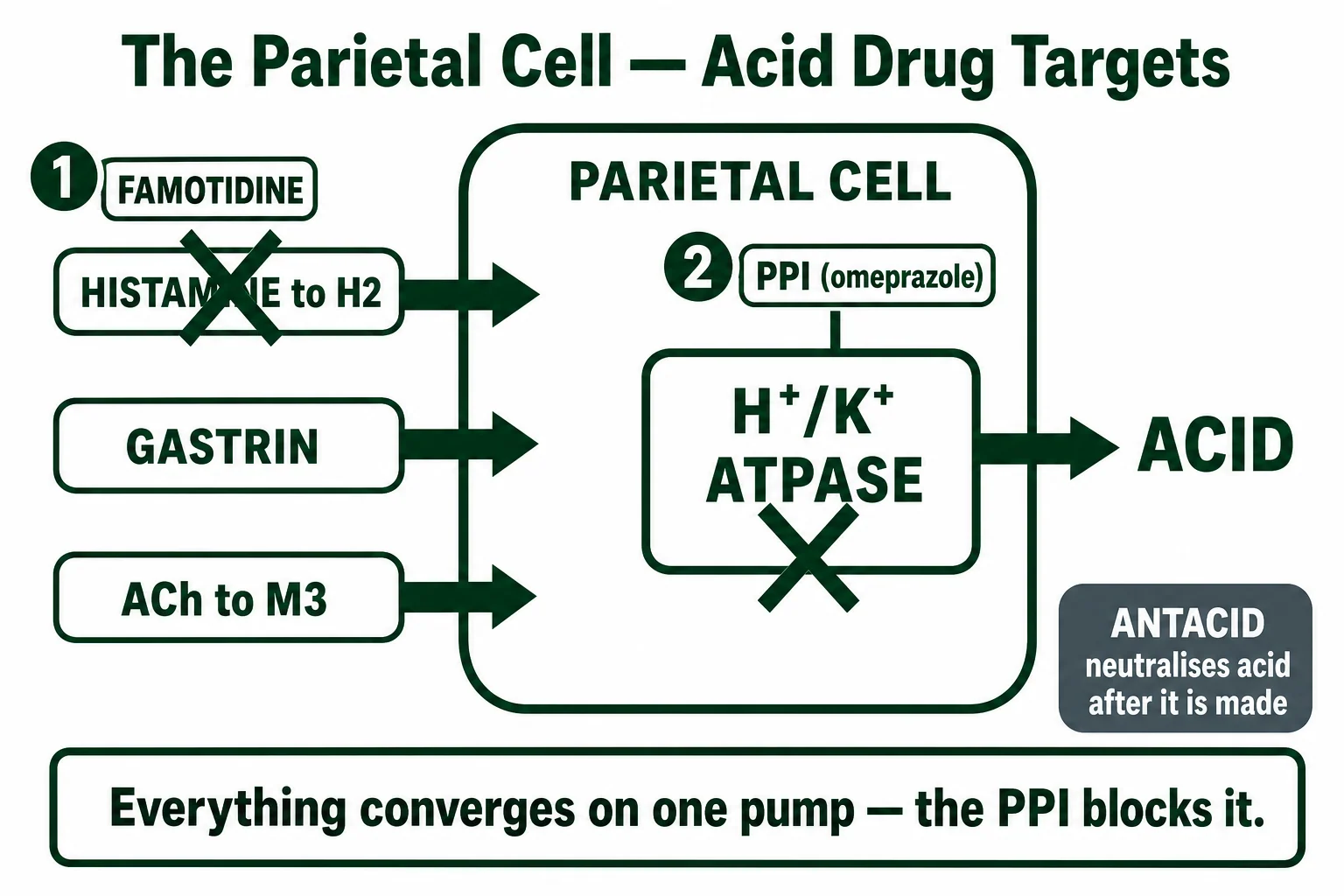
Simplified parietal cell diagram with histamine, gastrin and ACh inputs converging on the H+/K+ ATPase pump, blocked by famotidine at H2 and by a PPI at the pump, with antacid acting downstream.
Figure 2 — H. pylori triple therapy triangle
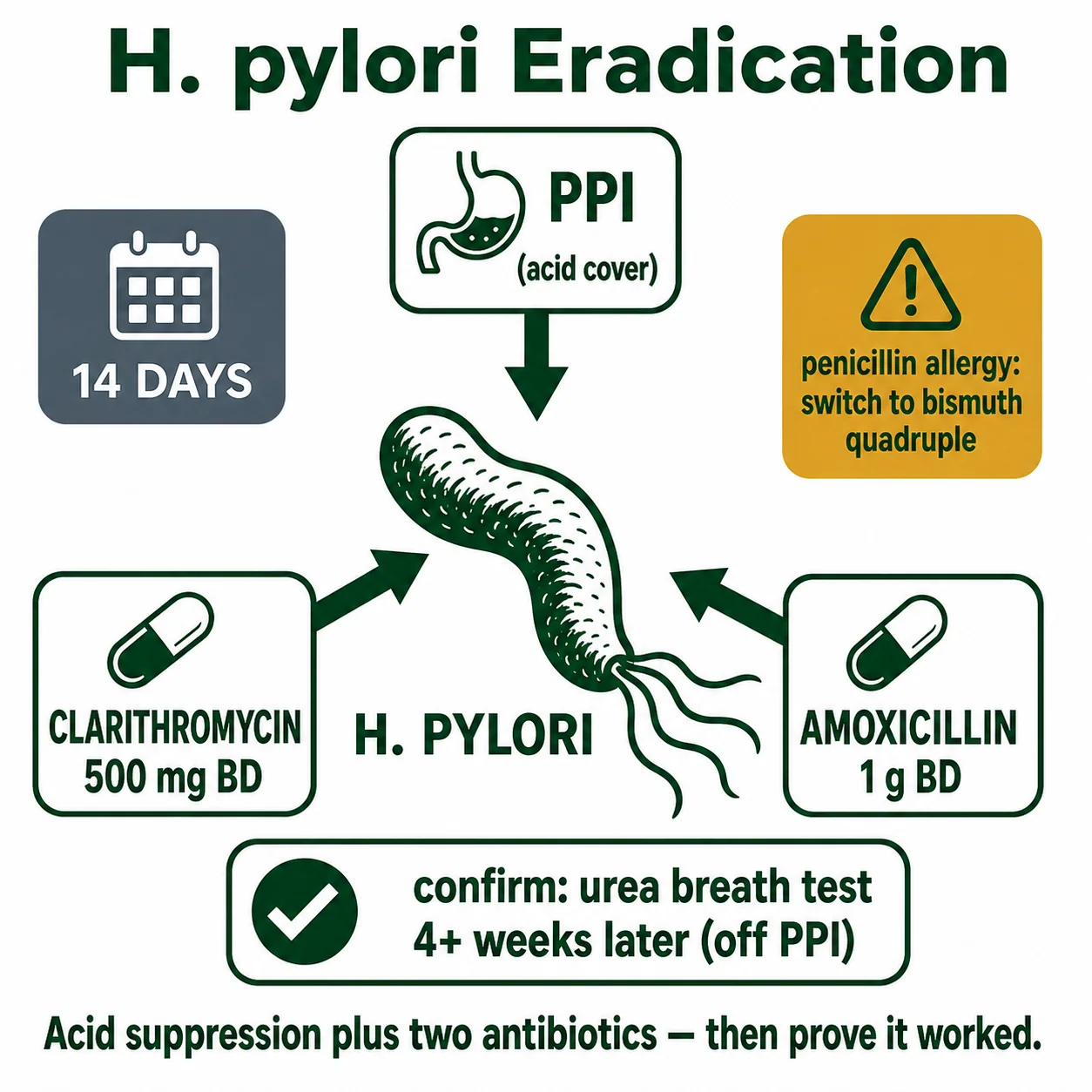
Triangle of PPI, clarithromycin and amoxicillin around a central H. pylori bacterium, with the 14-day duration chip, the penicillin-allergy switch to bismuth quadruple therapy, and post-treatment urea breath test confirmation.
Figure 3 — The vomiting map: four inputs, one centre
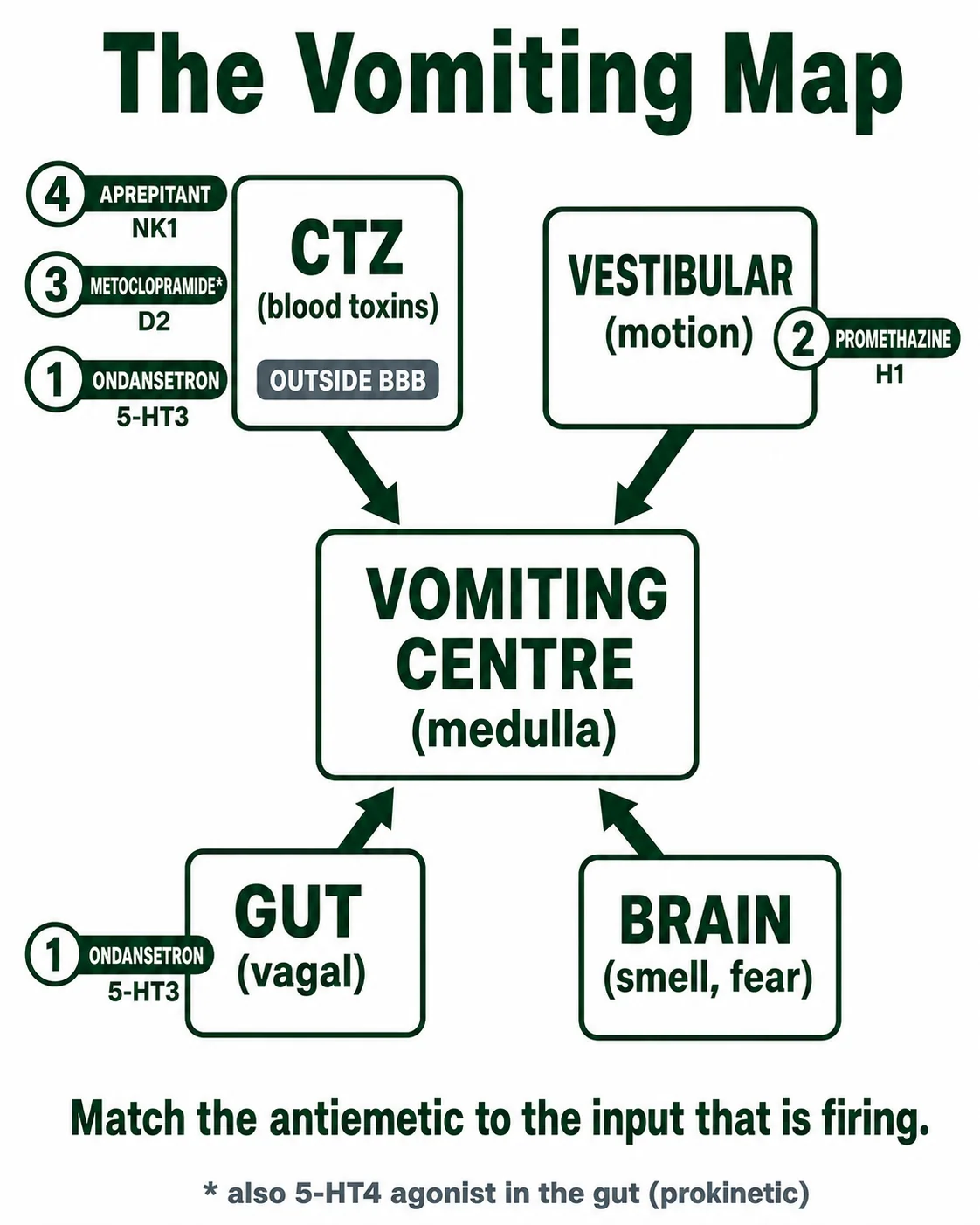
Vomiting centre receiving CTZ (outside the blood-brain barrier), vestibular, gut vagal and cortical inputs, with ondansetron on 5-HT3, promethazine on H1, metoclopramide (asterisk footnote: also 5-HT4 agonist in the gut, prokinetic) on D2 at the CTZ, and aprepitant on NK1 receptors.
Figure 4 — Metoclopramide: wanted and unwanted D2 block
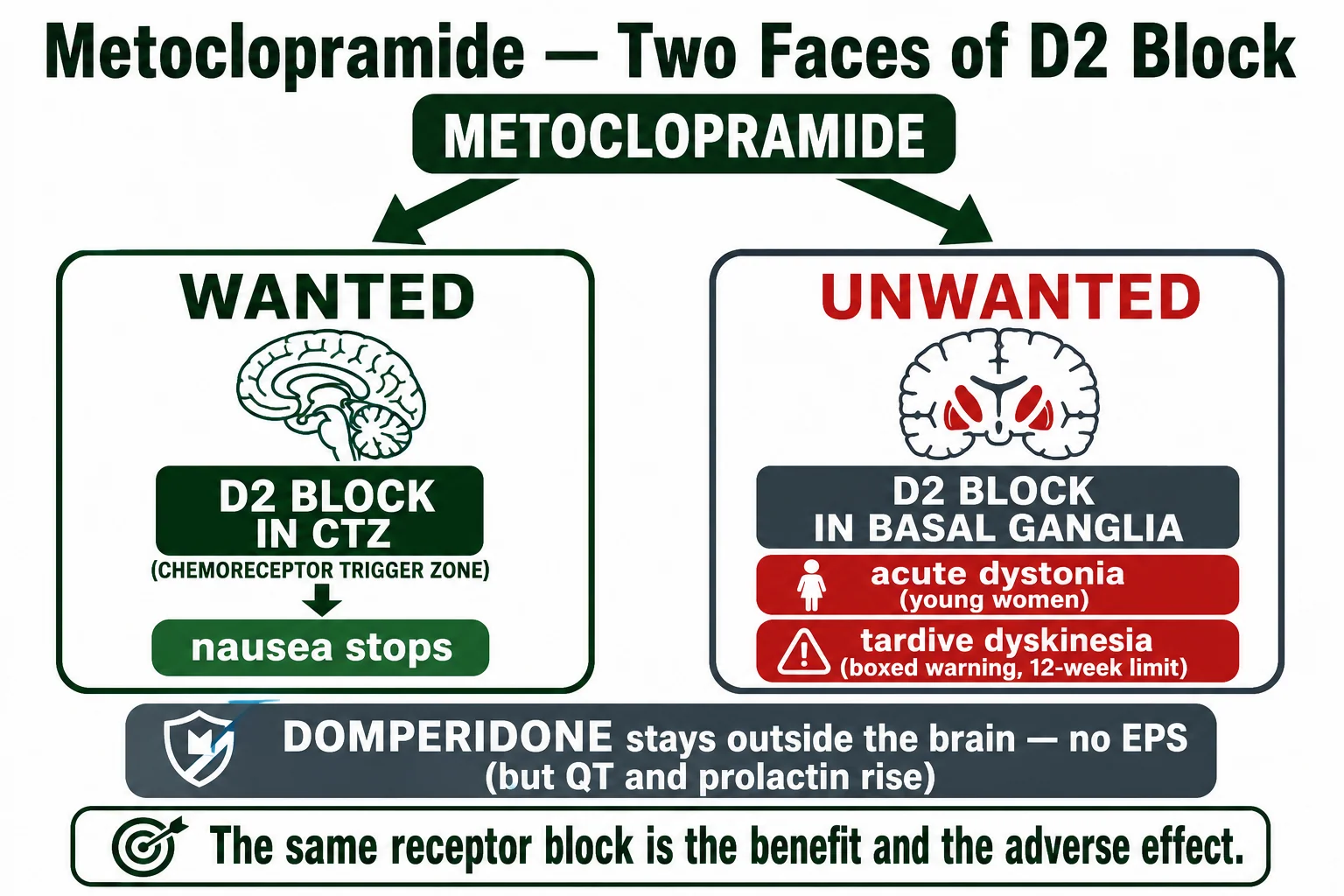
Dual-panel diagram of metoclopramide showing the therapeutic D2 block in the CTZ and the adverse D2 block in basal ganglia causing dystonia and tardive dyskinesia, with domperidone as the peripheral alternative.
Clinical Correlation
Vignette 1 — Duodenal ulcer with H. pylori
A 38-year-old man presents with 6 weeks of gnawing epigastric pain relieved by food and worsening at night; a urea breath test is positive. Upper GI endoscopy shows a duodenal ulcer. He takes ibuprofen for back pain. Plan: stop the NSAID (paracetamol substitution), and standard triple therapy for 14 days — esomeprazole 40 mg twice daily (or equivalent PPI) + amoxicillin 1 g twice daily + clarithromycin 500 mg twice daily, with adherence counselling (14 days completely, or resistance follows). PPI is continued for 4 more weeks to heal the ulcer. Eradication is confirmed 4+ weeks after antibiotics (PPI held 1–2 weeks) by urea breath test or stool antigen. (Where clarithromycin resistance is likely — increasingly the default — the 2025 ACG guideline would start with optimized bismuth quadruple therapy instead.)
Reasoning: H. pylori plus NSAID is the classic duodenal-ulcer pair; removing both the bacterium and the NSAID, and healing under acid suppression, is complete therapy. Confirmation is mandatory because failed courses breed resistant strains, and serology cannot distinguish past from present infection.
Vignette 2 — The long-term PPI chain of harm
A 68-year-old woman has taken omeprazole 20 mg daily for 5 years, begun for 'gastritis' during an admission and never reviewed. She now has recurrent loose stools (a C. difficile episode last year), fatigue with low vitamin B12, serum magnesium 1.3 mg/dL, and fell last month, fracturing her wrist. Plan: verify no ongoing indication (no NSAID, no erosive disease, no ulcer history); deprescribe — step down to the lowest effective dose, switch to on-demand H2 blocker or alginate for breakthrough symptoms, and taper to limit rebound hypersecretion; replace B12 and magnesium; bone health review (calcium, vitamin D, DEXA).
Reasoning: Every item on her problem list is a documented long-term PPI association. The stewardship lesson — now formalised in the 2025–26 ACG GERD guideline as "attempt to discontinue the PPI after an 8-week responsive trial" — is that PPIs are highly effective and safe for indicated, reviewed use; the harm is in unindicated continuation. Deprescribing is a planned taper with rebound counselling, not an abrupt stop.
Vignette 3 — Cisplatin chemotherapy: the triple-drug guard
A 52-year-old with ovarian cancer begins cisplatin-based chemotherapy, a highly emetogenic regimen. Pre-chemotherapy she receives ondansetron 8 mg IV + dexamethasone 12 mg IV + fosaprepitant 150 mg IV; oral aprepitant 80 mg and dexamethasone 8 mg continue on days 2–3 (dexamethasone dose reduced because aprepitant inhibits CYP3A4). She vomits once on day 1 and not at all on days 2–5. For cycle 2 she is premedicated with lorazepam at night because of anticipatory nausea before arriving.
Reasoning: The guard matches the timetable: serotonin (5-HT3) drives day 1, so ondansetron leads; substance P (NK1) drives days 2–3, so aprepitant carries the delayed phase; steroid potentiates both. Anticipatory nausea is conditioned — benzodiazepines and behavioural techniques, not higher antiemetic doses, are the answer.
Vignette 4 — Acute dystonia after one dose of metoclopramide
A 22-year-old woman receives metoclopramide 10 mg IV in the emergency department for migraine with vomiting. Twenty minutes later her eyes roll upward, her neck twists, and her jaw clenches — an oculogyric crisis with torticollis and trismus. She is terrified but conscious. IV diphenhydramine 25–50 mg (or benztropine 2 mg) is given; the dystonia resolves within 10 minutes. Metoclopramide is discontinued; her future antiemetic plan is domperidone or ondansetron; the FDA boxed warning and the 12-week rule are documented in her notes.
Reasoning: Acute dystonia is a central D2 blockade phenomenon, striking within hours of a first dose, with the highest risk in young women and children. It is fully reversible with an anticholinergic (or benzodiazepine) — an emergency procedure every intern must know. It is distinct from tardive dyskinesia, which is dose-duration-dependent and potentially irreversible — hence the boxed warning.
Practical Linkage
Upper-GI Prescribing Station (PH1.34)
H. pylori Regimen Worksheet
Write complete 14-day prescriptions (drug, dose, frequency, timing, key counselling point) for: (a) a standard adult — PPI BD + amoxicillin 1 g BD + clarithromycin 500 mg BD; (b) a penicillin-allergic adult — bismuth quadruple therapy. State the confirmation test, its timing (4+ weeks after therapy), and the PPI washout rule (hold 1–2 weeks before testing). Note the 2025 ACG preference for optimized bismuth quadruple therapy when clarithromycin susceptibility is unknown.
Antiemetic Selection Station (8 scenario cards)
Match and justify by receptor: (1) bus journey — hyoscine patch/promethazine (H1/M, vestibular); (2) cisplatin day 1 — ondansetron + dexamethasone + NK1 (5-HT3 acute); (3) day 3 post-cisplatin — aprepitant + dexamethasone (NK1 delayed); (4) 8 weeks pregnant with vomiting — doxylamine-pyridoxine (safety data); (5) post-cholecystectomy PONV — ondansetron ± dexamethasone; (6) diabetic gastroparesis — metoclopramide or domperidone (D2 + prokinetic); (7) vestibular neuritis — prochlorperazine (D2/H1); (8) anticipatory nausea before cycle 3 — lorazepam (cortical).
PPI Stewardship Audit
Review five medication charts: identify (1) PPI with no indication; (2) duration beyond 8 weeks without review; (3) stress-ulcer prophylaxis on a ward patient eating normally; (4) omeprazole running with clopidogrel (switch to pantoprazole); (5) long-term user never checked for B12/magnesium. Write a deprescribing plan with rebound counselling for each.
MCQ Bank
40 questions · tagged by topic, exam pattern & difficulty · full explanations
All three physiological stimuli of gastric acid secretion converge on a single final common pathway within the parietal cell. Which molecular entity is this final common pathway?
Rapid Revision
- Final common pathway of acid secretion — the H+/K+ ATPase pump; blocked covalently by PPIs.
- PPI activation — acid-activated prodrug converted to sulfenamide inside the parietal cell canaliculus.
- PPI timing — 30–60 minutes before breakfast; full effect in 3–5 days.
- PPI of choice with clopidogrel — pantoprazole (least CYP2C19 inhibition).
- Long-term PPI harms — C. difficile, B12/iron/magnesium/calcium malabsorption, fractures, acute interstitial nephritis, rebound.
- PPI deprescribing — taper with on-demand cover to outlast rebound hypersecretion; ACG 2025–26: attempt discontinuation after a responsive 8-week trial.
- Cimetidine legacy — antiandrogen (gynaecomastia) plus potent CYP inhibition.
- H2 blocker ceiling — good nocturnal acid control; tachyphylaxis within 5–10 days.
- Antacid bowel rule — aluminium constipates, magnesium purges; combine to balance.
- Antacid drug rule — separate quinolones, tetracycline, iron and thyroxine by 1–2 hours.
- Milk-alkali syndrome — calcium carbonate overload: hypercalcaemia, alkalosis, renal injury.
- Sucralfate — needs acid to polymerise; never together with PPI or antacid; safe in pregnancy (ACG: in GERD, sucralfate reserved for pregnancy).
- Bismuth — black stool and tongue (warn, do not misread as melaena).
- Misoprostol — NSAID-ulcer prophylaxis; diarrhoea; abortifacient — contraindicated in pregnancy.
- H. pylori triple — PPI BD + amoxicillin 1 g BD + clarithromycin 500 mg BD, 14 days.
- ACG 2025 first-line shift — optimized bismuth quadruple 14 days preferred when susceptibility unknown; vonoprazan dual/triple and rifabutin triple are FDA-approved alternatives.
- Penicillin allergy regimen — bismuth quadruple (PPI + bismuth + tetracycline + metronidazole).
- Eradication proof — urea breath test or stool antigen 4+ weeks later, PPI held 1–2 weeks.
- CTZ — area postrema, outside the blood-brain barrier; D2, 5-HT3, NK1 receptors.
- Motion sickness receptors — H1 and muscarinic; hence promethazine and hyoscine.
- Chemo acute phase — 5-HT3 (ondansetron) driven; delayed 24–120 h — NK1 (aprepitant) driven.
- Ondansetron adverse effects — headache, constipation, QT prolongation.
- Palonosetron — longest half-life 5-HT3 antagonist; best delayed cover.
- Aprepitant — NK1 antagonist and CYP3A4 inhibitor (halve dexamethasone; watch warfarin).
- Pregnancy nausea first line — doxylamine with pyridoxine.
- Anticipatory vomiting — lorazepam plus behavioural therapy.
- Breakthrough CINV — olanzapine (broad-spectrum rescue).
- Metoclopramide boxed warning — tardive dyskinesia; limit to 12 weeks.
- Acute dystonia rescue — IV diphenhydramine or benztropine within minutes.
- Metoclopramide contraindications — obstruction, perforation, epilepsy, Parkinson disease.
- Domperidone — outside the brain: no EPS, but prolactin rise and QT risk.
- Cisapride — withdrawn for fatal long-QT arrhythmias.
- Erythromycin — motilin agonist for short-course gastroparesis (tachyphylaxis).
- ACG GERD 2025–26 — prokinetics not recommended for GERD without objective gastroparesis; on-demand/intermittent PPI for non-erosive disease.
Viva Questions
- Why is a PPI taken before meals? — PPIs are acid-activated prodrugs that bind only pumps actively secreting acid; taking them 30–60 minutes before breakfast places drug in blood when the meal switches the pumps on.
- What happens if acid suppression is stopped abruptly after long-term PPI use? — Gastrin-driven parietal mass produces rebound hypersecretion for 1–2 weeks; deprescribe by tapering with on-demand H2 blocker or alginate cover.
- Which PPI with clopidogrel and why? — Pantoprazole; omeprazole inhibits CYP2C19, the clopidogrel-activating enzyme, and is specifically advised against.
- Why must sucralfate not be given with a PPI? — Sucralfate polymerises into its adherent gel only in acid; acid suppression inactivates its mechanism — separate the doses.
- How does cimetidine differ from famotidine? — Cimetidine is an antiandrogen (gynaecomastia) and potent CYP inhibitor causing many interactions and CNS confusion in the elderly; famotidine is renally cleared with minimal interactions.
- Write the standard H. pylori regimen and its allergy alternative. — PPI BD + amoxicillin 1 g BD + clarithromycin 500 mg BD for 14 days; penicillin allergy: bismuth quadruple (PPI + bismuth + tetracycline + metronidazole) 14 days. Note the 2025 ACG preference for optimized bismuth quadruple first-line whenever susceptibility is unknown, with vonoprazan dual/triple as new options.
- How will you confirm H. pylori eradication? — Urea breath test or stool antigen 4 or more weeks after therapy with PPI held 1–2 weeks; serology cannot confirm cure.
- Where is the CTZ and why is it special? — Area postrema of the fourth ventricle, outside the blood-brain barrier, sampling blood and CSF for emetogens; carries D2, 5-HT3 and NK1 receptors.
- Which antiemetic for a bus journey and which for cisplatin day 1? — Journey: hyoscine or promethazine (vestibular H1/M); cisplatin: ondansetron + dexamethasone + aprepitant (acute 5-HT3 plus delayed NK1 cover).
- What is the first-line treatment of vomiting in pregnancy? — Doxylamine-pyridoxine; ondansetron reserved for hyperemesis with counselling; thiamine in prolonged vomiting.
- What is the metoclopramide boxed warning and the duration rule? — Tardive dyskinesia, risk rising with dose and duration; limit treatment to 12 weeks except in exceptional circumstances.
- How do you treat an acute dystonic reaction to metoclopramide? — IV diphenhydramine 25–50 mg or benztropine 2 mg; resolution within minutes; stop the drug and document.
- Why does domperidone not cause extrapyramidal symptoms? — It crosses the blood-brain barrier poorly, so striatal D2 blockade is minimal; but the pituitary is outside the barrier, so prolactin rises, and QT prolongation persists as its cardiac caution.
- Why was cisapride withdrawn? — hERG blockade caused long QT and fatal torsades; the class moved to mosapride and itopride without QT liability.
- What are the ICU criteria for stress-ulcer prophylaxis? — Coagulopathy or mechanical ventilation beyond 48 hours; ward patients who feed normally do not qualify — over-prophylaxis is a stewardship target.
References
- Tripathi KD. Essentials of Medical Pharmacology. 9th ed. New Delhi: Jaypee Brothers Medical Publishers; 2024. Chapters 46–47 (drugs for peptic ulcer and emesis; prokinetics).
- Katzung BG, Vanderah TW. Basic & Clinical Pharmacology. 16th ed. New York: McGraw Hill; 2024. Chapter 62: Drugs Used in Gastrointestinal Disorders.
- Brunton LL, Knollmann BC (eds). Goodman & Gilman's Pharmacological Basis of Therapeutics. 14th ed. New York: McGraw Hill; 2023. Gastrointestinal pharmacology section.
- Ritter JM, Flower R, Henderson G, et al. Rang & Dale's Pharmacology. 10th ed. Edinburgh: Elsevier; 2024. Gastrointestinal drug section.
- Shah SC, Sewell JL, El-Serag HB, et al. ACG Clinical Guideline: Treatment of Helicobacter pylori Infection. Am J Gastroenterol. 2025;120(1):40–65. (Optimized bismuth quadruple preferred first-line when susceptibility unknown; rifabutin and vonoprazan regimens; all 14 days.)
- Sugimoto M, Uotani T, Sahara J, et al. Efficacy of triple Helicobacter pylori eradication therapy and the Maastricht VI/Florence consensus report. Gut. 2022;71(8):1592–1593 (consensus summary).
- Katz PO, Gerson LB, Tye GW, et al. ACG Clinical Guideline for the Diagnosis and Management of Gastroesophageal Reflux Disease. Am J Gastroenterol. 2025 (update of the 2013 guideline: 8-week empiric PPI trial; attempt discontinuation; PPI before meals; on-demand therapy for NERD; against routine prokinetics; sucralfate in pregnancy only).
- US Food and Drug Administration. Metoclopramide-containing drugs: boxed warning for tardive dyskinesia. Drug Safety Communication; 2009.
- FDA approvals: vonoprazan (Voquezna) dual and triple H. pylori regimens (2022–2024); rifabutin triple (Talicia, 2019); ranitidine market withdrawal (NDMA, 2020).
- Hesketh PJ, Kris MG, Basch E, et al. Antiemetics: ASCO guideline. J Clin Oncol. 2020;38(24):2782–2797.
- Navarra P, et al. ESMO/MASCC consensus or NCCN antiemesis updates (2023–2025), olanzapine for breakthrough CINV.
- National Medical Commission (NMC). Competency Based Undergraduate Curriculum: Pharmacology. Competency PH1.34; 2019.
Downloads
All deliverables & printable revision sheets for CH35
Printable Chapter Handout & Study Notes
Generate a clean, high-yield PDF or print directly without sidebars and navigation menus.