
Drugs for Bronchial Asthma & COPD
Learning Objectives
At the end of this chapter, the Phase II MBBS student will be able to:
- Contrast the pathophysiology of asthma (Type 2 inflammation, bronchial hyperresponsiveness, reversible obstruction) with COPD (largely fixed airflow limitation, emphysema and chronic bronchitis). (PH1.32 — Knows)
- Explain the pharmacology of short-acting and long-acting beta-2 agonists, including onset, duration, adverse effects and the LABA-monotherapy hazard. (PH1.32 — Knows)
- Compare inhaled corticosteroids by potency and dose, and counsel patients on oropharyngeal adverse effects and technique dependence. (PH1.32 — Knows-how)
- Describe ipratropium and tiotropium (SAMA and LAMA) mechanisms, niches and the quaternary-amine safety profile. (PH1.32 — Knows)
- Analyse theophylline kinetics, narrow therapeutic index, monitoring requirements and clinically critical interactions. (PH1.32 — Knows-how)
- Detail leukotriene antagonists and mast cell stabilisers with their niches and boxed warnings. (PH1.32 — Knows)
- Map severe-asthma biologicals to phenotypes (IgE-mediated, eosinophilic, Th2-high, TSLP-driven). (PH1.32 — Knows)
- Construct the GINA stepwise plan and the GOLD ABE strategy, including criteria for triple therapy. (PH1.32 — Knows-how)
- Manage acute severe asthma and COPD exacerbation using standard protocols (oxygen, nebulised therapy, steroids, magnesium, controlled oxygen 88–92%, NIV). (PH1.32 — Knows-how)
- Demonstrate correct inhaler device selection and technique (pMDI, DPI, spacer, soft-mist, nebuliser) and justify the spacer rationale. (PH1.32 — Knows-how)
Must-Know Summary
Asthma therapy rests on two families of drugs: relievers (bronchodilators for immediate symptom relief) and controllers (anti-inflammatory preventers). Salbutamol, the prototype SABA, acts within 5 minutes for 4–6 hours through beta-2 receptor-mediated cAMP generation; its adverse effects are tremor, tachycardia, hypokalaemia and lactic acidosis. LABAs (formoterol, salmeterol, vilanterol) act 12–24 hours but must never be used alone in asthma — the SMART trial showed excess deaths with salmeterol monotherapy; formoterol alone combines fast onset with long duration, the basis of MART (budesonide-formoterol as both maintenance and reliever). Inhaled corticosteroids are the most effective controllers — the only agents that reduce asthma mortality — with dose-dependent local effects (oral candidiasis, dysphonia; prevented by spacer plus rinse) and systemic effects (growth slowing, adrenal suppression). Ipratropium (SAMA) adds bronchodilation in acute severe attacks and COPD; tiotropium (LAMA, once daily) is a COPD cornerstone and a GINA step-4 add-on. Theophylline has a narrow therapeutic index (5–15 mcg/mL): ciprofloxacin, erythromycin and cimetidine raise its levels while rifampicin and phenytoin lower them; toxicity brings arrhythmias and seizures. Montelukast carries an FDA boxed warning for neuropsychiatric events. Biologicals map to phenotype: omalizumab (IgE), mepolizumab/benralizumab (IL-5, eosinophilic), dupilumab (IL-4 receptor alpha), tezepelumab (TSLP). Acute severe asthma: oxygen, nebulised salbutamol plus ipratropium, systemic steroid, IV magnesium sulfate 2 g in severe cases — sedatives are forbidden. COPD exacerbation: controlled oxygen 88–92% (hyperoxia causes CO2 narcosis), bronchodilator nebs, steroids, antibiotics if sputum is purulent, NIV for pH under 7.35.
- Salbutamol — SABA reliever: onset 5 min, duration 4–6 h; tremor, tachycardia, hypokalaemia, lactic acidosis
- LABA monotherapy hazard — SMART trial excess asthma deaths; LABA always paired with ICS
- Formoterol — the only LABA with fast onset (1–3 min) + 12 h duration; enables MART
- Inhaled corticosteroids — only controller class that reduces mortality; rinse and spacer prevent candidiasis
- Budesonide — the ICS with the most pregnancy safety data; fluticasone the most potent
- Ipratropium — quaternary anticholinergic, no CNS entry; additive with SABA in acute severe asthma
- Tiotropium — once-daily LAMA, COPD cornerstone; dry mouth, urinary retention, glaucoma warnings
- Theophylline — therapeutic 5–15 mcg/mL; ciprofloxacin/erythromycin/cimetidine raise; rifampicin/phenytoin/smoking lower
- Montelukast — FDA boxed warning (2020): depression, agitation, dream abnormalities, suicidal ideation
- GINA 2026 — anti-inflammatory reliever (AIR) at every step: Track 1 ICS-formoterol preferred; Track 2 now ICS-SABA from Step 1; SABA-only abolished
- GOLD 2026 — ABE with a lower threshold for Group E; eosinophil-guided ICS (≥300 strong, 100–299 conditional); triple may follow a single moderate exacerbation when eosinophils are high
- Acute severe asthma — O2, nebulised salbutamol + ipratropium, steroid, IV MgSO4 2 g; never sedate
- COPD oxygen — target SpO2 88–92%; hyperoxia causes CO2 narcosis
- Smoking cessation — the only intervention that changes COPD natural history
Classification
BOX 1 — BRONCHODILATORS (RELIEVERS AND MAINTENANCE BRONCHODILATORS)
Short-Acting Beta-2 Agonists (SABA)
- Salbutamol (albuterol), terbutaline, levosalbutamol
Long-Acting Beta-2 Agonists (LABA)
- 12-hour: formoterol, arformoterol, salmeterol
- 24-hour (ultra-LABA): indacaterol, vilanterol, olodaterol
Short-Acting Muscarinic Antagonist (SAMA)
- Ipratropium (also fixed combination with salbutamol)
Long-Acting Muscarinic Antagonists (LAMA)
- Tiotropium, glycopyrronium, umeclidinium, aclidinium
Methylxanthines
- Theophylline (oral SR), aminophylline (IV)
Phosphodiesterase-4 Inhibitor
- Roflumilast (oral, COPD exacerbation prevention)
BOX 2 — CONTROLLERS AND ADD-ON THERAPY
Inhaled Corticosteroids (ICS)
- Beclomethasone dipropionate, budesonide, fluticasone propionate, fluticasone furoate, ciclesonide
ICS-LABA Fixed Combinations
- Budesonide-formoterol (MART capable), beclomethasone-formoterol, fluticasone-salmeterol, fluticasone-vilanterol
Triple (ICS-LABA-LAMA) Combinations
- Fluticasone-umeclidinium-vilanterol; beclomethasone-formoterol-glycopyrronium
Leukotriene-Modifying Agents
- CysLT1 antagonists: montelukast, zafirlukast, pranlukast
- 5-Lipoxygenase inhibitor: zileuton
Mast Cell Stabilisers and Antihistaminic Stabilisers
- Cromolyn sodium, nedocromil, ketotifen
Severe Asthma Biologicals
- Anti-IgE: omalizumab
- Anti-IL-5 / IL-5 receptor: mepolizumab, reslizumab, benralizumab
- Anti-IL-4 receptor alpha: dupilumab
- Anti-TSLP: tezepelumab
Systemic Agents for Acute Severe Asthma
- Prednisolone, hydrocortisone, IV magnesium sulfate, IV aminophylline
Core Concepts
1. Pathophysiology of asthma and COPD
Asthma is a chronic inflammatory disease of the airways with variable and reversible airflow obstruction and bronchial hyperresponsiveness. In the classic allergic (Type 2, Th2-high) phenotype, inhaled allergens are presented by dendritic cells to Th2 lymphocytes, which release IL-4 (drives IgE class switching), IL-5 (eosinophil maturation and survival) and IL-13 (mucus hypersecretion, goblet-cell metaplasia, IgE). IgE arms mast cells; re-exposure triggers degranulation with histamine and cysteinyl leukotrienes (LTC4, LTD4, LTE4) — the immediate asthmatic response (bronchoconstriction within minutes). The late response (4–8 hours) is eosinophil- and cytokine-mediated inflammation. Chronic disease brings airway remodelling — subepithelial fibrosis, smooth-muscle hypertrophy, mucus gland hyperplasia — which controllers limit.
COPD is progressive, largely irreversible obstruction from small-airway fibrosis (chronic bronchitis) and alveolar destruction (emphysema), driven by neutrophil-macrophage-CD8 inflammation, oxidative stress and proteinase–antiproteinase imbalance (alpha-1 antitrypsin deficiency in early-onset emphysema). Some reversibility exists, but the dominant problems are expiratory flow limitation, hyperinflation and exacerbations — themselves inflammation-driven, eosinophilic or bacterial.
Why therapy differs: asthma is suppressible by steroids (controllers first); COPD inflammation is steroid-resistant, so bronchodilators dominate and ICS is reserved for eosinophilic frequent exacerbators. This single contrast organises the entire chapter.
2. Beta-2 agonists: short and long acting
Short-acting beta-2 agonists (SABA) — the relievers. Salbutamol (albuterol) is the prototype: onset 5 minutes, peak 30–60 minutes, duration 4–6 hours; given as 100 mcg per actuation (2 puffs) by pMDI or 2.5–5 mg by nebuliser. Terbutaline is the alternative; levosalbutamol (the R-enantiomer) matches efficacy with marginally less tremor. Adverse effects are predictable beta-2 pharmacology: skeletal muscle tremor (commonest), tachycardia (beta-1 spill), hypokalaemia (beta-2 drives potassium into cells — watch with diuretics; the basis of nebulised salbutamol as emergency treatment of hyperkalaemia), hyperglycaemia, lactic acidosis at high cumulative dose, and tachyphylaxis on overuse. Frequent SABA need signals poor control — dispensing of 3 or more canisters per year is associated with increased asthma death; the answer is a controller, not more reliever. Terbutaline/salbutamol are also used orally and parenterally as tocolytics.
Long-acting beta-2 agonists (LABA) — the controllers' partners. Salmeterol is highly lipophilic: slow onset (20–30 minutes — never for acute relief), duration 12 hours, a partial agonist. Formoterol is unique: fast onset (1–3 minutes) with 12-hour duration — the only LABA safe as a reliever, which permits MART (Maintenance And Reliever Therapy) with budesonide-formoterol. Ultra-LABAs — indacaterol, vilanterol, olodaterol — act 24 hours, once daily, mainly in COPD (vilanterol also in fluticasone-vilanterol asthma combinations).
The LABA monotherapy hazard: the SMART trial (Salmeterol Multicenter Asthma Research Trial) showed a significant excess of asthma-related deaths and life-threatening events when salmeterol was used without an inhaled corticosteroid; the FDA mandated a boxed warning. Rule: LABA only in fixed combination with ICS — fluticasone-salmeterol, budesonide-formoterol, beclomethasone-formoterol, fluticasone-vilanterol.
3. Inhaled and systemic corticosteroids
Mechanism. Corticosteroids diffuse into airway cells and bind the glucocorticoid receptor, which transrepresses inflammatory genes (cytokines IL-4, IL-5, IL-13, GM-CSF; chemokines; inducible COX and NOS) and transactivates anti-inflammatory proteins (beta-2 receptor upregulation — restoring beta-2 responsiveness, annexin-1, MKP-1). Effects: reduced eosinophil survival and activation, less mucus, less oedema, less vascular leak, and inhibition of airway remodelling. ICS are the most effective controllers in asthma and the only class shown to reduce asthma mortality.
Molecules and potency. Fluticasone propionate (and its once-daily ester fluticasone furoate) is the most potent per microgram; budesonide has the largest pregnancy safety database (preferred in pregnancy); beclomethasone dipropionate (extrafine HFA formulation reaches small airways); ciclesonide is a prodrug activated by airway esterases, minimising oropharyngeal effects.
Dose–response and systemic risk. Most patients are controlled on low doses; benefit above moderate-high doses is small while systemic risk climbs — adrenal suppression, growth slowing (about 0.5–1 cm, largely catch-up growth), cataract, osteoporosis, skin bruising. Doses are step-counted low/medium/high per molecule (e.g., budesonide 200–400/400–800/over 800 mcg daily via DPI; fluticasone propionate 100–250/250–500/over 500 mcg).
Local effects and counselling. Oral candidiasis (5–10%) and dysphonia (laryngeal myopathy) — prevented by rinse-and-spit after every use and a spacer with pMDI. Maximal benefit takes days to weeks; technique is the first thing to check before stepping up therapy.
Systemic steroids. Acute severe asthma/exacerbations: prednisolone 40–50 mg orally for 5–7 days (or hydrocortisone 100 mg IV if unable to swallow); short courses need no taper; long-term oral steroids are a last resort (osteoporosis prophylaxis, glucose monitoring).
4. Anticholinergics and methylxanthines
Ipratropium (SAMA). A quaternary ammonium derivative of atropine — negligibly absorbed, no CNS or systemic atropine effects. Onset 15–30 minutes (slower than SABA), duration 3–6 hours. Uses: added to nebulised salbutamol in acute severe asthma (reduces hospitalisation), COPD maintenance and exacerbations, and hypersecretory states. Dry mouth and a bitter taste are the only common complaints.
Tiotropium and the LAMAs. Tiotropium, once daily, gives 24-hour bronchodilation — a COPD cornerstone and a licensed GINA step-4/5 add-on in uncontrolled asthma. Companions: glycopyrronium, umeclidinium, aclidinium. Adverse effects: dry mouth, urinary retention (caution in BPH), precipitation of closed-angle glaucoma (especially nebulised mist), constipation.
Theophylline. A weak bronchodilator with genuine anti-inflammatory action (histone deacetylase activation; weak PDE inhibition; adenosine receptor antagonism; improves diaphragmatic contractility). The problem is a narrow therapeutic index: target 5–15 mcg/mL, with metabolism by CYP1A2/3A4 that is wildly variable and dose-dependent (zero-order kinetics at high levels). Level-raising interactions — ciprofloxacin, erythromycin, clarithromycin, cimetidine, oral contraceptives, fluvoxamine, allopurinol, propranolol (also cardiac disease, fever, liver disease, heart failure). Level-lowering — rifampicin, phenytoin, carbamazepine, phenobarbitone, chronic smoking (1A2 induction). Toxicity: early nausea, vomiting and restlessness; then tachyarrhythmias and seizures (which may be the first sign in children); hypokalaemia and hyperglycaemia at high levels. Management of overdose: stop the drug, repeated activated charcoal (enhances elimination), ECG monitoring, benzodiazepines for seizures, dialysis/charcoal haemoperfusion if severe. Aminophylline is the water-soluble IV complex (theophylline plus ethylenediamine) used in refractory acute severe asthma — load cautiously if the patient is already on oral theophylline. Monitoring: levels, and drug-interaction screening at every prescription.
Roflumilast (PDE4 inhibitor). Oral, once daily; reduces exacerbations in severe COPD with chronic bronchitis and FEV1 below 50% despite inhaled therapy. Not a bronchodilator. Adverse effects: nausea, diarrhoea, abdominal pain, weight loss, insomnia; use with caution in depression (suicidality warning).
5. Leukotriene antagonists, mast cell stabilisers, biologicals
Cysteinyl leukotrienes (LTC4/D4/E4) cause bronchoconstriction 1000 times more potent than histamine, plus mucus secretion, oedema and eosinophil recruitment — the target of two drug families.
Montelukast (10 mg once daily at night; 4 mg age 2–5; 5 mg age 6–14) and zafirlukast (20 mg twice daily, CYP2C9 interactions, given apart from meals) block the CysLT1 receptor. Niche indications: aspirin-exacerbated respiratory disease (AERD — the aspirin triad of asthma, nasal polyps and NSAID sensitivity), exercise-induced bronchoconstriction (a single dose 2 hours before exercise), mild persistent asthma, and asthma with allergic rhinitis. The FDA boxed warning (2020) mandates counselling for neuropsychiatric events — depression, agitation, dream abnormalities, insomnia, irritability and suicidal ideation; montelukast is no longer preferred for allergic rhinitis alone. Tapering steroids in Churg-Strauss syndrome may unmask vasculitis (paradoxical eosinophilia). Zileuton, the 5-lipoxygenase inhibitor, requires hepatic monitoring and is rarely used.
Mast cell stabilisers. Cromolyn sodium and nedocromil inhibit mast-cell degranulation (chloride-channel modulation) — purely prophylactic, no bronchodilator action, excellent safety, but 4-times-daily dosing ruins adherence; used in children and exercise-induced asthma (dose 15–20 minutes before exertion), and cromolyn also as ophthalmic/nasal preparations in allergy. Ketotifen combines H1-antihistamine with mast-cell stabilisation; oral, twice daily; sedation limits daytime use.
Severe asthma biologicals — phenotype-matched. Omalizumab (anti-IgE, subcutaneous every 2–4 weeks, dose by body weight and IgE level) for IgE-mediated allergic asthma; watch anaphylaxis (observe after initial doses) — also licensed for chronic urticaria. Mepolizumab, reslizumab and benralizumab target the IL-5 axis (IL-5 itself, or the IL-5 receptor alpha — benralizumab depletes eosinophils by ADCC) for the eosinophilic phenotype (blood eosinophils about 150–300 or more), oral-steroid sparing. Dupilumab blocks the IL-4 receptor alpha, inhibiting both IL-4 and IL-13 — for Th2-high asthma, atopic dermatitis and nasal polyps; conjunctivitis is a class complaint. Tezepelumab blocks TSLP (thymic stromal lymphopoietin), the upstream epithelial alarmin — the first phenotype-agnostic biologic (works regardless of eosinophil count).
6. Stepwise management and acute severe asthma
GINA principles (2025–2026). Asthma must be treated with ICS-containing therapy at every step; SABA-only treatment is no longer recommended at any step (it doubles exacerbation risk). The concept is the anti-inflammatory reliever (AIR): Track 1 (preferred) — low-dose ICS-formoterol as reliever, with maintenance doses as needed (MART at higher steps); Track 2 (where ICS-formoterol is unavailable) — GINA 2026 now offers ICS-SABA combination as the AIR from Step 1 (BATURA study: as-needed ICS-SABA nearly halved severe exacerbations vs SABA alone), with plain SABA relegated to use alongside regular ICS only.
The steps (Track 1): Step 1 — as-needed low-dose ICS-formoterol only. Step 2 — regular low-dose ICS-formoterol plus as-needed. Step 3 — medium-dose ICS-formoterol. Step 4 — add LTRA or tiotropium, check technique/adherence/triggers, refer for phenotyping. Step 5 — high-dose ICS-formoterol plus add-ons; biological by phenotype; consider bronchial thermoplasty in selected severe cases. GINA 2026 further consolidated MART in children aged 6–11 (CARE study: as-needed budesonide-formoterol reduced moderate-severe exacerbations by almost half vs SABA alone).
Grading the acute attack. Moderate: PEF 50–75% predicted, speaks in sentences. Acute severe: PEF 33–50%, cannot complete sentences, respiratory rate over 25, heart rate over 110. Life-threatening: PEF under 33%, SpO2 under 92%, silent chest, cyanosis, feeble respiratory effort, exhaustion or confusion, bradycardia, arrhythmia, hypotension, or a normal/rising PaCO2. Near-fatal: raised PaCO2 and/or need for ventilation.
The acute severe asthma protocol (exam-exact):
- High-flow oxygen to keep SpO2 93–95%.
- Nebulised salbutamol 5 mg plus ipratropium 0.5 mg, oxygen-driven, repeated every 15–30 minutes or back-to-back in severe attacks.
- Systemic corticosteroid: prednisolone 40–50 mg orally (or hydrocortisone 100 mg IV) — early; oral equals IV.
- IV magnesium sulfate 2 g over 20 minutes (GINA adult dose) if the response is poor; monitor for flushing, hypotension.
- Supportive: hydration, upright posture; strictly avoid sedatives, anxiolytics and beta-blockers (they kill in asthma).
- Escalation: consider IV aminophylline (cautious loading), ICU, and ventilatory support with permissive hypercapnia if deteriorating.
- Before discharge: continue or start the ICS-containing controller, arrange review within 1–4 weeks (technique, adherence, written action plan).
COPD — GOLD ABE pharmacotherapy (2026). Group A (0–1 moderate exacerbation, low symptoms, mMRC 0–1): a bronchodilator. Group B (0–1 exacerbations, high symptoms, mMRC 2 or more): LABA + LAMA dual bronchodilation. Group E (exacerbation-prone — GOLD 2026 lowers the threshold for this group): LABA + LAMA; add ICS (triple therapy) guided by blood eosinophils — 300 or more per mcL is a strong indication (consider at 100–299, particularly with asthma features or high exacerbation burden). GOLD 2026 permits — and in eosinophil-high patients encourages — escalation to triple therapy after even a single moderate exacerbation on dual therapy, and explicitly discourages withdrawing ICS in patients with eosinophils 300 or more. For every patient: smoking cessation (the only disease-modifying intervention), vaccines (influenza, pneumococcal, COVID-19 — GOLD 2026 adds RSV for age 60 and over and pertussis booster), pulmonary rehabilitation (tele-rehabilitation equivalent where access is limited); long-term oxygen if PaO2 under 55 mmHg; surgical options (lung volume reduction, bullectomy, transplant) in selected patients.
COPD exacerbation protocol. Assess severity and gases; controlled oxygen by Venturi mask targeting SpO2 88–92% — uncontrolled hyperoxia worsens hypercapnia and causes CO2 narcosis (the classic MCQ stem). Nebulised salbutamol plus ipratropium, prednisolone 40 mg for 5 days, antibiotics when sputum is more purulent (or two other cardinal signs, or ventilatory support) — first-line amoxicillin-clavulanate, doxycycline or azithromycin by local pattern. NIV (bi-level positive airway pressure) for pH under 7.35 with PaCO2 over 45 mmHg and respiratory distress — reduces intubation and mortality. Physiotherapy, hydration, treat precipitants; review inhalers and cessation support before discharge.
7. Inhaler devices and technique
pMDI (pressurised metered-dose inhaler). HFA propellant, handheld, cheap, portable — but needs hand-breath coordination (actuation at the start of a slow deep inspiration). Steps: shake; exhale fully; actuate at start of slow, deep inhalation; hold breath 10 seconds; wait 30–60 seconds between puffs; rinse after steroids.
The spacer (valved holding chamber). Rationale — three things at once: removes the coordination requirement; slows and breaks up the plume so more drug reaches the lung and less deposits in the oropharynx (higher efficacy, fewer local steroid effects, and safer high-dose ICS in children); allows tidal breathing with mask for the very young (under 4 years with mask; 4–6 years mouthpiece). Static charge reduces delivery — wash monthly and air-dry.
DPI (dry-powder inhaler). Breath-actuated — no coordination — but needs a forceful, deep inspiration (about 30–60 L/min); keep away from humidity (spoilage); exhale away from the device before inhaling; never use in severe obstruction or small children who cannot generate flow (Diskus, Turbohaler, Accuhaler, Breezhaler, Ellipta, Genuair).
Soft-mist inhaler (Respimat). Non-propellant, spring-loaded slow-moving mist — high lung deposition, minimal coordination, propellant-free; powers tiotropium and olodaterol delivery.
Nebuliser. For acute severe attacks and patients who cannot use handheld devices (small children, exhaustion, high doses needed): drug solution aerosolised by an air/O2 flow of 6–8 L/min for 10–15 minutes via mouthpiece (preferred over mask, especially for ipratropium — glaucoma and ocular effects). Disadvantages: equipment, time, drug wastage (~50%), and infection-control cleaning.
Technique audit is therapy: poor technique mimics refractory asthma; every follow-up should include a demonstration-back check, and a written action plan with PEF zones (green at least 80% of personal best; yellow 50–80% — increase reliever, step up controller, watch closely; red under 50% — emergency plan) plus trigger avoidance (mites, smoke, NSAIDs in AERD, beta-blockers — including eye drops).
Tables
Table 1 — SABA vs LABA master comparison
| Parameter | SABA (Salbutamol) | LABA (Salmeterol) | LABA (Formoterol) | Ultra-LABA (Vilanterol) |
|---|---|---|---|---|
| Onset | 5 minutes | 20–30 minutes (slow) | 1–3 minutes (fast) | About 5 minutes |
| Duration | 4–6 hours | 12 hours | 12 hours | 24 hours |
| Role | Reliever in all tracks | Maintenance only (with ICS) | Maintenance AND reliever (MART) | Maintenance once daily (with ICS) |
| Agonist character | Full agonist | Partial agonist | Full agonist | Full agonist |
| Key adverse effects | Tremor, tachycardia, hypokalaemia, lactic acidosis | Same; class boxed warning if ICS-sparing | Same; reliever role unique | Similar; class effects |
| Monotherapy rule | Reliever use always with a controller | Never alone in asthma (SMART trial) | Never alone (except as ICS-formoterol) | Never alone in asthma |
Table 2 — Inhaled corticosteroids: potency, dosing and adverse effects
| ICS | Relative potency | Low / Medium / High daily dose (adult, mcg) | Distinctions |
|---|---|---|---|
| Beclomethasone dipropionate | Moderate | 200–500 / 500–1000 / over 1000 | Extrafine HFA reaches small airways |
| Budesonide | Moderate | 200–400 / 400–800 / over 800 | Most pregnancy data — preferred in pregnancy; DPI-compatible |
| Fluticasone propionate | High | 100–250 / 250–500 / over 500 | Most potent per microgram; high first-pass metabolism |
| Fluticasone furoate | High | 50–100 / over 100 (once daily) | Once-daily with vilanterol (24 h) |
| Ciclesonide | Moderate (active metabolite) | 80–160 / over 160 | Prodrug activated in airways — least oropharyngeal candidiasis |
Table 3 — Anticholinergics and methylxanthines
| Drug | Mechanism | Onset / Duration | Monitoring and interactions | Key adverse effects |
|---|---|---|---|---|
| Ipratropium (SAMA) | M1/M3 blockade; quaternary — no CNS entry | 15–30 min / 3–6 h | None | Dry mouth, bitter taste; glaucoma with nebulised mist |
| Tiotropium (LAMA) | M3 blockade, kinetically slow dissociation | 30 min / 24 h (once daily) | None | Dry mouth, urinary retention, closed-angle glaucoma, constipation |
| Theophylline | Weak PDE inhibition, adenosine antagonism, HDAC activation | Oral SR: steady state days / variable | Levels 5–15 mcg/mL; raised by ciprofloxacin, erythromycin, cimetidine, OCPs; lowered by rifampicin, phenytoin, smoking | Nausea, vomiting, tachyarrhythmia, seizures, hypokalaemia |
| Roflumilast | PDE4 inhibition (anti-inflammatory) | Days / 24 h (oral) | Caution with CYP3A4/1A2 inhibitors; mood monitoring | Diarrhoea, nausea, weight loss, insomnia, depression caution |
Table 4 — Add-on controllers: LTRA and mast cell stabilisers
| Drug | Mechanism | Dose | Niche | Warning |
|---|---|---|---|---|
| Montelukast | CysLT1 receptor antagonist | 10 mg at night (5 mg age 6–14; 4 mg age 2–5) | AERD, exercise-induced bronchoconstriction, mild asthma, asthma with rhinitis | Boxed warning: neuropsychiatric events (2020) |
| Zafirlukast | CysLT1 receptor antagonist | 20 mg twice daily, apart from meals | As montelukast | CYP2C9 interactions (warfarin), rare cholestasis |
| Zileuton | 5-Lipoxygenase inhibitor | Twice daily (SR) | Rarely used | Hepatic enzyme monitoring |
| Cromolyn / Nedocromil | Mast-cell stabilisation (chloride-channel modulation) | Inhaled 4 times daily (prophylaxis) | Children, exercise prophylaxis (15–20 min before) | No bronchodilator action — prophylactic only; poor adherence |
| Ketotifen | H1 antihistamine + mast-cell stabiliser | Oral twice daily | Paediatric atopy | Sedation |
Table 5 — Severe asthma biologicals by phenotype
| Biologic | Target | Phenotype / biomarker | Dosing | Signature caution |
|---|---|---|---|---|
| Omalizumab | IgE (Fc-epsilon-III) | IgE-mediated allergic asthma (weight and IgE dosing table) | SC every 2–4 weeks | Anaphylaxis — observe after doses |
| Mepolizumab | IL-5 | Eosinophilic — blood eosinophils about 150+ | SC 100 mg every 4 weeks | Herpes zoster (consider vaccination) |
| Reslizumab | IL-5 | Eosinophilic | IV 3 mg/kg every 4 weeks | Anaphylaxis (IV route) |
| Benralizumab | IL-5 receptor alpha (ADCC eosinophil depletion) | Eosinophilic | SC every 4–8 weeks | Headache, injection reactions |
| Dupilumab | IL-4 receptor alpha (blocks IL-4 and IL-13) | Th2-high, FeNO-high; also atopic dermatitis, nasal polyps | SC every 2 weeks | Conjunctivitis; helminth caution |
| Tezepelumab | TSLP (epithelial alarmin) | Phenotype-agnostic — works at low and high eosinophils | SC every 4 weeks | Injection reactions; helminth caution |
Table 6 — GINA stepwise ladder vs GOLD ABE strategy
| Step / Group | Asthma (GINA, Track 1 — MART preferred) | COPD (GOLD 2026) |
|---|---|---|
| 1 / A (few symptoms; 0–1 exacerbation) | As-needed low-dose ICS-formoterol | A bronchodilator (SABA/SAMA or single LABA/LAMA) |
| 2 / B (regular symptoms; 0–1 exacerbation) | Regular low-dose ICS-formoterol + as-needed | LABA + LAMA |
| 3 | Medium-dose ICS-formoterol | (Escalate after exacerbation history) |
| 4 / E (exacerbation-prone; threshold lowered in 2026) | Add LTRA or tiotropium; refer for phenotyping | LABA + LAMA; add ICS if eosinophils 300+ (consider 100–299) — triple even after a single moderate exacerbation if eosinophil-high |
| 5 | High-dose ICS-LABA + biologic by phenotype; bronchial thermoplasty (selected) | Roflumilast (chronic bronchitis, FEV1 under 50%), oxygen, surgery, transplant (selected) |
| All | Technique, adherence, triggers, written action plan | Smoking cessation, vaccines (influenza, pneumococcal, COVID-19, RSV ≥60 y), pulmonary rehabilitation |
| Exacerbation | O2 93–95%; nebulised salbutamol + ipratropium; steroid; IV MgSO4 2 g if severe | O2 88–92%; nebs; steroid 5 days; antibiotics if purulent; NIV if pH under 7.35 |
Figures
Figure 1 — Asthma pathophysiology and inflammatory cascade with drug targets
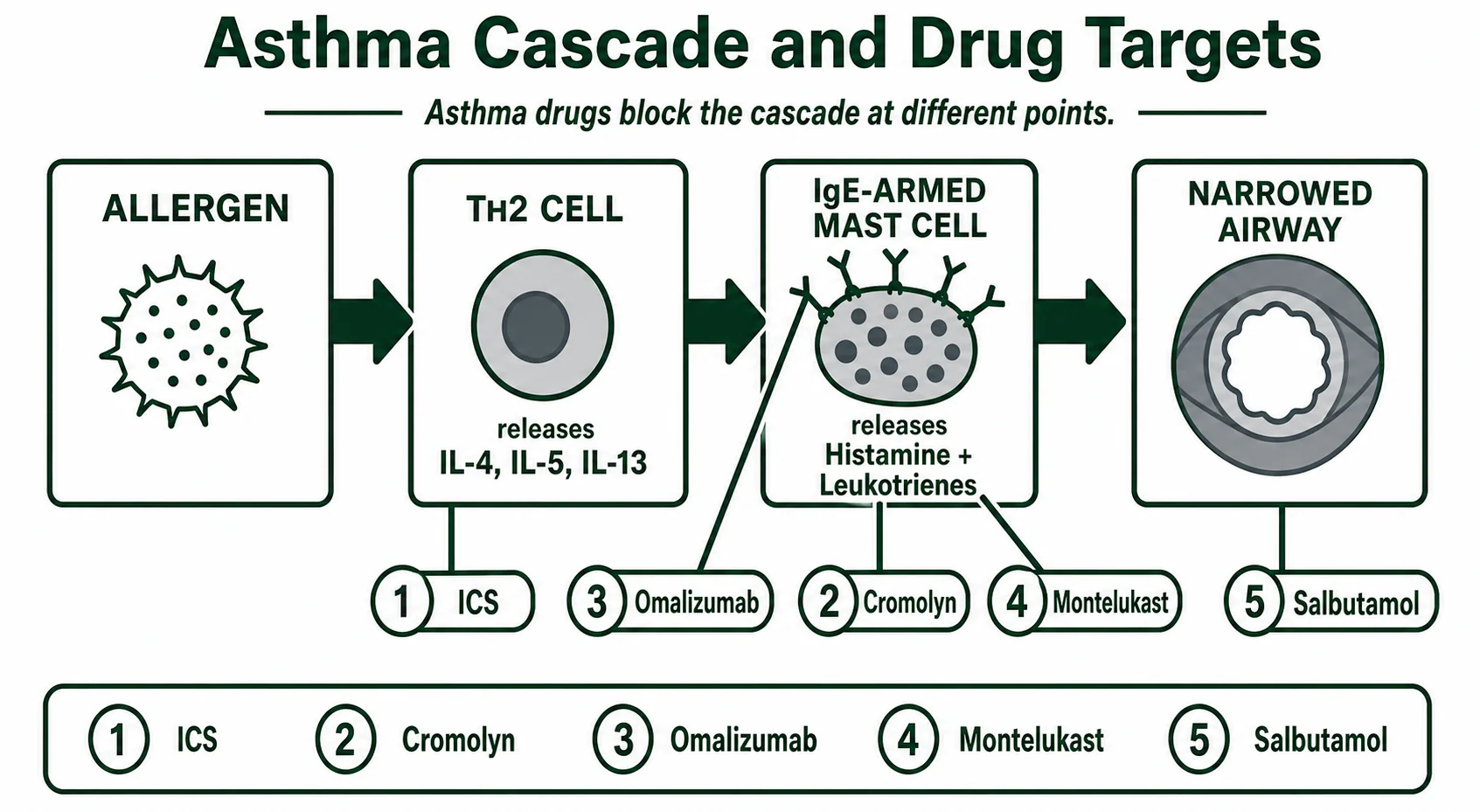
Cross-section diagram of the asthmatic bronchus with the Type 2 inflammatory cascade from allergen to Th2 cytokines, IgE, mast-cell degranulation and eosinophils, annotated with the molecular targets of steroids, beta-2 agonists, montelukast, cromolyn and omalizumab.
Figure 2 — Bronchodilator signalling pathways in airway smooth muscle
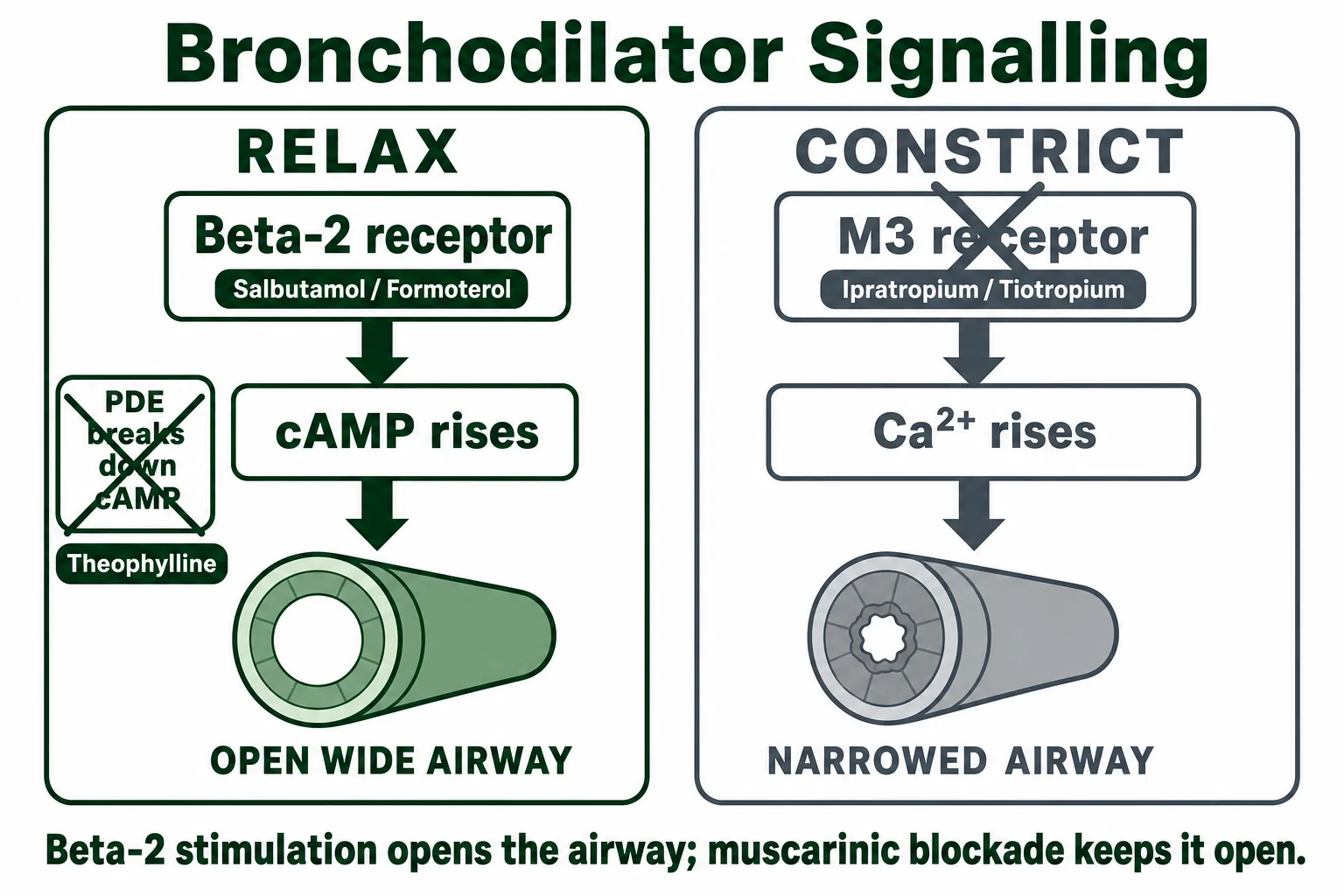
Airway smooth-muscle signalling diagram showing the beta-2 receptor-cAMP-PKA relaxation pathway with phosphodiesterase inhibition by theophylline, and the M3-calcium contraction pathway blocked by ipratropium and tiotropium.
Figure 3 — GINA stepwise asthma treatment ladder
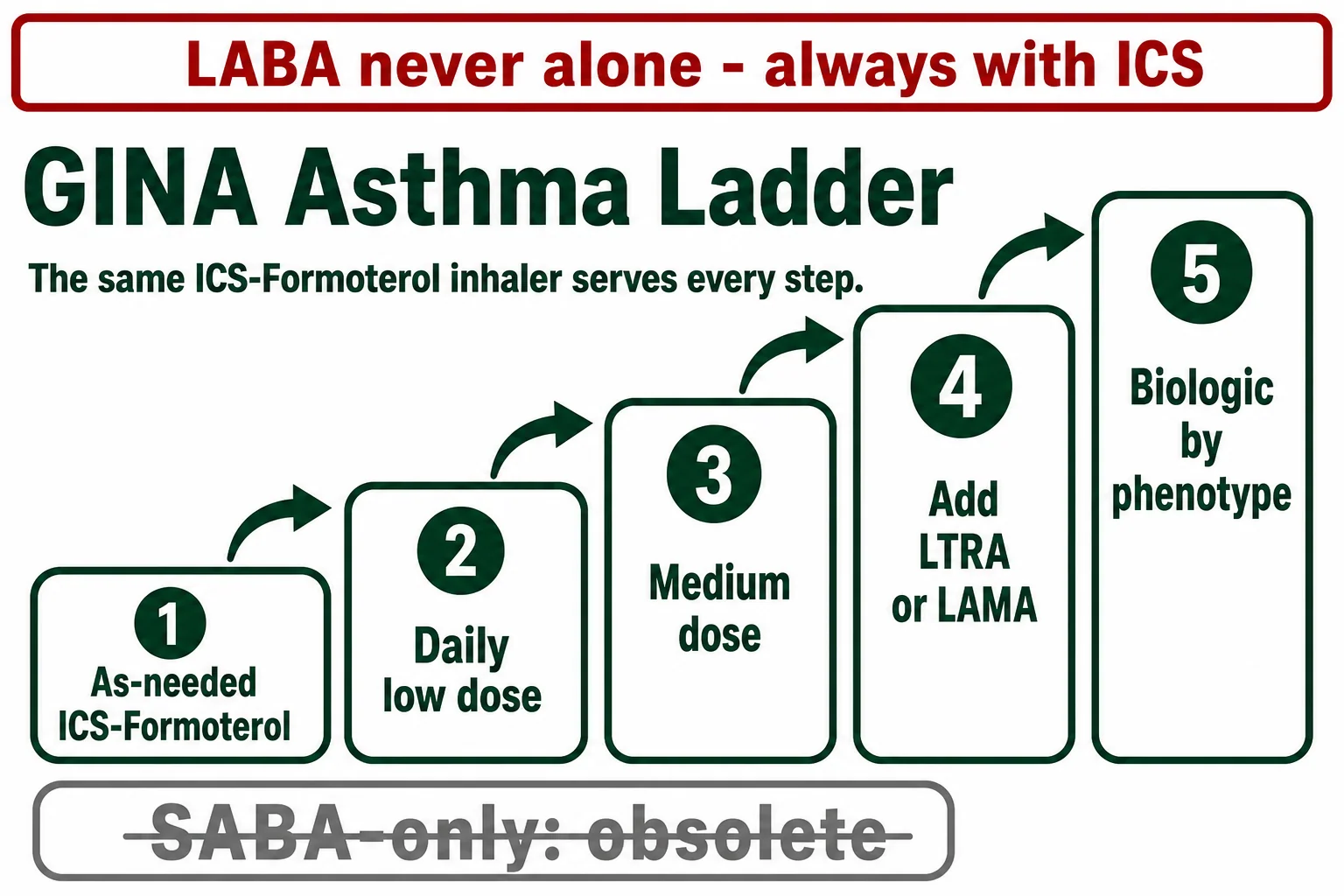
Five-step GINA treatment staircase featuring ICS-formoterol MART at every step, add-ons at step 4 and phenotype-matched biologicals at step 5, with the LABA-monotherapy hazard banner.
Figure 4 — Acute severe asthma: emergency management algorithm
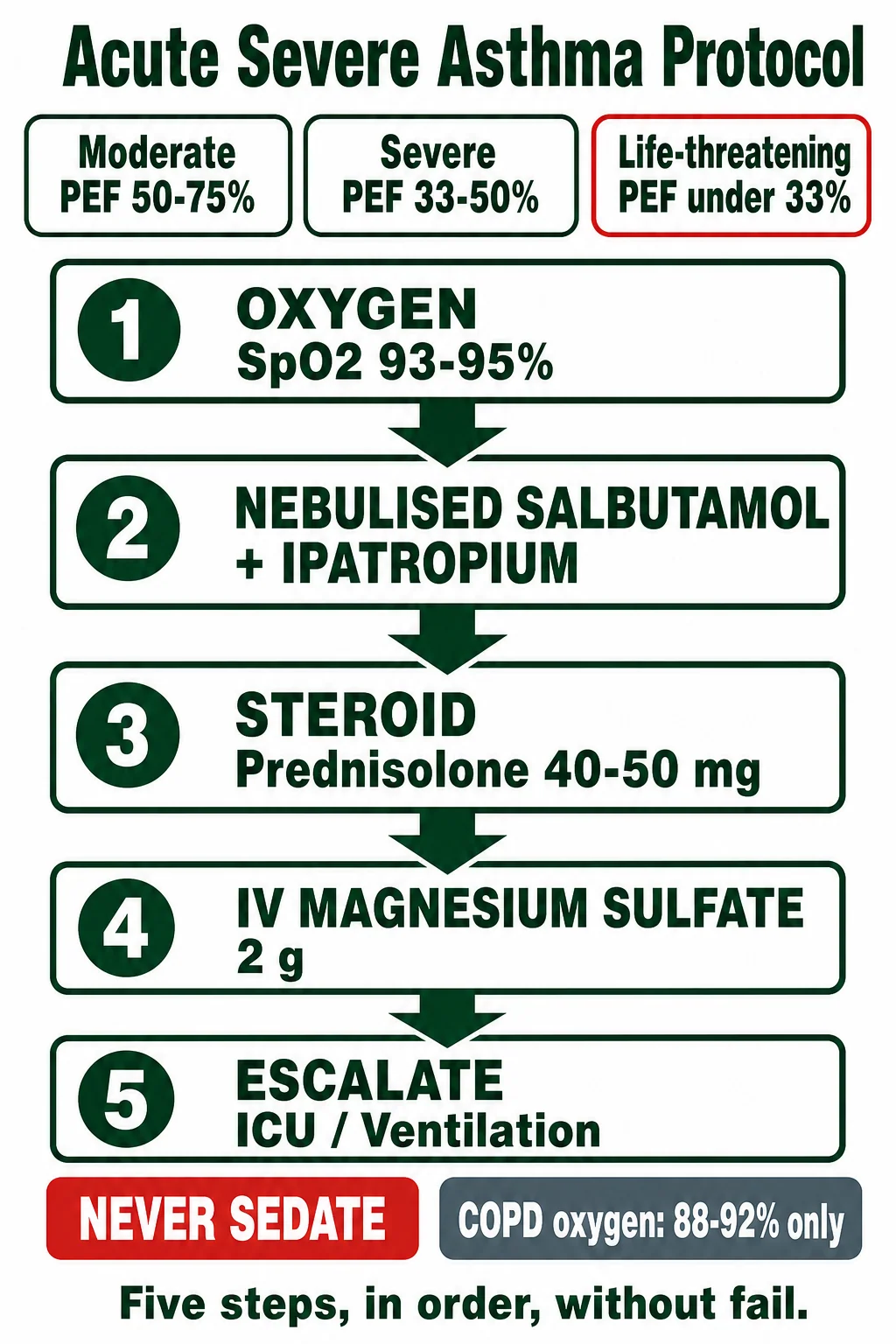
Emergency algorithm for acute severe asthma showing severity grading cards and the sequential protocol of oxygen, nebulised salbutamol with ipratropium, systemic steroid, IV magnesium sulfate, and escalation, with contraindicated drugs highlighted.
Clinical Correlation
Vignette 1 — Acute severe asthma in the emergency room
A 24-year-old woman with asthma presents at 2 am with 3 hours of breathlessness; she cannot complete sentences, respiratory rate 30, heart rate 122, PEF 35% predicted, SpO2 90% on air, accessory-muscle use, widespread wheeze. She is graded acute severe (PEF 33–50%, tachycardia, tachypnoea, interrupted speech). Treatment: sitting upright, high-flow oxygen (target SpO2 93–95%), nebulised salbutamol 5 mg with ipratropium 0.5 mg oxygen-driven, repeated back-to-back, prednisolone 45 mg orally immediately. After 40 minutes she remains distressed, so she receives IV magnesium sulfate 2 g over 20 minutes, with improvement in PEF to 62% over the next hour. She is observed, switched to a controller regime, and discharged after 48 hours with low-dose budesonide-formoterol MART, a written action plan and review in 2 weeks.
Reasoning: This is the protocol in sequence. The life-threatening red flags (silent chest, SpO2 under 92%, bradycardia, exhaustion, normal PaCO2) would mandate ICU. Ipratropium is added only in the acute setting (reduces hospitalisation), and IV magnesium sulfate is the step between repeated nebs and aminophylline/ICU. No sedative is given even though she is anxious — sedation removes the respiratory drive and is a recognised cause of death in asthma.
Vignette 2 — SABA overuse masking uncontrolled asthma
A 19-year-old student requests his fourth salbutamol inhaler refill in 4 months; he wakes twice weekly at night and uses the reliever before every lecture. He is on no controller. Spirometry confirms asthma with reversible obstruction. He is started on low-dose budesonide-formoterol (MART) — the same inhaler used for maintenance and symptom relief — with technique teaching and a PEF diary. At review 6 weeks later he is waking never, using reliever doses under 3 times a week, and his PEF variability is under 10%.
Reasoning: Reliever overuse (3 or more canisters a year) is a marker of uncontrolled asthma and a risk factor for asthma death. GINA has abolished SABA-only treatment: every patient needs ICS-containing therapy, and MART with formoterol — the only LABA with rapid onset — provides both anti-inflammatory relief and safety (each reliever dose carries steroid, protecting the monotherapy hazard). This vignette also teaches why salmeterol can never serve this role (onset 20–30 minutes, and the SMART-trial hazard if steroid is absent).
Vignette 3 — COPD exacerbation and the oxygen trap
A 68-year-old smoker with COPD (baseline FEV1 42%) is brought in drowsy after an ambulance crew gave high-flow oxygen for breathlessness. Arterial gas: pH 7.24, PaCO2 78 mmHg, PaO2 118 mmHg, HCO3 34 — hypercapnic respiratory acidosis precipitated by uncontrolled oxygen (CO2 narcosis). Oxygen is switched to a Venturi 24–28% mask targeting SpO2 88–92%, and he is started on bi-level NIV with nebulised salbutamol-ipratropium, prednisolone 40 mg, and amoxicillin-clavulanate for frankly purulent sputum. He wakes over the next 12 hours. Before discharge: LABA-LAMA (his eosinophil count is 120 — below the 300 strong-indication threshold for ICS, and in the 100–299 grey zone where triple is only conditional), smoking cessation counselling, influenza, pneumococcal and COVID-19 vaccination (plus RSV from age 60 per GOLD 2026), and pulmonary rehabilitation referral.
Reasoning: Two exam points in one case: controlled oxygen 88–92% in COPD exacerbation (hyperoxia worsens V/Q mismatch and hypercapnia) and NIV for pH under 7.35 with PaCO2 retention — which reduces intubation and mortality. Antibiotics are indicated by purulent sputum. His low-normal eosinophil count explains why ICS (triple therapy) is not automatic — GOLD 2026 reserves strong ICS indication for eosinophils 300 or more.
Vignette 4 — Theophylline toxicity from an antibiotic interaction
A 54-year-old woman with severe asthma maintained on slow-release theophylline 300 mg twice daily (level 12 mcg/mL last month) is prescribed ciprofloxacin for a urinary infection. Four days later she has vomiting, restlessness, insomnia and palpitations, then a generalised tonic-clonic seizure. ECG shows sinus tachycardia with frequent ventricular ectopics. Theophylline level: 28 mcg/mL — theophylline toxicity. Both drugs are stopped; she receives repeated activated charcoal, cardiac monitoring, IV fluids with potassium correction, and benzodiazepines for seizure control; levels fall over 36 hours and she recovers fully.
Reasoning: Theophylline is metabolised by CYP1A2, which ciprofloxacin potently inhibits — levels double within days in a drug whose therapeutic window is only 5–15 mcg/mL. Toxicity appears as vomiting, tachyarrhythmias and seizures (potentially the first sign). Management: stop the drug, multi-dose activated charcoal (dialysis/haemoperfusion in refractory cases), ECG monitoring and seizure control. The interaction list — ciprofloxacin, erythromycin, cimetidine, OCPs raise; rifampicin, phenytoin, smoking lower — is among the most tested in pharmacology.
Practical Linkage
Inhaler Technique Station, PEF Diary and Theophylline Worksheet (PH1.32)
pMDI Technique Checklist (demonstrate and correct)
- Shake the canister; remove the cap; breathe out fully.
- Place the mouthpiece between the lips; begin a slow, deep inspiration and actuate at the start of it.
- Continue to full inspiration; hold the breath for 10 seconds.
- Wait 30–60 seconds before the second puff; rinse and spit after steroid.
- State the spacer rationale: no coordination needed; more drug to the lung, less to the oropharynx (less candidiasis, safer high-dose ICS in children); mask for under-4s with tidal breathing (4–6 breaths per actuation).
DPI Technique Points
Exhale away from the device; forceful and deep inhalation through the mouthpiece (about 30–60 L/min); 10-second breath-hold; keep powder dry — never exhale into or store in humidity; rinse after steroids.
PEF Diary and Written Action Plan
Record morning and evening PEF for 2 weeks to set the personal best; zones — Green (at least 80%): continue therapy; Yellow (50–80%): increase reliever, step up controller, contact clinician; Red (under 50%): rescue protocol and emergency care. Identify and list triggers (dust mite, smoke, cold air, NSAIDs in AERD, beta-blocker eye drops).
Theophylline Monitoring Worksheet
- Interpret levels: 5–15 mcg/mL therapeutic; over 20 toxic risk.
- Predict: theophylline + ciprofloxacin/cimetidine/erythromycin/oral contraceptive — level rises; + rifampicin/phenytoin/smoking — level falls (and rises on smoking cessation).
- Flag toxicity: nausea and vomiting first; arrhythmia; seizures — first aid is stopping the drug and charcoal.
MCQ Bank
40 questions · tagged by topic, exam pattern & difficulty · full explanations
In the pathogenesis of allergic asthma, which cytokine released by Th2 lymphocytes is specifically responsible for driving IgE class switching in B lymphocytes?
Rapid Revision
- Salbutamol pharmacology — onset 5 min, duration 4–6 h; the reliever of every track.
- SABA adverse effects — tremor, tachycardia, hypokalaemia (K+ into cells), hyperglycaemia, lactic acidosis.
- SABA overuse — 3 or more canisters/year marks poor control and raises death risk; add a controller.
- Salmeterol — slow onset (20–30 min), 12 h, partial agonist; maintenance only, never a reliever.
- Formoterol — fast onset (1–3 min) plus 12 h duration; the MART enabler (budesonide-formoterol).
- LABA monotherapy — SMART trial excess asthma deaths; FDA boxed warning; LABA only with ICS.
- Ultra-LABAs — indacaterol, vilanterol, olodaterol; once-daily 24 h bronchodilation (COPD).
- ICS — the only controller class reducing asthma mortality; effect is not immediate (days to weeks).
- ICS local effects — oral candidiasis and dysphonia; prevent with spacer plus rinse-and-spit.
- Budesonide — the pregnancy-preferred ICS; fluticasone the most potent; ciclesonide the airway-activated prodrug.
- ICS systemic effects — growth slowing (about 0.5–1 cm), adrenal suppression, cataract, osteoporosis (dose-related).
- Exacerbation steroid course — prednisolone 40–50 mg orally 5–7 days; no taper needed.
- Ipratropium — quaternary SAMA, no CNS entry; added to salbutamol in acute severe attacks.
- Tiotropium — once-daily LAMA; COPD cornerstone and GINA step-4 asthma add-on; dry mouth, retention, glaucoma.
- Theophylline window — 5–15 mcg/mL; zero-order kinetics at high dose; variable CYP1A2 metabolism.
- Theophylline raised by — ciprofloxacin, erythromycin, clarithromycin, cimetidine, oral contraceptives.
- Theophylline lowered by — rifampicin, phenytoin, carbamazepine, phenobarbitone, smoking (and rises on quitting).
- Theophylline toxicity — vomiting, tachyarrhythmias, seizures; multi-dose activated charcoal enhances elimination.
- Roflumilast — oral PDE4 inhibitor for severe chronic-bronchitis COPD; weight loss, insomnia, mood caution.
- Montelukast — 10 mg at night; boxed warning for neuropsychiatric events (2020).
- LTRA niches — aspirin-exacerbated respiratory disease, exercise-induced bronchoconstriction, mild asthma with rhinitis.
- Cromolyn — mast-cell stabiliser; prophylactic only, no acute bronchodilation; exercise dose 15–20 min before.
- Omalizumab — anti-IgE for allergic asthma; anaphylaxis caution; also chronic urticaria.
- Anti-IL-5 class — mepolizumab, reslizumab; benralizumab hits IL-5 receptor alpha with ADCC eosinophil depletion.
- Dupilumab — IL-4 receptor alpha (blocks IL-4/IL-13); asthma, atopic dermatitis, nasal polyps; conjunctivitis.
- Tezepelumab — anti-TSLP; phenotype-agnostic (works at low eosinophils too).
- GINA core rule — no SABA-only therapy; preferred reliever is low-dose ICS-formoterol (AIR/MART); Track 2 now ICS-SABA from Step 1 (GINA 2026).
- GINA step 4 — add LTRA or tiotropium and refer for phenotyping; step 5 biologicals.
- Acute severe asthma — O2 93–95%; nebulised salbutamol 5 mg plus ipratropium 0.5 mg; steroid; IV MgSO4 2 g over 20 min if severe.
- Life-threatening markers — PEF under 33%, SpO2 under 92%, silent chest, exhaustion, bradycardia, normal or rising PaCO2.
- COPD oxygen — Venturi targeting 88–92%; hyperoxia causes CO2 narcosis.
- COPD exacerbation — nebs, prednisolone 40 mg 5 days, antibiotics if purulent, NIV if pH under 7.35.
- Triple therapy (COPD, GOLD 2026) — LABA + LAMA + ICS when eosinophils 300+ (consider 100–299); may follow a single moderate exacerbation in eosinophil-high patients.
- GOLD 2026 vaccines — influenza, pneumococcal, COVID-19, RSV from age 60, pertussis booster.
- Smoking cessation — the only intervention that slows COPD progression.
Viva Questions
- Why is a LABA never prescribed alone in asthma? — Salmeterol monotherapy increased asthma deaths and life-threatening events in the SMART trial; without ICS the underlying inflammation is untreated; hence the boxed warning and fixed-dose ICS-LABA combinations, with MART delivering steroid with every reliever dose.
- What makes formoterol unique among LABAs? — Rapid onset (1–3 minutes) combined with 12-hour duration, so budesonide-formoterol serves as maintenance and reliever (MART); salmeterol's 20–30 minute onset bars reliever use.
- Explain the spacer rationale. — Removes coordination difficulty, slows the plume so lung deposition rises and oropharyngeal deposition falls, improving efficacy and reducing steroid candidiasis; permits mask tidal-breathing in the very young.
- How do inhaled corticosteroids work and what is their ceiling? — Transrepression of inflammatory genes (IL-4, IL-5, IL-13, GM-CSF) with beta-2 receptor upregulation; they reduce mortality and remodelling, but above medium doses benefit plateaus while adrenal suppression, growth slowing and cataract risk climb.
- Which ICS for pregnancy and why? — Budesonide, based on the largest safety registry experience; uncontrolled asthma itself threatens the fetus, so treatment is stepped up rather than withheld.
- Compare ipratropium and tiotropium. — SAMA with 3–6 h action added in acute attacks versus once-daily LAMA (slow M3 dissociation) as COPD cornerstone and asthma step-4 add-on; both quaternary with dry mouth, urinary retention and glaucoma warnings.
- How will you monitor a patient on theophylline? — Target levels 5–15 mcg/mL; screen every new prescription: ciprofloxacin, erythromycin, cimetidine and oral contraceptives raise; rifampicin, phenytoin and smoking lower; warn about vomiting, palpitations and seizures; multi-dose charcoal in overdose.
- What is the role of magnesium sulfate in acute severe asthma? — 2 g IV over 20 minutes in adults when response to nebulised salbutamol-ipratropium and steroid is poor; it is the step before IV aminophylline and ICU escalation.
- List the life-threatening features of an asthma attack. — PEF under 33%, SpO2 under 92%, silent chest, cyanosis, feeble effort, exhaustion or confusion, bradycardia, arrhythmia, hypotension, and a normal or rising PaCO2.
- Why is oxygen controlled to 88–92% in COPD exacerbations? — Hyperoxia releases hypoxic vasoconstriction, worsens V/Q mismatch and the Haldane effect drives CO2 retention, causing narcosis; Venturi masks enforce the target.
- When are antibiotics given in a COPD exacerbation? — When sputum purulence increases (with dyspnoea or sputum volume, or whenever ventilation is needed); amoxicillin-clavulanate, doxycycline or azithromycin per local resistance.
- What are the Anthonisen-like criteria and the steroid course for exacerbations? — Purulence, increased sputum volume, increased dyspnoea; prednisolone 40 mg for 5 days with no taper.
- Which biologic for which phenotype? — IgE-mediated: omalizumab; eosinophilic (150–300 or more): mepolizumab, reslizumab, benralizumab; Th2-high (FeNO, atopy, nasal polyps): dupilumab; any phenotype including low-eosinophil: tezepelumab.
- What counselling accompanies montelukast? — Dosing at night (10 mg adult; 5 mg and 4 mg paediatric), the boxed-warning neuropsychiatric effects (mood change, dream abnormalities, agitation, suicidal ideation), and its niches in AERD and exercise-induced bronchoconstriction.
- What has changed in GINA 2026? — The anti-inflammatory reliever (AIR) concept is now explicit at every step: Track 1 ICS-formoterol remains preferred, and Track 2 offers ICS-SABA combination from Step 1 (BATURA); SABA-only treatment remains abolished; MART evidence extended in children (CARE).
- What has changed in GOLD 2026? — Lower threshold for exacerbation-prone Group E; eosinophil-guided initial therapy (ICS strong at eos 300+, conditional 100–299); triple therapy may follow a single moderate exacerbation in eosinophil-high patients; ICS withdrawal discouraged at eos 300+; RSV vaccine (60+) and pertussis booster added; tele-rehabilitation equivalent.
- What non-pharmacological measures are mandatory in COPD? — Smoking cessation (the only disease-modifying step), influenza, pneumococcal, COVID-19 (and RSV ≥60 y) vaccination, pulmonary rehabilitation, long-term oxygen assessment, and comorbidity management.
References
- Tripathi KD. Essentials of Medical Pharmacology. 9th ed. New Delhi: Jaypee Brothers Medical Publishers; 2024. Chapter 16 (Drugs for Bronchial Asthma and COPD).
- Katzung BG, Vanderah TW. Basic & Clinical Pharmacology. 16th ed. New York: McGraw Hill; 2024. Chapter 20: Drugs Used in Asthma and Chronic Obstructive Pulmonary Disease.
- Brunton LL, Knollmann BC (eds). Goodman & Gilman's Pharmacological Basis of Therapeutics. 14th ed. New York: McGraw Hill; 2023. Pulmonary pharmacology section.
- Ritter JM, Flower R, Henderson G, et al. Rang & Dale's Pharmacology. 10th ed. Edinburgh: Elsevier; 2024. Respiratory system section.
- Global Initiative for Asthma (GINA). Global Strategy for Asthma Management and Prevention, 2026 update. Available from ginaasthma.org. (AIR at every step; Track 1 ICS-formoterol preferred; Track 2 ICS-SABA from Step 1; MART extended in children.)
- Global Initiative for Chronic Obstructive Lung Disease (GOLD). Global Strategy for the Diagnosis, Management, and Prevention of COPD, 2026 report. Available from goldcopd.org. (ABE retained with lower Group E threshold; eosinophil-guided ICS; RSV vaccination.)
- Nelson HS, Weiss ST, Bleecker ER, Yancey SW, Dorinsky PM; SMART Study Group. The Salmeterol Multicenter Asthma Research Trial. Chest. 2006;129(1):15–26.
- US Food and Drug Administration. FDA requires boxed warning about serious mental health side effects of asthma and allergy drug montelukast (Singulair). Drug Safety Communication; 2020.
- National Heart, Lung, and Blood Institute. Expert Panel Report 3 / NAEPP 2020 Focused Updates: Guidelines for the Diagnosis and Management of Asthma. Bethesda, MD: NIH.
- Beasley R, et al. Updated comprehension of the Salmeterol Multicenter Asthma Research Trial and implications for LABA safety. Lancet Respir Med (LABA safety context).
- Bateman ED, et al. As-needed budesonide-formoterol versus maintenance budesonide in mild asthma (SYGNET/SAPT-derived evidence base for AIR).
- O'Byrne PM, et al. As-needed ICS-SABA in poorly controlled asthma (BATURA). N Engl J Med (GINA 2026 Track 2 evidence).
- Light B, et al. As-needed budesonide-formoterol in children (CARE). 2025 (GINA 2026 paediatric evidence).
- Brightling CE, et al. Tezepelumab in severe asthma (NAVIGATOR/SOURCE). Lancet / Lancet Respir Med.
- Global Initiative for Chronic Obstructive Lung Disease. Pulmonary rehabilitation and vaccination updates (tele-rehab equivalence; RSV ≥60 y). GOLD 2026 report.
Downloads
All deliverables & printable revision sheets for CH33
Printable Chapter Handout & Study Notes
Generate a clean, high-yield PDF or print directly without sidebars and navigation menus.