
Cholinergic Agonists & Anticholinesterases; OP Poisoning
Learning Objectives
At the end of this chapter, the Phase II MBBS student will be able to:
- Classify the cholinergic agonists into choline esters and alkaloids and state the receptor selectivity and cholinesterase susceptibility of each. (PH1.14 — Knows)
- Describe the mechanism of action, uses and adverse effects of pilocarpine and bethanechol. (PH1.14 — Knows)
- Explain how anticholinesterases act, differentiate reversible from irreversible inhibitors, and describe the individual agents (physostigmine, neostigmine, pyridostigmine, edrophonium, donepezil). (PH1.14 — Knows)
- Describe the management of myasthenia gravis, including the edrophonium test and the role of pyridostigmine. (PH1.14 — Knows-how)
- Recognise the clinical features of organophosphate poisoning and explain their muscarinic, nicotinic and central basis. (PH1.52 — Knows)
- Manage organophosphate poisoning with decontamination, atropine titrated to atropinisation, pralidoxime before ageing, and diazepam. (PH1.52 — Shows-how)
- Explain the ageing phenomenon and state why pralidoxime is not useful in carbamate poisoning. (PH1.52 — Knows)
- Differentiate myasthenic from cholinergic crisis and manage each. (PH1.14 — Knows-how)
- Explain why neostigmine is given with atropine when reversing neuromuscular blockade. (PH1.14 — Knows-how)
- Describe the role of anticholinesterases in glaucoma and Alzheimer disease. (PH1.14 — Knows)
Must-Know Summary
Cholinergic agonists either stimulate the receptor directly (the choline esters and alkaloids) or indirectly, by inhibiting the acetylcholinesterase that destroys acetylcholine — and it is the anticholinesterases that carry the chapter's clinical weight. The reversible inhibitors (neostigmine, pyridostigmine, physostigmine, edrophonium, donepezil) treat myasthenia gravis, glaucoma, atropine poisoning and Alzheimer disease; the irreversible organophosphates cause the most important cholinergic emergency in clinical practice — organophosphate poisoning. Its management is a fixed protocol: decontamination, atropine titrated to atropinisation for the muscarinic effects, and pralidoxime — an oxime that reactivates the enzyme but only before ageing — for the underlying defect, with diazepam for seizures.
In one line each:
- Choline esters — methacholine and bethanechol are muscarinic; carbachol is both
- Pilocarpine — the muscarinic alkaloid that lowers intraocular pressure in glaucoma
- Bethanechol — for non-obstructive urinary retention
- Neostigmine — quaternary, does not cross the blood-brain barrier
- Physostigmine — tertiary, crosses the blood-brain barrier, reverses atropine poisoning
- Edrophonium — ultra-short acting, the diagnostic test for myasthenia gravis
- Organophosphates — irreversibly phosphorylate acetylcholinesterase
- Atropine — reverses the muscarinic, not the nicotinic, effects of OP poisoning
- Pralidoxime — reactivates acetylcholinesterase only before ageing
- Carbamates — reversible, no ageing, pralidoxime not useful
Classification
Box 1 — Cholinergic agonists
I. Direct-acting
- Choline esters — acetylcholine, methacholine (M), carbachol (M+N), bethanechol (M)
- Alkaloids — pilocarpine (M), muscarine (M), nicotine (N)
II. Indirect-acting (anticholinesterases)
- Reversible (carbamates) — physostigmine, neostigmine, pyridostigmine, edrophonium, donepezil, rivastigmine, galantamine
- Irreversible (organophosphates) — malathion, parathion, diazinon, sarin, soman, tabun
Box 2 — Organophosphate poisoning — features and management
- Muscarinic (SLUDGE/DUMBBELS) — salivation, lacrimation, urination, diarrhoea, miosis, bronchospasm, bradycardia
- Nicotinic — fasciculations, weakness, paralysis
- Central — seizures, coma, respiratory depression
- Management — decontamination → atropine to atropinisation → pralidoxime (early, before ageing) → diazepam → ventilation
Core Concepts
1. Directly acting cholinergic agonists
Direct agonists stimulate muscarinic and/or nicotinic receptors without requiring acetylcholine. They are of two chemical classes.
Choline esters. The parent molecule acetylcholine has both muscarinic and nicotinic activity but is destroyed by cholinesterases within milliseconds, so it has no therapeutic use. Chemical modification produces esters with useful selectivity and cholinesterase resistance:
- Methacholine — a beta-methylated derivative that is muscarinic-selective and, because of the methyl substitution, relatively resistant to acetylcholinesterase. Used diagnostically (bronchial challenge) and historically for paroxysmal atrial tachycardia.
- Carbachol — a carbamyl ester that retains both muscarinic and nicotinic activity and is fully resistant to cholinesterase; used topically in glaucoma.
- Bethanechol — the muscarinic-selective, cholinesterase-resistant agent of choice for urinary retention (post-operative and non-obstructive neurogenic bladder) and, less often, for gastric atony. Its adverse effects are the predictable muscarinic ones — salivation, flushing, sweating, abdominal cramps and bradycardia.
Alkaloids.
- Pilocarpine — the muscarinic alkaloid from Pilocarpus leaves. It is heat-stable and the drug of choice for glaucoma: by contracting the ciliary muscle and the sphincter pupillae it opens the trabecular meshwork and lowers intraocular pressure. It is also used orally for xerostomia (dry mouth of Sjögren syndrome or after radiotherapy to the head and neck).
- Muscarine — from the mushroom Amanita muscaria; a muscarinic agonist of toxicological interest only (the "muscarinic" toxidrome — SLUDGE — is named after it).
- Nicotine — the nicotinic agonist (see CH11 for its pharmacology); arecoline — from betel nut, a muscarinic agonist of toxicological note.
2. Anticholinesterases — mechanism and classification
Anticholinesterases (acetylcholinesterase inhibitors) raise the concentration of acetylcholine at the synapse by inhibiting its hydrolytic enzyme. They act at the esteratic site of acetylcholinesterase (the anionic site anchors the substrate, as described in CH09). Two classes are distinguished by the nature of the enzyme–drug bond:
- Reversible (carbamate) inhibitors — physostigmine, neostigmine, pyridostigmine, edrophonium and the Alzheimer agents (donepezil, rivastigmine, galantamine) carbamylate the esteratic site; the carbamylated enzyme hydrolyses spontaneously over minutes to hours, so the inhibition is reversible.
- Irreversible (organophosphate) inhibitors — malathion, parathion, diazinon and the nerve agents (sarin, soman, tabun) phosphorylate the esteratic site, and the phosphorylated enzyme is stable; recovery requires synthesis of new enzyme over weeks. This is the basis of OP poisoning.
The individual reversible agents differ chiefly in quaternary versus tertiary amine structure, which determines blood-brain-barrier penetration:
- Physostigmine — a tertiary amine, hence crosses the blood-brain barrier. From the Calabar bean. Used for glaucoma (as eye drops) and as the antidote for atropine (central antimuscarinic) poisoning.
- Neostigmine — a quaternary amine, so it does not cross the blood-brain barrier. Used in myasthenia gravis and to reverse non-depolarising neuromuscular blockade; it also has a direct nicotinic action.
- Pyridostigmine — a quaternary amine with a longer duration, the maintenance drug for myasthenia gravis.
- Edrophonium — ultra-short acting (2–5 minutes) and quaternary; used almost exclusively for the diagnostic (Tensilon) test in myasthenia gravis.
- Donepezil, rivastigmine, galantamine — centrally-acting (tertiary) inhibitors used in Alzheimer disease to raise central acetylcholine.
3. Therapeutic uses
Myasthenia gravis. This autoimmune disease destroys nicotinic receptors at the neuromuscular junction, causing fatigable weakness. Anticholinesterases raise junctional acetylcholine to overcome the receptor deficit. Pyridostigmine is the maintenance drug (longer-acting, fewer muscarinic side-effects); neostigmine is used in the acute setting; edrophonium, because of its rapid onset and brief action, is used for the diagnostic test — a transient improvement in muscle strength after intravenous edrophonium confirms myasthenia gravis, while worsening suggests cholinergic excess (see Section 6).
Glaucoma. Pilocarpine (a direct agonist) and physostigmine (an indirect agonist) lower intraocular pressure by contracting the ciliary muscle, opening the trabecular meshwork. Pilocarpine is preferred for its stability; modern management, however, centres on the beta-blockers, prostaglandin analogues and other agents (CH13).
Reversal of neuromuscular blockade. At the end of surgery, neostigmine reverses non-depolarising muscle relaxants (tubocurarine, vecuronium, atracurium) by raising junctional acetylcholine; because the accumulated acetylcholine also stimulates muscarinic receptors, neostigmine is given with atropine (or glycopyrrolate) to prevent bradycardia and excessive secretions.
Atropine poisoning. Central and peripheral antimuscarinic toxicity (delirium, tachycardia, dry mouth, mydriasis) from atropine, Datura, or tricyclic overdose is reversed by physostigmine, the only common anticholinesterase that enters the CNS.
Alzheimer disease. The loss of central cholinergic neurons is partially compensated by donepezil, rivastigmine or galantamine, which raise cortical acetylcholine and modestly slow cognitive decline.
4. Organophosphate poisoning
Organophosphates are widely used as insecticides (malathion, parathion, diazinon, chlorpyrifos) and as chemical-warfare nerve agents (sarin, soman, tabun). Exposure may be agricultural, suicidal, accidental or occupational; absorption is by inhalation, ingestion or through the skin.
Mechanism. The organophosphate phosphorylates the esteratic site of acetylcholinesterase, irreversibly inactivating it. Acetylcholine therefore accumulates at every cholinergic synapse, producing a characteristic toxidrome that is the direct expression of the CH09 receptor map:
- Muscarinic effects (the "DUMBBELS/SLUDGE" syndrome) — salivation, lacrimation, urination, diarrhoea/diaphoresis, miosis, bronchospasm and bronchorrhoea, and bradycardia.
- Nicotinic effects — muscle fasciculations, weakness and paralysis (from Nm overstimulation followed by depolarisation block), and initial tachycardia/hypertension from ganglionic (Nn) stimulation.
- Central effects — headache, confusion, convulsions, coma and respiratory depression.
Death is usually from respiratory failure — a combination of bronchoconstriction, bronchorrhoea, weakness of respiratory muscles and central depression. Diagnosis is clinical (the toxidrome + the exposure history); red-cell or plasma cholinesterase levels confirm and quantify.
5. Management of organophosphate poisoning
Management follows a fixed sequence:
- Decontamination — remove and discard contaminated clothing, wash the skin with soap and water, and protect the caregivers (OPs are absorbed transdermally). In ingestion, consider gastric lavage/activated charcoal within the first hour, with airway protection.
- Atropine — the life-saving antidote. It competitively blocks muscarinic receptors, reversing the SLUDGE features, but does not reverse the nicotinic (muscle) effects or the enzyme inhibition. It is given intravenously (1–2 mg in adults, repeated and doubled every few minutes) and titrated to atropinisation — the end-points of dry mouth, dilated pupils, heart rate above 70–80/minute, and a clear chest. Over-atropinisation (confusion, hyperthermia, ileus) requires temporary cessation.
- Pralidoxime (2-PAM) — an oxime that reactivates the phosphorylated enzyme by detaching the phosphate from the esteratic site, thus reversing the underlying defect (and, unlike atropine, the nicotinic weakness). It must be given early — before "ageing" — because with time the phosphorylated enzyme undergoes an irreversible conformational change (dealkylation of the phosphate) that oximes can no longer reverse. It is given intravenously (1–2 g or 30 mg/kg over 30 minutes, then an infusion). Pralidoxime crosses the blood-brain barrier poorly.
- Diazepam — for convulsions and to reduce central complications.
- Supportive care — airway, oxygen, ventilation, and atropine continuation as needed.
Carbamate poisoning. Carbamates (carbaryl, propoxur, aldicarb) also inhibit cholinesterase, but reversibly — the carbamylated enzyme regenerates spontaneously within hours, there is no ageing, and the clinical course is milder and shorter. Atropine is used for the muscarinic effects, but pralidoxime is not useful (and may be harmful in carbaryl poisoning), because the enzyme recovers on its own. The organophosphate versus carbamate distinction is a favourite examination discriminator.
Late complications. The intermediate syndrome (weakness of proximal muscles and respiratory muscles 24–96 hours after apparent recovery, particularly with the lipophilic agents) and organophosphate-induced delayed neuropathy (OPIDN) (a distal axonal degeneration appearing 1–3 weeks later) are recognised late sequelae.
6. Myasthenic versus cholinergic crisis
A patient with myasthenia gravis who deteriorates may be in one of two opposite states:
- Myasthenic crisis — under-treatment: worsening muscle weakness from insufficient anticholinesterase (or disease progression), often precipitated by infection or surgery. The patient is weak but without excessive muscarinic signs.
- Cholinergic crisis — over-treatment: excessive anticholinesterase produces nicotinic overstimulation (fasciculations, weakness from depolarisation block) plus muscarinic signs (salivation, miosis, diarrhoea, bradycardia).
The edrophonium (Tensilon) test distinguishes them: a short-acting anticholinesterase given intravenously produces improvement in a myasthenic crisis (more acetylcholine helps) but worsening in a cholinergic crisis (more acetylcholine harms). Myasthenic crisis is treated with more anticholinesterase (or plasma exchange/IVIg) and ventilatory support; cholinergic crisis is treated by withdrawing anticholinesterases and giving atropine, with ventilation. Because the test itself can precipitate a cholinergic crisis, atropine and resuscitation equipment must be at hand.
Tables
Table 1 — Choline esters and alkaloids
| Agent | Selectivity | Cholinesterase susceptibility | Main use |
|---|---|---|---|
| Acetylcholine | M + N | Destroyed instantly | None (research) |
| Methacholine | M | Resistant | Bronchial challenge |
| Carbachol | M + N | Fully resistant | Glaucoma (topical) |
| Bethanechol | M | Resistant | Urinary retention |
| Pilocarpine | M | Not a substrate | Glaucoma, xerostomia |
Table 2 — Reversible versus irreversible anticholinesterases
| Feature | Reversible (carbamates) | Irreversible (organophosphates) |
|---|---|---|
| Bond | Carbamylation | Phosphorylation |
| Duration | Minutes to hours | Weeks (new enzyme) |
| Ageing | Does not occur | Occurs |
| Pralidoxime | Not needed | Effective before ageing |
| Toxicity | Lower | Severe poisoning |
Table 3 — Individual anticholinesterases
| Drug | Structure | BBB penetration | Use |
|---|---|---|---|
| Physostigmine | Tertiary | Crosses | Glaucoma, atropine poisoning |
| Neostigmine | Quaternary | Does not cross | Myasthenia, reversal of block |
| Pyridostigmine | Quaternary | Does not cross | Myasthenia maintenance |
| Edrophonium | Quaternary | Does not cross | Diagnostic (Tensilon) test |
| Donepezil/rivastigmine | Tertiary | Crosses | Alzheimer disease |
Table 4 — Myasthenia gravis drugs
| Drug | Role | Duration |
|---|---|---|
| Edrophonium | Diagnostic test | 2–5 minutes |
| Neostigmine | Acute treatment | Short |
| Pyridostigmine | Maintenance | Long |
Table 5 — Organophosphate toxidrome
| System | Features |
|---|---|
| Muscarinic (M) | Salivation, lacrimation, miosis, bronchorrhoea, diarrhoea, bradycardia |
| Nicotinic (N) | Fasciculations, weakness, paralysis, initial tachycardia |
| Central | Seizures, coma, respiratory depression |
Table 6 — Atropine versus pralidoxime in OP poisoning
| Feature | Atropine | Pralidoxime |
|---|---|---|
| Class | Muscarinic antagonist | Oxime (enzyme reactivator) |
| Reverses | Muscarinic effects only | Enzyme inhibition (incl. nicotinic) |
| Timing | Immediate, titrated to atropinisation | Early, before ageing |
| BBB penetration | Crosses (central effect) | Poor |
Table 7 — Myasthenic versus cholinergic crisis
| Feature | Myasthenic crisis | Cholinergic crisis |
|---|---|---|
| Cause | Under-treatment | Over-treatment |
| Muscarinic signs | Absent | Present (SLUDGE) |
| Nicotinic signs | Weakness | Fasciculations + weakness |
| Edrophonium test | Improves | Worsens |
| Treatment | More anticholinesterase | Stop drug, give atropine |
Figures
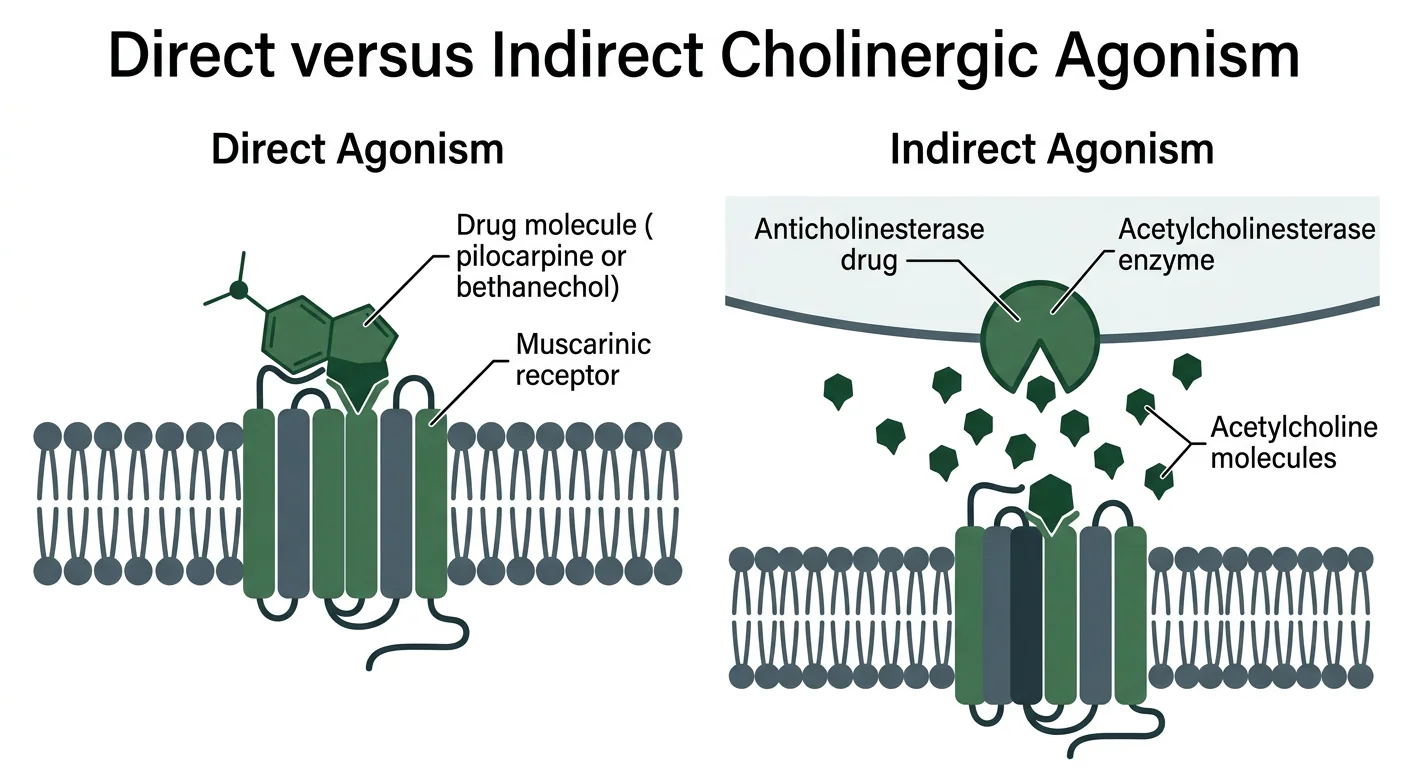
Figure 1 — Direct versus indirect cholinergic agonism. Two-panel diagram contrasting direct cholinergic agonism, where a drug binds the receptor, with indirect agonism, where an anticholinesterase inhibits acetylcholinesterase so acetylcholine accumulates and stimulates the receptor.
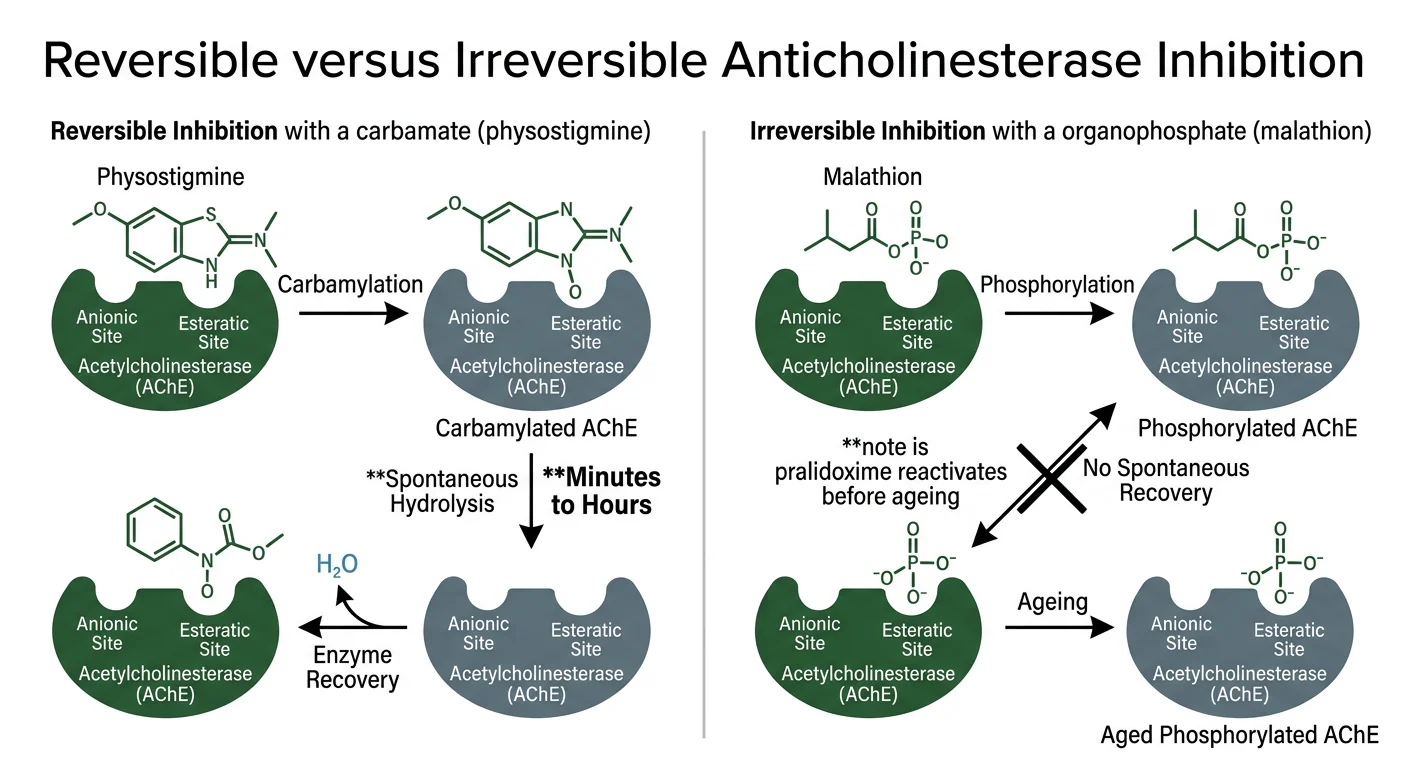
Figure 2 — Reversible carbamylation versus irreversible phosphorylation. Diagram comparing reversible carbamylation of acetylcholinesterase by a carbamate, which recovers spontaneously, with irreversible phosphorylation by an organophosphate, which requires pralidoxime reactivation before ageing.
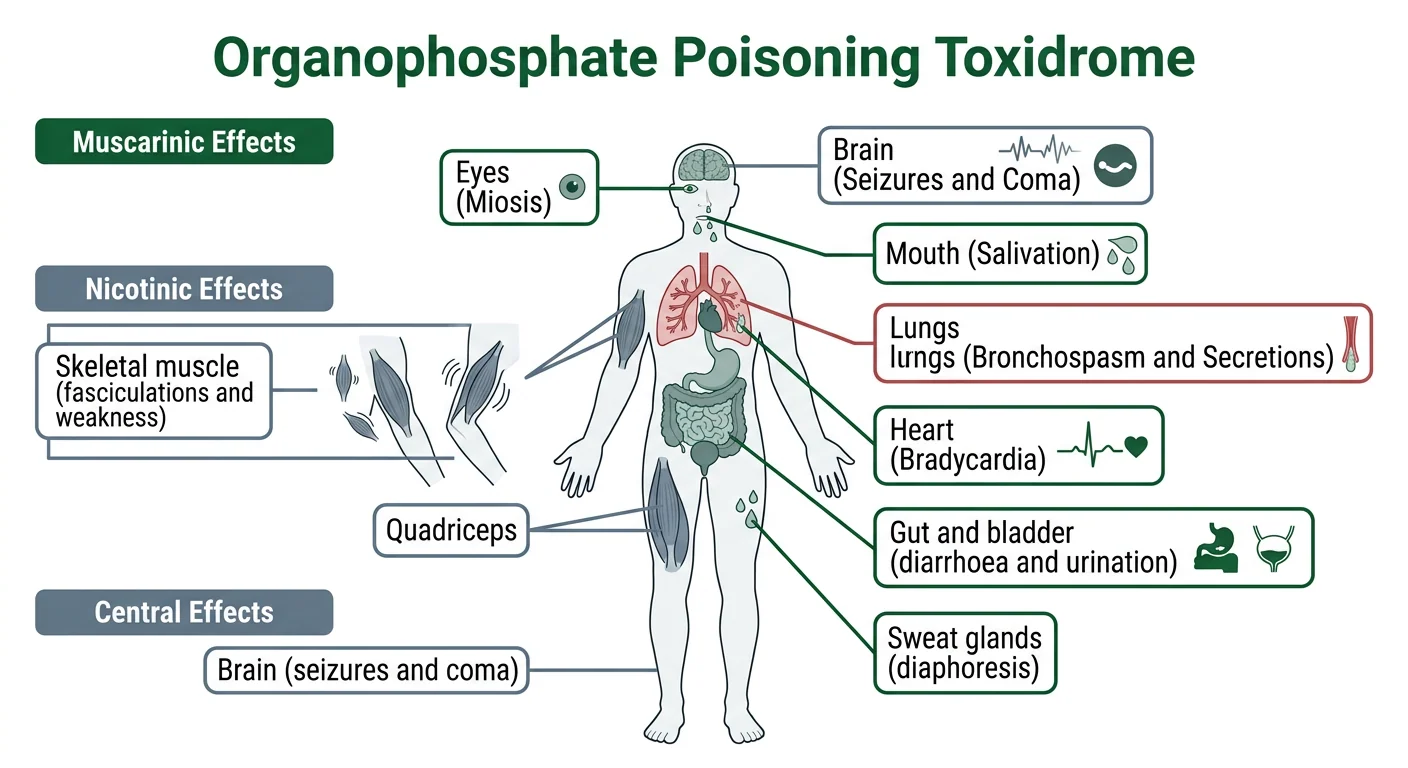
Figure 3 — Organophosphate poisoning toxidrome. Anatomical diagram of the organophosphate toxidrome showing miosis, salivation, bronchospasm, bradycardia, diarrhoea, urination, sweating, muscle fasciculations and central effects, grouped into muscarinic, nicotinic and central categories.
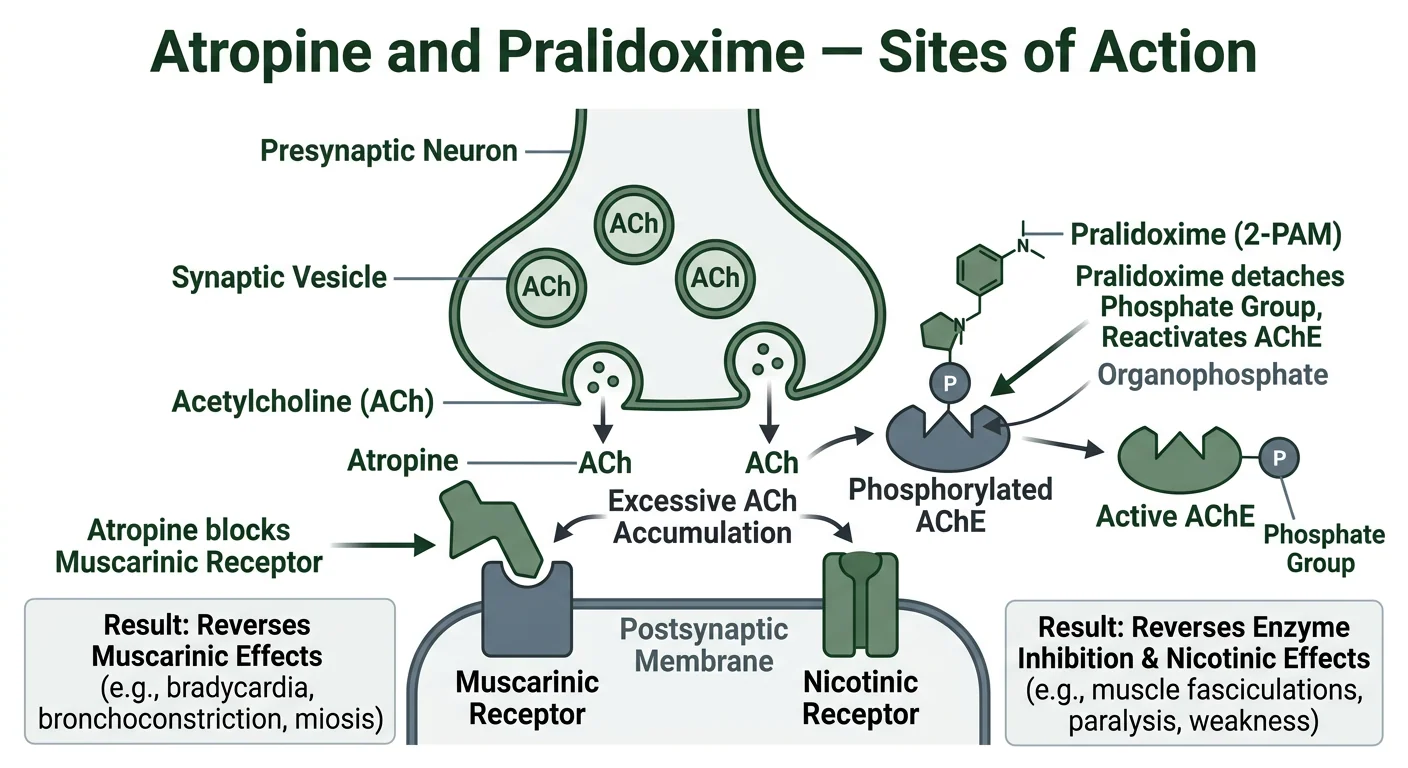
Figure 4 — Atropine and pralidoxime sites of action. Diagram of the cholinergic synapse showing atropine blocking the muscarinic receptor and pralidoxime reactivating the organophosphate-inhibited acetylcholinesterase, illustrating their complementary sites of action.
Clinical Correlation
Vignette 1 — A farmer with organophosphate poisoning
A 35-year-old farmer who sprayed insecticide without protective clothing is brought in salivating, sweating, with pin-point pupils, profuse bronchial secretions, abdominal cramps and diarrhoea, and visible muscle fasciculations; his heart rate is 46/minute and he is drowsy.
Reasoning: The picture is organophosphate poisoning — the SLUDGE (salivation, lacrimation, urination, diarrhoea, miosis) muscarinic syndrome plus nicotinic fasciculations and central drowsiness. Management proceeds in sequence: decontamination (remove and wash the patient, protecting staff), then atropine intravenously, doubled every few minutes until atropinisation — dry mouth, dilated pupils, heart rate above 70–80 and a clear chest — which reverses the muscarinic (but not the nicotinic) features. Pralidoxime is then given early to reactivate the enzyme before ageing, reversing the underlying defect including muscle weakness, and diazepam controls seizures. The patient needs ventilatory support if respiration fails, since respiratory failure is the usual cause of death.
Vignette 2 — The edrophonium test
A 40-year-old woman with known myasthenia gravis on pyridostigmine presents with increasing weakness. The clinician gives intravenous edrophonium and observes the response.
Reasoning: Edrophonium is an ultra-short-acting anticholinesterase; its effect appears within a minute and lasts 2–5 minutes. If the weakness improves, she is in a myasthenic crisis (under-treatment) and needs more anticholinesterase, ventilatory support and treatment of the precipitant. If the weakness worsens — especially with salivation, miosis or fasciculations — she is in a cholinergic crisis (over-treatment), and the drug must be stopped with atropine given for the muscarinic effects. Because the test can precipitate a cholinergic crisis, atropine and resuscitation equipment are kept at hand.
Vignette 3 — Carbamate exposure
A child accidentally ingests a carbamate insecticide (carbaryl). He develops mild salivation, lacrimation and diarrhoea, but no fasciculations, and recovers over a few hours with supportive care and a small dose of atropine.
Reasoning: Carbamates inhibit cholinesterase reversibly — the carbamylated enzyme regenerates spontaneously within hours, there is no ageing, and the course is milder and shorter than organophosphate poisoning. Atropine reverses the muscarinic features, but pralidoxime is not useful (the enzyme recovers on its own, and it may be harmful in carbaryl poisoning). This contrast — reversible carbamate versus irreversible organophosphate — is the key discriminator, and it explains why the management and prognosis differ so markedly.
Vignette 4 — Reversing muscle relaxation
At the end of an operation, a patient who received vecuronium is given neostigmine, but only after a dose of atropine.
Reasoning: Vecuronium is a non-depolarising neuromuscular blocker acting at the nicotinic Nm receptor; neostigmine, by inhibiting acetylcholinesterase, raises junctional acetylcholine to compete the blocker off the receptor and restore muscle function. But the accumulated acetylcholine also stimulates muscarinic receptors, causing bradycardia, bronchospasm and secretions — so neostigmine is given with atropine (or glycopyrrolate) to block these unwanted muscarinic effects while the nicotinic reversal proceeds. This pairing is the clinical illustration of the muscarinic/nicotinic receptor distinction taught in CH09.
Practical Linkage
OP-poisoning management protocol
| Step | Action | Detail |
|---|---|---|
| 1 | Decontamination | Remove clothing, wash skin, protect staff |
| 2 | Atropine IV | 1–2 mg, doubled every few minutes |
| 3 | Titrate to atropinisation | Dry mouth, mydriasis, HR >70–80, clear chest |
| 4 | Pralidoxime IV | 1–2 g (or 30 mg/kg) early, before ageing |
| 5 | Diazepam | For seizures |
| 6 | Supportive care | Airway, oxygen, ventilation |
Exercise (PH1.52 — the OP-poisoning management protocol)
Given a patient with the organophosphate toxidrome, complete the management sequence above.
Discussion point
Why must pralidoxime be given early?
Expected: because the phosphorylated enzyme undergoes "ageing" — an irreversible conformational change — after which oximes can no longer reactivate it; the window is roughly 12–24 hours for most organophosphates, so it must be given as early as possible.
MCQ Bank
40 questions · tagged by topic, exam pattern & difficulty · full explanations
A farmer exposed to organophosphate insecticide presents with salivation, miosis, diarrhoea, bradycardia and muscle fasciculations. The bradycardia and miosis are mediated by which receptors?
Rapid Revision
- Choline esters — methacholine and bethanechol are muscarinic; carbachol is muscarinic plus nicotinic
- Bethanechol — for non-obstructive urinary retention
- Pilocarpine — muscarinic alkaloid, lowers intraocular pressure in glaucoma
- Pilocarpine — also for the dry mouth of Sjögren syndrome
- Muscarine — from Amanita muscaria, the namesake of the muscarinic toxidrome
- Anticholinesterases — act at the esteratic site
- Reversible inhibitors — carbamylate the enzyme
- Irreversible inhibitors (organophosphates) — phosphorylate the enzyme
- Physostigmine — tertiary, crosses the blood-brain barrier
- Neostigmine — quaternary, does not cross the blood-brain barrier
- Pyridostigmine — the maintenance drug for myasthenia gravis
- Edrophonium — ultra-short acting, the diagnostic test for myasthenia
- Donepezil, rivastigmine, galantamine — for Alzheimer disease
- Organophosphate toxidrome — muscarinic SLUDGE plus nicotinic fasciculations plus CNS
- Atropine — reverses only the muscarinic effects of OP poisoning
- Atropinisation — dry mouth, mydriasis, heart rate over 70, clear chest
- Pralidoxime — reactivates the enzyme by detaching the phosphate
- Ageing — the irreversible change that stops pralidoxime working
- Carbamates — reversible, no ageing, pralidoxime not useful
- Intermediate syndrome — weakness 24 to 96 hours after recovery
- OPIDN — delayed neuropathy 1 to 3 weeks later
- Myasthenic crisis — under-treatment, improves with edrophonium
- Cholinergic crisis — over-treatment, worsens with edrophonium
- Neostigmine is given with atropine — to block muscarinic effects during reversal
- Death in OP poisoning — respiratory failure
- Diazepam — the anticonvulsant for OP seizures
- SLUDGE — salivation, lacrimation, urination, diarrhoea, GI upset, emesis
Viva Questions
- Classify the cholinergic agonists — Direct-acting (choline esters and alkaloids) and indirect-acting (reversible and irreversible anticholinesterases).
- Which choline esters are muscarinic-selective — Methacholine and bethanechol; carbachol is both muscarinic and nicotinic.
- What is pilocarpine used for — Glaucoma and the dry mouth of Sjögren syndrome.
- What is bethanechol used for — Non-obstructive urinary retention.
- How do anticholinesterases work — They inhibit acetylcholinesterase at the esteratic site, raising acetylcholine.
- Differentiate reversible from irreversible inhibitors — Reversible agents carbamylate and recover spontaneously; organophosphates phosphorylate irreversibly.
- Why does physostigmine reverse atropine poisoning — It is a tertiary amine that crosses the blood-brain barrier.
- What is the edrophonium test — A short-acting anticholinesterase; improvement indicates myasthenic crisis, worsening indicates cholinergic crisis.
- What are the features of organophosphate poisoning — Muscarinic (SLUDGE), nicotinic (fasciculations) and central (seizures, coma).
- What does atropine reverse in OP poisoning — Only the muscarinic effects, not the nicotinic weakness or enzyme inhibition.
- What is atropinisation — Dry mouth, dilated pupils, heart rate above 70 to 80, and a clear chest.
- What is pralidoxime and when is it given — An oxime that reactivates the enzyme; give early, before ageing.
- What is ageing — The irreversible conformational change of the phosphorylated enzyme that stops oxime reactivation.
- Why is pralidoxime not used in carbamate poisoning — Carbamates inhibit reversibly with no ageing, so the enzyme recovers alone.
- Differentiate myasthenic from cholinergic crisis — Myasthenic is under-treatment (improves with edrophonium); cholinergic is over-treatment (worsens, with muscarinic signs).
References
- Tripathi KD. Essentials of Medical Pharmacology. 9th ed. New Delhi: Jaypee Brothers Medical Publishers; Chapter 9 (Cholinergic System and Drugs).
- Katzung BG, Vanderah TW (eds). Basic & Clinical Pharmacology. 16th ed. New York: McGraw Hill; Chapters 7 and 8 (Cholinoceptor-Activating and Cholinesterase-Inhibiting Drugs).
- Brunton LL, Knollmann BC (eds). Goodman & Gilman's The Pharmacological Basis of Therapeutics. 14th ed. New York: McGraw Hill; Chapters 8–10 (Muscarinic Agonists; Anticholinesterases).
- Ritter JM, Flower RJ, Henderson G, et al. Rang & Dale's Pharmacology. 10th ed. Edinburgh: Elsevier; Chapter 13 (Cholinergic Transmission).
- National Medical Commission. Competency Based Undergraduate Curriculum for the Indian Medical Graduate, Volume II — Pharmacology (Code: PH), competencies PH1.14 and PH1.52.
- Eddleston M, Buckley NA, Eyer P, Dawson AH. Management of acute organophosphorus pesticide poisoning. Lancet. 2008;371(9612):597–607.
- World Health Organization. Guidelines for the management of poisoning. Geneva: WHO.
- National Poisons Information Centre. Management of organophosphate and carbamate poisoning. New Delhi: AIIMS.
Downloads
All deliverables & printable revision sheets for CH10
Printable Chapter Handout & Study Notes
Generate a clean, high-yield PDF or print directly without sidebars and navigation menus.