
Pharmacogenomics, Drug Development & Clinical Trials
Learning Objectives
At the end of this chapter, the Phase II MBBS student will be able to:
- Define pharmacogenetics and pharmacogenomics and explain how genetic variation produces interindividual differences in drug response. (PH1.60 — Knows)
- Describe the classic pharmacogenetic polymorphisms — G6PD deficiency, acetylator status and pseudocholinesterase deficiency — with the drug, the consequence and the clinical action for each. (PH1.60 — Knows)
- Explain the pharmacogenetics of CYP2D6 (codeine, tramadol, tamoxifen) and CYP2C19 (clopidogrel), including the consequences of poor and ultrarapid metaboliser status. (PH1.60 — Knows)
- Describe the HLA associations of abacavir (B5701) and carbamazepine (B1502) and the role of pre-prescription genetic screening. (PH1.60 — Knows)
- Outline the four types of pharmacoeconomic analysis and their relevance to the NLEM and rational prescribing. (PH1.60 — Knows)
- Describe the preclinical evaluation of drugs and the phases of clinical trials (I–IV) with participants, objectives and sample sizes. (PH1.64 — Knows)
- Explain the principles of Good Clinical Practice, the Declaration of Helsinki, informed consent and the role of the Institutional Ethics Committee. (PH1.64 — Knows)
- Design the trial pathway for a hypothetical new drug and draft the core elements of an informed-consent document. (PH1.64 — Shows-how)
- State what an orphan drug is and why special incentives exist for its development. (PH1.64 — Knows)
Must-Know Summary
Two ideas unify this chapter: individual variability (why the same dose works in one patient and fails in another) and the evidence pathway (how we know a drug is safe and effective). Pharmacogenomics explains the first — inherited differences in drug-metabolising enzymes, transporters and targets produce poor, intermediate, extensive and ultrarapid metabolisers, and a handful of named examples dominate the examinations. Drug development explains the second — a new molecule moves through preclinical testing and then the four phases of clinical trials, from safety in healthy volunteers to confirmatory randomised trials to post-marketing surveillance, all governed by Good Clinical Practice, the Declaration of Helsinki, informed consent and the ethics committee.
In one line each:
- Pharmacogenetics is single-gene — pharmacogenomics is genome-wide
- G6PD deficiency — haemolysis with primaquine and sulfonamides
- Slow acetylators — isoniazid neuropathy; fast acetylators — isoniazid hepatotoxicity
- Pseudocholinesterase deficiency — prolonged succinylcholine apnoea
- CYP2D6 poor metaboliser — codeine gives no analgesia
- CYP2D6 ultrarapid metaboliser — codeine causes morphine toxicity
- CYP2C19 poor metaboliser — clopidogrel fails
- HLA-B5701 — screen before abacavir; HLA-B1502 — carbamazepine SJS risk
- Phase I — safety in healthy volunteers; Phase II — efficacy in patients; Phase III — confirmatory RCT; Phase IV — post-marketing surveillance
Classification
Box 1 — Phases of clinical trials
- Phase I — 20–100 healthy volunteers; safety, tolerability, pharmacokinetics, dose-ranging; NOT efficacy
- Phase II — 100–300 patients with the disease; proof of concept, efficacy, dose-finding
- Phase III — large multicentre randomised controlled trials; confirmatory efficacy and safety; basis for marketing approval
- Phase IV — post-marketing surveillance; detects rare and long-term adverse reactions
Box 2 — Classic pharmacogenetic polymorphisms
- G6PD deficiency — haemolysis with primaquine, dapsone, sulfonamides, nitrofurantoin
- Slow acetylator (NAT2) — isoniazid peripheral neuropathy; hydralazine/procainamide lupus
- Fast acetylator — isoniazid hepatotoxicity
- Pseudocholinesterase deficiency — prolonged succinylcholine apnoea
- CYP2D6 poor metaboliser — codeine/tramadol failure; tamoxifen failure
- CYP2D6 ultrarapid metaboliser — codeine → morphine toxicity
- CYP2C19 poor metaboliser — clopidogrel failure
- TPMT deficiency — azathioprine myelosuppression
- HLA-B5701 — abacavir hypersensitivity (screen before use)
- HLA-B1502 — carbamazepine SJS in Han Chinese/Southeast Asians
- Ryanodine receptor mutation — malignant hyperthermia
Core Concepts
1. Pharmacogenetics and pharmacogenomics — principles
Pharmacogenetics is the study of how individual genes affect the response to drugs; pharmacogenomics is the broader, genome-wide study of how all inherited variation shapes drug response. Both terms are now often used interchangeably, and both explain a phenomenon introduced in CH05 as idiosyncrasy — the same dose producing an exaggerated, absent or qualitatively different effect in a genetically distinct individual.
Genetic variation affects drug response at several levels: drug-metabolising enzymes (the commonest and most studied — the cytochrome P450 family), drug transporters (P-glycoprotein, OATP), and drug targets (receptors, enzymes, ion channels). A polymorphism that reduces enzyme activity produces a poor metaboliser (drug accumulates → toxicity, or a prodrug fails to activate → no effect); a duplication that increases activity produces an ultrarapid metaboliser (prodrug converts too fast → toxicity). This metaboliser-status vocabulary underpins every example below.
The clinical promise of pharmacogenomics is "the right drug at the right dose for the right patient" — replacing empirical dose titration with genotype-guided prescribing. In practice it has entered routine care selectively: pre-prescription screening is standard for abacavir (HLA-B5701) and, in at-risk populations, carbamazepine (HLA-B1502), while CYP2C19 genotyping guides antiplatelet choice after stenting, and TPMT testing precedes azathioprine.
2. The classic pharmacogenetic polymorphisms
G6PD deficiency. Glucose-6-phosphate dehydrogenase generates NADPH, which maintains reduced glutathione, the red cell's defence against oxidant stress. In deficiency (an X-linked trait common in malaria-endemic regions), oxidant drugs — primaquine, dapsone, sulfonamides, nitrofurantoin, and rasburicase — deplete glutathione and cause acute haemolysis. This is the paradigm of a genetically determined idiosyncratic (Type B) reaction, and it underlies the rule of testing for G6PD before giving primaquine.
Acetylator status (NAT2). N-acetyltransferase-2 acetylates isoniazid, hydralazine, procainamide, dapsone and sulfonamides. Slow acetylators (homozygous for the low-activity allele) accumulate the parent drug → isoniazid peripheral neuropathy (prevented by pyridoxine) and a predisposition to drug-induced lupus with hydralazine and procainamide. Fast acetylators metabolise isoniazid rapidly to a hepatotoxic metabolite → a higher risk of isoniazid hepatitis. This example is memorable because the same drug produces different toxicities in the two genotypes.
Pseudocholinesterase (butyrylcholinesterase) deficiency. Succinylcholine and mivacurium are normally hydrolysed rapidly by plasma pseudocholinesterase. In inherited deficiency, the block is not broken down, and a brief intraoperative relaxant produces prolonged apnoea and paralysis requiring mechanical ventilation until the drug is cleared — classically revealed by the "scoline apnoea" scenario. The patient (and family) must be warned, and dibucaine number testing documents the variant.
3. CYP2D6, CYP2C19 and further pharmacogenetics
CYP2D6 — codeine, tramadol, tamoxifen. CYP2D6 converts the prodrug codeine to morphine (its active analgesic). Poor metabolisers (about 5–10% of some populations) convert little, so codeine gives no analgesia; the same applies to tramadol, which requires CYP2D6 activation. Ultrarapid metabolisers (gene duplication) convert codeine excessively to morphine, producing opioid toxicity — including fatal neonatal respiratory depression in breastfeeding infants whose mothers are ultrarapid metabolisers, which prompted regulatory warnings against codeine in this setting. Tamoxifen, a prodrug, requires CYP2D6 to form endoxifen; poor metabolisers have reduced efficacy in breast cancer, and strong CYP2D6 inhibitors (fluoxetine, paroxetine) blunt the benefit.
CYP2C19 — clopidogrel. Clopidogrel is a prodrug requiring CYP2C19 to form its active metabolite. Poor metabolisers form little active drug, so clopidogrel fails to inhibit platelets — a real and important problem after coronary stenting, where CYP2C19 genotyping now guides the choice of an alternative (prasugrel or ticagrelor, which are not CYP2C19-dependent). Omeprazole, a CYP2C19 inhibitor, can similarly blunt clopidogrel.
TPMT — azathioprine and 6-mercaptopurine. Thiopurine methyltransferase inactivates these drugs; TPMT-deficient patients accumulate cytotoxic thioguanine nucleotides and develop severe myelosuppression. Genotype or enzyme-activity testing before azathioprine is standard practice.
HLA associations. HLA-B5701 predicts abacavir hypersensitivity (a severe, sometimes fatal reaction); screening is mandatory before prescribing abacavir — the paradigm of pharmacogenomic testing as routine care. HLA-B1502 strongly predicts carbamazepine-induced Stevens–Johnson syndrome / toxic epidermal necrolysis in Han Chinese and Southeast Asian populations, so screening is recommended in these ethnic groups before starting carbamazepine. These examples connect directly to the drug-allergy and SJS material in CH05.
Malignant hyperthermia. Mutations in the ryanodine receptor (RYR1) predispose to malignant hyperthermia, a hypermetabolic crisis with muscle rigidity and hyperthermia triggered by succinylcholine or volatile anaesthetics (halothane). Management is dantrolene (CH18). It is a pharmacogenetic disorder of a drug target, not a metabolising enzyme.
Warfarin pharmacogenomics. Warfarin dose is determined in part by CYP2C9 (metabolises the active S-enantiomer) and VKORC1 (the vitamin K epoxide reductase target). Variants predict low dose requirement and bleeding risk, though routine genotyping is not standard practice — a useful illustration of a pharmacogenetic association that has not uniformly entered care.
4. Pharmacoeconomics
Pharmacoeconomics applies economic methods to drug choice, asking whether a medicine's benefit justifies its cost — central to the NLEM and to rational, affordable prescribing. Four types of analysis are distinguished:
- Cost-minimisation analysis — compares drugs assumed to have equal outcomes and selects the cheapest.
- Cost-effectiveness analysis — compares cost per unit of natural health outcome (e.g. cost per life-year saved, cost per mmHg reduction).
- Cost-utility analysis — compares cost per QALY (quality-adjusted life year), a measure that weights survival by its quality — the standard for comparing across diseases.
- Cost-benefit analysis — converts both costs and benefits into monetary terms and compares their ratio.
These tools justify the inclusion or exclusion of a drug from a national essential medicines list, and they underpin the concept — developed in CH08 — that prescribing should be efficacious, safe, suitable and cost-effective.
5. Preclinical drug evaluation
Before any human exposure, a candidate drug is tested in vitro and in animals. Preclinical studies establish efficacy (does it work), pharmacokinetics and pharmacodynamics, and toxicity: acute, subacute and chronic toxicology; teratogenicity, mutagenicity and carcinogenicity (the concepts from CH05, now tested formally). The Ames test uses reversion of a mutant bacterial strain to detect mutagenesis. The classical LD50 (lethal dose for 50%) is determined, though modern toxicology has largely moved to non-lethal endpoints. Animal use is governed by the 3Rs — replacement, reduction and refinement — an ethical framework that is itself examinable. Only after satisfactory preclinical safety does the drug proceed to an Investigational New Drug (IND) application and human trials.
6. Clinical trials — the four phases
Clinical trials are conducted in four sequential phases, and their participants, objectives and approximate sample sizes are the single most examined block in this chapter.
- Phase I — the first human exposure, typically in 20–100 healthy volunteers (cancer drugs are the exception, tested in patients). Objectives are safety, tolerability, pharmacokinetics and dose-ranging — not efficacy. A dose that is tolerated is established.
- Phase II — 100–300 patients with the target disease. Objectives are proof of concept and efficacy, together with dose-finding for the pivotal trial. This is the first phase designed to show the drug works.
- Phase III — large, multicentre, randomised controlled trials in hundreds to thousands of patients, comparing the drug against placebo or standard therapy. It provides the confirmatory evidence on which marketing approval is based (the New Drug Application).
- Phase IV — post-marketing surveillance after approval, monitoring the drug in the wider, real-world population to detect rare or long-term adverse reactions and refine its use — the interface with the pharmacovigilance systems described in CH05.
Design vocabulary. Randomisation removes allocation bias; blinding (single, where the patient is unaware, or double, where neither patient nor investigator knows the allocation) removes observation bias; a placebo control isolates the true drug effect from expectation; and trials are parallel (separate groups) or cross-over (each subject receives both treatments in sequence). These features distinguish a rigorous trial from an anecdote, and explain why a randomised double-blind controlled trial is the gold standard of evidence.
7. Ethics and regulation of clinical research
Clinical research is governed by ethical principles codified in named documents:
The Declaration of Helsinki (adopted 1964 by the World Medical Association, and revised repeatedly) is the foundational statement of research ethics — the subject's welfare takes precedence over the interests of science and society, and vulnerable populations require special protection. Good Clinical Practice (GCP) is the international ethical and scientific quality standard for designing, conducting and reporting trials (the ICH-GCP guideline), ensuring that data are credible and subjects' rights are protected. Informed consent is the practical expression of these principles — a freely given, adequately informed agreement, without coercion, documented in writing. The Institutional Ethics Committee (IEC) / Institutional Review Board reviews every protocol before it begins, ensuring the science, the risk–benefit ratio and the consent process are acceptable. In India, trials must be registered prospectively in the Clinical Trials Registry – India (CTRI) and comply with Schedule Y of the Drugs and Cosmetics Rules (the Indian GCP framework). Orphan drugs — medicines for rare diseases that would otherwise be unprofitable to develop — receive special incentives (market exclusivity, fee waivers) under legislation such as the Orphan Drug Act.
Tables
Table 1 — Pharmacogenetics versus pharmacogenomics
| Feature | Pharmacogenetics | Pharmacogenomics |
|---|---|---|
| Scope | Single gene | Genome-wide |
| Focus | Individual variants and drug response | All inherited variation and drug response |
| Examples | CYP2D6, NAT2, G6PD | Polygenic response, gene-expression profiling |
| Application | Specific drug–gene tests | Personalised medicine |
Table 2 — The classic pharmacogenetic examples
| Polymorphism | Drug | Consequence | Clinical action |
|---|---|---|---|
| G6PD deficiency | Primaquine, sulfonamides, dapsone | Acute haemolysis | Test G6PD; avoid oxidant drugs |
| Slow acetylator (NAT2) | Isoniazid | Peripheral neuropathy | Give pyridoxine |
| Slow acetylator | Hydralazine, procainamide | Drug-induced lupus | Monitor; withdraw drug |
| Fast acetylator | Isoniazid | Hepatotoxicity | Monitor liver function |
| Pseudocholinesterase deficiency | Succinylcholine | Prolonged apnoea | Ventilate; warn family |
| TPMT deficiency | Azathioprine, 6-mercaptopurine | Myelosuppression | Test TPMT; reduce dose |
Table 3 — CYP2D6 and CYP2C19 pharmacogenetics
| Enzyme | Drug | Poor metaboliser | Ultrarapid / consequence |
|---|---|---|---|
| CYP2D6 | Codeine | No analgesia (no morphine formed) | Morphine toxicity |
| CYP2D6 | Tramadol | Reduced analgesia | — |
| CYP2D6 | Tamoxifen | Reduced efficacy (no endoxifen) | — |
| CYP2C19 | Clopidogrel | Failure of antiplatelet effect | — |
| CYP2C19 | Omeprazole co-admin | — | Blunts clopidogrel |
Table 4 — The four phases of clinical trials
| Phase | Participants | Primary objective | Approximate size |
|---|---|---|---|
| I | Healthy volunteers | Safety, tolerability, PK, dose-ranging | 20–100 |
| II | Patients | Proof of concept, efficacy, dose | 100–300 |
| III | Patients (RCT) | Confirmatory efficacy and safety | Hundreds–thousands |
| IV | Post-marketing population | Surveillance, rare ADRs | Large population |
Table 5 — Types of pharmacoeconomic analysis
| Analysis | Measures | Unit |
|---|---|---|
| Cost-minimisation | Assumes equal outcome | Cost |
| Cost-effectiveness | Natural health outcome | Cost per life-year saved |
| Cost-utility | Quality-adjusted survival | Cost per QALY |
| Cost-benefit | Monetary value of outcomes | Benefit-to-cost ratio |
Table 6 — Key ethical and regulatory documents
| Document / body | Role |
|---|---|
| Declaration of Helsinki (1964) | Foundational research ethics statement |
| ICH-GCP | International quality standard for trials |
| Institutional Ethics Committee | Reviews and approves protocols |
| Informed consent | Freely given, documented agreement |
| Schedule Y (India) | Indian GCP / regulatory framework |
| CTRI | Prospective trial registration in India |
Table 7 — Preclinical toxicology studies
| Study | Purpose |
|---|---|
| Acute toxicity | Single-dose toxicity, LD50 |
| Subacute / chronic toxicity | Repeated-dose organ toxicity |
| Teratogenicity | Fetal malformation potential |
| Mutagenicity (Ames test) | Genetic mutation potential |
| Carcinogenicity | Cancer potential over long exposure |
| Reproductive toxicity | Fertility and pregnancy effects |
Figures
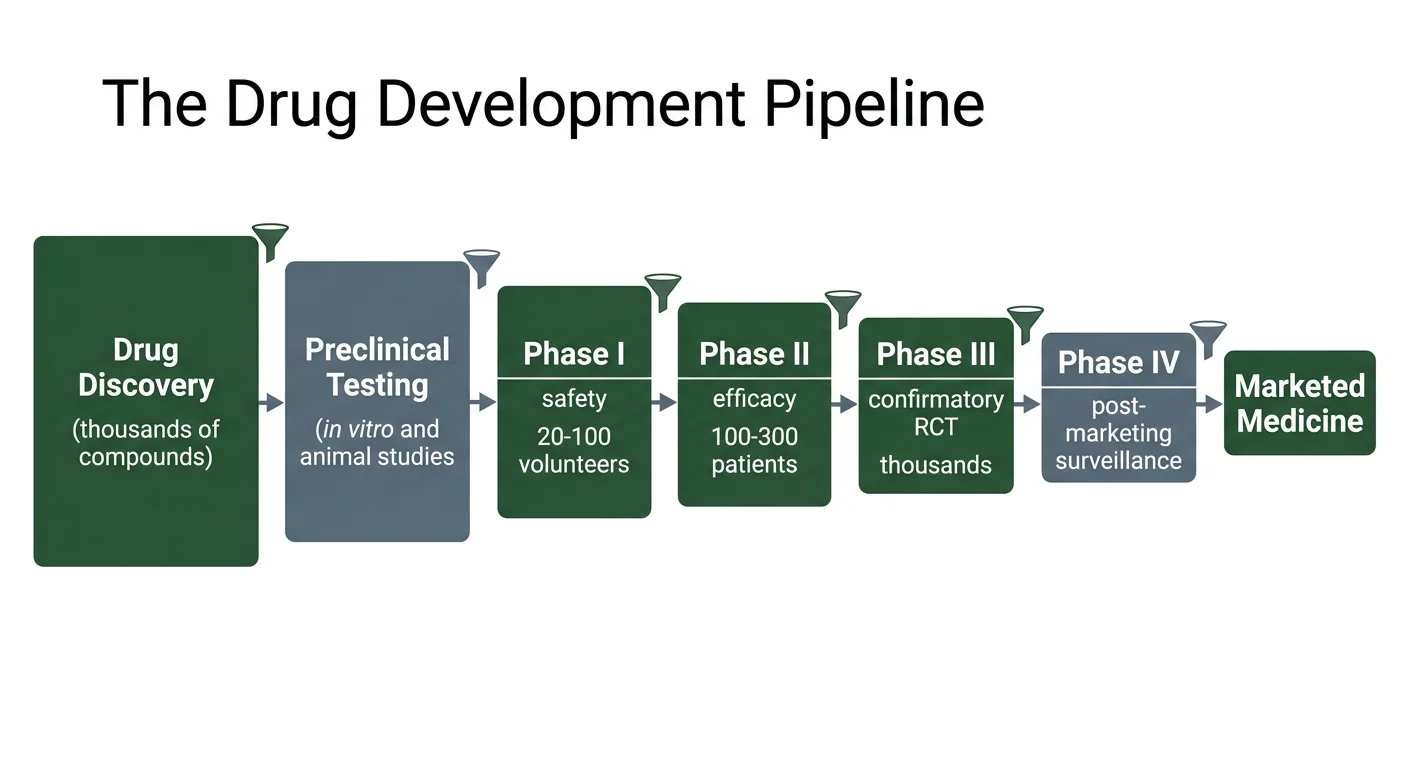
Figure 1 — The drug development pipeline. Flow diagram of the drug development pipeline from drug discovery through preclinical testing and the four phases of clinical trials to marketed medicine, indicating the high attrition of candidate compounds.
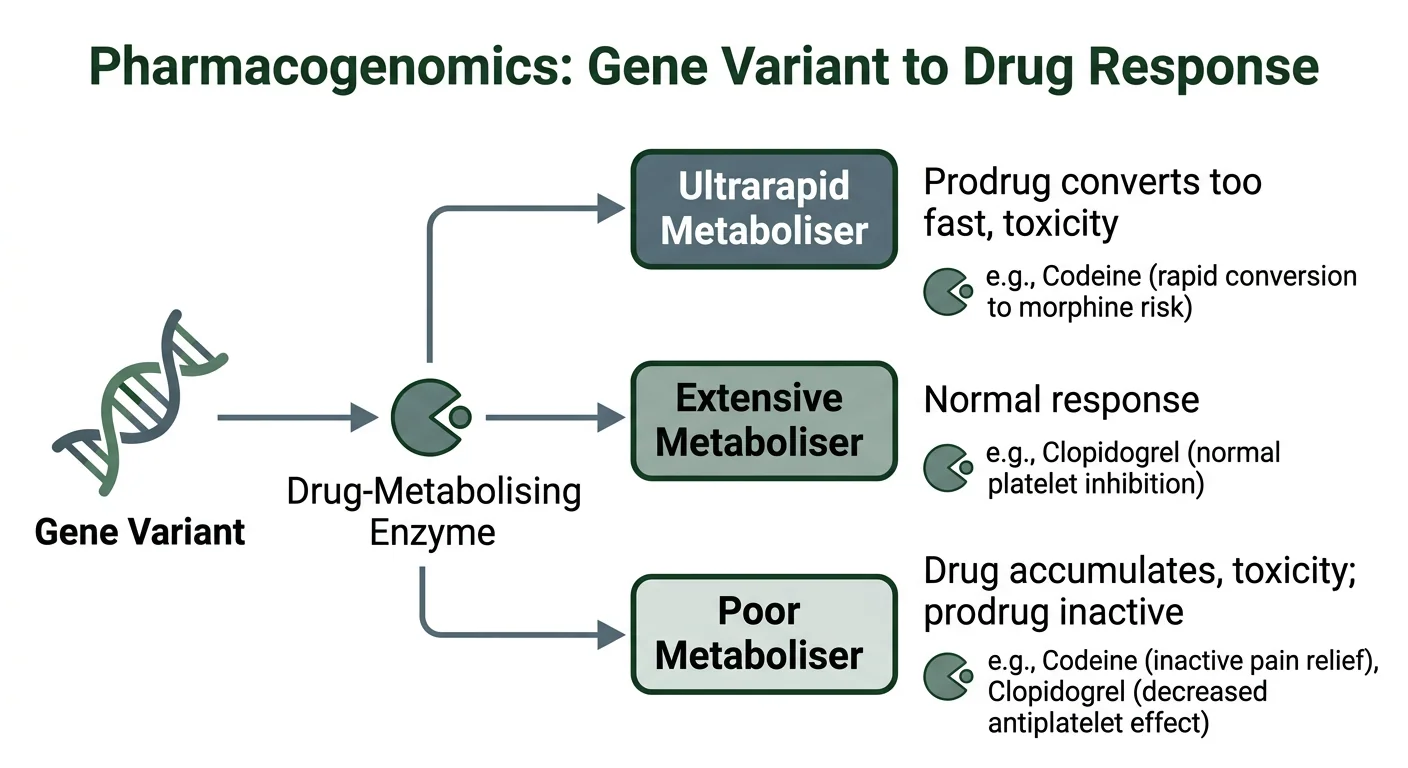
Figure 2 — From gene variant to altered drug response. Diagram showing how a gene variant alters drug-metabolising enzyme activity to produce poor, extensive and ultrarapid metaboliser phenotypes, with codeine and clopidogrel as examples, and the resulting changes in drug response.
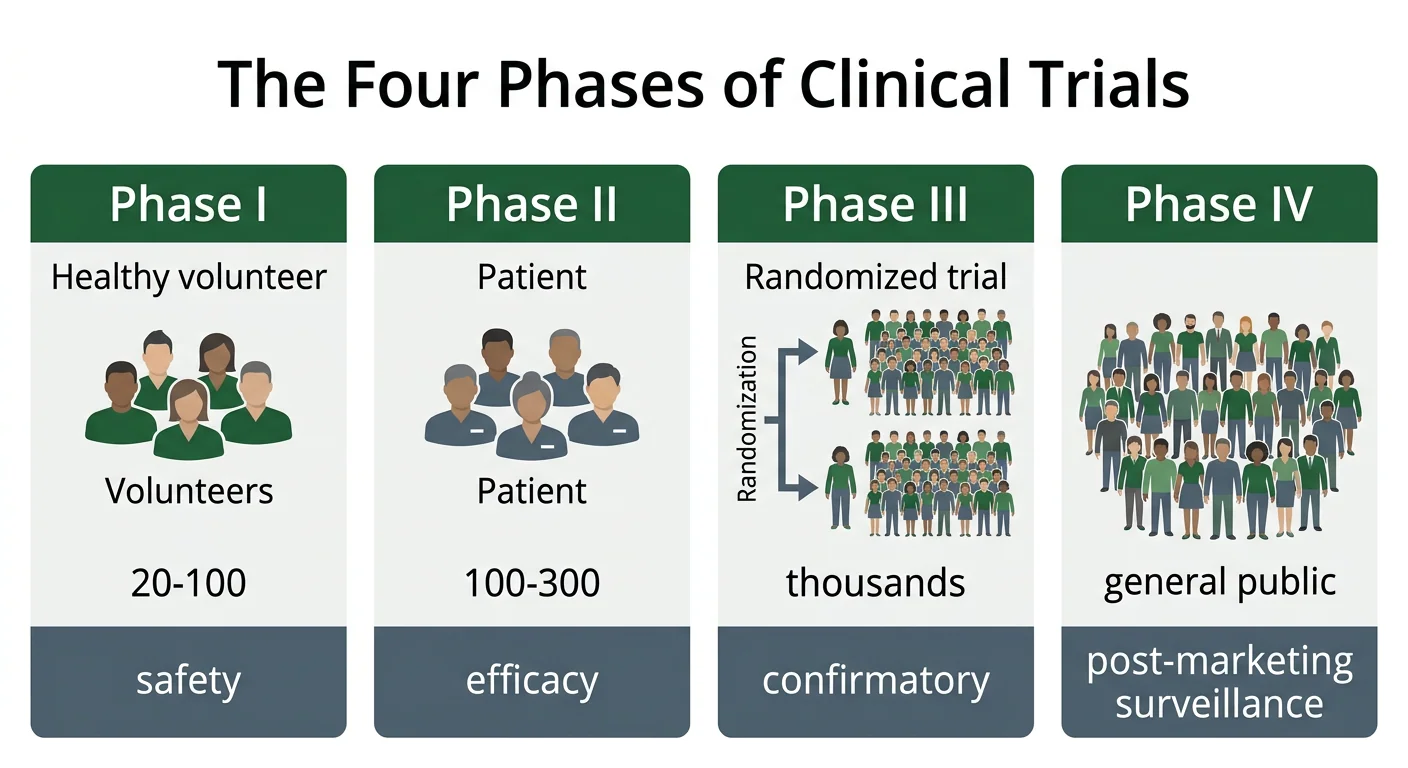
Figure 3 — The four phases of clinical trials. Four-panel comparison of the phases of clinical trials, showing phase one safety in healthy volunteers, phase two efficacy in patients, phase three confirmatory randomised trials in thousands, and phase four post-marketing surveillance.
Clinical Correlation
Vignette 1 — A sedated infant whose mother took codeine
A breastfeeding mother takes codeine for post-partum pain. Her healthy term infant becomes lethargic, feeds poorly and develops shallow breathing, and is found to have a high morphine level.
Reasoning: The mother is a CYP2D6 ultrarapid metaboliser — a gene duplication gives her multiple CYP2D6 copies, so she converts codeine to morphine far faster than normal, and the morphine transfers into breast milk and accumulates in the neonate, whose morphine clearance is immature. This is the basis of the regulatory warnings restricting codeine in breastfeeding. The vignette illustrates how a pharmacogenomic variant in one individual can endanger another, and why "one dose fits all" fails.
Vignette 2 — Prolonged apnoea after succinylcholine
During induction of anaesthesia for a minor procedure, a patient receives succinylcholine. The expected brief paralysis does not recover, and the patient requires ventilation for several hours.
Reasoning: This is pseudocholinesterase deficiency — an inherited variant in which the plasma enzyme that normally hydrolyses succinylcholine within minutes is inactive or reduced, so the neuromuscular block persists. Management is supportive ventilation until the drug is cleared, followed by family screening and a warning for all future anaesthesia (and documentation of the dibucaine number). It is a classic pharmacogenetic drug-target/elimination defect and a favourite examination vignette.
Vignette 3 — Stent thrombosis despite clopidogrel
A 58-year-old man receives a drug-eluting coronary stent and is prescribed clopidogrel. Three weeks later he presents with stent thrombosis.
Reasoning: Clopidogrel is a prodrug requiring CYP2C19 to generate its active metabolite. In a CYP2C19 poor metaboliser, little active drug is formed, platelet inhibition is inadequate, and stent thrombosis occurs despite "compliance" with therapy. The correct response is to switch to a P2Y12 inhibitor not dependent on CYP2C19 (prasugrel or ticagrelor), and this is precisely why CYP2C19 genotyping now guides antiplatelet choice after stenting. Omeprazole co-prescription would compound the problem through CYP2C19 inhibition.
Vignette 4 — Carbamazepine and Stevens–Johnson syndrome
A young man of Han Chinese ancestry is started on carbamazepine for epilepsy. Two weeks later he develops fever, mucosal erosions and a spreading rash with epidermal detachment.
Reasoning: This is carbamazepine-induced Stevens–Johnson syndrome / toxic epidermal necrolysis, strongly associated with HLA-B1502, an allele common in Han Chinese and Southeast Asian populations. In these ethnic groups, HLA-B1502 screening before starting carbamazepine is recommended, and a positive result mandates an alternative anticonvulsant. The case is the clinical face of the HLA associations taught in this chapter and links directly to the severe cutaneous reactions discussed in CH05.
Practical Linkage
Trial design and consent elements
| Step | Task | Expected response |
|---|---|---|
| 1 | Name the phase and participants for first human exposure | Phase I — 20–100 healthy volunteers; safety/PK |
| 2 | Phase for proof of concept | Phase II — 100–300 hypertensive patients |
| 3 | Phase providing confirmatory evidence | Phase III — large randomised controlled trial |
| 4 | Phase detecting rare ADRs after approval | Phase IV — post-marketing surveillance |
| 5 | List the core elements of informed consent | Purpose, procedures, risks, benefits, alternatives, confidentiality, voluntary participation and withdrawal |
| 6 | What must the ethics committee review | Protocol, risk–benefit ratio, consent form, investigator qualifications |
Exercise (PH1.64 — design the trial pathway; draft informed consent)
A pharmaceutical company has developed a novel oral antihypertensive. Complete the trial design below and draft the consent elements.
Discussion point
Why must the trial be registered in the CTRI before enrolment begins?
Expected: prospective registration ensures transparency, prevents selective reporting, and is a regulatory and ethical requirement under Schedule Y.
MCQ Bank
35 questions · tagged by topic, exam pattern & difficulty · full explanations
The first phase of clinical testing of a new drug in humans is conducted in:
Rapid Revision
- Pharmacogenetics — single-gene; pharmacogenomics — genome-wide
- G6PD deficiency — haemolysis with primaquine, dapsone, sulfonamides
- Slow acetylator — isoniazid neuropathy, prevented by pyridoxine
- Fast acetylator — isoniazid hepatotoxicity
- Pseudocholinesterase deficiency — prolonged succinylcholine apnoea
- CYP2D6 poor metaboliser — codeine gives no analgesia
- CYP2D6 ultrarapid metaboliser — codeine causes morphine toxicity
- CYP2C19 poor metaboliser — clopidogrel fails after stenting
- TPMT deficiency — azathioprine myelosuppression
- HLA-B5701 — screen before abacavir
- HLA-B1502 — carbamazepine SJS in Han Chinese
- Malignant hyperthermia — ryanodine receptor mutation, triggered by succinylcholine
- Warfarin dose — determined by CYP2C9 and VKORC1
- Phase I — safety in 20 to 100 healthy volunteers
- Phase II — efficacy in 100 to 300 patients
- Phase III — confirmatory randomised controlled trial
- Phase IV — post-marketing surveillance
- Declaration of Helsinki — 1964, foundational research ethics
- GCP — ethical and scientific quality standard for trials
- Informed consent — voluntary, informed, documented, withdrawable
- CTRI — prospective trial registration in India
- Schedule Y — Indian GCP framework
- Orphan drug — for a rare disease, with market-exclusivity incentives
- QALY — quality-adjusted life year, the unit of cost-utility analysis
- Ames test — detects mutagenicity in bacteria
- 3Rs of animal research — replacement, reduction, refinement
Viva Questions
- Differentiate pharmacogenetics from pharmacogenomics — Pharmacogenetics studies single-gene effects on drug response; pharmacogenomics studies genome-wide inherited variation.
- What happens in a G6PD-deficient patient given primaquine — Acute haemolysis, because the red cell cannot regenerate reduced glutathione against oxidant stress.
- Why do slow acetylators develop isoniazid neuropathy — The parent drug accumulates, and the neuropathy is prevented by pyridoxine.
- What is the significance of pseudocholinesterase deficiency — Prolonged apnoea after succinylcholine, requiring ventilation.
- Why does codeine fail in a CYP2D6 poor metaboliser — Codeine is a prodrug requiring CYP2D6 to form morphine, so no analgesia results.
- What is the danger of codeine in an ultrarapid metaboliser — Excessive conversion to morphine, causing opioid toxicity.
- Why may clopidogrel fail after stenting — CYP2C19 poor metabolisers cannot form the active metabolite.
- Which HLA allele is screened before abacavir — HLA-B5701, because of the risk of hypersensitivity.
- Which allele predicts carbamazepine SJS — HLA-B1502, in Han Chinese and Southeast Asian populations.
- State the four phases of a clinical trial — Phase I safety in volunteers, Phase II efficacy in patients, Phase III confirmatory RCT, Phase IV post-marketing surveillance.
- What is the Declaration of Helsinki — The 1964 statement of ethical principles for research involving human subjects.
- What is Good Clinical Practice — The international ethical and scientific quality standard for conducting clinical trials.
- What are the essential elements of informed consent — Purpose, procedures, risks, benefits, alternatives, confidentiality, and freedom to withdraw.
- What is an orphan drug — A drug for a rare disease, given incentives such as market exclusivity.
- Define a QALY — A quality-adjusted life year, weighting survival by its quality.
References
- Tripathi KD. Essentials of Medical Pharmacology. 9th ed. New Delhi: Jaypee Brothers Medical Publishers; Chapters 6 and 7 (Pharmacogenomics; Drug Development and Clinical Trials).
- Katzung BG, Vanderah TW (eds). Basic & Clinical Pharmacology. 16th ed. New York: McGraw Hill; Chapter 4 (Drug Biotransformation) and Chapter 59 (Pharmacogenomics).
- Brunton LL, Knollmann BC (eds). Goodman & Gilman's The Pharmacological Basis of Therapeutics. 14th ed. New York: McGraw Hill; Chapter 7 (Pharmacogenetics).
- Ritter JM, Flower RJ, Henderson G, et al. Rang & Dale's Pharmacology. 10th ed. Edinburgh: Elsevier; Chapters 11 and 60 (Drug Development and Regulation).
- National Medical Commission. Competency Based Undergraduate Curriculum for the Indian Medical Graduate, Volume II — Pharmacology (Code: PH), competencies PH1.60 and PH1.64.
- International Council for Harmonisation. ICH Harmonised Guideline — Good Clinical Practice (E6).
- World Medical Association. Declaration of Helsinki — Ethical Principles for Medical Research Involving Human Subjects.
- Central Drugs Standard Control Organization. Drugs and Cosmetics Rules — Schedule Y (Requirements and Guidelines for Clinical Trials), Government of India.
Downloads
All deliverables & printable revision sheets for CH07
Printable Chapter Handout & Study Notes
Generate a clean, high-yield PDF or print directly without sidebars and navigation menus.