
Drug Interactions, Factors Modifying Drug Action
Learning Objectives
At the end of this chapter, the Phase II MBBS student will be able to:
- Define a drug interaction and differentiate pharmacokinetic from pharmacodynamic interactions with examples of each. (PH1.8 — Knows)
- Explain the pharmacokinetic mechanisms of interaction at absorption, distribution, metabolism, excretion and transport, with a named drug pair for each site. (PH1.8 — Knows)
- Describe enzyme induction and enzyme inhibition, their time courses, and their major clinical consequences including oral contraceptive failure with rifampicin. (PH1.8 — Knows)
- Identify the mechanism of the grapefruit-juice interaction and list the drugs it affects. (PH1.8 — Knows)
- Recognise and manage the high-yield interaction pairs — warfarin, digoxin, MAOI, sildenafil–nitrate, lithium, theophylline — stating mechanism, consequence and management for each. (PH1.8 — Knows-how)
- Describe the factors modifying drug action — age, sex, body size, genetic, pathological, environmental and psychological — with a drug example of each. (PH1.8 — Knows)
- Differentiate tolerance, tachyphylaxis, dependence and cumulation, and cite a representative drug for each. (PH1.8 — Knows)
- Audit a given polypharmacy prescription, identify the embedded drug interactions and rewrite it correctly. (PH1.8 — Shows-how)
- Explain the drug–herb interactions of St John's wort, ginkgo and garlic, and counsel a patient on them. (PH1.8 — Knows-how)
Must-Know Summary
A drug interaction is a measurable modification of the action of one drug by prior or concomitant administration of another substance — and it is one of the commonest causes of preventable adverse effects, especially in the elderly on multiple medicines. Interactions are pharmacokinetic (one drug alters the absorption, distribution, metabolism, excretion or transport of another) or pharmacodynamic (the drugs act on the same or related receptor/effect pathways).
The clinically decisive facts are few: enzyme induction is slow (days to weeks) while inhibition is fast (hours); rifampicin causes oral contraceptive failure; grapefruit juice inhibits intestinal CYP3A4; and warfarin is the interaction hub around which the commonest questions turn. Individual patient factors — age, body size, genetics, disease — modify every drug's action, and tolerance, tachyphylaxis, dependence and cumulation are the four ways the body's response changes over time.
In one line each:
- Drug interaction — one drug modifies the action of another, by kinetics or by dynamics
- Enzyme induction is slow — inhibition is fast
- Rifampicin — the classic inducer causing oral contraceptive failure
- Grapefruit juice — inhibits intestinal CYP3A4, raising statin and felodipine levels
- Warfarin + cotrimoxazole — bleeding from displacement, CYP inhibition and less gut vitamin K
- Sildenafil + nitrate — absolute contraindication, profound hypotension
- MAOI + tyramine — hypertensive crisis, the cheese reaction
- Digoxin toxicity is precipitated by hypokalaemia — diuretic-induced
- Tolerance is reduced effect on repeated dosing — tachyphylaxis is tolerance developing rapidly
Classification
Box 1 — Types of drug interactions
I. Pharmacokinetic (one drug alters the concentration of another)
- Absorption — chelation (tetracycline + calcium), altered pH/motility, adsorption
- Distribution — protein-binding displacement (warfarin + sulfonamide)
- Metabolism — enzyme induction (rifampicin, phenytoin) and inhibition (cimetidine, azoles, macrolides)
- Excretion — tubular secretion blockade (probenecid + penicillin)
- Transport — P-glycoprotein inhibition (quinidine + digoxin)
II. Pharmacodynamic (drugs act on the same or related systems)
- Additive — alcohol + benzodiazepine
- Synergistic/potentiated — trimethoprim + sulfamethoxazole
- Antagonistic — naloxone + morphine, beta-blocker + beta-agonist
III. Drug–food / drug–herb
- Grapefruit juice + statin/felodipine; tyramine + MAOI
- St John's wort (induction); ginkgo, garlic (antiplatelet)
Box 2 — Factors modifying drug action
- Physiological — age (neonate, elderly), sex, body weight/surface area, pregnancy
- Genetic — acetylator status, G6PD deficiency, pseudocholinesterase variants
- Pathological — hepatic disease, renal disease, hypoalbuminaemia, heart failure
- Environmental — diet, smoking, alcohol, chronopharmacology
- Psychological — placebo, nocebo, expectation
- Pharmacological (time-related) — tolerance, tachyphylaxis, dependence, cumulation
Core Concepts
1. Definition and classification of drug interactions
A drug interaction is a measurable modification (in magnitude or duration) of the action of one drug by prior or concomitant administration of another substance. The "other substance" may be another drug, a food, an herb, alcohol, or even a component of tobacco smoke. Interactions are clinically important because polypharmacy is the norm in the elderly and the chronically ill — patients on five or more medicines have a sharply increased risk — and because interactions are frequently preventable if anticipated.
Interactions are classified first into two broad types:
Pharmacokinetic interactions — one drug alters the concentration of another at its site of action by changing its absorption, distribution, metabolism, excretion or transport. The net effect is a higher or lower level of the object drug, and therefore more or less effect.
Pharmacodynamic interactions — the drugs act on the same or related target systems without either altering the other's concentration: two CNS depressants (alcohol + benzodiazepine) cause additive sedation; a beta-agonist and a beta-blocker oppose each other; two drugs that prolong the QT interval act synergistically to provoke torsades de pointes.
A further practical classification by consequence is useful: interactions that are contraindicated (sildenafil + nitrate), those requiring dose adjustment or monitoring (warfarin with an enzyme inhibitor), and those that are benign or even exploited therapeutically (probenecid given deliberately to prolong penicillin levels; levodopa with carbidopa; amoxicillin with clavulanic acid).
2. Pharmacokinetic drug interactions
At absorption. Interactions in the gut lumen or at the gut wall are common. Chelation: tetracyclines and fluoroquinolones form poorly absorbed complexes with divalent and trivalent cations — calcium (milk, antacids), iron, magnesium, aluminium — markedly reducing their bioavailability. Altered gastric pH: antacids and proton-pump inhibitors can impair the absorption of weakly basic drugs requiring an acid environment (ketoconazole, itraconazole). Altered motility: metoclopramide speeds gastric emptying and may hasten absorption of some drugs, while anticholinergics delay it. Adsorbents: activated charcoal adsorbs co-administered drugs. Grapefruit juice acts at the gut wall (see Section 4).
At distribution — protein-binding displacement. Two drugs competing for the same plasma-protein site can transiently raise the free fraction of the higher-affinity drug. The clinically important principle is that displacement matters only when the displaced drug is highly protein-bound (>90%), has a narrow therapeutic index and a small volume of distribution — then the rise in free drug is large relative to the small central pool. Warfarin (99% bound), phenytoin and the sulfonylureas are the classical objects; phenylbutazone, sulfonamides and salicylates the classical displacers. In most cases the free drug is rapidly cleared and a new steady state re-establishes, so a single displacement is only transiently important — but for warfarin even a transient rise in free drug can cause bleeding.
At metabolism — enzyme induction and inhibition (the mechanisms are developed in CH03; here the clinical application). Induction requires synthesis of new enzyme protein, so it is slow — days to weeks to peak, and equally slow to reverse after the inducer is stopped. Inhibition is usually immediate — hours — because it reflects direct enzyme blockade. The major inducers are rifampicin (the most important clinically), carbamazepine, phenytoin, phenobarbitone, chronic alcohol, griseofulvin and St John's wort; smoking induces CYP1A2. The major inhibitors include cimetidine, omeprazole, the azole antifungals (ketoconazole, fluconazole, itraconazole), macrolides (erythromycin, clarithromycin — azithromycin is the safe exception), isoniazid, chloramphenicol, ciprofloxacin, ritonavir and grapefruit juice.
At excretion. Drugs are eliminated renally by filtration and by active tubular secretion via organic-anion (OAT) and organic-cation (OCT) transporters. Probenecid blocks the OAT-mediated secretion of penicillin, raising and prolonging penicillin levels — deliberately exploited. Salicylates inhibit the tubular secretion of methotrexate, raising its toxicity. Quinidine and verapamil inhibit the P-glycoprotein-mediated renal (and biliary) elimination of digoxin, raising digoxin levels.
At transport — P-glycoprotein. P-glycoprotein (P-gp) is an efflux transporter at the gut, blood–brain barrier, kidney and bile canaliculus. Inhibitors (quinidine, verapamil, amiodarone, clarithromycin, itraconazole) raise the levels of P-gp substrates such as digoxin, and inducers (rifampicin, St John's wort) lower them.
3. Pharmacodynamic drug interactions
Pharmacodynamic interactions occur when two drugs affect the same physiological system. They may be additive (two benzodiazepines, or alcohol with any sedative), synergistic/potentiating (the effect of the combination exceeds the sum — trimethoprim + sulfamethoxazole inhibiting two sequential steps of folate synthesis), or antagonistic (a beta-blocker opposing a beta-agonist; naloxone reversing morphine; protamine neutralising heparin). Three clinically critical clusters recur in examinations:
Serotonergic drugs. Combining an SSRI or SNRI with a MAOI, tramadol, a triptan, or linezolid can precipitate serotonin syndrome — hyperthermia, rigidity, clonus, autonomic instability — a potentially fatal pharmacodynamic interaction.
Anticholinergic load. Multiple drugs with antimuscarinic activity (tricyclic antidepressants, antihistaminics, antipsychotics, oxybutynin) sum to produce dry mouth, constipation, urinary retention, confusion and precipitation of glaucoma in the elderly.
QT-prolonging drugs. The additive risk of torsades de pointes when drugs that prolong the QT interval are combined — amiodarone, sotalol, macrolides, fluoroquinolones, haloperidol, methadone — especially in the presence of hypokalaemia or hypomagnesaemia.
4. Drug–food and drug–herb interactions
Grapefruit juice. Grapefruit (and Seville orange) contain furanocoumarins that inhibit intestinal CYP3A4 and P-glycoprotein in the gut wall. Because this is an intestinal (presystemic) effect, it raises the oral bioavailability of drugs with high first-pass metabolism by CYP3A4 — felodipine and other dihydropyridine calcium-channel blockers, simvastatin and atorvastatin, ciclosporin, midazolam, and buspirone — while having little effect on intravenously administered drug. A single glass can be significant; the effect persists for over 24 hours after ingestion. Statin-induced myopathy is the common clinical consequence.
Tyramine and MAO inhibitors. Tyramine, present in aged cheese, fermented meats, red wine, broad beans and yeast extracts, is normally metabolised by intestinal and hepatic monoamine oxidase. In a patient on a non-selective, irreversible MAOI, tyramine reaches the systemic circulation and displaces noradrenaline from presynaptic vesicles, producing a hypertensive crisis ("cheese reaction") with severe headache and risk of intracranial haemorrhage. Management is alpha-adrenergic blockade (phentolamine). Patients must observe a tyramine-restricted diet and respect the two-week washout when switching MAOI to another antidepressant.
Other food interactions. Calcium-containing foods and antacids chelate tetracyclines and quinolones; vitamin-K-rich foods (green leafy vegetables) antagonise warfarin; alcohol interacts with sedatives (additive CNS depression), with metronidazole and cephalosporins (disulfiram-like reaction), and chronically induces hepatic enzymes.
Drug–herb interactions. St John's wort induces CYP3A4 and P-glycoprotein, reducing levels of ciclosporin (transplant rejection), oral contraceptives, warfarin and digoxin. Ginkgo biloba inhibits platelet aggregation, increasing bleeding risk with warfarin and aspirin. Garlic has antiplatelet properties that potentiate anticoagulants. The governing principle is that "natural" does not mean "safe", and herbal medicines must be documented in every medication history.
5. Factors modifying drug action I — age, sex, body size and genetics
Age. Neonates have immature hepatic enzymes and reduced renal function, so drugs metabolised by conjugation are cleared slowly — the paradigm is chloramphenicol causing the grey baby syndrome because of deficient glucuronidation. The elderly have reduced hepatic and renal reserve, altered body composition (more fat, less water), and — above all — polypharmacy, making them the group at greatest risk of adverse drug reactions and interactions. Doses are often reduced and titrated cautiously in both groups.
Body size and sex. Dosing is calculated by body weight (mg/kg) for many drugs (aminoglycosides, anaesthetics) and by body surface area for cytotoxic agents. Sex differences arise from body composition and hormonal status — women generally have a higher percentage body fat and may respond differently to some drugs; pregnancy introduces teratogenic risk (CH57).
Genetics. Inherited differences in drug handling are the domain of pharmacogenomics (developed fully in CH07). The examinable one-liners are: slow acetylators of isoniazid and sulfonamides; G6PD deficiency causing haemolysis with oxidant drugs; and pseudocholinesterase deficiency causing prolonged apnoea with succinylcholine. These modify the individual's response to a drug and underlie idiosyncratic reactions.
6. Factors modifying drug action II — pathological, environmental and psychological; tolerance, dependence and cumulation
Pathological states. Hepatic and renal disease alter drug clearance and require dose adjustment (developed in CH58). Hypoalbuminaemia raises the free fraction of highly bound drugs; heart failure reduces hepatic and renal perfusion; thyroid disease alters the metabolic rate and thus the response to many drugs.
Environmental factors. Diet (tyramine, vitamin K, grapefruit), smoking (induces CYP1A2, lowering theophylline levels), and chronic alcohol (induces enzymes; acutely inhibits them) all modify drug action. Shift work and chronopharmacology — the time-of-day variation in drug response — are considered in CH58.
Psychological factors and the placebo. Expectation alters response: the placebo effect is a genuine pharmacological phenomenon, and conversely a nocebo response produces adverse effects from an inert preparation. Psychological dependence contributes to drug-seeking behaviour.
Tolerance, tachyphylaxis, dependence and cumulation — precise definitions.
- Tolerance is a gradual diminution of response to a drug on repeated administration, so that larger doses are needed for the same effect — opioids, benzodiazepines, nitrates, and barbiturates (pharmacokinetic tolerance from enzyme induction). It may be innate (present from first dose, e.g. racial variation in atropine-induced mydriasis) or acquired.
- Tachyphylaxis is rapidly developing tolerance — diminished response after only a few doses — seen with nitrates (nitrate tolerance), ephedrine (depletion of noradrenaline stores), and indirectly-acting sympathomimetics.
- Dependence is a state in which withdrawal of the drug produces symptoms. Psychological dependence is craving; physical dependence produces a withdrawal (abstinence) syndrome — opioids, benzodiazepines, alcohol. Dependence is distinct from addiction, which adds compulsive drug-seeking behaviour.
- Cumulation is the progressive accumulation of a drug when the dosing interval is shorter than the time needed for its elimination — classically digoxin, whose slow elimination and narrow therapeutic index make cumulation toxic; it is also the basis of deliberate loading-dose strategies.
7. Clinically important interaction pairs
The warfarin hub. Warfarin is the object of more clinically significant interactions than any other drug. Its anticoagulant effect is increased (bleeding risk) by: cotrimoxazole (displacement from albumin + inhibition of CYP2C9 + suppression of gut vitamin K synthesis — a triple mechanism); amiodarone, fluconazole, metronidazole (CYP2C9 inhibition); aspirin (pharmacodynamic antiplatelet effect + gastric irritation); and broad-spectrum antibiotics (reduced intestinal vitamin K). Its effect is decreased (thrombosis risk) by rifampicin, phenytoin, carbamazepine (enzyme induction) and by vitamin K itself. Management is INR monitoring and dose adjustment whenever these are co-prescribed.
The digoxin hub. Digoxin levels rise with quinidine (displacement + reduced renal and biliary P-gp-mediated clearance), amiodarone, verapamil, and macrolides; toxicity is also precipitated by hypokalaemia from diuretics (furosemide, thiazides) and by hypomagnesaemia. Management is digoxin-level monitoring, potassium repletion, and dose reduction.
Sildenafil and nitrates. Phosphodiesterase-5 inhibitors (sildenafil, tadalafil, vardenafil) potentiate the vasodilatory nitric-oxide–cGMP pathway; combined with a nitrate they cause profound, refractory hypotension. This is an absolute contraindication, and the patient must be asked about recent PDE5-inhibitor use before giving any nitrate.
MAOI interactions. Beyond tyramine, MAOIs interact dangerously with pethidine (hyperpyrexia, excitability), sympathomimetics (hypertensive crisis), and SSRIs or serotonergic drugs (serotonin syndrome). A two-week washout between an SSRI and an MAOI is mandatory.
Theophylline. Levels rise with ciprofloxacin, erythromycin/clarithromycin, cimetidine (CYP1A2 inhibition) and fall with smoking, rifampicin, phenytoin (induction) — clinically important because theophylline has a narrow therapeutic index.
Lithium. Thiazide diuretics reduce lithium clearance (raising levels to toxicity); NSAIDs also reduce lithium renal clearance. Conversely lithium toxicity is worsened by dehydration and sodium depletion.
Other pairs. Methotrexate + sulfonamide or salicylate (reduced secretion, displacement → bone-marrow toxicity); oral contraceptives + enzyme inducers (rifampicin, carbamazepine, phenytoin, St John's wort → contraceptive failure); ACE inhibitors + potassium-sparing diuretics or potassium supplements (hyperkalaemia).
Tables
Table 1 — Pharmacokinetic versus pharmacodynamic interactions
| Feature | Pharmacokinetic | Pharmacodynamic |
|---|---|---|
| Definition | One drug alters the concentration of another | Drugs act on the same or related systems |
| Mechanism | Absorption, distribution, metabolism, excretion, transport | Receptor/effect-pathway overlap |
| Concentration of object drug | Changed | Unchanged |
| Example | Rifampicin lowering OCP levels | Alcohol + benzodiazepine sedation |
| Detection | Drug-level measurement | Clinical observation |
Table 2 — Enzyme inducers and inhibitors with clinical consequences
| Agent | Effect on enzymes | Clinical consequence |
|---|---|---|
| Rifampicin | Potent inducer (CYP3A4 and others) | OCP failure, loss of warfarin/ciclosporin effect |
| Carbamazepine, phenytoin, phenobarbitone | Inducers | Reduced levels of co-administered drugs |
| Chronic alcohol | Induces CYP2E1 | Paracetamol hepatotoxicity, tolerance |
| Smoking | Induces CYP1A2 | Lower theophylline, clozapine levels |
| St John's wort | Induces CYP3A4, P-gp | Transplant rejection, OCP failure |
| Cimetidine | Broad inhibitor | Raises warfarin, phenytoin, theophylline |
| Azoles (ketoconazole, fluconazole) | CYP3A4/2C9 inhibitors | Statin myopathy, raised ciclosporin |
| Macrolides (erythromycin, clarithromycin) | CYP3A4 inhibitors | Theophylline and statin toxicity |
| Grapefruit juice | Intestinal CYP3A4 inhibitor | Raised felodipine, statin levels |
Table 3 — Drug–food interactions
| Food | Drug | Mechanism and consequence |
|---|---|---|
| Grapefruit juice | Felodipine, statins, ciclosporin | Intestinal CYP3A4 inhibition → raised levels |
| Aged cheese, wine (tyramine) | MAOI | Hypertensive crisis |
| Calcium (milk, antacids) | Tetracyclines, quinolones | Chelation → reduced absorption |
| Vitamin K (green leafy vegetables) | Warfarin | Antagonism → reduced INR |
| Alcohol | Metronidazole, cephalosporins | Disulfiram-like reaction |
Table 4 — Drug–herb interactions
| Herb | Drug | Consequence |
|---|---|---|
| St John's wort | Ciclosporin, OCP, warfarin, digoxin | Induces CYP3A4/P-gp → reduced effect |
| Ginkgo biloba | Warfarin, aspirin | Antiplatelet → bleeding |
| Garlic | Warfarin | Potentiated anticoagulation |
| Kava | CNS depressants | Additive sedation |
Table 5 — Factors modifying drug action
| Factor | Example |
|---|---|
| Age — neonate | Chloramphenicol grey baby syndrome (immature glucuronidation) |
| Age — elderly | Reduced hepatic/renal reserve, polypharmacy |
| Body weight | mg/kg dosing (aminoglycosides) |
| Body surface area | Cytotoxic dosing |
| Genetics | G6PD deficiency, slow acetylators |
| Disease | Hepatic/renal impairment |
| Environment | Smoking, alcohol, diet |
| Psychological | Placebo and nocebo response |
Table 6 — Tolerance, tachyphylaxis, dependence and cumulation
| Term | Definition | Drug example |
|---|---|---|
| Tolerance | Gradual diminished response on repeated dosing | Opioids, benzodiazepines |
| Tachyphylaxis | Rapidly developing tolerance | Nitrates, ephedrine |
| Psychological dependence | Craving for the drug | Nicotine, opioids |
| Physical dependence | Withdrawal syndrome on stopping | Opioids, benzodiazepines, alcohol |
| Cumulation | Drug accumulation when elimination is slow | Digoxin |
Table 7 — Clinically important interaction pairs
| Drug pair | Mechanism | Consequence | Management |
|---|---|---|---|
| Warfarin + cotrimoxazole | Displacement + CYP2C9 inhibition + ↓ gut vitamin K | Bleeding | Monitor INR, reduce warfarin |
| Warfarin + rifampicin | Enzyme induction | Thrombosis risk | Increase warfarin dose |
| Digoxin + quinidine | Displacement + P-gp + renal | Digoxin toxicity | Monitor levels, reduce digoxin |
| Digoxin + furosemide | Hypokalaemia | Arrhythmias | Replenish potassium |
| Sildenafil + nitrate | Additive NO/cGMP vasodilation | Profound hypotension | Absolute contraindication |
| MAOI + tyramine | Noradrenaline release | Hypertensive crisis | Tyramine-free diet |
| MAOI + pethidine/SSRI | Serotonin excess | Hyperpyrexia, serotonin syndrome | Avoid combination |
| Theophylline + ciprofloxacin | CYP1A2 inhibition | Theophylline toxicity | Reduce theophylline |
| Lithium + thiazide | Reduced lithium clearance | Lithium toxicity | Monitor lithium, adjust dose |
| OCP + rifampicin | Enzyme induction | Contraceptive failure | Additional/alternative contraception |
Figures
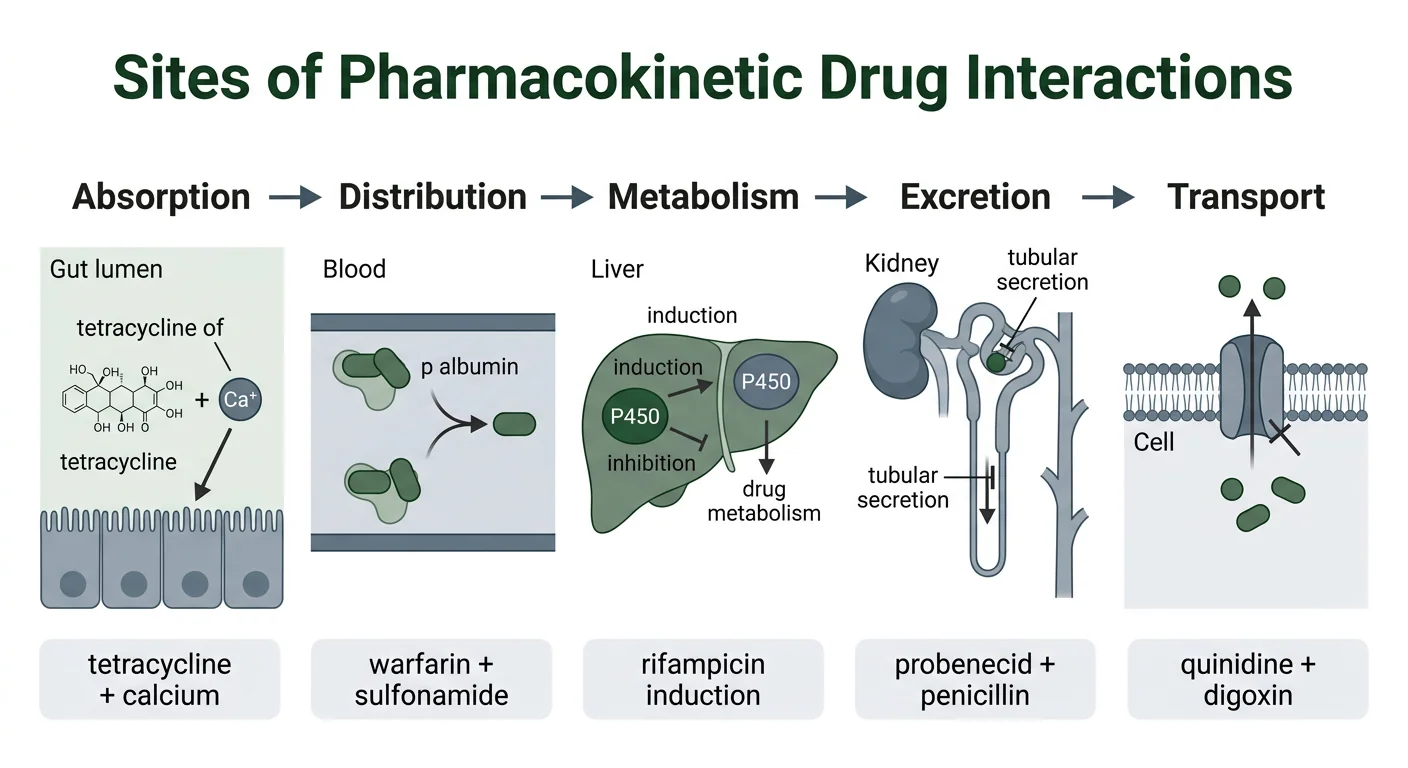
Figure 1 — Sites of pharmacokinetic drug interactions along the ADME pathway. Diagram showing the five sites of pharmacokinetic drug interactions — absorption, distribution, metabolism, excretion and transport — each with a representative interacting drug pair such as tetracycline with calcium, warfarin with sulfonamide, and quinidine with digoxin.
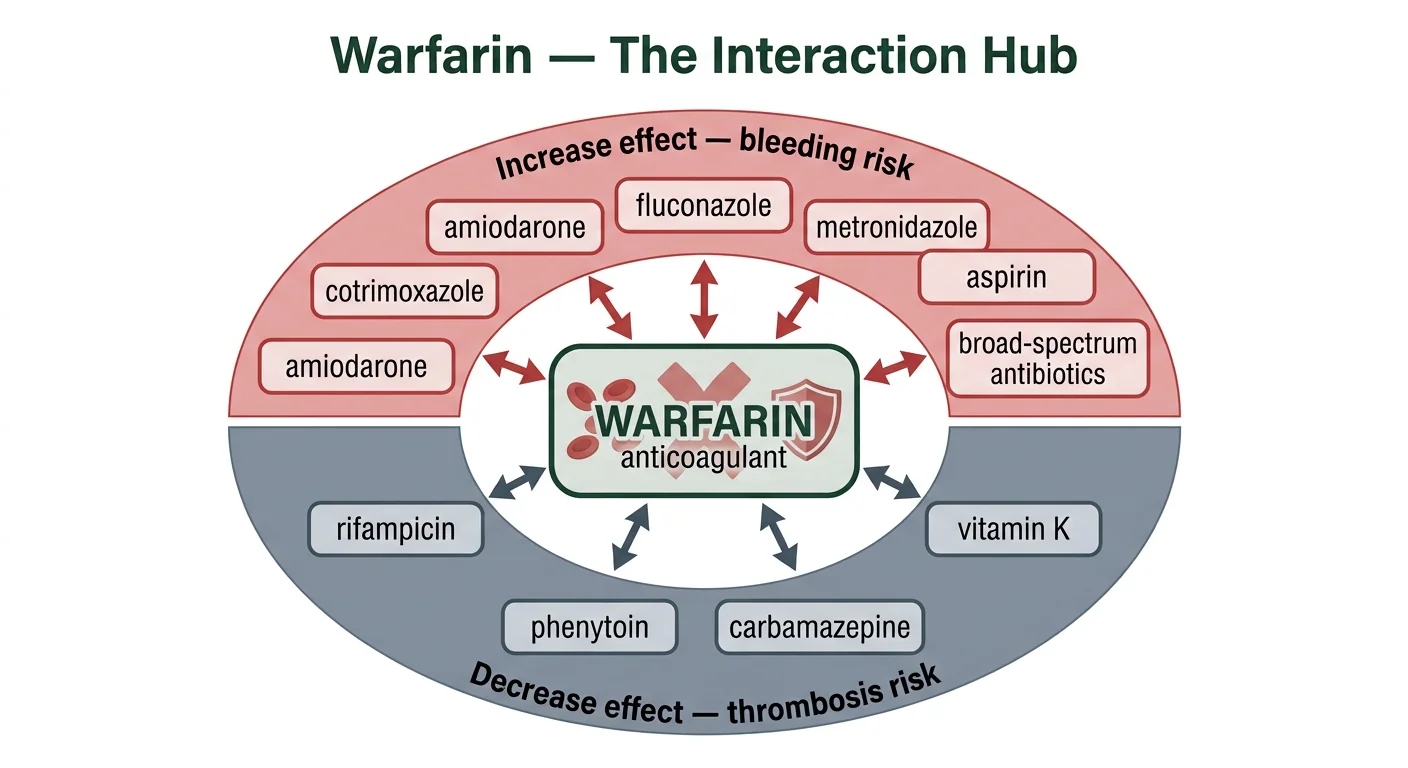
Figure 2 — Warfarin as the interaction hub. Hub-and-spoke diagram centred on warfarin, showing drugs that increase its anticoagulant effect and bleeding risk on one side (cotrimoxazole, amiodarone, aspirin) and drugs that decrease its effect and raise thrombosis risk on the other (rifampicin, phenytoin, vitamin K).
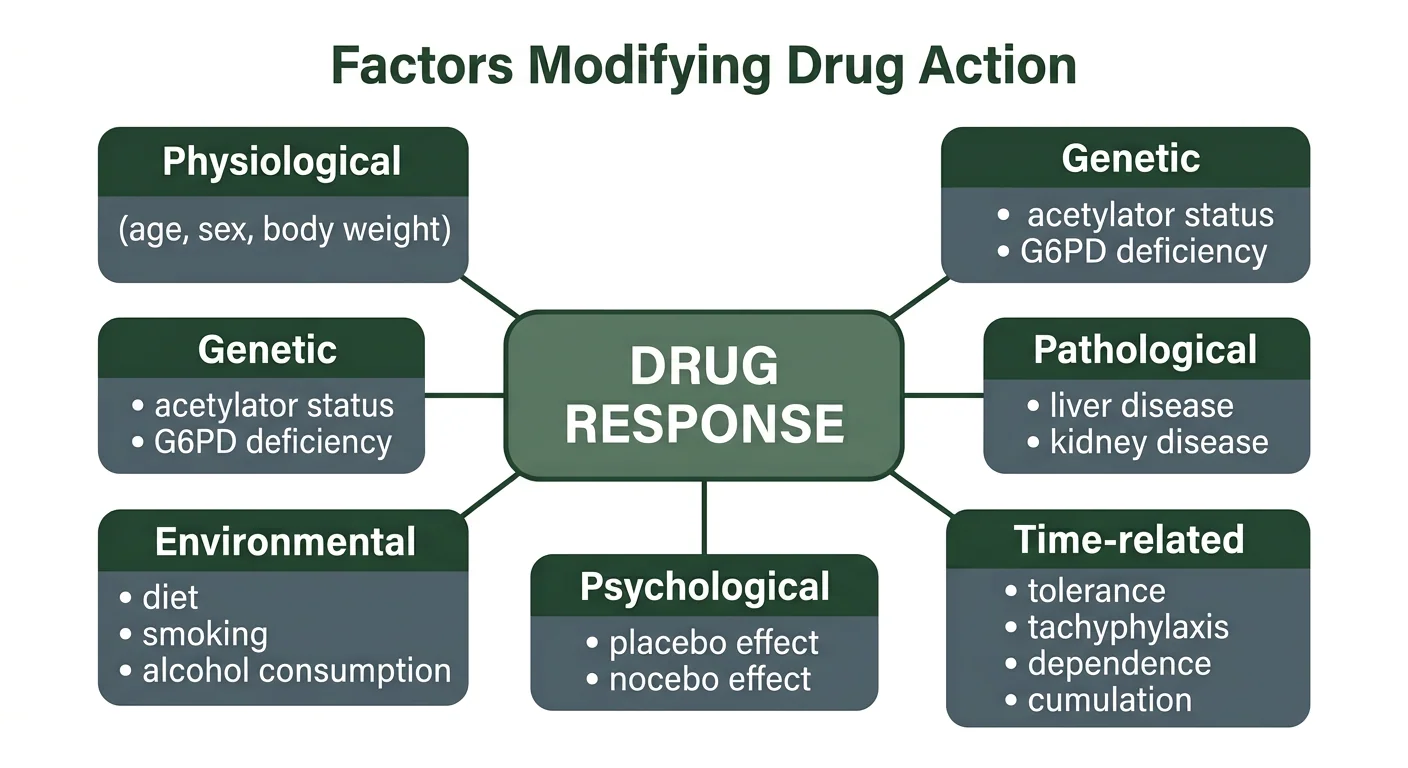
Figure 3 — Factors modifying drug action. Concept map showing the factors that modify drug response — physiological, genetic, pathological, environmental, psychological and time-related factors — each with short examples such as age, G6PD deficiency, liver disease, smoking, the placebo effect and tolerance.
Clinical Correlation
Vignette 1 — Bleeding on warfarin after cotrimoxazole
A 71-year-old man on warfarin for atrial fibrillation (INR stable at 2.5) is prescribed cotrimoxazole for a urinary tract infection. Ten days later he presents with haematuria and an INR of 8.
Reasoning: Cotrimoxazole raises warfarin's effect through a triple mechanism: the sulfonamide displaces warfarin from albumin, raising the free fraction; it inhibits CYP2C9, the enzyme that metabolises the more active S-warfarin enantiomer; and the antibiotic suppresses gut flora that synthesise vitamin K. The consequence is a marked rise in INR and bleeding. Management is to stop the cotrimoxazole (or substitute an antibiotic that does not interact), withhold or reduce warfarin, and give vitamin K if bleeding is significant. This is the paradigm of a pharmacokinetic interaction with a narrow-therapeutic-index drug, and it illustrates why any new prescription for a patient on warfarin demands an interaction review.
Vignette 2 — Sildenafil and a nitrate
A 62-year-old man with ischaemic heart disease and erectile dysfunction takes sildenafil and later uses a sublingual glyceryl trinitrate for chest pain. Within minutes his blood pressure falls to 70/40 mmHg and he becomes drowsy.
Reasoning: Sildenafil inhibits phosphodiesterase-5, preventing the breakdown of cGMP, the second messenger of nitric oxide. Nitrates act by releasing nitric oxide, which also raises cGMP. The combination produces an additive vasodilatory effect that the cardiovascular system cannot compensate for, causing profound, refractory hypotension. This is an absolute contraindication — the two must never be combined, and before administering any nitrate the patient must be asked when he last took a PDE5 inhibitor. The vignette is a pharmacodynamic interaction (both drugs act on the same NO/cGMP pathway) of the most clinically dangerous kind.
Vignette 3 — Hypertensive crisis after aged cheese
A 45-year-old woman on phenelzine (an MAOI) for depression attends a party, eats a cheese platter and drinks red wine, and develops a throbbing headache and a blood pressure of 230/140 mmHg.
Reasoning: Phenelzine irreversibly inhibits monoamine oxidase, which normally degrades tyramine. Tyramine from aged cheese and wine therefore enters the systemic circulation, where it displaces noradrenaline from presynaptic vesicles, producing an acute sympathomimetic surge and a hypertensive crisis. Management is phentolamine (alpha-adrenergic blockade) to lower the pressure, with monitoring for intracranial haemorrhage. The interaction is prevented by a tyramine-restricted diet, and it explains why patients on irreversible MAOIs need careful dietary and drug counselling — including the two-week washout before any other serotonergic drug.
Vignette 4 — Digoxin toxicity precipitated by a diuretic
A 78-year-old woman with heart failure on digoxin is started on furosemide for worsening oedema. A week later she develops nausea, yellow vision and a slow irregular pulse.
Reasoning: Furosemide causes hypokalaemia, and low extracellular potassium sensitises the myocardium to digoxin — digoxin competes with potassium for binding to the Na⁺/K⁺-ATPase, so when potassium is low, more digoxin binds and toxicity appears even at "therapeutic" levels. Hypomagnesaemia from the loop diuretic compounds the problem. Management is to stop the digoxin, replenish potassium and magnesium, monitor the ECG, and use digoxin-specific antibody fragments if severe. This is a pharmacodynamic interaction (the diuretic does not raise the digoxin level, but alters the end-organ sensitivity), and a reminder that electrolyte disturbances are among the commonest precipitants of drug toxicity.
Practical Linkage
Prescription audit
| Drug prescribed | Identify the interaction | Mechanism | Correction |
|---|---|---|---|
| Tab. warfarin 5 mg OD | Warfarin + cotrimoxazole → bleeding | Displacement + CYP2C9 inhibition + ↓ gut vitamin K | Replace cotrimoxazole or monitor INR closely |
| Tab. cotrimoxazole DS BD | (as above) | (as above) | (as above) |
| Tab. digoxin 0.25 mg OD | Digoxin + furosemide → toxicity risk | Hypokalaemia sensitises myocardium | Add potassium monitoring / supplement |
| Tab. furosemide 40 mg OD | (as above) | (as above) | (as above) |
| Tab. theophylline SR 300 mg BD | Theophylline + ciprofloxacin → toxicity | CYP1A2 inhibition | Reduce theophylline or change antibiotic |
| Tab. ciprofloxacin 500 mg BD | (as above) | (as above) | (as above) |
Exercise (PH1.8 — identify and manage drug interactions in a prescription)
Audit the following prescription written for a 68-year-old man, identify the three embedded drug interactions, name the mechanism, and rewrite the prescription correctly.
Worked mini-case
A patient on phenytoin for epilepsy is started on omeprazole for gastritis. Which interaction should you anticipate, and how would you manage it?
Expected: omeprazole inhibits CYP2C19 and can inhibit phenytoin metabolism, raising phenytoin levels and risking toxicity — monitor phenytoin levels and adjust the dose.
MCQ Bank
35 questions · tagged by topic, exam pattern & difficulty · full explanations
A patient on warfarin with a stable INR is prescribed cotrimoxazole for a urinary tract infection. The most important mechanism by which cotrimoxazole increases the risk of bleeding is:
Rapid Revision
- Drug interaction — one drug modifies the action of another, by kinetics or by dynamics
- Pharmacokinetic interaction — one drug alters the concentration of another
- Pharmacodynamic interaction — drugs act on the same receptor or effect pathway
- Enzyme induction is slow — days to weeks
- Enzyme inhibition is fast — hours
- Rifampicin — the classic inducer causing oral contraceptive failure
- Grapefruit juice — inhibits intestinal CYP3A4, raising felodipine and statin levels
- Warfarin + cotrimoxazole — bleeding from displacement, CYP2C9 inhibition and less gut vitamin K
- Warfarin + rifampicin — reduced INR, thrombosis risk
- Sildenafil + nitrate — absolute contraindication, profound hypotension
- MAOI + tyramine — hypertensive crisis, the cheese reaction
- MAOI + pethidine — hyperpyrexia and excitability
- Digoxin + furosemide — toxicity from hypokalaemia
- Digoxin + quinidine — raised levels by displacement and P-glycoprotein inhibition
- Theophylline + ciprofloxacin — toxicity from CYP1A2 inhibition
- Lithium + thiazide — lithium toxicity from reduced clearance
- Probenecid + penicillin — deliberately prolonged penicillin levels
- Tetracycline + milk — chelation and reduced absorption
- St John's wort — induces CYP3A4, causing transplant rejection with ciclosporin
- Ginkgo and garlic — antiplatelet, potentiate warfarin
- Displacement matters — only when the drug is over 90 percent bound with a narrow therapeutic index
- Grey baby syndrome — immature glucuronidation in neonates
- Cytotoxics are dosed — by body surface area
- Tolerance — reduced response on repeated dosing
- Tachyphylaxis — rapidly developing tolerance, nitrates and ephedrine
- Physical dependence — a withdrawal syndrome on stopping
- Addiction — craving with compulsive use despite harm
- Cumulation — accumulation when dosing interval is shorter than elimination
Viva Questions
- Define a drug interaction — A measurable modification of the action of one drug by prior or concomitant administration of another substance.
- Differentiate pharmacokinetic from pharmacodynamic interactions — Pharmacokinetic interactions alter the concentration of one drug by another; pharmacodynamic interactions occur when drugs act on the same or related systems without changing concentration.
- Why does rifampicin cause oral contraceptive failure — It induces hepatic enzymes that accelerate oestrogen metabolism.
- What is the mechanism of the grapefruit-juice interaction — Inhibition of intestinal CYP3A4, raising the oral bioavailability of high first-pass drugs such as felodipine and statins.
- How does cotrimoxazole increase bleeding with warfarin — By displacing warfarin from albumin, inhibiting CYP2C9, and reducing gut vitamin K synthesis.
- Why are sildenafil and nitrates contraindicated together — Both raise cGMP, causing additive vasodilation and profound hypotension.
- What is the cheese reaction — Hypertensive crisis from tyramine displacing noradrenaline in a patient on an MAOI.
- Why does furosemide precipitate digoxin toxicity — Hypokalaemia sensitises the myocardium to digoxin.
- How does probenecid prolong penicillin levels — It blocks renal tubular secretion of penicillin.
- Why do tetracyclines fail when taken with milk — Calcium chelates the drug, preventing absorption.
- When is protein-binding displacement clinically important — Only for drugs over 90 percent bound with a narrow therapeutic index and a small volume of distribution.
- Differentiate tolerance from tachyphylaxis — Tolerance is gradual diminution of response on repeated dosing; tachyphylaxis is tolerance developing very rapidly, as with nitrates.
- Differentiate physical dependence from addiction — Physical dependence is a withdrawal syndrome on stopping; addiction adds craving and compulsive use despite harm.
- What causes grey baby syndrome — Immature glucuronidation in the neonate, causing chloramphenicol accumulation.
References
- Tripathi KD. Essentials of Medical Pharmacology. 9th ed. New Delhi: Jaypee Brothers Medical Publishers; Chapter 5 (Adverse Drug Effects; Drug Interactions).
- Katzung BG, Vanderah TW (eds). Basic & Clinical Pharmacology. 16th ed. New York: McGraw Hill; Chapter 4 (Drug Biotransformation) and Chapters 59–60 (Adverse Drug Reactions; Drug Interactions).
- Brunton LL, Knollmann BC (eds). Goodman & Gilman's The Pharmacological Basis of Therapeutics. 14th ed. New York: McGraw Hill; Chapter 2 (Pharmacokinetics) and Chapter 5 (Membrane Transporters and Drug Response).
- Ritter JM, Flower RJ, Henderson G, et al. Rang & Dale's Pharmacology. 10th ed. Edinburgh: Elsevier; Chapter 58 (Adverse Drug Reactions and Drug Interactions).
- National Medical Commission. Competency Based Undergraduate Curriculum for the Indian Medical Graduate, Volume II — Pharmacology (Code: PH), competency PH1.8.
- Baxter K (ed). Stockley's Drug Interactions. 12th ed. London: Pharmaceutical Press; selected monographs on warfarin, digoxin and MAOI interactions.
- World Health Organization. Guide to Good Prescribing: A Practical Manual. Geneva: WHO/DAP.
- Indian Pharmacopoeia Commission. Pharmacovigilance Programme of India (PvPI): Guidance document for ADR monitoring centres. Ghaziabad: IPC.
Downloads
All deliverables & printable revision sheets for CH06
Printable Chapter Handout & Study Notes
Generate a clean, high-yield PDF or print directly without sidebars and navigation menus.