
Adverse Drug Reactions & Pharmacovigilance
Learning Objectives
At the end of this chapter, the Phase II MBBS student will be able to:
- Define an adverse drug reaction (ADR) and differentiate it from an adverse event, a side effect, a toxic effect, intolerance, idiosyncrasy and drug allergy. (PH1.7 — Knows)
- Classify ADRs according to the Rawlins–Thompson (Type A/B) scheme and the extended A–F classification, with a drug example of each type. (PH1.7 — Knows)
- Describe the Gell–Coombs types I–IV of drug hypersensitivity with mechanism, time course and representative drugs. (PH1.7 — Knows)
- Identify the classic teratogens and the drugs capable of carcinogenesis, and state the critical period of organogenesis. (PH1.7 — Knows)
- Describe the principles of pharmacovigilance, its methods and the structure and functioning of the Pharmacovigilance Programme of India (PvPI). (PH1.6 — Knows)
- Apply the WHO-UMC causality categories and the Naranjo scale to assign causality to a suspected ADR. (PH1.6, PH1.7 — Knows-how)
- Explain dechallenge and rechallenge and the circumstances in which each is informative. (PH1.7 — Knows-how)
- Decide what, when and to whom an ADR should be reported, and recognise the reasons for under-reporting. (PH1.6 — Knows-how)
- Fill the PvPI suspected-ADR reporting form for a given clinical scenario in a simulated environment. (PH1.6, PH3.4 — Shows-how)
Must-Know Summary
Every drug carries risk, and quantifying, classifying and reporting that risk is a core competency of the prescribing doctor. An adverse drug reaction is a noxious and unintended response to a drug given in normal therapeutic doses; the term implies a causal relationship, which is exactly what an adverse event does not.
The single most examined distinction is Type A (Augmented) versus Type B (Bizarre) reactions: Type A reactions are dose-dependent and pharmacologically predictable (bleeding on warfarin), whereas Type B reactions are dose-independent, unpredictable and immunologically or genetically determined (anaphylaxis to penicillin). In India these reactions feed a national surveillance system — the Pharmacovigilance Programme of India (PvPI), coordinated by the Indian Pharmacopoeia Commission, Ghaziabad, under the CDSCO, and reporting to the WHO Uppsala Monitoring Centre. Causality is formally assessed with the WHO-UMC categories or the Naranjo scale.
In one line each:
- ADR means a causal link is suspected — Adverse event means the link is not established
- Type A = Augmented (dose-related, predictable) — Type B = Bizarre (dose-independent, unpredictable)
- Type C = Chronic — Type D = Delayed — Type E = End-of-use — Type F = Failure of therapy
- Type I hypersensitivity is IgE-mediated — anaphylaxis, urticaria, bronchospasm
- Type II is cytotoxic — methyldopa haemolytic anaemia
- Type III is immune-complex — serum sickness
- Type IV is T-cell mediated — contact dermatitis, SJS/TEN
- Naranjo score 9 or more is "definite" — 5 to 8 "probable" — 1 to 4 "possible"
- PvPI coordinates from IPC Ghaziabad and reports to WHO-UMC in Sweden
Classification
Box 1 — Types of adverse drug reactions (Rawlins–Thompson + extended A–F)
- Type A — Augmented
- Dose-dependent exaggeration of a known pharmacological action
- Predictable, high incidence, low mortality
- Examples: warfarin bleeding, beta-blocker bradycardia, insulin hypoglycaemia
- Type B — Bizarre
- Dose-independent, unpredictable, immunologically or genetically determined
- Low incidence, high mortality
- Examples: penicillin anaphylaxis, chloramphenicol aplastic anaemia, G6PD haemolysis
- Type C — Chronic (Continuous) — due to prolonged use: analgesic nephropathy, tardive dyskinesia, steroid osteoporosis
- Type D — Delayed — appears years later: carcinogenesis, teratogenesis
- Type E — End of use — withdrawal reaction: opioid withdrawal, beta-blocker rebound, benzodiazepine withdrawal seizures
- Type F — Failure of therapy — unexpected failure from interaction or resistance: OCP failure with rifampicin, antimicrobial resistance
Box 2 — Gell & Coombs hypersensitivity reactions
- Type I — Anaphylactic (IgE) — mast cell/basophil degranulation, minutes to hours; urticaria, angioedema, bronchospasm, anaphylaxis — penicillin
- Type II — Cytotoxic (IgG/IgM) — complement-mediated cell lysis; methyldopa haemolytic anaemia, heparin thrombocytopenia
- Type III — Immune-complex — complex deposition, 1–3 weeks; serum sickness, vasculitis, drug fever
- Type IV — Delayed (T-cell) — 48–72 hours or longer; contact dermatitis, SJS, TEN, DRESS
Core Concepts
1. Definitions and terminology
Adverse drug reaction (ADR). The World Health Organization defines an ADR as "a response to a drug which is noxious and unintended, and which occurs at doses normally used in man for prophylaxis, diagnosis or therapy of disease, or for the modification of physiological function." Three ideas are packed into this sentence. First, the response is noxious and unintended — beneficial side effects are excluded. Second, it occurs at normal therapeutic doses, which distinguishes it from poisoning (overdose). Third, and most importantly for the doctor, the phrase "response to a drug" implies a causal relationship: the drug is suspected, at a minimum, of having caused the event.
Adverse event (AE). An adverse event is any untoward medical occurrence in a patient administered a drug, which does not necessarily have a causal relationship with the treatment. A patient on an antihypertensive who trips and fractures a wrist has suffered an adverse event; only if the drug caused postural hypotension that caused the fall is it an adverse reaction. The distinction matters in trials, in pharmacovigilance case assessment and in examinations.
Side effect versus adverse effect. A side effect is an unintended but pharmacologically predictable effect occurring at therapeutic doses, inseparable from the drug's known action — dry mouth with atropine, drowsiness with a sedating antihistamine, hypokalaemia with a thiazide. It may even be therapeutically exploited (codeine's constipating effect is used in diarrhoea). An adverse effect is the broader term for any undesired effect, whether predictable or not. A toxic effect is the exaggerated pharmacological action of a drug from excessive dose or prolonged use — respiratory depression from opioid overdose, deafness from a high cumulative dose of an aminoglycoside. Intolerance is the appearance of a drug's characteristic toxic effects in a given individual at therapeutic doses, i.e. a lowered threshold — vomiting after a single dose of a drug that is ordinarily well tolerated.
Idiosyncrasy. Idiosyncrasy is a genetically determined, qualitatively abnormal response — different in nature, not merely degree, from the pharmacological action. The paradigm is haemolysis after primaquine, a sulfonamide, dapsone or nitrofurantoin in a patient with glucose-6-phosphate dehydrogenase (G6PD) deficiency; the drug, or its oxidant metabolite, overwhelms the already-impaired capacity of the red cell to regenerate glutathione. Other examples include apnoea from succinylcholine in pseudocholinesterase deficiency and peripheral neuropathy from isoniazid in slow acetylators. Idiosyncrasy is therefore not a Type A (dose-related) phenomenon but a Type B reaction with a genetic substrate.
Drug allergy (hypersensitivity). Drug allergy is an immunologically mediated reaction to a drug, requiring prior sensitisation and unrelated to the drug's pharmacological action. It is the archetypal Type B reaction. Iatrogenic disease is disease caused by the physician or by treatment — Cushingoid syndrome from prolonged corticosteroids, or drug-induced parkinsonism from metoclopramide. Teratogenicity is the capacity to cause structural or functional abnormality in the fetus; mutagenicity the capacity to induce heritable genetic change; carcinogenicity the capacity to cause cancer.
Serious adverse event (SAE). An SAE is any untoward occurrence that is fatal, life-threatening, requires hospitalisation or prolongs existing hospitalisation, results in persistent or significant disability, produces a congenital anomaly, or is otherwise medically important. SAEs carry mandatory, expedited reporting obligations.
2. Classification of adverse drug reactions
The Rawlins–Thompson classification divides ADRs into Type A (Augmented) and Type B (Bizarre), and this dichotomy remains the highest-yield concept in the chapter.
Type A (Augmented). Type A reactions are an exaggeration of the drug's normal pharmacological action. They are dose-dependent, predictable from the pharmacology, carry a high incidence (they account for the large majority of all ADRs, roughly 70–80%), and a low mortality because they are anticipated and manageable. Examples: bleeding with warfarin, bradycardia with a beta-blocker, hypoglycaemia with insulin or a sulfonylurea, postural hypotension with an alpha-blocker. They are managed by dose reduction or withdrawal.
Type B (Bizarre). Type B reactions are unpredictable from pharmacology, dose-independent, of low incidence and — because they are unexpected and severe — of high mortality. They are usually immunologically (drug allergy) or genetically (idiosyncrasy) determined. Examples: anaphylaxis to penicillin, aplastic anaemia with chloramphenicol, malignant hyperthermia with succinylcholine or halothane, haemolysis in G6PD deficiency.
Because the classical A/B scheme leaves several clinically important reactions out, an extended A–F classification is increasingly examined:
- Type C (Chronic/Continuous) — reactions from prolonged use: analgesic nephropathy from chronic NSAID abuse, tardive dyskinesia from long-term antipsychotics, osteoporosis from long-term corticosteroids.
- Type D (Delayed) — reactions appearing years after exposure: carcinogenesis (secondary leukaemia after alkylating agents) and teratogenesis (phocomelia from thalidomide).
- Type E (End of use) — withdrawal phenomena on stopping: opioid withdrawal, rebound hypertension and angina on abrupt beta-blocker cessation, seizures on stopping benzodiazepines or phenytoin, adrenal insufficiency after sudden corticosteroid withdrawal.
- Type F (Failure of therapy) — unexpected therapeutic failure, usually from an interaction or resistance: oral contraceptive failure with rifampicin, antimicrobial failure from resistance.
ADRs are also classified by severity (minor, moderate, severe, lethal) and by onset (acute, subacute, latent). An epidemiological generalisation worth remembering: Type A reactions dominate the incidence figures, while Type B reactions dominate the mortality figures — precisely because the predictable ones are frequent but survivable, and the bizarre ones are rare but lethal.
3. Drug allergy and hypersensitivity
Most drugs are too small to be immunogenic by themselves; they act as haptens, binding covalently to a host protein to form an immunogenic conjugate. Penicillin, through its reactive beta-lactam ring, couples to proteins to form the major determinant (penicilloyl), which is the basis of skin testing and of cross-reactivity. Gell and Coombs classified hypersensitivity into four types, each with characteristic drugs:
Type I — anaphylactic (IgE). Drug-specific IgE bound to mast cells and basophils is cross-linked by the drug, causing degranulation and release of histamine, leukotrienes and other mediators within minutes to hours. Manifestations are urticaria, angioedema, bronchospasm and anaphylactic shock. Penicillin is the classical cause; others include cephalosporins, neuromuscular blockers, and streptokinase. Treatment is intramuscular adrenaline (see Vignette 1).
Type II — cytotoxic (IgG/IgM). Antibodies directed at drug-coated cells activate complement or antibody-dependent cytotoxicity, destroying the target cell. Examples: methyldopa-induced autoimmune haemolytic anaemia, penicillin-induced haemolysis, heparin-induced thrombocytopenia, and immune-mediated agranulocytosis.
Type III — immune-complex. Soluble antigen–antibody complexes deposit in tissues and activate complement, causing vasculitis, arthralgia, fever and rash — serum sickness — typically 1–3 weeks after exposure. Penicillin and sulfonamides are classical causes; drug fever belongs here.
Type IV — delayed, cell-mediated (T-cell). Sensitised T lymphocytes mediate the reaction over 48–72 hours or longer — contact dermatitis, maculopapular eruptions, and the severe cutaneous reactions Stevens–Johnson syndrome (SJS), toxic epidermal necrolysis (TEN) and DRESS (drug reaction with eosinophilia and systemic symptoms). The sulfonamides, allopurinol, carbamazepine, lamotrigine and phenytoin are the common culprits.
Cross-reactivity is examinable: patients allergic to a penicillin have a small (~2–10%) risk of reaction to a cephalosporin; the sulfonamide family (sulfamethoxazole, sulfasalazine, and also acetazolamide, furosemide, thiazides) shows some cross-reactivity, though the diuretics rarely cause the same allergic syndromes.
4. Teratogenicity, mutagenicity and carcinogenicity
Teratogenicity. A teratogen produces structural or functional abnormality in the developing fetus. The risk is greatest during organogenesis — roughly weeks 3 to 8 of gestation (days 17–56) — the window in which organs form. The historical paradigm is thalidomide (1956–1961), a sedative and antiemetic that caused phocomelia (seal-like short limbs) in thousands of children, and which transformed drug regulation worldwide. The classic teratogens and their signature effects are tabulated (Table 5). Two principles recur: first, no drug is absolutely safe in pregnancy, and second, the highest-risk agents include valproate (neural tube defects — the anticonvulsant of greatest teratogenic risk), isotretinoin, warfarin, and the ACE inhibitors/ARBs in the second and third trimesters (renal dysgenesis, oligohydramnios).
The traditional FDA pregnancy categories A/B/C/D/X (X = contraindicated in pregnancy, e.g. isotretinoin) are still quoted in Indian examinations, but current labelling has moved to the narrative Pregnancy and Lactation Labelling Rule (PLLR), which replaces the letter grades with descriptive risk summaries.
Mutagenicity. A mutagen induces heritable genetic change. Mutagenic potential is screened preclinically (the Ames test uses a bacterial strain's reversion to histidine independence as a marker of mutation). Anticancer alkylating agents and radiation are classic mutagens.
Carcinogenicity. A carcinogen induces cancer, often after a long latent period (a Type D reaction). Diethylstilbestrol (DES), given to pregnant women, caused clear-cell adenocarcinoma of the vagina in their daughters decades later — the definitive example of transplacental carcinogenesis. Alkylating agents (cyclophosphamide) predispose to secondary leukaemia and bladder cancer; immunosuppressants and photochemotherapy (PUVA) raise the risk of skin malignancy; long-term oestrogen therapy is associated with endometrial carcinoma. Drugs are also implicated in promoting pre-existing cancers rather than initiating them.
5. Pharmacovigilance and the PvPI
Pharmacovigilance is defined by the WHO as "the science and activities relating to the detection, assessment, understanding and prevention of adverse effects or any other drug-related problem." Its aims are to detect previously unknown reactions, to detect an increase in frequency of known reactions, to identify risk factors and mechanisms, to estimate the quantitative benefit–risk, and to disseminate information that improves prescribing and regulation.
Methods include: spontaneous (voluntary) reporting — the backbone of post-marketing surveillance, cheap and able to cover the whole population and lifetime of a drug, but hampered by under-reporting; prescription-event monitoring; cohort and case–control studies; and record linkage of large electronic databases. A signal is reported information on a possible causal relationship between an adverse event and a drug, previously unknown or incompletely documented.
The Pharmacovigilance Programme of India (PvPI). India joined the WHO Programme for International Drug Monitoring in 1997. The PvPI was launched on 14 July 2010 by the Ministry of Health and Family Welfare, with the National Coordination Centre (NCC) initially at AIIMS, New Delhi, overseeing 22 ADR Monitoring Centres (AMCs). On 15 April 2011 the NCC was shifted to the Indian Pharmacopoeia Commission (IPC), Ghaziabad, operating under the Central Drugs Standard Control Organization (CDSCO). The network has since grown to more than a thousand AMCs — sited largely in medical colleges and hospitals — which collect suspected ADR reports, perform a provisional causality assessment, and forward the Individual Case Safety Reports (ICSRs) to the NCC. The NCC collates, analyses and transmits the data to the WHO Uppsala Monitoring Centre (UMC) in Sweden, where it enters the global VigiBase database. Sister programmes include the Haemovigilance Programme of India (HvPI) for blood and blood products and the Materiovigilance Programme of India (MvPI) for medical devices.
6. Causality assessment
When a suspected ADR is reported, the first question is whether the drug actually caused it. Two structured tools are used.
WHO-UMC categories. The Uppsala Monitoring Centre scale assigns one of six categories: Certain (plausible time relationship, cannot be explained by disease or other drugs, response to withdrawal [dechallenge] is plausible, and the event is definitive pharmacologically or on rechallenge); Probable/Likely (reasonable time relationship, unlikely to be explained otherwise, reasonable response to dechallenge, rechallenge not required); Possible (reasonable time relationship but could also be explained by disease or other drugs; dechallenge information lacking); Unlikely (improbable time relationship, other explanations more likely); Conditional/Unclassified (more data needed for proper assessment); and Unassessable/Unclassifiable (insufficient or contradictory information).
The Naranjo scale (algorithm). Ten questions are answered Yes/No/Unknown and scored. The items are: (1) previous conclusive reports of this reaction; (2) appearance of the event after the drug was given; (3) improvement on dechallenge (withdrawal); (4) recurrence on rechallenge (readministration); (5) alternative causes that could explain the event (scored negatively); (6) recurrence on placebo (scored negatively); (7) drug present in blood at toxic concentration; (8) severity related to dose; (9) similar reaction to the same or similar drug previously; and (10) objective confirmation of the event. The total ranges from −4 to +13: a score of 9 or more = definite, 5–8 = probable, 1–4 = possible, and 0 or less = doubtful.
Dechallenge is the observation that the reaction resolves when the drug is stopped — strong supportive evidence. Rechallenge is the deliberate re-administration to see whether the reaction recurs — the most conclusive single criterion, but unethical and usually contraindicated for serious reactions, so it is rarely performed prospectively.
7. ADR reporting and signal detection
What to report. For a newly marketed drug, all suspected reactions, including minor ones, should be reported. For established drugs, all serious or unexpected reactions should be reported, together with reactions to vaccines, herbal products, and any event suggesting a quality defect, medication error, overdose, or drug interaction. In India reporting uses the PvPI suspected ADR form and flows AMC → NCC (IPC Ghaziabad) → CDSCO and WHO-UMC.
Under-reporting is the central weakness of spontaneous systems. Its causes are instructive: the prescriber may be uncertain that the reaction is real or worth reporting, may not know how or to whom to report, may fear medico-legal exposure, may be too busy, or may simply forget. Recognition of these barriers underpins the undergraduate practical competency of completing an ADR report.
Signal detection. Once reports accumulate in VigiBase, statistical and clinical review identifies signals — new or changing safety concerns — which trigger regulatory action ranging from label changes and Dear Healthcare Professional letters to restriction or withdrawal of a drug. The withdrawal of several high-risk agents (for example, cisapride for QT prolongation and torsades de pointes) is the end product of this pipeline, and a reminder that pharmacovigilance is a continuing responsibility shared by industry, regulators and every prescribing doctor.
Tables
Table 1 — Drug safety terminology
| Term | Definition | Key point |
|---|---|---|
| Adverse drug reaction | Noxious, unintended response at normal therapeutic doses | Causal link is implied |
| Adverse event | Any untoward medical occurrence during treatment | No causal link required |
| Side effect | Unintended, pharmacologically predictable effect | May be therapeutically useful |
| Toxic effect | Exaggerated action from overdose or prolonged use | Dose-related |
| Intolerance | Toxic effect at therapeutic dose in a susceptible individual | Lowered threshold |
| Idiosyncrasy | Genetically determined abnormal response | G6PD haemolysis as paradigm |
| Drug allergy | Immunologically mediated reaction | Requires prior sensitisation |
| Iatrogenic disease | Disease caused by treatment | Corticosteroid-induced Cushing syndrome |
Table 2 — Type A versus Type B adverse drug reactions
| Feature | Type A (Augmented) | Type B (Bizarre) |
|---|---|---|
| Relationship to dose | Dose-dependent | Dose-independent |
| Predictability | Predictable from pharmacology | Unpredictable |
| Incidence | High (majority of ADRs) | Low |
| Mortality | Low | High |
| Mechanism | Exaggerated pharmacological action | Immunological or genetic |
| Examples | Warfarin bleeding, insulin hypoglycaemia | Penicillin anaphylaxis, aplastic anaemia |
| Management | Reduce dose or withdraw | Withdraw; avoid re-exposure |
Table 3 — Extended A–F classification of adverse drug reactions
| Type | Meaning | Mechanism | Example |
|---|---|---|---|
| A | Augmented | Dose-related exaggeration | Bleeding with warfarin |
| B | Bizarre | Idiosyncratic/immunological | Anaphylaxis to penicillin |
| C | Chronic/Continuous | Cumulative, prolonged use | Analgesic nephropathy |
| D | Delayed | Late onset | Teratogenesis, carcinogenesis |
| E | End of use | Withdrawal | Beta-blocker rebound |
| F | Failure of therapy | Interaction or resistance | OCP failure with rifampicin |
Table 4 — Gell & Coombs hypersensitivity reactions
| Type | Mechanism | Time course | Manifestation | Representative drug |
|---|---|---|---|---|
| I | IgE, mast cell degranulation | Minutes–hours | Anaphylaxis, urticaria, bronchospasm | Penicillin |
| II | IgG/IgM + complement | Variable | Haemolytic anaemia, thrombocytopenia | Methyldopa, heparin |
| III | Immune-complex deposition | 1–3 weeks | Serum sickness, vasculitis, drug fever | Penicillin, sulfonamides |
| IV | Sensitised T cells | 48–72 h or longer | Contact dermatitis, SJS, TEN, DRESS | Sulfonamides, carbamazepine |
Table 5 — Classic teratogens and their characteristic effects
| Drug | Characteristic effect |
|---|---|
| Thalidomide | Phocomelia (short, seal-like limbs) |
| Isotretinoin | CNS, cardiovascular and ear malformations |
| Valproate | Neural tube defects (spina bifida) — highest-risk anticonvulsant |
| Warfarin | Warfarin embryopathy (nasal hypoplasia, stippled epiphyses) |
| ACE inhibitors/ARBs | Renal dysgenesis, oligohydramnios (2nd/3rd trimester) |
| Lithium | Ebstein anomaly |
| Phenytoin | Fetal hydantoin syndrome |
| Methotrexate | Aminopterin syndrome, abortion |
| Alcohol | Fetal alcohol syndrome |
| Diethylstilbestrol (DES) | Vaginal clear-cell adenocarcinoma in daughters |
| Tetracyclines | Tooth discolouration, enamel hypoplasia |
| Aminoglycosides | Ototoxicity |
Table 6 — WHO-UMC causality categories
| Category | Key criteria |
|---|---|
| Certain | Plausible time, no alternative cause, positive dechallenge and/or rechallenge |
| Probable/Likely | Reasonable time, unlikely other cause, reasonable dechallenge; rechallenge not required |
| Possible | Reasonable time, but other causes possible; dechallenge lacking |
| Unlikely | Improbable time, alternative explanation more likely |
| Conditional/Unclassified | More data needed for assessment |
| Unassessable/Unclassifiable | Insufficient or contradictory information |
Table 7 — Drug-induced organ toxicity pairings
| Organ/system | Drugs | Toxicity |
|---|---|---|
| Liver | Paracetamol, isoniazid, halothane, methotrexate | Hepatotoxicity |
| Kidney | Aminoglycosides, cisplatin, NSAIDs, amphotericin B | Nephrotoxicity |
| Ear | Aminoglycosides, loop diuretics, cisplatin, quinine | Ototoxicity |
| Blood | Chloramphenicol, clozapine, carbimazole | Aplastic anaemia / agranulocytosis |
| Heart (QT) | Amiodarone, sotalol, macrolides, haloperidol | Torsades de pointes |
| Lung | Bleomycin, amiodarone, methotrexate, nitrofurantoin | Pulmonary fibrosis |
| Heart (muscle) | Doxorubicin | Cardiomyopathy |
| Eye | Ethambutol, chloroquine, corticosteroids | Optic neuritis, retinopathy, cataract |
Figures
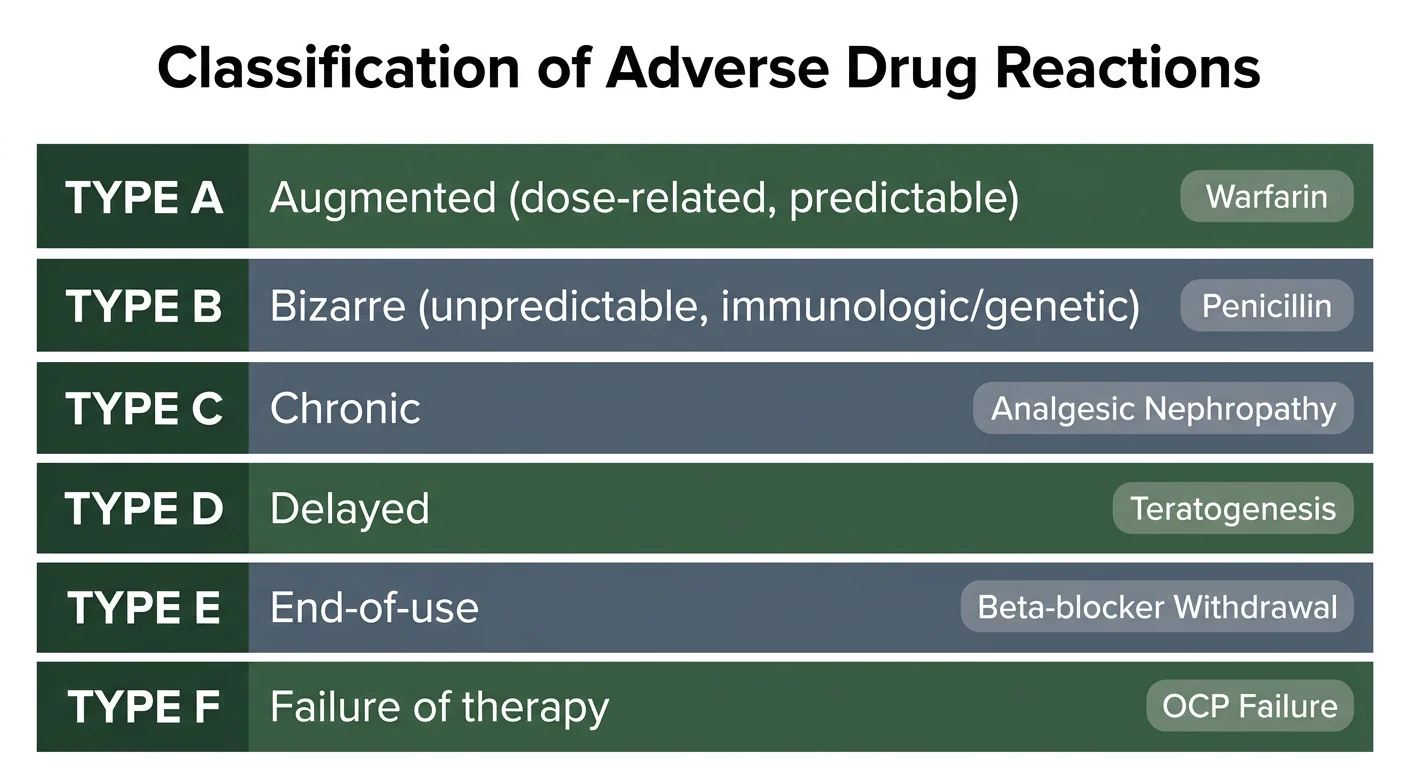
Figure 1 — Classification of adverse drug reactions (Type A–F). Diagram classifying adverse drug reactions into types A augmented, B bizarre, C chronic, D delayed, E end-of-use and F failure of therapy, each with a brief description and a representative drug example.
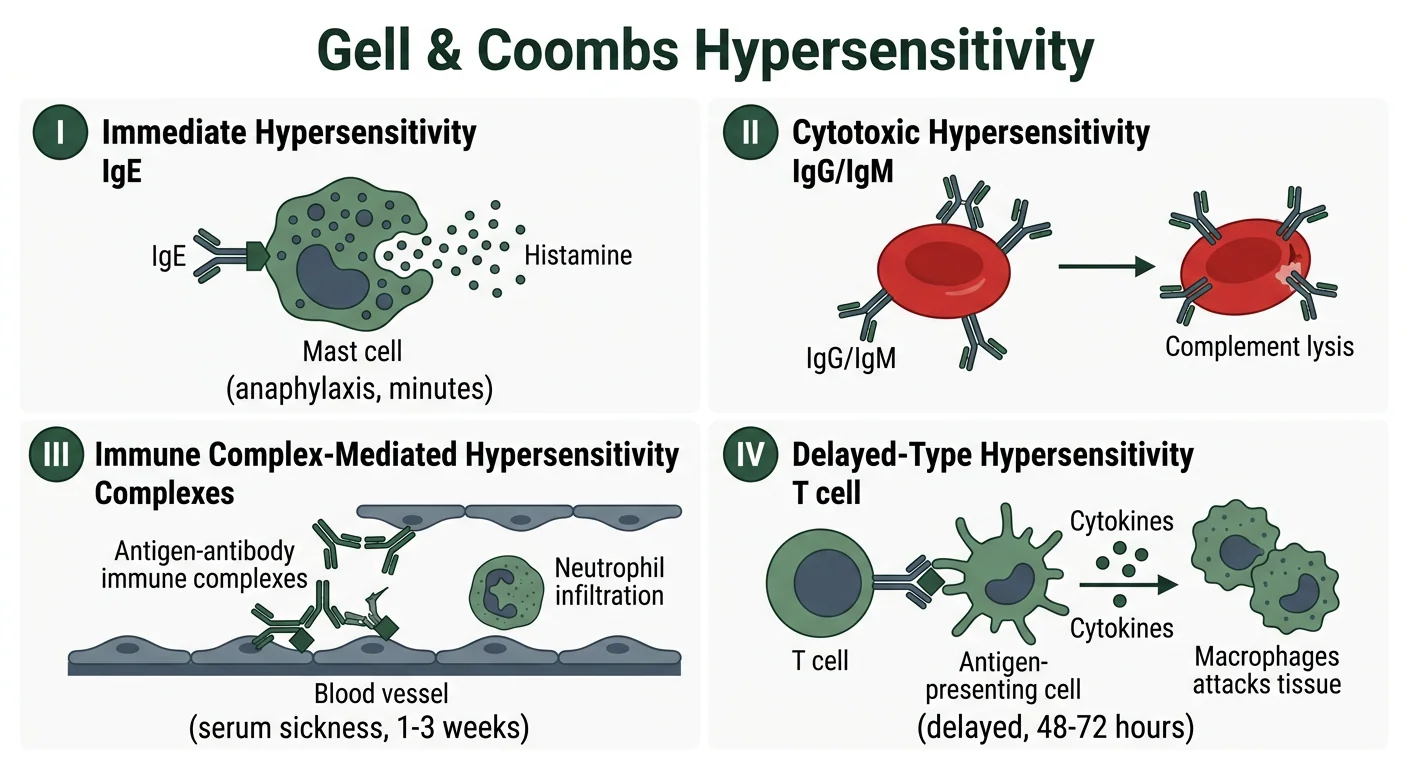
Figure 2 — Gell & Coombs hypersensitivity mechanisms I–IV. Four-panel diagram of Gell and Coombs hypersensitivity types I through IV, showing IgE-mediated anaphylaxis, IgG/IgM cytotoxic lysis, immune-complex deposition, and T-cell mediated delayed hypersensitivity, each with its effector and a representative drug.
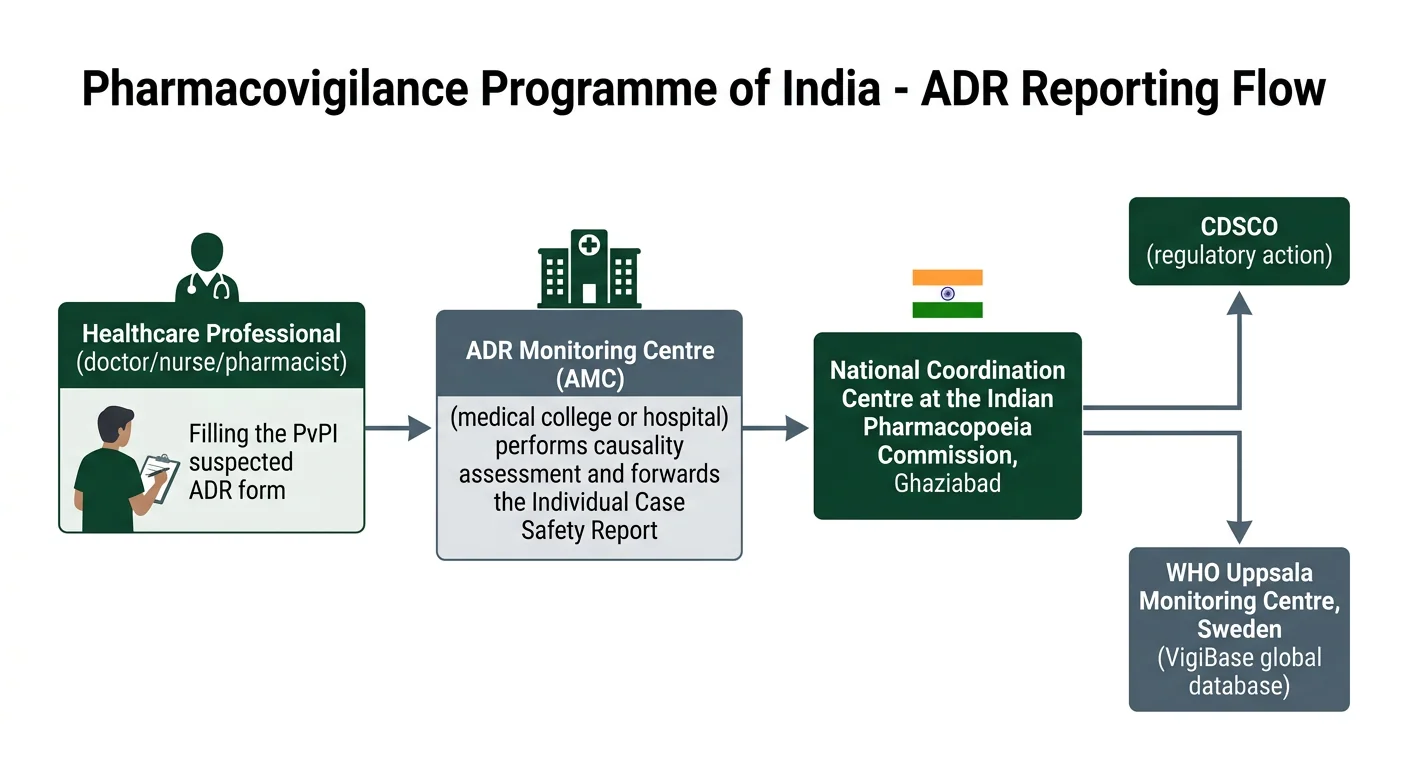
Figure 3 — PvPI structure and the ADR reporting flow. Flow diagram of the Indian pharmacovigilance reporting chain from the healthcare professional through the ADR monitoring centre to the National Coordination Centre at IPC Ghaziabad, and onward to the CDSCO and the WHO Uppsala Monitoring Centre.
Clinical Correlation
Vignette 1 — Anaphylaxis after a penicillin injection
A 28-year-old woman receives intramuscular benzathine penicillin for streptococcal pharyngitis. Within ten minutes she develops pruritus, diffuse urticaria, swelling of the lips, stridor and a blood pressure of 72/40 mmHg.
Reasoning: This is a Type I (IgE-mediated) anaphylactic reaction, a Type B ADR — unpredictable, dose-independent, and potentially fatal. Prior sensitisation produced penicillin-specific IgE bound to mast cells; re-exposure cross-links the IgE and triggers massive release of histamine and other mediators. Management is intramuscular adrenaline 0.5 mg (0.5 mL of 1:1000) into the anterolateral thigh, repeated as needed, together with oxygen, intravenous fluids, and adjuncts such as an antihistamine and hydrocortisone. Adrenaline is the first-line drug because it reverses bronchospasm (beta-2), supports blood pressure (alpha-1 vasoconstriction) and inhibits further mediator release (beta-2 on mast cells). The patient must be counselled to carry the allergy documented and avoid all penicillins, with awareness of partial cross-reactivity with cephalosporins.
Vignette 2 — Stevens–Johnson syndrome after cotrimoxazole
A 34-year-old man treated with cotrimoxazole (trimethoprim–sulfamethoxazole) for a urinary infection develops fever, mucosal erosions and a tender, spreading rash with epidermal detachment on day 7 of therapy.
Reasoning: The clinical picture is Stevens–Johnson syndrome (SJS)/toxic epidermal necrolysis, a Type IV (T-cell mediated) hypersensitivity reaction. The sulfonamide component is a classic culprit, along with allopurinol, carbamazepine, lamotrigine and phenytoin. This is a severe, life-threatening Type B reaction requiring immediate withdrawal of the offending drug, supportive care in an appropriate unit, and avoidance of re-challenge for life. The case illustrates why a careful drug history and early recognition of severe cutaneous adverse reactions are essential — mortality in TEN is high, and prompt drug withdrawal is the single most important intervention.
Vignette 3 — A Naranjo-scored case
A 62-year-old man started on enalapril for hypertension develops a dry cough three days later. The cough disappears when enalapril is stopped and returns when it is restarted.
Reasoning: Applying the Naranjo items: there are previous conclusive reports (ACE-inhibitor cough is well documented, +1); the event appeared after the drug was given (+2); it improved on dechallenge (+1); it recurred on rechallenge (+2); there are no obvious alternative causes (0); and there is no toxic blood level, dose relationship, prior similar reaction or objective test to add further points. The total is 6, placing the reaction in the "probable" band (5–8). This is, mechanistically, a predictable Type A-related effect (accumulation of bradykinin), and demonstrates that a high Naranjo score is not confined to Type B reactions.
Vignette 4 — Isotretinoin in an unsuspected early pregnancy
A 19-year-old woman on isotretinoin for severe acne discovers she is six weeks pregnant.
Reasoning: Isotretinoin is a potent teratogen (retinoic acid embryopathy — CNS, cardiovascular and ear malformations), and the drug is contraindicated in pregnancy (FDA category X). The exposure has occurred within the critical period of organogenesis (weeks 3–8). Management requires immediate cessation of the drug, urgent obstetric referral, and detailed counselling about the substantial risk of fetal abnormality and the options available. The case reinforces the rationale for the mandatory pregnancy-prevention programme that accompanies isotretinoin prescribing — effective contraception before, during and after therapy — and it illustrates the Type D (Delayed) nature of teratogenicity, in which the adverse outcome manifests months after the exposure that caused it.
Practical Linkage
Completing the PvPI suspected-ADR reporting form
| Step | Task | Expected response |
|---|---|---|
| 1 | Identify the suspect drug(s) | Isoniazid, rifampicin, pyrazinamide (hepatotoxic) |
| 2 | Record patient and reporter identifiers | Patient initials, age, sex, weight; reporter name and designation |
| 3 | Describe the reaction | Nausea, jaundice — onset, course, severity |
| 4 | Record dechallenge | Did it resolve when the hepatotoxic drug was stopped? |
| 5 | Record rechallenge | Not attempted — unethical in serious reactions |
| 6 | Assign causality | Naranjo score / WHO-UMC category (likely "probable") |
| 7 | Route of reporting | AMC → NCC (IPC Ghaziabad) → CDSCO / WHO-UMC |
Exercise (PH3.4 — recognise and report an adverse drug reaction)
A patient on antitubercular therapy develops nausea and jaundice in the second month of treatment. Complete the steps above as you would for the PvPI suspected-ADR reporting form.
Mini-cases for Naranjo scoring
(i) A patient develops a rash two days after starting amoxicillin; it fades after stopping and no other drug was changed — assign the score.
(ii) A patient on a statin develops muscle pain; the pain persists despite stopping the statin and the patient has longstanding osteoarthritis — discuss whether causality is "possible" or "unlikely" and why alternative causes matter.
MCQ Bank
35 questions · tagged by topic, exam pattern & difficulty · full explanations
A 60-year-old man on warfarin for atrial fibrillation presents with haematuria and an INR of 6.0. This adverse reaction is best classified as:
Rapid Revision
- Adverse drug reaction — a noxious, unintended response at normal therapeutic doses, implying a causal link
- Adverse event — an untoward occurrence during treatment without a necessary causal link
- Side effect — a predictable, unintended pharmacological effect at therapeutic doses
- Toxic effect — an exaggerated effect from overdose or prolonged use
- Idiosyncrasy — a genetically determined abnormal response, e.g. G6PD haemolysis
- Type A reaction — Augmented, dose-dependent and predictable
- Type B reaction — Bizarre, dose-independent, unpredictable, immunologic or genetic
- Type C reaction — Chronic, from prolonged use
- Type D reaction — Delayed, appearing years later
- Type E reaction — End of use, a withdrawal phenomenon
- Type F reaction — Failure of therapy from interaction or resistance
- Type I hypersensitivity — IgE-mediated anaphylaxis within minutes
- Type II hypersensitivity — IgG/IgM cytotoxic cell lysis
- Type III hypersensitivity — immune-complex serum sickness in 1 to 3 weeks
- Type IV hypersensitivity — T-cell mediated, delayed 48 hours or more
- Thalidomide — phocomelia
- Valproate — neural tube defects, the highest-risk anticonvulsant
- Warfarin embryopathy — nasal hypoplasia and stippled epiphyses
- Lithium — Ebstein anomaly
- ACE inhibitors in late pregnancy — renal dysgenesis and oligohydramnios
- Naranjo score 9 or more — definite
- Naranjo score 5 to 8 — probable
- Naranjo score 1 to 4 — possible
- Naranjo score 0 or less — doubtful
- Dechallenge — reaction resolves when the drug is stopped
- Rechallenge — reaction recurs when the drug is restarted
- PvPI launched — 14 July 2010
- PvPI National Coordination Centre — Indian Pharmacopoeia Commission, Ghaziabad
- PvPI reports to — WHO Uppsala Monitoring Centre, Sweden
Viva Questions
- Define an adverse drug reaction — A noxious and unintended response to a drug occurring at doses normally used in man for prophylaxis, diagnosis or therapy, which implies a causal relationship.
- Differentiate an ADR from an adverse event — An ADR implies a causal relationship with the drug, whereas an adverse event is any untoward occurrence during treatment that may or may not be causally related.
- Differentiate a side effect from a toxic effect — A side effect is a predictable, unintended effect at therapeutic doses; a toxic effect is an exaggerated action from excessive dose or prolonged use.
- Classify ADRs according to Rawlins and Thompson — Type A (Augmented, dose-dependent and predictable) and Type B (Bizarre, dose-independent and unpredictable).
- Give one example each of Type A and Type B reactions — Type A: bleeding with warfarin; Type B: anaphylaxis with penicillin.
- What is an idiosyncratic reaction, with an example — A genetically determined abnormal response, e.g. haemolysis with primaquine in G6PD deficiency.
- Name the four Gell and Coombs types with an example drug — Type I anaphylaxis (penicillin), Type II cytotoxic (methyldopa haemolysis), Type III immune-complex (serum sickness), Type IV delayed (contact dermatitis).
- What is the Naranjo score for a definite reaction — 9 or more; probable is 5 to 8, possible 1 to 4, and doubtful 0 or less.
- Define dechallenge and rechallenge — Dechallenge is resolution of the reaction on stopping the drug; rechallenge is recurrence on re-administration, which is the most conclusive but often unethical test.
- Where is the PvPI National Coordination Centre located — At the Indian Pharmacopoeia Commission, Ghaziabad, functioning under the CDSCO.
- In which year was the PvPI launched — 14 July 2010.
- To whom does the PvPI transmit its ADR data — To the WHO Uppsala Monitoring Centre in Sweden for inclusion in the global VigiBase database.
- What should be reported for a newly marketed drug — All suspected reactions, including minor ones.
References
- Tripathi KD. Essentials of Medical Pharmacology. 9th ed. New Delhi: Jaypee Brothers Medical Publishers; Chapter 5 (Adverse Drug Effects).
- Katzung BG, Vanderah TW (eds). Basic & Clinical Pharmacology. 16th ed. New York: McGraw Hill; Chapters 59–60 (Adverse Drug Reactions and Drug Interactions).
- Brunton LL, Knollmann BC (eds). Goodman & Gilman's The Pharmacological Basis of Therapeutics. 14th ed. New York: McGraw Hill; Chapter 5 (Pharmacovigilance).
- Ritter JM, Flower RJ, Henderson G, et al. Rang & Dale's Pharmacology. 10th ed. Edinburgh: Elsevier; Chapter 58 (Adverse Drug Reactions).
- National Medical Commission. Competency Based Undergraduate Curriculum for the Indian Medical Graduate, Volume II — Pharmacology (Code: PH), competencies PH1.6, PH1.7 and PH3.4.
- World Health Organization – Uppsala Monitoring Centre. The use of the WHO-UMC system for standardised case causality assessment. Uppsala: WHO-UMC.
- Naranjo CA, Busto U, Sellers EM, et al. A method for estimating the probability of adverse drug reactions. Clinical Pharmacology and Therapeutics. 1981;30(2):239–245.
- Indian Pharmacopoeia Commission. Pharmacovigilance Programme of India (PvPI): Guidance document for ADR monitoring centres. Ghaziabad: IPC.
Downloads
All deliverables & printable revision sheets for CH05
Printable Chapter Handout & Study Notes
Generate a clean, high-yield PDF or print directly without sidebars and navigation menus.