
Pharmacokinetics II — Metabolism, Excretion, Kinetics, TDM
Learning Objectives
At the end of this chapter, the Phase II MBBS student will be able to:
- Describe the purpose and consequences of drug biotransformation and enumerate its principal sites. (PH1.4 — Knows)
- Classify metabolic reactions into Phase I and Phase II and give representative examples of each. (PH1.4 — Knows)
- Describe the cytochrome P450 system and identify the major isoenzymes with their important substrates. (PH1.4 — Knows-how)
- Enumerate the clinically important enzyme inducers and inhibitors and predict the direction, magnitude and time course of the resulting interaction. (PH1.4 — Knows-how)
- Identify drugs with active or toxic metabolites and prodrugs requiring metabolic activation, and explain the clinical consequence of impaired activation. (PH1.4 — Knows-how)
- Analyse the factors that modify drug metabolism, including age, genetics, hepatic disease and environmental exposure. (PH1.4 — Knows-how)
- Describe renal excretion in terms of filtration, secretion and reabsorption, and interpret renal clearance in relation to glomerular filtration rate. (PH1.4 — Knows-how)
- Explain enterohepatic circulation and describe the non-renal routes of excretion. (PH1.4 — Knows)
- Differentiate first-order from zero-order kinetics and calculate half-life, clearance, time to steady state and maintenance dose rate. (PH1.4, PH2.4 — Shows-how)
- State the indications for therapeutic drug monitoring, select the correct sampling time for a given drug, and interpret a reported concentration. (PH1.2 — Shows-how)
Must-Know Summary
Absorption and distribution decide where a drug goes; metabolism and excretion decide how long it stays. Together they constitute elimination, and they determine dosing interval, steady-state concentration, accumulation in disease, and the great majority of clinically important drug interactions.
The governing idea is simple. The body cannot excrete a lipid-soluble drug, because the kidney would passively reabsorb it. Biotransformation therefore converts lipophilic molecules into hydrophilic ones that the kidney can eliminate. The enzymes that do this — chiefly the hepatic cytochrome P450 family — can be induced or inhibited by other drugs, which is why so much of clinical pharmacology reduces to knowing who induces and who inhibits.
The second governing idea is quantitative. Clearance determines the maintenance dose, volume of distribution determines the loading dose, and half-life, derived from both, determines how long until steady state. Almost every pharmacokinetic calculation in the examination follows from these relationships.
In one line each:
- Phase I (oxidation, reduction, hydrolysis) introduces or exposes a functional group and may produce an active or toxic metabolite; Phase II (conjugation) attaches an endogenous molecule and almost always terminates activity.
- Phase II can occur without Phase I; the sequence is not obligatory.
- CYP3A4 metabolises the largest share of drugs; CYP2D6 is polymorphic and not meaningfully inducible.
- Enzyme inducers: carbamazepine, rifampicin, chronic alcohol, phenytoin, griseofulvin, phenobarbitone, St John's wort, smoking.
- Enzyme inhibitors: cimetidine, omeprazole, ketoconazole and azoles, erythromycin and clarithromycin, isoniazid, valproate, ciprofloxacin, grapefruit juice, acute alcohol, ritonavir, amiodarone.
- Induction takes days to weeks (new protein must be synthesised); inhibition occurs within hours.
- Paracetamol is detoxified by glutathione conjugation; when glutathione is exhausted, NAPQI causes hepatic necrosis, treated with N-acetylcysteine.
- Renal handling = filtration + secretion − reabsorption; probenecid blocks the tubular secretion of penicillin.
- Enterohepatic circulation prolongs drug action and is interrupted by antibiotics — the basis of oral contraceptive failure.
- First order = constant fraction eliminated per unit time, constant half-life; zero order = constant amount, half-life not constant.
- Zero-order drugs: phenytoin, ethanol and aspirin at high dose (mnemonic PEA).
- t½ = 0.693 × Vd / CL.
- Steady state is reached in 4–5 half-lives, and this depends only on half-life, not on the dose or the rate of administration.
- Maintenance dose depends on clearance; loading dose depends on volume of distribution.
Classification
Box 1 — Reactions of drug biotransformation
Phase I — Non-synthetic (functionalisation)
- Oxidation
- Microsomal, by cytochrome P450 (CYP3A4, 2D6, 2C9, 2C19, 1A2, 2E1)
- Non-microsomal: monoamine oxidase, alcohol and aldehyde dehydrogenase, xanthine oxidase
- Reduction — chloramphenicol, prontosil
- Hydrolysis — esterases and amidases: suxamethonium, procaine, aspirin, pethidine
- Cyclisation and decyclisation
Phase II — Synthetic (conjugation)
- Glucuronide conjugation (UGT) — morphine, paracetamol, bilirubin, chloramphenicol
- Acetylation (NAT2, polymorphic) — isoniazid, sulfonamides, dapsone, hydralazine, procainamide
- Sulfate conjugation — paracetamol, steroids, methyldopa
- Methylation — catecholamines (COMT), thiopurines (TPMT), histamine
- Glutathione conjugation — reactive metabolites including NAPQI
- Amino acid conjugation (glycine, glutamine) — salicylates
- Ribonucleoside and ribonucleotide synthesis
Box 2 — Routes of drug excretion
- Renal (most important)
- Glomerular filtration — free drug only
- Active tubular secretion — organic anion and cation transporters; saturable, competitive
- Passive tubular reabsorption — unionised drug only; pH dependent
- Hepatobiliary — biliary excretion, enterohepatic circulation
- Pulmonary — volatile anaesthetics, ethanol
- Gastrointestinal — faecal elimination of unabsorbed and biliary-excreted drug
- Mammary — breast milk; concentrates weak bases
- Minor routes — saliva, sweat, tears, hair and nails
Core Concepts
1. Principles and sites of biotransformation
Biotransformation is the enzymatic conversion of a drug into a chemically different substance. Its physiological purpose is to convert lipid-soluble compounds into more water-soluble, ionisable metabolites that can be excreted by the kidney. A highly lipophilic drug, if not metabolised, would be filtered at the glomerulus and then passively reabsorbed from the tubule, recirculating almost indefinitely — thiopentone and other lipophilic agents would have half-lives of weeks were it not for hepatic metabolism.
Metabolism has four possible consequences, and confusing them is a common error:
- Inactivation — the usual outcome. An active drug becomes an inactive metabolite (phenobarbitone, chloramphenicol).
- Conversion to an active metabolite — the parent drug is active and so is the product, which may prolong or alter the effect. Diazepam yields desmethyldiazepam and oxazepam; codeine yields morphine; amitriptyline yields nortriptyline.
- Activation of a prodrug — the parent is inactive and metabolism is essential for effect. Levodopa, enalapril, cyclophosphamide, clopidogrel and sulfasalazine all require conversion.
- Conversion to a toxic metabolite — paracetamol to NAPQI, halothane to trifluoroacetyl derivatives, methanol to formic acid, ethylene glycol to oxalic acid, isoniazid to a hepatotoxic hydrazine.
The liver is quantitatively the most important site, containing the highest concentration of drug-metabolising enzymes in the smooth endoplasmic reticulum (microsomal fraction) and cytosol. Significant extrahepatic metabolism occurs in the intestinal wall (CYP3A4, important in first-pass), plasma (esterases hydrolysing suxamethonium, esmolol and remifentanil), lung, kidney, skin and placenta.
2. Phase I reactions and the cytochrome P450 system
Phase I (non-synthetic) reactions introduce or unmask a functional group — hydroxyl, amino, carboxyl or sulphydryl — making the molecule slightly more polar and providing a handle for Phase II conjugation. The metabolite may be less active, equally active, more active or toxic.
Oxidation is by far the commonest Phase I reaction and is performed predominantly by the cytochrome P450 (CYP) mono-oxygenase system, a superfamily of haem-containing enzymes in the hepatic smooth endoplasmic reticulum. The reaction requires molecular oxygen, NADPH and NADPH-cytochrome P450 reductase; one atom of oxygen is incorporated into the substrate and the other reduced to water. The name derives from the absorption peak at 450 nm of the reduced enzyme–carbon monoxide complex.
Isoenzymes are named by family (number), subfamily (letter) and individual gene (number) — thus CYP3A4 is family 3, subfamily A, gene 4. Six isoenzymes account for most drug metabolism, and their substrate lists are directly examinable:
- CYP3A4 — the workhorse, responsible for roughly half of all drug oxidation, present in both liver and intestinal wall. Substrates: statins (except pravastatin and rosuvastatin), ciclosporin, tacrolimus, midazolam, most calcium channel blockers, oral contraceptives, macrolides, many protease inhibitors.
- CYP2D6 — highly polymorphic, with poor, extensive and ultrarapid metaboliser phenotypes; not meaningfully inducible. Substrates: codeine, tramadol, tamoxifen, metoprolol, tricyclic antidepressants, many antipsychotics.
- CYP2C9 — warfarin (the more potent S-isomer), phenytoin, sulfonylureas, losartan, NSAIDs.
- CYP2C19 — clopidogrel, omeprazole and other proton pump inhibitors, diazepam, voriconazole.
- CYP1A2 — theophylline, caffeine, clozapine, olanzapine; induced by cigarette smoke and charbroiled meat.
- CYP2E1 — ethanol, paracetamol, halothane; induced by chronic alcohol and isoniazid.
Non-CYP Phase I enzymes are also important: monoamine oxidase (catecholamines, tyramine), alcohol and aldehyde dehydrogenase (ethanol), plasma and tissue esterases (suxamethonium, procaine, aspirin), xanthine oxidase (6-mercaptopurine — the basis of the allopurinol interaction), and dihydropyrimidine dehydrogenase (5-fluorouracil).
Reduction (chloramphenicol, prontosil) and hydrolysis (procaine, suxamethonium, pethidine, lignocaine) complete the Phase I repertoire.
3. Phase II conjugation reactions
Phase II (synthetic) reactions couple the drug or its Phase I metabolite to an endogenous substrate, producing a highly polar, usually inactive, readily excreted conjugate. These reactions are generally of higher energy requirement and greater molecular-weight increment than Phase I.
- Glucuronidation — quantitatively the most important, catalysed by UDP-glucuronosyl transferase (UGT), using UDP-glucuronic acid. Substrates include morphine, paracetamol, chloramphenicol, bilirubin, steroid hormones and lorazepam. UGT activity is deficient in the neonate, which is the basis of chloramphenicol grey baby syndrome and of physiological neonatal jaundice. Note the important exception that morphine-6-glucuronide is more active than morphine itself and accumulates in renal failure.
- Acetylation — by N-acetyltransferase 2 (NAT2), which shows a well-known genetic polymorphism dividing populations into fast and slow acetylators. Substrates: isoniazid, sulfonamides, dapsone, hydralazine, procainamide. Slow acetylators are more prone to isoniazid peripheral neuropathy and to drug-induced lupus with hydralazine and procainamide; fast acetylators may show reduced efficacy and, for isoniazid, a greater risk of hepatotoxicity through hydrazine metabolites.
- Sulfate conjugation — paracetamol, steroids, methyldopa; a high-affinity but low-capacity pathway, readily saturated.
- Methylation — catecholamines by COMT, thiopurines by thiopurine methyltransferase (TPMT, whose deficiency causes severe azathioprine myelosuppression), histamine, nicotinamide.
- Glutathione conjugation — a detoxification pathway of great clinical importance. Reactive electrophilic metabolites are conjugated with glutathione and excreted as mercapturic acids. Paracetamol's toxic metabolite NAPQI is handled this way, and hepatic necrosis occurs only when glutathione stores are exhausted.
- Amino acid conjugation (glycine, glutamine) — salicylates, nicotinic acid.
An important conceptual point: although the terms suggest a sequence, Phase II can occur without Phase I. Morphine is directly glucuronidated; isoniazid is directly acetylated.
4. Enzyme induction and inhibition
Because most drug metabolism depends on a finite pool of enzymes, anything that increases or decreases that pool alters the plasma concentration of every substrate handled by it. This is the mechanistic basis of the majority of clinically important pharmacokinetic drug interactions (the clinical management of which is developed in CH06).
Enzyme induction is an increase in the amount of enzyme, produced by increased gene transcription and new protein synthesis, usually mediated through nuclear receptors such as PXR, CAR and AhR. Its cardinal features:
- Onset is slow — days to two or three weeks — because new protein must be synthesised, and offset is equally slow after the inducer is stopped.
- The consequence is increased metabolism, reduced plasma concentration and therapeutic failure of the affected substrate.
- If the substrate is a prodrug, induction paradoxically increases its effect or toxicity.
- Induction may increase the production of a toxic metabolite, as chronic alcohol does for paracetamol.
The important inducers, conveniently remembered as "CRAP GPS" plus smoking: Carbamazepine · Rifampicin · Alcohol (chronic) · Phenytoin · Griseofulvin · Phenobarbitone · St John's wort · plus smoking (CYP1A2).
Rifampicin is the most potent and the most frequently examined, reducing the effect of oral contraceptives, warfarin, ciclosporin, corticosteroids, antiretrovirals and many others. Carbamazepine induces its own metabolism (auto-induction), so its plasma concentration falls over the first few weeks of therapy and the dose must be increased.
Induction is occasionally exploited therapeutically: phenobarbitone induces UGT and has been used to enhance bilirubin conjugation in neonatal jaundice and in Crigler–Najjar syndrome type II.
Enzyme inhibition is a reduction in enzyme activity, usually by competition for the active site or by direct inactivation. Its cardinal features:
- Onset is rapid — hours to a day or two — since it requires no protein synthesis, and it resolves quickly on withdrawal.
- The consequence is reduced metabolism, increased plasma concentration and toxicity of the affected substrate.
- If the substrate is a prodrug, inhibition causes therapeutic failure.
The important inhibitors include cimetidine (but not ranitidine or famotidine), omeprazole and esomeprazole, azole antifungals (ketoconazole, itraconazole, fluconazole), erythromycin and clarithromycin — with azithromycin as the notable safe exception — isoniazid, valproate, ciprofloxacin, metronidazole, amiodarone, ritonavir, grapefruit juice and acute alcohol. A useful mnemonic is "COKE IVC GAR" (Cimetidine, Omeprazole, Ketoconazole, Erythromycin, Isoniazid, Valproate, Ciprofloxacin, Grapefruit, Alcohol-acute, Ritonavir).
Isoniazid deserves special mention because it inhibits most CYP isoenzymes but induces CYP2E1, which is why it raises phenytoin and carbamazepine concentrations while also increasing susceptibility to paracetamol hepatotoxicity.
5. Factors modifying drug metabolism
- Age. The neonate has immature microsomal oxidation and, particularly, deficient glucuronidation — hence grey baby syndrome with chloramphenicol and prolonged action of many drugs. The elderly show reduced hepatic mass and blood flow with reduced Phase I metabolism, while Phase II conjugation is relatively preserved (which is why lorazepam and oxazepam, conjugated directly, are preferred over diazepam in the elderly).
- Genetic polymorphism. Fast and slow acetylators (NAT2); CYP2D6 poor and ultrarapid metabolisers; CYP2C19 variation affecting clopidogrel; atypical pseudocholinesterase causing prolonged suxamethonium apnoea; TPMT deficiency causing azathioprine toxicity; G6PD deficiency causing haemolysis with oxidant drugs. Developed further in CH07.
- Hepatic disease. Cirrhosis reduces metabolic capacity and, through portosystemic shunting, increases the bioavailability of high first-pass drugs (the CH02 point). Dose reduction is required for drugs with a high hepatic extraction ratio.
- Hepatic blood flow. For flow-limited (high extraction ratio) drugs such as propranolol, lignocaine and morphine, clearance depends chiefly on hepatic blood flow, which falls in heart failure and with beta blockade. For capacity-limited (low extraction ratio) drugs such as warfarin, phenytoin and theophylline, clearance depends on enzyme activity and protein binding rather than flow.
- Nutrition and diet — protein-deficient diets reduce metabolism; charbroiled meat and cruciferous vegetables induce CYP1A2.
- Smoking and alcohol — as above.
- Other — pregnancy, thyroid status, and concurrent disease.
6. Renal excretion
The kidney is the most important organ of excretion for most drugs and their metabolites. Three processes act in combination.
Glomerular filtration. Drug of molecular weight below about 20,000 Da is filtered at a rate equal to the glomerular filtration rate multiplied by the free fraction. Only unbound drug is filtered; the drug–protein complex is not. This is why the renal clearance of a highly bound drug such as warfarin is very low.
Active tubular secretion occurs in the proximal convoluted tubule through two distinct carrier systems: the organic anion transporters (OAT) for acids, and the organic cation transporters (OCT) for bases. These systems are important for three reasons. They are saturable; they can transport protein-bound drug, because removal of free drug from plasma causes rapid dissociation from albumin; and they are subject to competitive inhibition.
The classic example is probenecid, which competes with penicillin for the organic anion transporter, reduces its tubular secretion, and thereby prolongs and raises penicillin concentrations — a deliberate therapeutic manoeuvre historically used in gonorrhoea and endocarditis. Probenecid similarly reduces the secretion of methotrexate (a dangerous interaction) and cephalosporins. Other secreted drugs include furosemide, thiazides, salicylates, quinine and morphine.
Passive tubular reabsorption occurs along the tubule as water is reabsorbed and the drug concentration in the lumen rises. Only the unionised, lipid-soluble form is reabsorbed, which is why urinary pH manipulation alters excretion — the ion-trapping principle developed in CH02.
Interpreting renal clearance. Comparing renal clearance with the product of GFR and free fraction reveals the dominant process:
- Renal clearance greater than filtration clearance implies net tubular secretion.
- Renal clearance less than filtration clearance implies net tubular reabsorption.
Dose adjustment in renal impairment is required for drugs eliminated predominantly unchanged by the kidney — aminoglycosides, vancomycin, digoxin, lithium, methotrexate, atenolol and most penicillins and cephalosporins. Creatinine clearance is conventionally estimated by the Cockcroft–Gault equation, and either the dose is reduced or the interval lengthened. This is developed fully in CH58.
7. Non-renal excretion
Biliary excretion and enterohepatic circulation. The hepatocyte actively transports organic anions, cations and conjugates into bile. Biliary excretion is favoured by molecular weight above about 300–500 Da and by conjugation, particularly glucuronidation.
Once in the intestine, a glucuronide conjugate may be hydrolysed by bacterial β-glucuronidase, liberating the parent drug, which is then reabsorbed and returned to the liver in the portal blood. This cycle is enterohepatic circulation, and it prolongs the duration of action of the drug. Important examples are oral contraceptive steroids, digoxin, rifampicin, morphine, chloramphenicol, tetracyclines, phenolphthalein and warfarin.
The clinical consequences run in both directions. Broad-spectrum antibiotics suppress gut flora and interrupt the cycle, which is one proposed mechanism of oral contraceptive failure during antibiotic therapy. Conversely, the cycle can be deliberately interrupted to treat poisoning: repeated doses of activated charcoal enhance the elimination of carbamazepine, dapsone, phenobarbitone, quinine and theophylline, and cholestyramine binds digoxin and warfarin in the gut.
Pulmonary excretion is the principal route for volatile and gaseous agents — inhalational anaesthetics and ethanol. Because alveolar concentration reflects arterial concentration, the breath alcohol test is a valid measure of blood alcohol.
Excretion in milk is quantitatively small but important for the infant. Milk is slightly acidic relative to plasma, so weak bases are concentrated (the CH02 ion-trapping point). Drugs contraindicated or requiring caution in lactation include amiodarone, lithium, cytotoxics, chloramphenicol, tetracyclines, ergotamine and radioactive iodine.
Other routes — saliva (used for non-invasive monitoring of phenytoin, carbamazepine and theophylline), sweat, tears, and hair and nails (arsenic and heavy metals, of forensic importance).
8. Kinetics of elimination, dosing mathematics and therapeutic drug monitoring
First-order and zero-order kinetics
In first-order (linear) kinetics the rate of elimination is proportional to the plasma concentration, so a constant fraction of the drug present is eliminated per unit time. Elimination processes are not saturated. The plasma concentration falls exponentially with time, appearing as a straight line on a semi-logarithmic plot, and the half-life is constant regardless of concentration or dose. The great majority of drugs at therapeutic doses follow first-order kinetics.
In zero-order (non-linear, saturation) kinetics the eliminating enzyme or transporter is saturated, so a constant amount of drug is eliminated per unit time irrespective of concentration. The plasma concentration falls linearly with time on a normal plot, clearance is not constant, and there is no fixed half-life — the apparent half-life lengthens as the concentration rises.
The classic zero-order drugs are remembered as PEA: Phenytoin, Ethanol and Aspirin. Two precisions matter. Aspirin follows zero-order kinetics only at high therapeutic and toxic concentrations, not at ordinary analgesic doses; and phenytoin enters the zero-order range within the therapeutic window, which is what makes it so treacherous. Warfarin, theophylline and tolbutamide show saturation at toxic levels.
Most drugs in fact obey Michaelis–Menten kinetics, behaving in first order when the concentration is well below Km and shifting towards zero order as Km is exceeded. The clinical consequence for phenytoin is that a small increase in dose can produce a disproportionately large, toxic rise in plasma concentration — dose increments above 300 mg/day should be small, typically 25–50 mg.
Clearance, half-life and steady state
Clearance (CL) is the volume of plasma completely cleared of drug per unit time (mL/min or L/h). It is the single most important parameter for maintenance dosing, and it is additive:
CL(total) = CL(renal) + CL(hepatic) + CL(other)
Half-life (t½) is the time taken for the plasma concentration to fall by one half. It is a derived parameter determined by both volume of distribution and clearance:
t½ = 0.693 × Vd / CL
This relationship is worth dwelling on, because it explains apparent paradoxes. A drug may have a long half-life not because it is cleared slowly but because it is extensively distributed — a large Vd lengthens the half-life even when clearance is normal.
The fraction of drug remaining after successive half-lives is 50%, 25%, 12.5%, 6.25% and 3.125%, so approximately 94% is eliminated in four half-lives and 97% in five. By the same arithmetic, during continuous administration steady state is approached in 4–5 half-lives.
The plateau principle states that the time taken to reach steady state depends only on the half-life — not on the dose, the dosing interval or the rate of infusion. Increasing the infusion rate raises the eventual steady-state concentration but does not shorten the time taken to reach it. If a therapeutic concentration is needed sooner, a loading dose must be given.
At steady state, the rate of administration equals the rate of elimination:
Css = (F × Dose rate) / CL, hence Maintenance dose rate = (Css × CL) / F
Contrast this with the CH02 relationship Loading dose = (Css × Vd) / F. The distinction is fundamental and frequently examined: the loading dose depends on the volume of distribution and generally does not require adjustment in renal impairment, whereas the maintenance dose depends on clearance and does.
Therapeutic drug monitoring (PH1.2)
Therapeutic drug monitoring (TDM) is the measurement of drug concentration in plasma or blood to individualise dosage. It is not required for most drugs and is worth performing only when specific conditions are met:
- A narrow therapeutic index, so that efficacy and toxicity lie close together.
- A good correlation between plasma concentration and effect, better than the correlation with dose.
- Wide interindividual pharmacokinetic variability.
- No easily measured clinical or biochemical endpoint — this is why TDM is not used for antihypertensives (measure the blood pressure), warfarin (measure the INR), or insulin and oral hypoglycaemics (measure the glucose).
- A validated, accessible assay.
Additional specific indications are suspected toxicity, suspected non-compliance, therapeutic failure at an apparently adequate dose, saturation kinetics (phenytoin), altered pharmacokinetics in renal or hepatic disease, pregnancy or the extremes of age, and suspected drug interaction.
Sampling time is critical and is a common source of error. Samples should generally be taken at steady state, that is after 4–5 half-lives on a constant regimen.
- Trough (pre-dose) sampling — the standard for lithium (12 hours after the evening dose), phenytoin, carbamazepine, valproate, ciclosporin, tacrolimus and vancomycin. The trough reflects accumulation and toxicity risk.
- Peak and trough sampling — used for aminoglycosides. The peak reflects efficacy (concentration-dependent killing) and the trough reflects toxicity risk (nephrotoxicity and ototoxicity relate to sustained exposure). A useful clinical rule is that if the peak is inadequate the dose should be raised, whereas if the trough is high the interval should be lengthened.
- Digoxin must be sampled at least 6–8 hours after the dose, because distribution into tissue is slow and an earlier sample gives a spuriously high value that does not reflect the concentration at the site of action.
Representative therapeutic ranges (values vary between laboratories and should always be interpreted against the local range): phenytoin 10–20 mg/L total, or 1–2 mg/L free; carbamazepine 4–12 mg/L; valproate 50–100 mg/L; lithium 0.6–1.0 mmol/L for maintenance; theophylline 5–15 mg/L; digoxin 0.5–0.9 ng/mL for heart failure by current guidance, although the traditional range of 0.5–2.0 ng/mL is still widely quoted; ciclosporin and tacrolimus by transplant protocol.
Two points of current practice deserve emphasis. Vancomycin monitoring has moved away from trough-only measurement towards AUC-guided dosing, with a target 24-hour AUC of 400–600 mg·h/L for serious MRSA infection, because this correlates better with outcome and reduces nephrotoxicity; many textbooks still teach the older trough target of 10–20 mg/L. And free rather than total phenytoin should be measured in hypoalbuminaemia or when valproate is co-administered, because the total concentration then underestimates the active free fraction — the displacement principle from CH02.
Interpretation must always be clinical. A concentration is a guide, not a verdict: treat the patient, not the number. Digoxin toxicity can occur within the "therapeutic" range, particularly in hypokalaemia, and a patient who is seizure-free and asymptomatic on a phenytoin level slightly below range needs no dose change.
Tables
Table 1 — Phase I versus Phase II reactions
| Feature | Phase I | Phase II |
|---|---|---|
| Nature | Non-synthetic; functionalisation | Synthetic; conjugation |
| Reactions | Oxidation, reduction, hydrolysis | Glucuronidation, acetylation, sulfation, methylation, glutathione conjugation |
| Change in polarity | Small increase | Large increase |
| Effect on activity | May be inactivated, unchanged, activated or made toxic | Almost always inactivated |
| Principal enzyme system | Cytochrome P450 | Transferases (UGT, NAT, SULT) |
| Location | Mainly microsomal | Mainly cytosolic (UGT is microsomal) |
| Must it precede the other? | No | No — may occur without Phase I |
| Example | Phenytoin hydroxylation | Morphine glucuronidation |
Table 2 — Major cytochrome P450 isoenzymes
| Isoenzyme | Key substrates | Key inhibitors | Key inducers | Classic trap |
|---|---|---|---|---|
| CYP3A4 | Statins, ciclosporin, tacrolimus, midazolam, oral contraceptives, calcium channel blockers | Azoles, clarithromycin, ritonavir, grapefruit juice, diltiazem | Rifampicin, carbamazepine, phenytoin, St John's wort | Azole plus simvastatin causes rhabdomyolysis |
| CYP2D6 | Codeine, tramadol, tamoxifen, metoprolol, tricyclics | Fluoxetine, paroxetine, quinidine, bupropion | Not meaningfully inducible | Codeine fails in poor metabolisers |
| CYP2C9 | Warfarin (S-isomer), phenytoin, sulfonylureas, losartan, NSAIDs | Amiodarone, fluconazole, metronidazole, cotrimoxazole, valproate | Rifampicin, carbamazepine, phenobarbitone | Amiodarone raises INR on warfarin |
| CYP2C19 | Clopidogrel, omeprazole, diazepam, voriconazole | Omeprazole, esomeprazole, fluconazole, fluvoxamine | Rifampicin, carbamazepine | Omeprazole blunts clopidogrel |
| CYP1A2 | Theophylline, caffeine, clozapine, olanzapine | Ciprofloxacin, fluvoxamine, cimetidine | Smoking, charbroiled meat, rifampicin | Stopping smoking raises theophylline |
| CYP2E1 | Ethanol, paracetamol, halothane | Acute alcohol, disulfiram | Chronic alcohol, isoniazid | Chronic alcohol increases NAPQI toxicity |
Table 3 — Enzyme inducers and inhibitors at a glance
| Inducers ("CRAP GPS" + smoking) | Inhibitors ("COKE IVC GAR") |
|---|---|
| Carbamazepine (also auto-induces) | Cimetidine (not ranitidine or famotidine) |
| Rifampicin (most potent) | Omeprazole and esomeprazole |
| Alcohol — chronic | Ketoconazole and other azoles |
| Phenytoin | Erythromycin and clarithromycin (azithromycin is safe) |
| Griseofulvin | Isoniazid (but induces CYP2E1) |
| Phenobarbitone (also induces UGT) | Valproate |
| St John's wort | Ciprofloxacin |
| Smoking (CYP1A2) | Grapefruit juice, Alcohol — acute, Ritonavir, Amiodarone, Metronidazole |
Table 4 — Enzyme induction versus inhibition
| Feature | Induction | Inhibition |
|---|---|---|
| Mechanism | Increased enzyme synthesis (gene transcription) | Competition for, or inactivation of, the active site |
| Onset | Slow — days to 2–3 weeks | Rapid — hours to 1–2 days |
| Offset after stopping | Slow — days to weeks | Rapid |
| Effect on substrate level | Decreased | Increased |
| Usual clinical result | Therapeutic failure | Toxicity |
| Effect on a prodrug | Increased effect or toxicity | Therapeutic failure |
| Example | Rifampicin causing oral contraceptive failure | Clarithromycin plus simvastatin causing rhabdomyolysis |
Table 5 — Active metabolites, toxic metabolites and prodrugs
| Category | Parent drug | Product | Significance |
|---|---|---|---|
| Active metabolite | Codeine | Morphine | Requires CYP2D6; fails in poor metabolisers |
| Active metabolite | Diazepam | Desmethyldiazepam, oxazepam | Prolonged action, accumulation in the elderly |
| Active metabolite | Morphine | Morphine-6-glucuronide | More potent than parent; accumulates in renal failure |
| Prodrug | Levodopa | Dopamine | Crosses the blood–brain barrier |
| Prodrug | Enalapril | Enalaprilat | Hepatic hydrolysis required |
| Prodrug | Clopidogrel | Active thiol metabolite | Requires CYP2C19; blunted by omeprazole |
| Prodrug | Cyclophosphamide | Phosphoramide mustard, acrolein | Hepatic activation; acrolein causes cystitis |
| Toxic metabolite | Paracetamol | NAPQI | Hepatic necrosis when glutathione is depleted |
| Toxic metabolite | Methanol | Formic acid | Blindness and acidosis |
| Toxic metabolite | Isoniazid | Hydrazine derivatives | Hepatotoxicity |
Table 6 — Factors modifying drug metabolism
| Factor | Effect |
|---|---|
| Neonate | Deficient glucuronidation — grey baby syndrome, prolonged drug action |
| Elderly | Reduced Phase I; Phase II relatively preserved — prefer lorazepam and oxazepam |
| NAT2 polymorphism | Slow acetylators: isoniazid neuropathy, hydralazine lupus |
| CYP2D6 polymorphism | Poor metabolisers: codeine and tramadol ineffective |
| Pseudocholinesterase variant | Prolonged suxamethonium apnoea |
| TPMT deficiency | Severe azathioprine myelosuppression |
| Hepatic disease | Reduced clearance; raised bioavailability of high first-pass drugs |
| Reduced hepatic blood flow | Reduced clearance of flow-limited drugs (propranolol, lignocaine) |
| Smoking | Induces CYP1A2 — theophylline, clozapine |
| Chronic alcohol | Induces CYP2E1 — paracetamol toxicity |
Table 7 — First-order versus zero-order kinetics
| Feature | First order | Zero order |
|---|---|---|
| Rate of elimination | Proportional to concentration | Constant, independent of concentration |
| Amount eliminated | Constant fraction per unit time | Constant amount per unit time |
| Enzyme systems | Not saturated | Saturated |
| Half-life | Constant | Not constant; increases with concentration |
| Clearance | Constant | Not constant |
| Plot of concentration vs time | Exponential decay; straight line on semi-log plot | Straight line on a linear plot |
| Time to steady state | Predictable, 4–5 half-lives | Unpredictable and prolonged |
| Effect of raising the dose | Proportionate rise in concentration | Disproportionate, potentially toxic rise |
| Examples | Most drugs | Phenytoin, ethanol, aspirin (high dose) |
Table 8 — Essential pharmacokinetic formulae
| Parameter | Formula | Meaning |
|---|---|---|
| Volume of distribution | Vd = Dose / C₀ | Extent of tissue distribution (CH02) |
| Half-life | t½ = 0.693 × Vd / CL | Derived from Vd and clearance |
| Clearance | CL = 0.693 × Vd / t½ | Volume cleared per unit time |
| Total clearance | CL = CL(renal) + CL(hepatic) + CL(other) | Clearances are additive |
| Steady-state concentration | Css = (F × dose rate) / CL | Determined by clearance |
| Maintenance dose rate | (Css × CL) / F | Depends on clearance |
| Loading dose | (Css × Vd) / F | Depends on volume of distribution |
| Time to steady state | 4–5 half-lives | Depends only on half-life |
| Fraction remaining after n half-lives | (1/2)ⁿ | 4 half-lives leaves about 6% |
Table 9 — Therapeutic drug monitoring in practice
| Drug | Sample timing | Representative therapeutic range | Principal toxicity monitored |
|---|---|---|---|
| Lithium | Trough, 12 h after dose | 0.6–1.0 mmol/L | Tremor, ataxia, confusion, renal injury |
| Phenytoin | Trough | 10–20 mg/L total; 1–2 mg/L free | Nystagmus, ataxia, encephalopathy |
| Carbamazepine | Trough | 4–12 mg/L | Diplopia, ataxia, hyponatraemia |
| Valproate | Trough | 50–100 mg/L | Tremor, hyperammonaemia, hepatotoxicity |
| Digoxin | At least 6–8 h post-dose | 0.5–0.9 ng/mL (heart failure); 0.5–2.0 traditional | Arrhythmia, visual disturbance, nausea |
| Theophylline | Timed to formulation | 5–15 mg/L | Tachyarrhythmia, seizures |
| Gentamicin | Peak and trough | Peak 5–10 mg/L; trough < 2 mg/L | Nephrotoxicity, ototoxicity |
| Vancomycin | AUC-guided (preferred) | AUC 400–600 mg·h/L | Nephrotoxicity |
| Ciclosporin, tacrolimus | Trough | By transplant protocol | Nephrotoxicity, neurotoxicity |
Figures
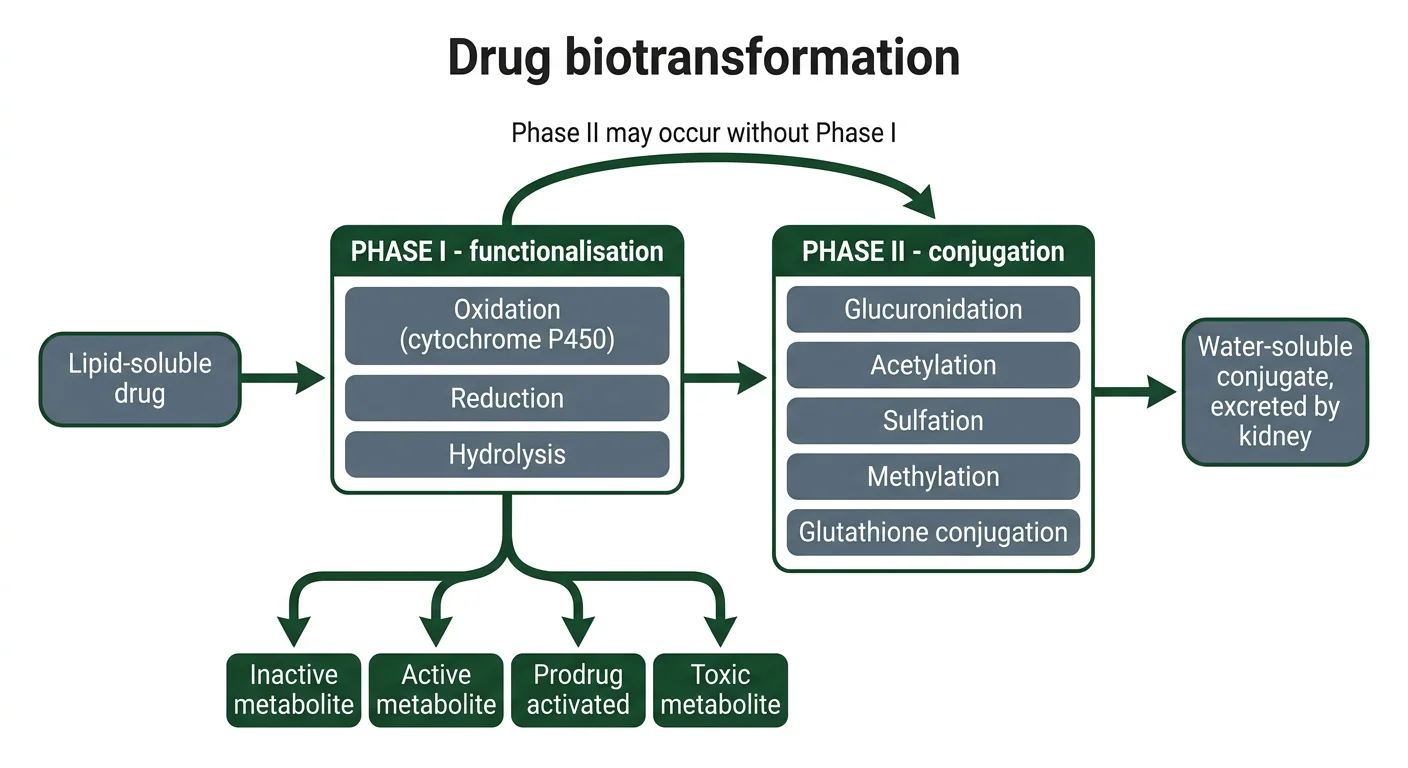
Figure 1 — Phase I and Phase II biotransformation. Flow diagram showing a lipid-soluble drug undergoing Phase I functionalisation by oxidation, reduction or hydrolysis with four possible outcomes, then Phase II conjugation to a water-soluble metabolite for renal excretion, with a bypass arrow indicating Phase II can occur without Phase I.
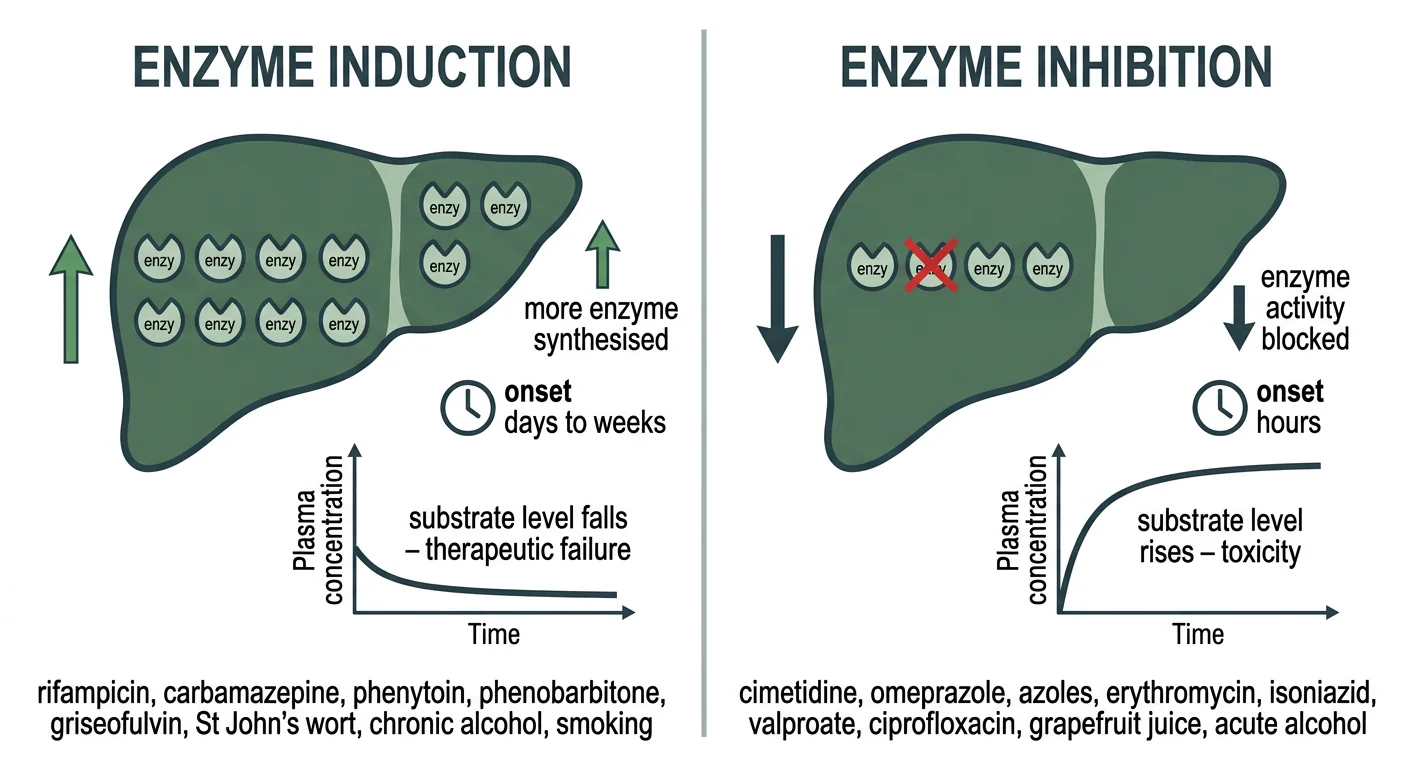
Figure 2 — Enzyme induction and inhibition. Two-panel comparison of enzyme induction, which increases enzyme synthesis over days to weeks and lowers substrate concentration causing therapeutic failure, against enzyme inhibition, which blocks activity within hours and raises substrate concentration causing toxicity, each listing the principal drugs.
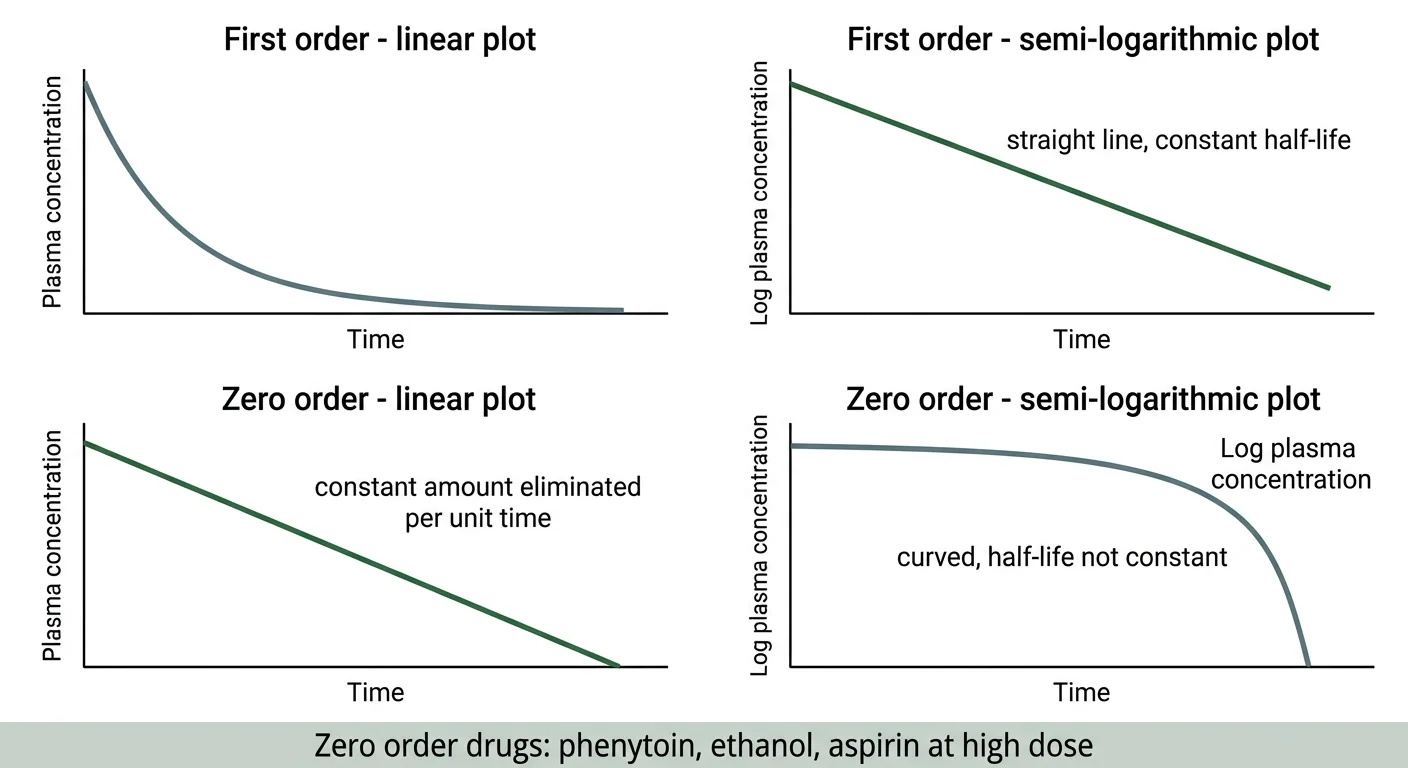
Figure 3 — First-order versus zero-order elimination. Four graphs comparing first-order elimination, which is exponential on a linear plot and straight on a semi-logarithmic plot with a constant half-life, against zero-order elimination, which is straight on a linear plot and curved on a semi-logarithmic plot with a half-life that is not constant.
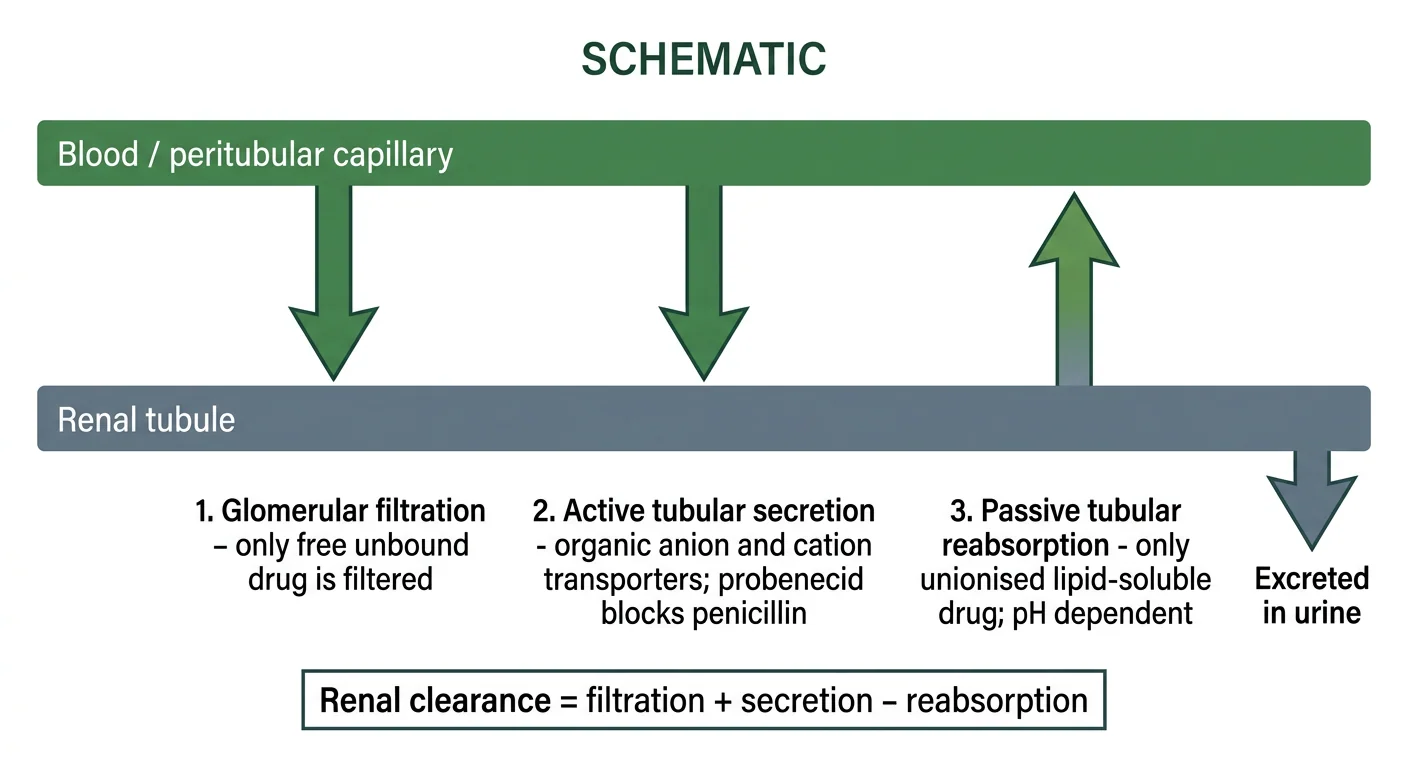
Figure 4 — Renal handling of drugs. Nephron diagram showing the three processes determining renal drug excretion: glomerular filtration of free drug only, active tubular secretion in the proximal tubule by organic anion and cation transporters, and passive reabsorption of unionised drug in the distal tubule.
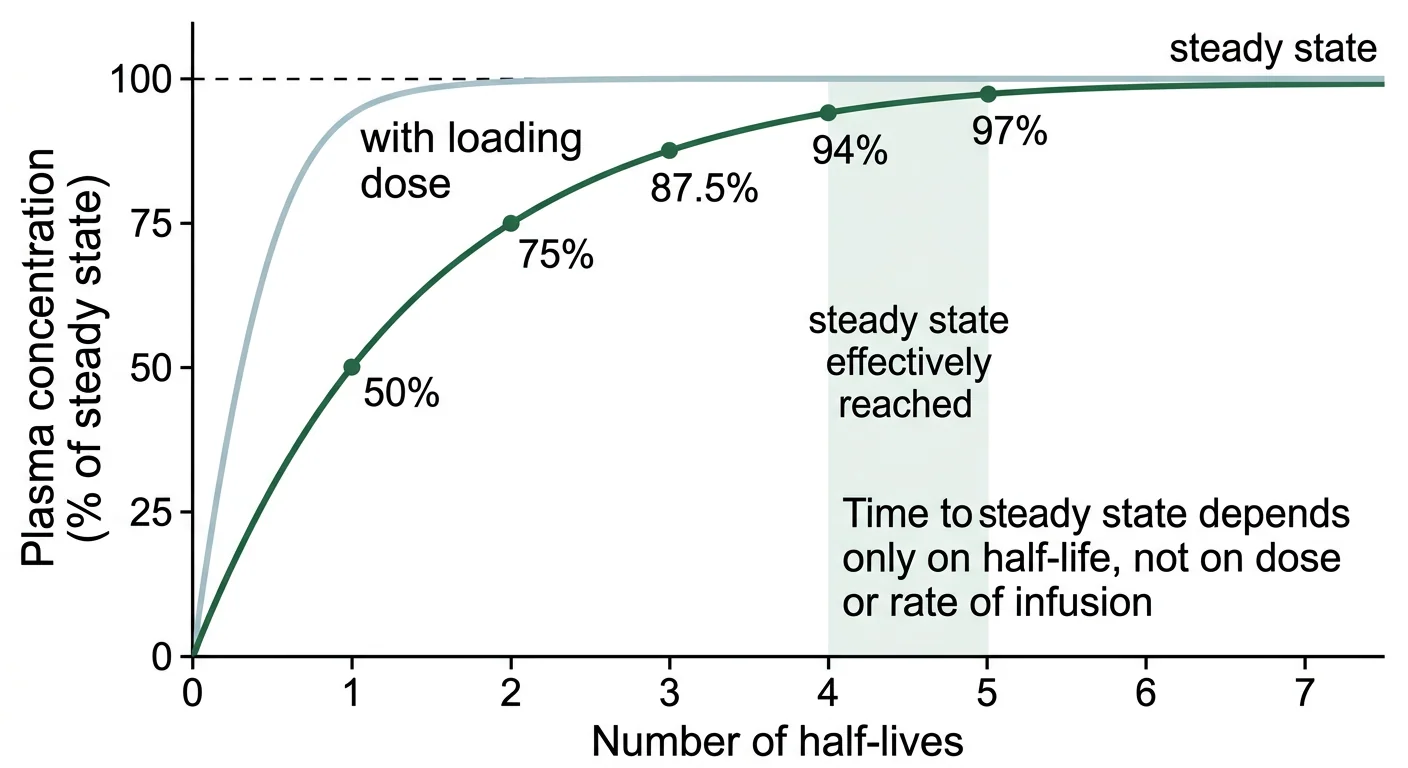
Figure 5 — Attainment of steady state. Graph showing plasma concentration rising towards steady state over successive half-lives, reaching about 94 percent at four half-lives and 97 percent at five, with a second curve showing how a loading dose achieves the target concentration immediately.
Clinical Correlation
Vignette 1 — Oral contraceptive failure during antitubercular therapy
A 26-year-old woman taking a combined oral contraceptive is started on antitubercular therapy including rifampicin. Six weeks later she presents with an unplanned pregnancy.
Reasoning: Rifampicin is the most potent enzyme inducer in clinical use, strongly inducing CYP3A4 as well as intestinal P-glycoprotein. It accelerates the metabolism of ethinylestradiol and the progestogen, lowering their plasma concentrations below the contraceptive threshold. Because induction requires new enzyme synthesis, the effect develops over one to two weeks — which is consistent with a failure occurring some weeks after starting therapy — and it persists for up to four weeks after rifampicin is stopped. The correct management is to counsel the patient before starting rifampicin and to advise an alternative or additional non-hormonal method, such as a copper intrauterine device or condoms, during treatment and for four weeks afterwards. A higher-dose oestrogen pill is not a reliable solution. The same interaction endangers patients on warfarin, ciclosporin, corticosteroids and antiretrovirals.
Vignette 2 — A small dose increase, a large problem
A 30-year-old man with epilepsy is well controlled on phenytoin 300 mg daily with a level of 15 mg/L. Because of one breakthrough seizure the dose is increased to 400 mg daily. Two weeks later he presents with nystagmus, slurred speech and ataxia, and his level is 32 mg/L.
Reasoning: Phenytoin is metabolised by CYP2C9 and CYP2C19, and these enzymes become saturated within the therapeutic range. Its elimination therefore follows Michaelis–Menten kinetics, behaving as first order at low concentrations but shifting towards zero order as the therapeutic range is entered. Once saturated, a constant amount rather than a constant fraction is eliminated per unit time, so a 33% increase in dose produced a greater than 100% increase in concentration. The half-life is not constant and lengthens as the concentration rises, so a toxic level falls only slowly. The lesson for practice is that phenytoin dose increments above 300 mg/day should be small, typically 25–50 mg, with the level rechecked at steady state. Because the half-life is prolonged at toxic levels, several days may pass before the concentration returns to range.
Vignette 3 — Paracetamol overdose in a chronic alcoholic
A 42-year-old man with a long history of alcohol dependence takes 10 g of paracetamol. He develops fulminant hepatic failure despite a dose that would often be survivable.
Reasoning: At therapeutic doses, paracetamol is conjugated with glucuronide and sulfate, and only a small fraction is oxidised by CYP2E1 to the reactive electrophile N-acetyl-p-benzoquinone imine (NAPQI), which is immediately detoxified by conjugation with glutathione. In overdose the conjugation pathways saturate, more paracetamol is diverted through CYP2E1, and hepatic glutathione is progressively depleted. Once glutathione falls below about 30% of normal, NAPQI binds covalently to hepatocyte macromolecules and produces centrilobular necrosis. This patient is doubly disadvantaged: chronic alcohol induces CYP2E1, generating more NAPQI, and chronic alcoholism with malnutrition depletes glutathione stores. Treatment is N-acetylcysteine, which replenishes glutathione and acts as a glutathione substitute; it is most effective within 8 hours of ingestion but is still worth giving late, including in established hepatic failure. Note the contrasting effect of acute alcohol, which competes for CYP2E1 and is transiently protective.
Vignette 4 — Interpreting gentamicin levels
A 68-year-old man with Gram-negative sepsis is on gentamicin. The peak concentration is 4 mg/L (target 5–10) and the trough is 3 mg/L (target below 2). His creatinine has risen.
Reasoning: The two values must be interpreted separately because they answer different questions. The peak reflects efficacy, since aminoglycoside killing is concentration-dependent, and a peak of 4 mg/L is subtherapeutic — the dose is too small. The trough reflects toxicity risk, since nephrotoxicity and ototoxicity relate to sustained exposure and inadequate washout, and a trough of 3 mg/L is too high — the dosing interval is too short for this patient's declining renal function. The correct response is therefore to increase the dose and simultaneously lengthen the interval, which raises the peak while allowing the trough to fall. Simply increasing the dose without extending the interval would raise the trough further and precipitate renal injury. Gentamicin exemplifies why TDM is indicated: a narrow therapeutic index, wide interindividual variability, dependence on renal function, and toxicity that cannot be detected clinically until it is established.
Practical Linkage
Linked competencies: PH1.2 (therapeutic drug monitoring), PH1.4, PH2.4 — see also PR02 (Clinical pharmacy exercises).
Worked calculation exercises.
Problem 1 — Half-life from Vd and clearance
A drug has a volume of distribution of 50 L and a clearance of 5 L/h. Calculate the elimination half-life.
Solution: t½ = 0.693 × Vd / CL = 0.693 × 50 ÷ 5 = 6.93 hours, approximately 7 hours.
Problem 2 — Clearance from half-life
A drug has a volume of distribution of 30 L and a half-life of 3 hours. Calculate clearance.
Solution: CL = 0.693 × Vd / t½ = 0.693 × 30 ÷ 3 = 6.93 L/h.
Problem 3 — Time to steady state
A drug has a half-life of 8 hours and is given by continuous infusion. When will steady state be effectively reached, and does doubling the infusion rate shorten this?
Solution: Steady state is reached in 4–5 half-lives, that is 32–40 hours. Doubling the infusion rate doubles the steady-state concentration but does not shorten the time taken to reach it, because time to steady state depends only on half-life. To reach the target sooner, give a loading dose.
Problem 4 — Fraction remaining
What percentage of a drug remains 4 half-lives after administration is stopped?
Solution: (1/2)⁴ = 1/16 = 6.25% remaining, that is about 94% eliminated.
Problem 5 — Maintenance dose rate
A drug has a clearance of 4 L/h. The target steady-state concentration is 10 mg/L and oral bioavailability is 0.5. Calculate the oral maintenance dose rate.
Solution: Maintenance dose rate = (Css × CL) / F = (10 mg/L × 4 L/h) ÷ 0.5 = 80 mg/hour.
Problem 6 — Loading versus maintenance in renal failure
A patient with severe renal impairment requires a drug eliminated entirely by the kidney. Which needs adjustment, the loading dose or the maintenance dose?
Expected answer: The maintenance dose, because it depends on clearance, which is reduced. The loading dose depends on volume of distribution and is usually unchanged, so the patient should receive the standard loading dose followed by a reduced maintenance dose or a lengthened interval.
Problem 7 — Interpreting a phenytoin level
A patient with serum albumin of 2.2 g/dL (low) has a total phenytoin level of 8 mg/L and is clinically toxic. Explain.
Expected answer: Phenytoin is highly albumin-bound and laboratories report total concentration. In hypoalbuminaemia the bound fraction falls and the free, pharmacologically active fraction rises, so the patient can be toxic despite an apparently subtherapeutic total level. Free phenytoin should be measured, with a target of 1–2 mg/L.
Problem 8 — Choosing the sampling time
State the correct sampling time for lithium, digoxin and gentamicin, with the reason.
Expected answer: Lithium — trough, 12 hours after the dose, as the therapeutic range is defined on a 12-hour sample. Digoxin — at least 6–8 hours after the dose, because tissue distribution is slow and earlier samples are spuriously high. Gentamicin — both peak, to confirm efficacy, and trough, to confirm safe washout.
MCQ Bank
40 questions · tagged by topic, exam pattern & difficulty · full explanations
The principal purpose of drug biotransformation is to:
Rapid Revision
- Purpose of biotransformation — Conversion of lipid-soluble drugs into water-soluble metabolites for renal excretion
- Phase I reactions — Oxidation, reduction and hydrolysis
- Phase II reactions — Glucuronidation, acetylation, sulfation, methylation, glutathione and amino acid conjugation
- Must Phase I precede Phase II — No; morphine is directly glucuronidated and isoniazid directly acetylated
- Enzyme handling the largest share of drug oxidation — CYP3A4
- Cytochrome P450 isoenzyme that is not inducible — CYP2D6
- Mnemonic for enzyme inducers — CRAP GPS plus smoking
- Most potent enzyme inducer — Rifampicin
- Antiepileptic that induces its own metabolism — Carbamazepine, by auto-induction
- Onset of enzyme induction versus inhibition — Days to weeks versus hours
- Macrolide that does not inhibit CYP3A4 — Azithromycin
- Drug that inhibits most CYPs but induces CYP2E1 — Isoniazid
- Enzyme inducer used therapeutically in neonatal jaundice — Phenobarbitone, by inducing UDP-glucuronosyl transferase
- Enzyme deficient in the neonate causing grey baby syndrome — UDP-glucuronosyl transferase
- Polymorphic enzyme determining isoniazid acetylation — N-acetyltransferase 2
- Conjugate more active than its parent drug — Morphine-6-glucuronide
- Toxic metabolite of paracetamol — N-acetyl-p-benzoquinone imine, NAPQI
- Antidote in paracetamol poisoning and its mechanism — N-acetylcysteine, which replenishes glutathione
- Prodrug requiring CYP2C19 activation — Clopidogrel, blunted by omeprazole
- Prodrug requiring CYP2D6 activation — Codeine, ineffective in poor metabolisers
- Three processes of renal drug handling — Filtration, active tubular secretion and passive reabsorption
- Drug that blocks tubular secretion of penicillin — Probenecid, at the organic anion transporter
- Interpretation when renal clearance exceeds filtration clearance — Net tubular secretion is occurring
- Consequence of enterohepatic circulation — Prolonged duration of action
- Enzyme liberating drug from biliary conjugates in the gut — Bacterial beta-glucuronidase
- Route of excretion of volatile anaesthetics — Pulmonary
- First-order kinetics — A constant fraction is eliminated per unit time; half-life is constant
- Zero-order kinetics — A constant amount is eliminated per unit time; half-life is not constant
- Mnemonic for zero-order drugs — PEA: phenytoin, ethanol and aspirin at high dose
- Formula for half-life — t half equals 0.693 multiplied by Vd divided by clearance
- Number of half-lives to reach steady state — Four to five
- Percentage eliminated after four half-lives — Approximately 94 per cent
- Determinant of the time to reach steady state — Half-life alone, not dose or infusion rate
- Determinant of maintenance dose — Clearance
- Determinant of loading dose — Volume of distribution
- Drug monitored by a twelve-hour trough sample — Lithium
- Minimum interval before sampling digoxin — Six to eight hours after the dose
- What the aminoglycoside peak and trough indicate — Peak indicates efficacy, trough indicates toxicity risk
- Current preferred vancomycin monitoring target — Area under the curve of 400 to 600 mg per hour per litre
- Drug for which TDM is unnecessary because effect is directly measurable — Warfarin, monitored by INR
Viva Questions
- Define biotransformation and state its purpose — Enzymatic conversion of a drug to a different chemical species, converting lipid-soluble compounds to water-soluble metabolites that the kidney can excrete.
- Classify the reactions of drug metabolism — Phase I non-synthetic reactions of oxidation, reduction and hydrolysis, and Phase II synthetic conjugation reactions.
- Name the four possible consequences of metabolism — Inactivation, formation of an active metabolite, activation of a prodrug, and formation of a toxic metabolite.
- What is the cytochrome P450 system — A superfamily of haem-containing mono-oxygenases in the hepatic smooth endoplasmic reticulum that perform most oxidative drug metabolism using oxygen and NADPH.
- List the important enzyme inducers — Carbamazepine, rifampicin, chronic alcohol, phenytoin, griseofulvin, phenobarbitone, St John's wort and smoking.
- List the important enzyme inhibitors — Cimetidine, omeprazole, azoles, erythromycin and clarithromycin, isoniazid, valproate, ciprofloxacin, grapefruit juice, acute alcohol and ritonavir.
- Why does induction take longer than inhibition — Induction requires increased gene transcription and synthesis of new enzyme protein, whereas inhibition is immediate competition at the active site.
- What happens when an enzyme inhibitor is given with a prodrug — Therapeutic failure, because the active metabolite cannot be formed; omeprazole and clopidogrel is the classic example.
- Explain grey baby syndrome — Deficient neonatal glucuronidation of chloramphenicol leading to accumulation, vomiting, hypotension, cyanosis and circulatory collapse.
- Describe the mechanism of paracetamol hepatotoxicity — Saturation of conjugation diverts drug through CYP2E1 to NAPQI, which causes centrilobular necrosis once glutathione is depleted.
- Name the three processes determining renal excretion — Glomerular filtration of free drug, active tubular secretion, and passive tubular reabsorption of unionised drug.
- What is enterohepatic circulation and why does it matter — Biliary excretion of a conjugate, bacterial hydrolysis in the gut and reabsorption of the parent drug, which prolongs action and can be interrupted by antibiotics or charcoal.
- Differentiate first-order from zero-order kinetics — First order eliminates a constant fraction with a constant half-life, zero order eliminates a constant amount with a half-life that lengthens as concentration rises.
- Give the formula for half-life and explain each term — t half equals 0.693 times the volume of distribution divided by clearance, so half-life is derived from distribution and elimination together.
- How long does it take to reach steady state and what determines it — Four to five half-lives, determined by half-life alone and not by dose or infusion rate.
- State the criteria for therapeutic drug monitoring — Narrow therapeutic index, good concentration-effect correlation, wide interindividual variability, absence of an easily measured clinical endpoint, and an available assay.
- Why is TDM not used for warfarin — Because the anticoagulant effect is directly and reliably measured by the international normalised ratio.
- When should digoxin be sampled and why — At least six to eight hours after the dose, because distribution into tissue is slow and earlier samples are spuriously high.
References
- Tripathi KD. Essentials of Medical Pharmacology. 9th ed. New Delhi: Jaypee Brothers Medical Publishers; Chapter 3 (Pharmacokinetics: Metabolism and Excretion of Drugs, Kinetics of Elimination).
- Katzung BG, Vanderah TW (eds). Basic & Clinical Pharmacology. 16th ed. New York: McGraw Hill; Chapters 3 and 4 (Pharmacokinetics; Drug Biotransformation).
- Brunton LL, Knollmann BC (eds). Goodman & Gilman's The Pharmacological Basis of Therapeutics. 14th ed. New York: McGraw Hill; Chapter 2 (Pharmacokinetics) and the drug metabolism chapter.
- Ritter JM, Flower RJ, Henderson G, et al. Rang & Dale's Pharmacology. 10th ed. Edinburgh: Elsevier; Chapters 10 and 11 (Drug Elimination and Pharmacokinetics; Individual Variation).
- National Medical Commission. Competency Based Undergraduate Curriculum for the Indian Medical Graduate, Volume II — Pharmacology (Code: PH), competencies PH1.2 and PH1.4.
- Rybak MJ, Le J, Lodise TP, et al. Therapeutic monitoring of vancomycin for serious methicillin-resistant Staphylococcus aureus infections: a revised consensus guideline. American Journal of Health-System Pharmacy 2020;77(11):835–864.
- World Health Organization. Therapeutic Drug Monitoring and the Essential Diagnostics List. Geneva: WHO Expert Committee documentation.
- Shargel L, Yu ABC. Applied Biopharmaceutics and Pharmacokinetics. 7th ed. New York: McGraw Hill; chapters on clearance, multiple dosing and non-linear pharmacokinetics.
Downloads
All deliverables & printable revision sheets for CH03
Printable Chapter Handout & Study Notes
Generate a clean, high-yield PDF or print directly without sidebars and navigation menus.