
Introduction, Sources, Routes & Dosage Forms
Learning Objectives
At the end of this chapter, the Phase II MBBS student will be able to:
- Define pharmacology, pharmacotherapeutics, pharmacokinetics, pharmacodynamics, toxicology, chemotherapy and drug, and describe the principles underlying pharmacology and pharmacotherapeutics. (PH1.1 — Knows)
- Enumerate the branches of pharmacology and place clinical, experimental and molecular pharmacology within the modern discipline. (PH1.1 — Knows)
- Classify the sources of drugs with representative examples from each source, including biotechnology-derived agents. (PH1.1 — Knows)
- Describe the nomenclature of drugs — chemical, non-proprietary (generic/INN) and proprietary (brand) names — and justify the mandate for generic prescribing in India. (PH1.9 — Knows-how)
- Enumerate and identify solid, liquid, semisolid, parenteral and inhalational dosage forms, and state the rationale for enteric coating, sustained release and dispersible formulations. (PH1.3 — Shows-how)
- Enumerate novel drug delivery systems, explain their operating principle and analyse their advantages and limitations. (PH1.3 — Knows-how)
- Describe the various routes of drug administration — enteral, parenteral, inhalational and transdermal — with technique, representative drugs, advantages and disadvantages of each. (PH1.11 — Knows-how)
- Analyse the factors governing the choice of route in a given clinical situation, including the unconscious, vomiting or shocked patient. (PH1.11 — Knows-how)
- Define first-pass metabolism, identify the routes that bypass it, and distinguish drugs requiring a dose increase from those requiring a change of route. (PH1.11 — Knows-how)
- Identify common dosage forms as practical specimens and demonstrate correct use of a metered dose inhaler with spacer in a simulated environment. (PH1.3, PH2.1 — Shows-how)
Must-Know Summary
Pharmacology is the science of the interaction between drugs and living systems. It rests on two pillars: pharmacokinetics — what the body does to the drug (absorption, distribution, metabolism, excretion) — and pharmacodynamics — what the drug does to the body (mechanism, receptor interaction, effect). Every therapeutic decision a clinician ever makes is an application of these two ideas plus a third: the route by which the drug is delivered.
The route of administration is not an administrative detail. It determines onset, bioavailability, duration, and whether the drug works at all. Oral nitroglycerin is therapeutically useless because the liver destroys it before it reaches the circulation; the same molecule placed under the tongue aborts an anginal attack in two minutes. This chapter builds the vocabulary of the subject and then teaches the single most clinically consequential decision in that vocabulary — how a drug gets in.
In one line each:
- Pharmacokinetics = what the body does to the drug; pharmacodynamics = what the drug does to the body.
- Intravenous route has 100% bioavailability by definition and is the reference standard against which all other routes are measured.
- F = AUC(oral) / AUC(IV) for the same dose — the formula for absolute bioavailability.
- Sublingual, transdermal, inhalational and all parenteral routes bypass hepatic first-pass metabolism; the rectal route bypasses only about half of it.
- Drugs with partial first-pass loss can be compensated by raising the oral dose (propranolol); drugs with near-total first-pass loss require a change of route (insulin, hydrocortisone, isoprenaline).
- A prodrug is an inactive precursor converted to the active drug in the body — levodopa crosses the blood–brain barrier where dopamine cannot.
- Enteric coating protects a gastric-irritant or acid-labile drug and must never be crushed or chewed.
- Transdermal delivery suits drugs that are highly potent, low-dose, lipid-soluble and of small molecular size.
- The intrathecal route bypasses the blood–CSF barrier — the reason methotrexate is given intrathecally in CNS prophylaxis for leukaemia.
- Generic (non-proprietary) prescribing is mandated in India by the NMC to promote rational, affordable therapy.
Classification
Box 1 — Classification of routes of drug administration
I. Local routes (action at the site of application)
- Topical: skin; mucous membranes — eye, ear, nose, mouth/throat, vagina, rectum
- Deeper tissues: intra-articular, intrathecal, intralesional, retrobulbar
- Arterial supply: intra-arterial (regional chemotherapy)
II. Systemic routes (drug absorbed into the circulation)
- A. Enteral — oral (per os); sublingual / buccal; rectal
- B. Parenteral (injections) — subcutaneous (incl. dermojet, pellet implant); intramuscular (incl. depot preparations); intravenous (bolus / slow injection / infusion); intradermal; specialised: intrathecal, epidural, intraosseous, intravesical, intravitreal, intraperitoneal, intracardiac
- C. Inhalational — volatile anaesthetics; aerosols (MDI, DPI, nebuliser)
- D. Transdermal / transmucosal — patches, iontophoresis, nasal sprays
Box 2 — Classification of dosage forms
- Solid — tablet (uncoated, coated, enteric-coated, SR/CR, dispersible, chewable, effervescent, sublingual), capsule (hard/soft gelatin), powder, granule, suppository, pessary, implant
- Liquid — solution, syrup, elixir, suspension, emulsion, linctus, mixture, drops, injection (ampoule, vial, LVP), enema
- Semisolid — ointment, cream, paste, gel, lotion
- Gaseous / aerosol — volatile anaesthetics, MDI, DPI, nebuliser solution
Core Concepts
1. Definitions and the scope of the subject
Pharmacology (Greek pharmakon = drug; logos = study) is the science that deals with the interaction of exogenously administered chemical substances with living systems. It encompasses the source, physicochemical properties, mechanism of action, absorption, distribution, metabolism, excretion, therapeutic and adverse effects of drugs.
A drug, by the WHO definition, is any substance or product that is used or intended to be used to modify or explore physiological systems or pathological states for the benefit of the recipient. Note that this definition is deliberately broad — it includes diagnostic agents (radiocontrast), agents used to explore physiology (histamine in gastric function testing) and preventive agents (vaccines), not merely therapeutic ones.
Key terms that must be used with precision from the first week of the course:
- Pharmacokinetics — the study of the movement of the drug in and alteration of the drug by the body: absorption, distribution, metabolism and excretion (ADME). Colloquially, what the body does to the drug.
- Pharmacodynamics — the study of the biochemical and physiological effects of drugs and their mechanisms of action. What the drug does to the body.
- Pharmacotherapeutics — the application of pharmacological information together with knowledge of the disease for the prevention, mitigation and cure of disease. This is the clinical end-point of the subject.
- Clinical pharmacology — the scientific study of drugs in humans, including pharmacokinetic and pharmacodynamic investigation in patients and healthy volunteers, therapeutic trials and post-marketing surveillance.
- Experimental pharmacology — evaluation of drug action in animals and in vitro systems.
- Chemotherapy — treatment of systemic infection or malignancy in which the drug has selective toxicity for the invading organism or cancer cell with minimal effect on host cells.
- Toxicology — the study of the adverse effects of chemicals on living systems, including detection, prevention and treatment of poisoning. Toxicology is pharmacology at a higher dose; the two are separated only by intent and magnitude.
- Pharmacy — the art and science of compounding, formulating, dispensing and storing drugs.
- Pharmacognosy — the study of drugs of crude natural origin (plant, animal, mineral).
- Materia medica — the older term for the descriptive study of drug sources and preparations, now largely of historical interest.
Two further terms of frequent clinical use:
- Placebo — an inert substance given as a medicine; it may produce a real, measurable benefit through expectation (the placebo effect). Used as the control arm in clinical trials.
- Nocebo — the negative counterpart: an inert substance producing adverse effects because the patient expects them.
Modern branches that have become distinct disciplines — each corresponding to a separate CBME competency later in this course — include pharmacovigilance (detection and prevention of adverse effects), pharmacoepidemiology (drug use in populations), pharmacogenomics (genetic determinants of drug response), pharmacoeconomics (cost-effectiveness of therapy) and chronopharmacology (influence of biological rhythms on drug action).
2. Principles of pharmacology and pharmacotherapeutics
The principles that govern the subject can be reduced to a small number of propositions that recur in every subsequent chapter:
- Drugs do not confer new functions on tissues. They only modulate existing physiological or biochemical processes — by stimulation, depression, irritation, replacement, cytotoxic action or anti-infective action.
- Drug action is dose-dependent and graded. The same molecule is a medicine, a poison or inert depending on dose — the principle attributed to Paracelsus.
- Selectivity is relative, never absolute. Every drug capable of a therapeutic effect is capable of an adverse effect; there is no such thing as a drug without side effects.
- Effect depends on concentration at the site of action, which in turn depends on dose, route, and the four pharmacokinetic processes.
- Response varies between individuals because of body size, age, sex, genetics, disease, concurrent drugs and psychological factors.
The principles of pharmacotherapeutics add the clinical layer: establish a diagnosis first; define the therapeutic objective; select a drug of proven efficacy for that objective (the P-drug concept); choose the appropriate dose, route and duration; monitor the outcome; and review. Rational prescribing means the right drug, in the right dose, by the right route, for the right duration, at the lowest cost, for the right patient.
3. Sources of drugs
Drugs are derived from six broad sources. This is classic short-note and viva material.
- Plant sources — alkaloids (morphine from Papaver somniferum, atropine from Atropa belladonna, quinine from Cinchona, vincristine from Vinca rosea, reserpine from Rauwolfia serpentina), glycosides (digoxin from Digitalis), and others such as artemisinin from Artemisia annua and taxol from Taxus brevifolia.
- Animal sources — insulin (formerly porcine/bovine, now recombinant human), heparin (porcine intestinal mucosa / bovine lung), gonadotropins, antisera and antitoxins.
- Mineral sources — ferrous sulphate, magnesium sulphate, aluminium hydroxide, lithium carbonate, radioactive iodine.
- Microbial sources — the great majority of antibiotics: penicillin from Penicillium notatum, streptomycin and tetracyclines from Streptomyces species, cyclosporine from a fungus, lovastatin from Aspergillus.
- Synthetic and semi-synthetic sources — the largest contemporary source. Fully synthetic: paracetamol, sulfonamides, quinolones, thiazides. Semi-synthetic: ampicillin and amoxicillin (from the penicillin nucleus 6-APA), doxycycline, heroin (diacetylmorphine from morphine).
- Biotechnology and recombinant DNA technology — the fastest-growing source: human insulin and its analogues, human growth hormone, erythropoietin, filgrastim (G-CSF), interferons, tissue plasminogen activator, hepatitis B vaccine, and the entire class of monoclonal antibodies (rituximab, trastuzumab, adalimumab).
4. Nomenclature of drugs (PH1.9)
Every drug carries three kinds of name, and confusion between them is a recognised cause of prescribing error.
- Chemical name — describes the chemical structure precisely. Unambiguous but unusable in practice. Paracetamol is N-(4-hydroxyphenyl)acetamide.
- Non-proprietary (generic) name — the official, internationally agreed name, assigned by the WHO as the International Non-proprietary Name (INN). It is not owned by any manufacturer and is the same worldwide. Examples: paracetamol, atenolol, omeprazole. Related drugs share informative stems: -olol for beta-blockers, -prazole for proton pump inhibitors, -pril for ACE inhibitors, -statin for HMG-CoA reductase inhibitors, -mab for monoclonal antibodies. Note that a few drugs carry different non-proprietary names in different countries — paracetamol (INN) is acetaminophen in the USA; adrenaline (INN) is epinephrine (USAN).
- Proprietary (brand or trade) name — the name given by the manufacturer, which is a registered trademark. A single generic drug may be marketed under dozens of brand names, and the same brand name may even contain different ingredients in different countries.
Why generic prescribing matters in India. The National Medical Commission requires that prescriptions be written in generic (non-proprietary) names, legibly and preferably in capital letters. The reasons are economic and clinical: brand-name products of the same molecule may differ several-fold in price; the Jan Aushadhi scheme dispenses quality-assured generics at low cost; and generic prescribing reduces the risk of therapeutic duplication when a patient receives two brands of the same molecule from two prescribers. The counter-consideration is bioequivalence — generics must demonstrate equivalent bioavailability to the innovator product, which matters most for narrow therapeutic index drugs (warfarin, phenytoin, digoxin, lithium, levothyroxine).
Look-alike, sound-alike (LASA) drugs are a recognised safety hazard, and awareness of them belongs to this chapter: for example losartan and lisinopril; chlorpropamide and chlorpromazine; hydralazine and hydroxyzine; dopamine and dobutamine. Tall-man lettering (chlorproPAMIDE vs chlorproMAZINE) is one mitigation strategy.
5. Dosage forms (PH1.3)
A dosage form is the physical form in which a drug is presented for administration, comprising the active pharmaceutical ingredient plus excipients (diluents, binders, disintegrants, lubricants, preservatives, flavouring and colouring agents) which have no therapeutic action of their own but determine stability, palatability and release characteristics.
Solid oral dosage forms
- Tablet — the commonest form. Variants include uncoated, sugar-coated and film-coated (mask taste, protect from moisture); enteric-coated (delayed release — the coating resists gastric acid and dissolves in the alkaline intestinal medium, used for gastric irritants such as aspirin and diclofenac and for acid-labile drugs such as omeprazole; must be swallowed whole); sustained/controlled release (SR, CR, XL, OROS — release the drug slowly to reduce dosing frequency and smooth peaks and troughs; also must not be crushed, since crushing causes dose dumping); dispersible (disperse in water, useful in children and in patients with dysphagia); chewable (antacids, albendazole); effervescent; sublingual and buccal; vaginal tablets.
- Capsule — hard gelatin (powder or granules) and soft gelatin (oily liquids such as vitamin A or D, cyclosporine). Capsules can mask bitter taste and can be opened when necessary, unlike enteric-coated tablets.
- Powders, granules and sachets — oral rehydration salts, effervescent granules.
Liquid oral dosage forms
- Solution — a clear homogeneous single-phase preparation.
- Syrup — a concentrated sugar solution of the drug; palatable, useful in paediatrics, but unsuitable for diabetics.
- Elixir — a clear, sweetened, hydroalcoholic solution used for drugs poorly soluble in water.
- Suspension — insoluble solid dispersed in liquid; must be shaken before use or dosing will be inaccurate.
- Emulsion — two immiscible liquids stabilised by an emulsifying agent (oil-in-water or water-in-oil).
- Linctus — a viscous, sweet preparation for cough, meant to be sipped slowly to coat the pharynx.
- Mixture, drops (paediatric), tinctures and spirits.
Semisolid and topical forms — ointment (greasy, occlusive, oil-based; best for dry, scaly lesions), cream (emulsion, less greasy, cosmetically acceptable), paste (high solid content, protective), gel (water-based, non-greasy, good for hairy areas), lotion (liquid, for large or weeping areas), dusting powder, paint, lozenge, gargle.
Parenteral forms — must be sterile, pyrogen-free and isotonic where possible. Presented as ampoules (single-dose, entirely sealed glass, no preservative, discard remainder), vials (rubber-capped, may be multi-dose and contain a preservative), prefilled syringes, large-volume parenterals (IV fluids) and lyophilised (freeze-dried) powders for reconstitution where the drug is unstable in solution. Distinguishing ampoule from vial is a standard practical and viva question.
Inhalational forms — metered dose inhaler (MDI), ideally used with a spacer to improve lung deposition and reduce oropharyngeal candidiasis with inhaled steroids; dry powder inhalers (rotahaler, diskhaler) which require adequate inspiratory flow; nebulisers for acute severe attacks and in the very young or very ill.
Rectal and vaginal forms — suppository (rectal), pessary (vaginal), enema, rectal foam.
Ocular, otic and nasal forms — eye drops and ointments (must be sterile), ear drops, nasal drops and sprays.
6. Novel and special drug delivery systems (PH1.3)
Conventional dosage forms produce peaks and troughs in plasma concentration, require frequent dosing and cannot target tissue. Novel drug delivery systems address these limitations.
- Transdermal therapeutic systems (patches) — deliver drug through intact skin at a controlled rate for 24 hours to 7 days, bypassing first-pass metabolism and producing stable plasma levels. Two designs: reservoir type, where drug is held in a compartment behind a rate-controlling membrane (zero-order release, but catastrophic dose dumping if the membrane is breached), and matrix type, where drug is dispersed in a polymer matrix (safer, but release declines with the square root of time). Examples: nitroglycerin, fentanyl, nicotine, hyoscine, estradiol, rivastigmine, clonidine. Suitability criteria are heavily examined: the drug must be highly potent (low daily dose, conventionally under about 10 mg/day), highly lipid-soluble, of small molecular size, and non-irritant to skin. Consequently drugs requiring large doses, hydrophilic drugs and large molecules such as insulin are unsuitable.
- Osmotic pump systems (OROS) — a semipermeable membrane surrounds an osmotic core with a laser-drilled orifice; water is drawn in and drug solution is extruded at a constant, near zero-order rate independent of gastric pH and motility. Example: nifedipine GITS.
- Liposomes — concentric phospholipid bilayer vesicles enclosing an aqueous compartment; they can carry both hydrophilic (in the core) and lipophilic (in the bilayer) drugs. Liposomal encapsulation markedly reduces toxicity: liposomal amphotericin B is far less nephrotoxic than the conventional deoxycholate formulation, and liposomal doxorubicin is less cardiotoxic. Stealth (PEGylated) liposomes resist macrophage uptake and circulate longer.
- Nanoparticles and solid lipid nanoparticles — sub-micron carriers permitting tissue targeting; nab-paclitaxel is an albumin-bound nanoparticle formulation.
- Niosomes — vesicles formed from non-ionic surfactants rather than phospholipids; cheaper and more chemically stable than liposomes.
- Implants — subdermal rods or depots giving months to years of delivery: etonogestrel contraceptive implant, goserelin depot, disulfiram implant.
- Ocular inserts — Ocusert (pilocarpine) placed in the conjunctival sac for one week; avoids the peaks and troughs of drops.
- Intrauterine devices — levonorgestrel-releasing intrauterine system, which delivers drug locally with minimal systemic exposure.
- Prodrugs — inactive precursors converted in vivo to the active moiety, used to improve absorption, prolong action, target a tissue or reduce toxicity. Levodopa crosses the blood–brain barrier which dopamine cannot; enalapril is hydrolysed to enalaprilat; sulfasalazine is split by colonic bacteria to release 5-aminosalicylic acid at the site of action; cyclophosphamide requires hepatic activation.
- Monoclonal antibody and antibody–drug conjugates — targeted delivery of a cytotoxic payload to an antigen-bearing cell.
- Iontophoresis — use of a small electric current to drive ionised drug across the skin.
- Jet injectors — needle-free high-velocity delivery, useful in mass immunisation.
7. Routes of drug administration (PH1.11)
Routes are classified first by the intended scope of action.
A. Local (topical) routes — the drug is applied at the site where the effect is desired, achieving high local concentration with minimal systemic exposure: skin (creams, ointments), mucous membranes (eye, ear, nose, mouth, vagina, rectum), inhalation for a local airway effect, and injection into a confined space (intra-articular, intrathecal, intralesional).
B. Systemic routes — the drug is absorbed into the bloodstream and carried to the site of action. These are subdivided into enteral, parenteral, inhalational and transdermal.
Enteral routes
- Oral (per os, PO) — the most natural, safest, most convenient and most economical route; the default unless there is a reason to deviate. It requires no sterility and no assistance, and in overdose the drug can sometimes still be recovered by gastric lavage or bound with activated charcoal. Limitations: slow onset, unsuitable in the unconscious, vomiting or uncooperative patient; irritant drugs cause gastritis; absorption is variable and affected by food, gastric emptying and pH; drugs destroyed by gastric acid (benzylpenicillin) or digestive enzymes (insulin, all peptides) cannot be given orally; and the route is subject to first-pass metabolism. Not suitable in shock, where splanchnic perfusion is reduced.
- Sublingual (SL) and buccal — the tablet is held under the tongue or between cheek and gum. The oral mucosa is thin and richly vascular, and venous drainage is into the superior vena cava, so absorption is rapid (within 1–2 minutes) and first-pass metabolism is completely bypassed. A further advantage unique to this route is that the tablet can be spat out to terminate absorption if adverse effects occur. Only highly lipid-soluble, non-irritant drugs effective in small dose are suitable. Examples: glyceryl trinitrate, isosorbide dinitrate, nifedipine, buprenorphine, ondansetron, sublingual ergometrine. Disadvantages: bad taste, buccal ulceration with repeated use, and the patient must not swallow the tablet.
- Rectal (PR) — useful when the oral route is unavailable: the unconscious patient, the vomiting patient, the child in status epilepticus, and the post-operative patient. Formulations include suppositories and enemas. The examinable point is the venous anatomy. Drug absorbed from the lower rectum drains through the middle and inferior rectal (haemorrhoidal) veins into the internal iliac vein and thence directly into the systemic circulation, bypassing the liver. Drug absorbed from the upper rectum drains through the superior rectal vein into the inferior mesenteric vein and thus into the portal circulation, where it is subject to first-pass metabolism. Since a suppository spreads across both territories, approximately 50% of a rectally administered dose bypasses first-pass metabolism. Examples: diazepam and midazolam for febrile seizures in children, paracetamol suppositories, indomethacin, rectal diclofenac. Disadvantages: absorption is irregular and incomplete, rectal irritation and proctitis may occur, and patient acceptability is poor.
Parenteral routes
Parenteral literally means "beside the intestine" — that is, any route other than the alimentary canal. General advantages: rapid and predictable action; suitable for the unconscious and uncooperative patient; usable when the drug is destroyed in the gut or highly first-pass metabolised; and gastric irritation is avoided. General disadvantages: invasive, painful, requires asepsis and trained personnel; risk of infection, including transmission of blood-borne viruses through unsafe injection practice; local tissue injury; more expensive; and the drug cannot be recalled once given, so adverse effects are less easily controlled.
- Intravenous (IV) — the drug is placed directly into the bloodstream. Bioavailability is 100% by definition, absorption is not a variable, and onset is the fastest of any route. This is the route of choice in emergencies and for titrated therapy. It permits administration of large volumes, of irritant and hypertonic solutions (diluted by rapid blood flow), and of drugs where precise plasma levels are required. Given as a bolus (rapid single injection), slow injection, or continuous infusion (used to maintain a steady plasma concentration, e.g. dopamine, oxytocin, heparin, insulin). Hazards: highest risk of severe immediate reactions and anaphylaxis; thrombophlebitis; extravasation of vesicants causing tissue necrosis; air embolism; and the requirement for venous access. Oily preparations and depot suspensions must never be given intravenously.
- Intramuscular (IM) — injected into a skeletal muscle (deltoid, gluteus maximus, vastus lateralis). Muscle is richly vascular, so absorption is reasonably rapid (10–30 minutes) and more predictable than subcutaneous. Volumes up to about 5–10 mL are tolerated; mild irritants can be given. Depot preparations in oil or as insoluble salts are given by this route for very prolonged action: benzathine penicillin (given deep IM, providing weeks of cover in rheumatic fever prophylaxis), depot medroxyprogesterone acetate, fluphenazine and haloperidol decanoate. Note: IM injection is relatively contraindicated in patients on anticoagulants or with bleeding disorders because of the risk of haematoma, and it raises serum creatine kinase, which can confound the diagnosis of myocardial infarction. Absorption is unreliable in shock. Adrenaline in anaphylaxis is given IM into the anterolateral thigh (vastus lateralis) — the site with the most reliable and rapid absorption.
- Subcutaneous (SC) — injected into the loose subcutaneous tissue, which is less vascular than muscle, so absorption is slower and steadier. Only small volumes (up to about 2 mL) of non-irritant drugs can be given. It is well suited to self-administration: insulin, low molecular weight heparin, GLP-1 agonists, and many biologicals. Specialised subcutaneous forms include dermojet, pellet implantation and the contraceptive implant. Absorption is markedly reduced in shock owing to peripheral vasoconstriction.
- Intradermal (ID) — a minute volume (about 0.1 mL) injected into the dermis raising a bleb. Used for the Mantoux test, allergy testing and BCG vaccination.
Specialised parenteral routes (frequently tested as one-liners):
- Intrathecal — into the subarachnoid space/CSF, bypassing the blood–CSF barrier. Used for spinal anaesthesia (bupivacaine), intrathecal methotrexate or cytarabine in CNS prophylaxis of acute leukaemia, and baclofen for severe spasticity.
- Epidural — into the epidural space, for labour analgesia and post-operative analgesia.
- Intra-articular — into a joint cavity: corticosteroids such as triamcinolone in an inflamed knee, giving a high local concentration with limited systemic effect.
- Intraosseous (IO) — into the marrow cavity, typically the proximal tibia. A rapidly obtainable emergency alternative when intravenous access fails, especially in children and in cardiac arrest; the marrow is a non-collapsible venous plexus.
- Intravesical — instilled into the urinary bladder: BCG and mitomycin C for superficial bladder carcinoma.
- Intravitreal — injected into the vitreous cavity: anti-VEGF agents (ranibizumab, bevacizumab) for diabetic macular oedema and age-related macular degeneration.
- Intraperitoneal — used for peritoneal dialysis and for some intraperitoneal chemotherapy.
- Intra-arterial — for regional chemotherapy and for diagnostic angiography.
- Intracardiac — historically for adrenaline in cardiac arrest, now essentially obsolete and replaced by the IV and IO routes.
- Intralesional — into a keloid or a wart.
Inhalational route
Volatile and gaseous agents and aerosolised drugs are delivered to the enormous alveolar surface area (roughly 70–100 m²) with a very rich blood supply, giving near-instantaneous absorption comparable in speed to the intravenous route, and avoiding first-pass metabolism. It serves two purposes:
- Systemic action — volatile general anaesthetics (halothane, isoflurane, sevoflurane, nitrous oxide), where depth of anaesthesia can be controlled precisely because uptake and elimination both occur through the lung.
- Local action on the airway — inhaled salbutamol, ipratropium and corticosteroids in asthma and COPD. Here the great advantage is that a small dose delivered directly to the target tissue produces a high local concentration with minimal systemic effect — the reason inhaled beclomethasone lacks the systemic toxicity of oral prednisolone.
Disadvantages: requires correct technique and a device; irritant gases increase secretions and can provoke bronchospasm; local adverse effects such as oropharyngeal candidiasis and dysphonia with inhaled steroids (reduced by using a spacer and rinsing the mouth); and it is an important route of drug abuse.
Transdermal and transmucosal routes
Discussed under novel delivery systems above. The essential pharmacological points are that transdermal delivery bypasses first-pass metabolism, provides prolonged, steady plasma concentrations with improved compliance, and can be terminated simply by removing the patch. Absorption is enhanced by hydrated skin, occlusion, inflamed or abraded skin, and by application to thin skin — which is also why systemic toxicity from topical agents is a genuine risk in infants, in whom the surface area to body weight ratio is high.
8. Factors governing the choice of route, and first-pass metabolism
Factors determining route selection:
- Physicochemical properties of the drug — solids are given orally, gases by inhalation; insulin and other peptides are destroyed by gut enzymes and must be given parenterally; benzylpenicillin is acid-labile; highly ionised drugs are poorly absorbed orally.
- Site of desired action — local versus systemic. A skin infection is treated topically, an airway disease by inhalation, a bladder tumour by intravesical instillation.
- Rate of onset required — an emergency (anaphylaxis, status epilepticus, cardiac arrest) demands the intravenous or intramuscular route; chronic maintenance therapy uses the oral or transdermal route.
- Condition of the patient — the unconscious, vomiting, or uncooperative patient cannot take oral medication; in shock, peripheral perfusion is poor, so oral, subcutaneous and intramuscular absorption are all unreliable and the intravenous route is mandatory.
- Extent of first-pass metabolism — the determining factor for several important drugs.
- Ability of the patient to self-administer, cost, and availability of a suitable formulation.
First-pass (pre-systemic) metabolism is the metabolism of a drug during its passage from the site of absorption to the systemic circulation. For an orally administered drug the sequence is: gut lumen (acid and digestive enzymes, gut flora) → intestinal wall (CYP3A4 and P-glycoprotein efflux) → portal vein → liver → systemic circulation. The liver is quantitatively the most important site. The lung can also contribute pre-systemic elimination for some drugs.
Its consequences are:
- Reduced oral bioavailability. Bioavailability (F) is the fraction of an administered dose reaching the systemic circulation in unchanged form. By definition F = 1 (100%) for the intravenous route. Absolute bioavailability is measured as F = AUC(oral) / AUC(IV) for the same dose, where AUC is the area under the plasma concentration–time curve.
- A higher oral than parenteral dose for the same effect.
- Marked inter-individual variation, because the extent of first-pass metabolism varies genetically and with liver disease.
- Increased bioavailability in severe liver disease and portosystemic shunting — an important and frequently examined consequence: in cirrhosis, oral propranolol bioavailability rises substantially and the dose must be reduced.
The clinically decisive distinction:
- Where first-pass loss is partial, it can be overcome by simply increasing the oral dose — propranolol, nitroglycerin (as oral sustained-release for prophylaxis), salbutamol, morphine, verapamil, metoprolol.
- Where first-pass loss is near-total, the oral route is futile and the route must be changed — insulin and other peptides, hydrocortisone, isoprenaline, lignocaine (given IV for arrhythmia; oral lignocaine would be both ineffective and toxic through its metabolites), glyceryl trinitrate for an acute attack.
Routes that avoid hepatic first-pass metabolism in summary: sublingual, buccal, transdermal, inhalational, nasal, all injections (IV, IM, SC and the specialised routes), and — partially, to the extent of about half — the rectal route.
Tables
Table 1 — Sources of drugs with representative examples
| Source | Examples |
|---|---|
| Plant | Morphine (Papaver somniferum), atropine (Atropa belladonna), quinine (Cinchona), digoxin (Digitalis), vincristine (Vinca rosea), reserpine (Rauwolfia serpentina), artemisinin (Artemisia annua) |
| Animal | Heparin, insulin (formerly porcine/bovine), gonadotropins, antisera, antitoxins |
| Mineral | Ferrous sulphate, magnesium sulphate, aluminium hydroxide, lithium carbonate, radioactive iodine |
| Microbial | Penicillin (Penicillium notatum), streptomycin and tetracycline (Streptomyces), cyclosporine, lovastatin |
| Synthetic | Paracetamol, sulfonamides, quinolones, thiazides, chloroquine |
| Semi-synthetic | Ampicillin, amoxicillin, doxycycline, diacetylmorphine (heroin) |
| Biotechnology / recombinant | Human insulin, growth hormone, erythropoietin, filgrastim, interferons, hepatitis B vaccine, monoclonal antibodies |
Table 2 — The three names of a drug
| Type of name | Assigned by | Characteristics | Example |
|---|---|---|---|
| Chemical | IUPAC convention | Precise structural description; unusable clinically | N-(4-hydroxyphenyl)acetamide |
| Non-proprietary (generic, INN) | WHO | Official, universal, not owned; informative stems (-olol, -pril, -statin) | Paracetamol |
| Proprietary (brand, trade) | Manufacturer | Registered trademark; many brands per molecule; short and memorable | Crocin, Calpol, Dolo |
Table 3 — Master comparison of the major routes of administration
| Route | Onset | Bioavailability | First-pass | Patient cooperation | Key advantages | Key disadvantages |
|---|---|---|---|---|---|---|
| Oral | Slow (30–90 min) | Variable, often low | Yes, full | Required | Safest, cheapest, convenient, self-administered | Useless in unconscious/vomiting; slow; gastric irritation; variable absorption |
| Sublingual | Very rapid (1–2 min) | High | Bypassed | Required | Rapid; can spit out to stop absorption; no first-pass | Only potent, lipid-soluble, small-dose drugs; bad taste; buccal ulceration |
| Rectal | Moderate | Irregular | ~50% bypassed | Not required | Useful in unconscious, vomiting, children | Erratic absorption; irritation; poor acceptability |
| Subcutaneous | Slow, steady | Good | Bypassed | Not required | Self-administration (insulin, LMWH); depot/implant possible | Small volumes only; non-irritants only; unreliable in shock |
| Intramuscular | Moderate (10–30 min) | Good | Bypassed | Not required | Larger volumes; mild irritants; depot preparations | Painful; haematoma if anticoagulated; raises CK; unreliable in shock |
| Intravenous | Immediate | 100% by definition | Bypassed | Not required | Fastest; titratable; large volumes; irritants and hypertonic solutions | Cannot be recalled; anaphylaxis; phlebitis; needs access and skill; no oily/depot preparations |
| Inhalational | Very rapid | High | Bypassed | Technique required | Huge absorptive area; high local concentration with low systemic dose; controllable | Device and technique dependent; local irritation; oral candidiasis with steroids |
| Transdermal | Slow onset, prolonged | Steady | Bypassed | Minimal | Constant levels; once-daily to weekly; removable | Only potent lipid-soluble small molecules; local irritation; slow onset |
Table 4 — Oral versus parenteral: head to head
| Feature | Oral | Parenteral |
|---|---|---|
| Onset | Slow | Rapid and predictable |
| Bioavailability | Variable, reduced by first-pass | High; 100% for IV |
| Use in unconscious/vomiting patient | Not possible | Possible |
| Sterility required | No | Yes, mandatory |
| Cost and convenience | Low cost, self-administered | Expensive, needs trained personnel |
| Drug recoverable after administration | Yes (lavage, charcoal) | No |
| Risk of infection / injury | Nil | Present |
| Suitable in shock | No | Yes (IV) |
Table 5 — Dosage forms at a glance
| Form | Definition | Example / note |
|---|---|---|
| Enteric-coated tablet | Coating resists gastric acid, dissolves in intestine | Omeprazole, aspirin — never crush |
| Sustained-release tablet | Slow release over hours | Nifedipine GITS — crushing causes dose dumping |
| Dispersible tablet | Disperses in water before use | Paediatric use, dysphagia |
| Soft gelatin capsule | Flexible shell containing oily liquid | Vitamin A/D, cyclosporine |
| Syrup vs elixir | Sugar solution vs hydroalcoholic solution | Elixir for poorly water-soluble drugs |
| Suspension | Insoluble solid dispersed in liquid | Must be shaken before use |
| Linctus | Viscous sweet cough preparation | Sipped slowly, not diluted |
| Ampoule vs vial | Sealed single-dose glass vs rubber-capped, often multi-dose | Ampoule has no preservative; discard remainder |
| Lyophilised powder | Freeze-dried, reconstituted before use | For drugs unstable in solution |
Table 6 — Novel drug delivery systems
| System | Principle | Example | Principal advantage |
|---|---|---|---|
| Transdermal patch | Controlled diffusion across skin | Fentanyl, nitroglycerin, nicotine | Steady levels; no first-pass; removable |
| Osmotic pump (OROS) | Osmotic influx extrudes drug through orifice | Nifedipine GITS | Zero-order release, pH-independent |
| Liposome | Phospholipid bilayer vesicle | Liposomal amphotericin B, doxorubicin | Markedly reduced organ toxicity |
| Stealth liposome | PEGylated surface resists phagocytosis | Doxil | Prolonged circulation time |
| Nanoparticle | Sub-micron carrier | nab-Paclitaxel | Tissue targeting |
| Implant | Subdermal depot | Etonogestrel, goserelin | Months to years of action; compliance |
| Ocular insert | Conjunctival sac reservoir | Ocusert (pilocarpine) | Avoids peaks/troughs of drops |
| Prodrug | Inactive precursor activated in vivo | Levodopa, enalapril, sulfasalazine | Crosses barriers; site-specific activation |
Table 7 — First-pass metabolism: the two clinical groups
| Group | Consequence | Representative drugs |
|---|---|---|
| Partial first-pass loss — compensate by increasing the oral dose | Oral route remains usable | Propranolol, metoprolol, verapamil, morphine, salbutamol, nitroglycerin (oral SR for prophylaxis) |
| Near-total first-pass loss — change the route | Oral route ineffective | Insulin and peptides, hydrocortisone, isoprenaline, lignocaine, glyceryl trinitrate (acute attack — give sublingual) |
Figures
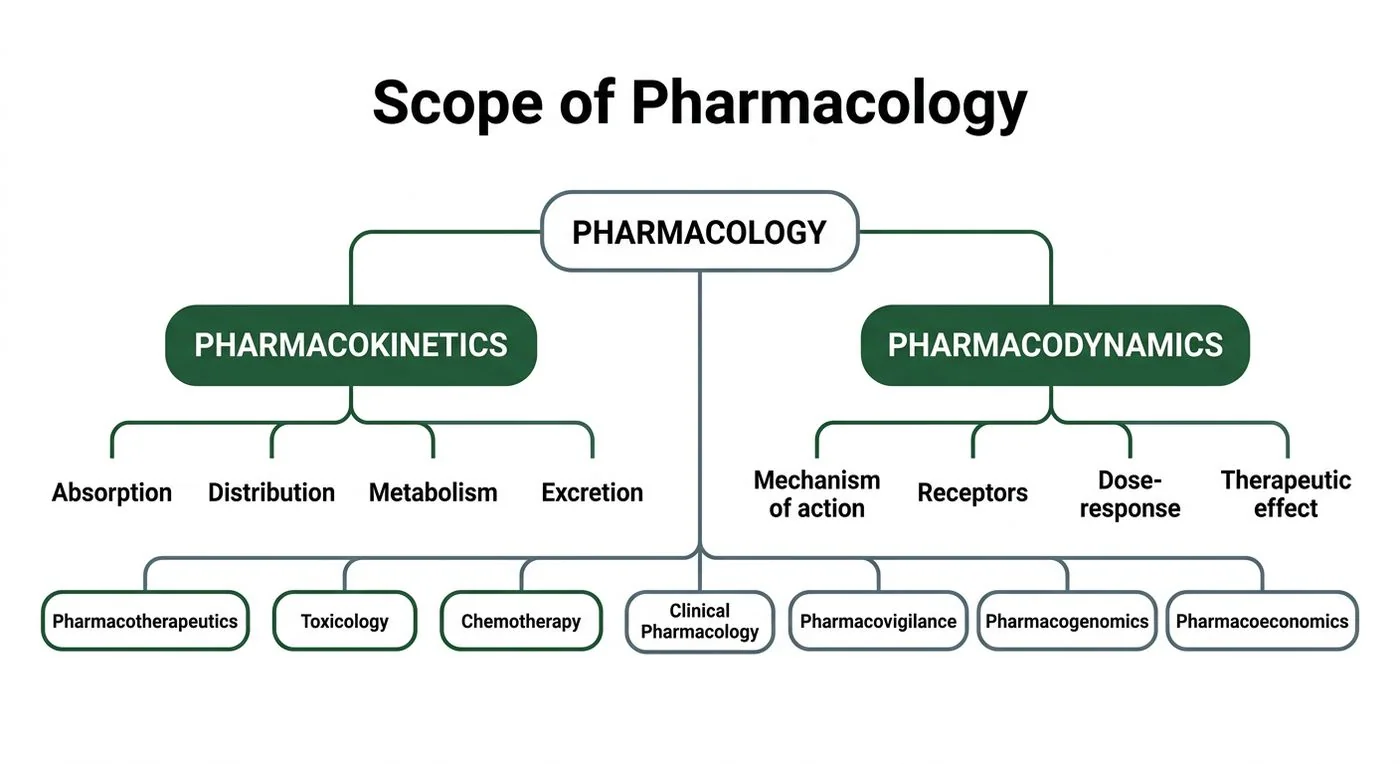
Figure 1 — Scope and branches of pharmacology. Concept map showing pharmacology dividing into pharmacokinetics (what the body does to the drug) and pharmacodynamics (what the drug does to the body), with allied branches including pharmacotherapeutics, toxicology and clinical pharmacology.
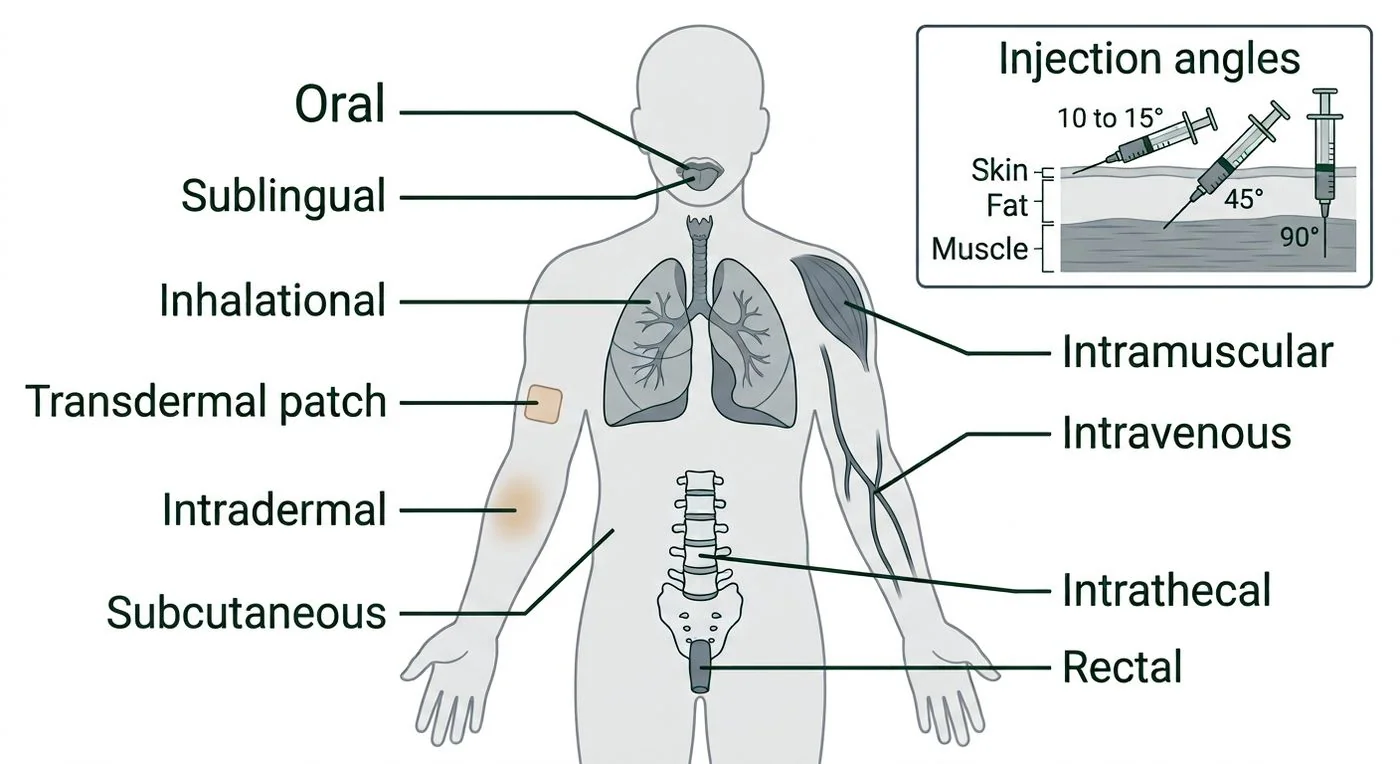
Figure 2 — Routes of drug administration: anatomical overview. Anatomical diagram of the human body indicating the sites of oral, sublingual, inhalational, transdermal, intradermal, subcutaneous, intramuscular, intravenous, rectal and intrathecal administration, with an inset showing needle angles for intradermal, subcutaneous and intramuscular injection.
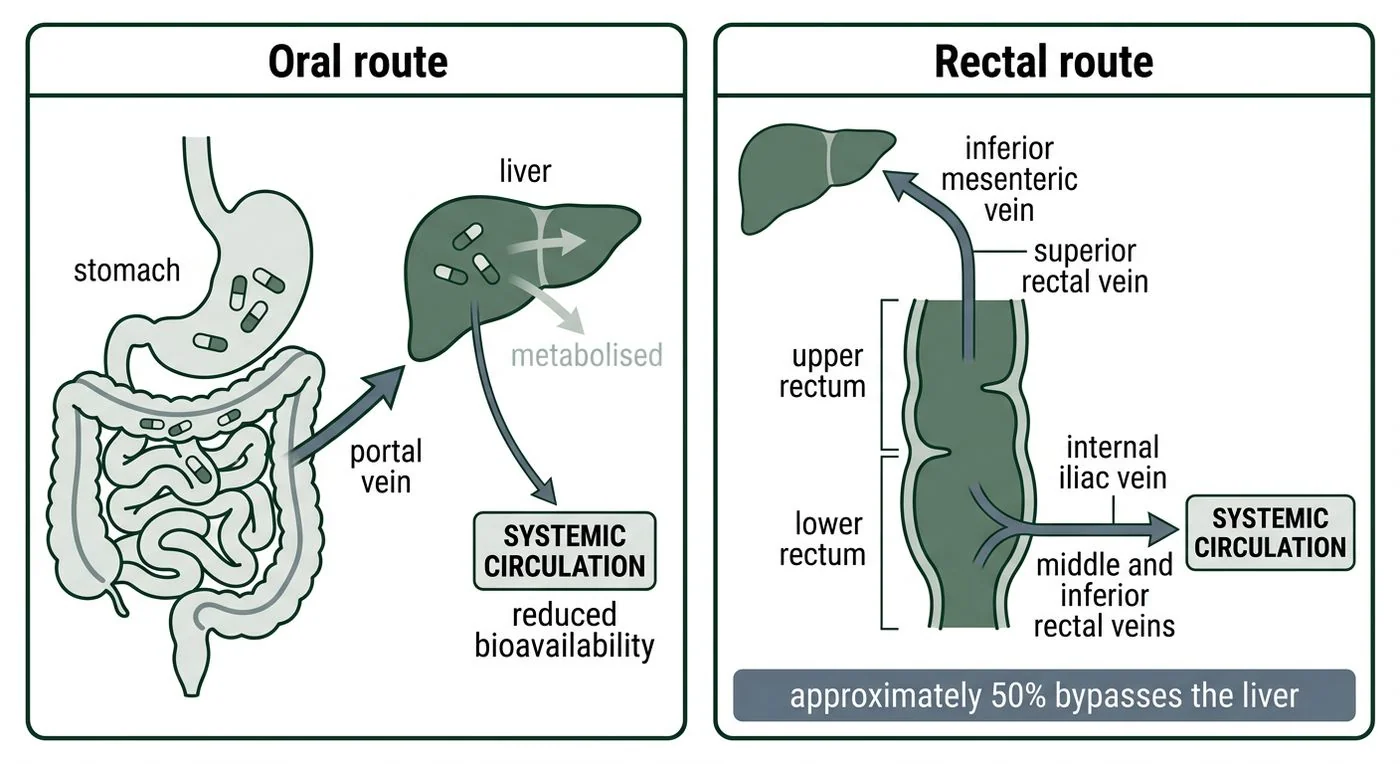
Figure 3 — First-pass metabolism and the rectal venous drainage. Two-panel diagram contrasting the oral route, where drug passes through the portal vein and liver with substantial first-pass loss, against the rectal route, where the lower rectum drains directly into the systemic circulation so that roughly half the dose bypasses hepatic metabolism.
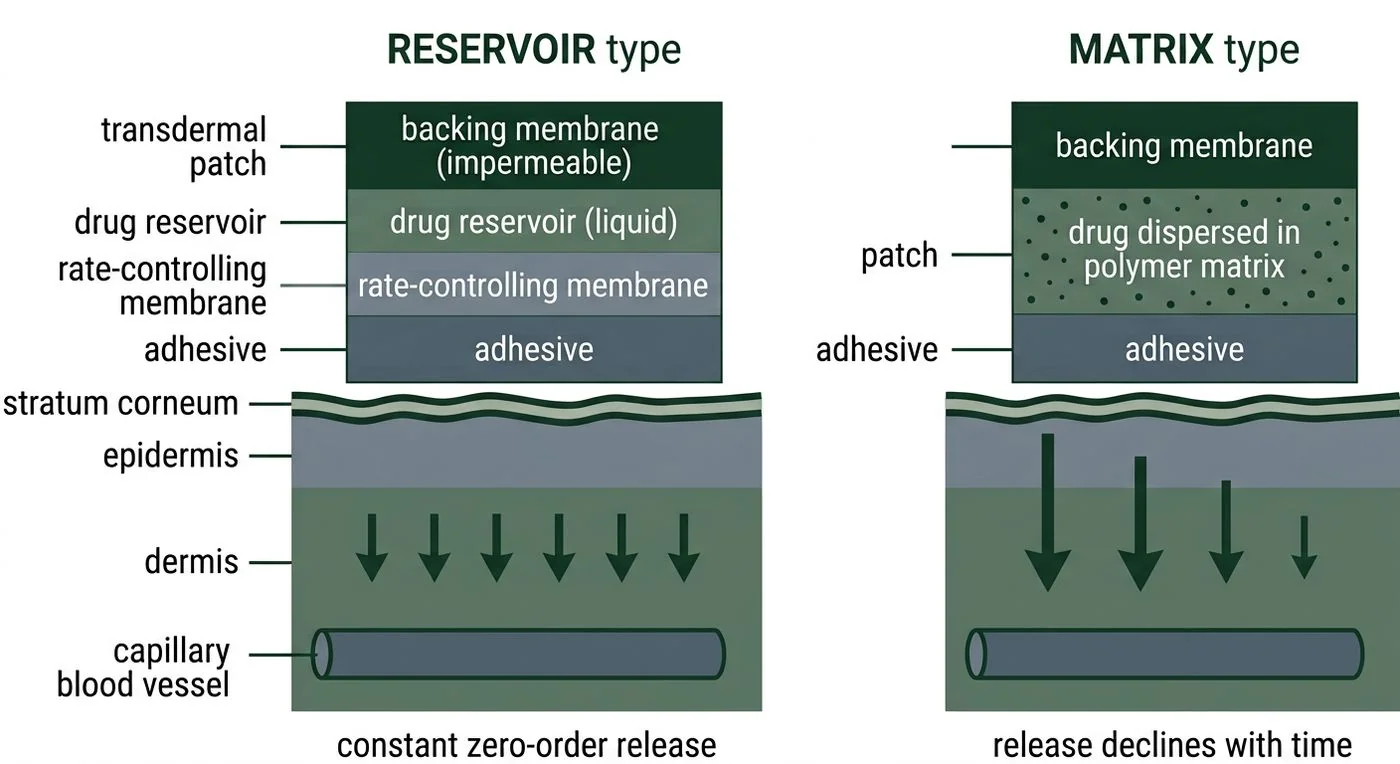
Figure 4 — Transdermal patch: reservoir versus matrix design. Cross-sectional comparison of reservoir-type and matrix-type transdermal patches applied to skin, showing the rate-controlling membrane and constant release of the reservoir design against the polymer-dispersed drug and declining release of the matrix design.
Clinical Correlation
Vignette 1 — Route selection in anaphylaxis
A 22-year-old woman develops generalised urticaria, stridor, wheeze and a blood pressure of 78/50 mmHg within minutes of a diclofenac injection. The intern draws up adrenaline and asks whether to give it subcutaneously.
Reasoning: The correct answer is 0.5 mg (0.5 mL of 1:1000) adrenaline intramuscularly into the anterolateral thigh (vastus lateralis). The subcutaneous route is wrong here because anaphylactic shock produces intense peripheral vasoconstriction and hypoperfusion, so absorption from subcutaneous tissue is slow and unreliable — precisely when speed matters most. The intramuscular route into a large, well-perfused muscle achieves faster and more predictable peak concentrations, and the anterolateral thigh is superior to the deltoid for this purpose. Intravenous adrenaline is reserved for cardiac arrest or for a peri-arrest patient with continuous monitoring, because bolus IV adrenaline in a perfusing patient risks hypertensive crisis and ventricular arrhythmia. This vignette illustrates the general principle that in shock, oral, subcutaneous and intramuscular absorption are all compromised, and that route choice must account for the circulatory state.
Vignette 2 — The unconscious child with no venous access
A 3-year-old is brought convulsing for the past 8 minutes. Peripheral veins are collapsed and two attempts at cannulation have failed.
Reasoning: Two route decisions follow. First, for immediate seizure termination the benzodiazepine can be given by a non-intravenous route that bypasses the need for access — rectal diazepam, or buccal/intranasal midazolam, both of which avoid the gut and achieve therapeutic concentrations within minutes. Rectal administration is effective here because roughly half the dose bypasses first-pass metabolism, and the rectal mucosa is well vascularised. Second, if vascular access is still required for further drugs and fluids, the intraosseous route into the proximal tibia is the recommended alternative in children: the marrow cavity is a non-collapsible venous plexus that remains patent even in shock, and any drug that can be given intravenously can be given intraosseously at the same dose.
Vignette 3 — Therapeutic failure from a route error
A 58-year-old man with stable angina is prescribed "tab. glyceryl trinitrate, swallow one at the onset of chest pain". He returns saying the tablets do nothing during an attack.
Reasoning: Glyceryl trinitrate undergoes near-total first-pass metabolism by hepatic organic nitrate reductase; its oral bioavailability is negligible, so a swallowed tablet cannot relieve an acute attack. The tablet must be placed sublingually, where the drug is absorbed across the oral mucosa into veins draining to the superior vena cava, entering the systemic circulation directly and acting within 1–2 minutes. This is the paradigm example of a drug in the "change the route" rather than the "increase the dose" group. For prophylaxis rather than acute relief, oral sustained-release nitrates or isosorbide mononitrate (which has high oral bioavailability because it is already the active metabolite and escapes significant first-pass loss) are appropriate.
Vignette 4 — Cirrhosis and first-pass metabolism
A patient with decompensated cirrhosis and portal hypertension is started on propranolol for variceal prophylaxis at the usual dose and becomes profoundly bradycardic and hypotensive.
Reasoning: Propranolol normally undergoes extensive hepatic first-pass metabolism, giving an oral bioavailability of only about 25–30%. In cirrhosis, hepatocellular dysfunction reduces metabolising capacity and, critically, portosystemic shunting allows drug to bypass the liver entirely. Oral bioavailability therefore rises markedly and the same oral dose produces a much higher systemic concentration. The dose must be reduced and titrated to heart rate. This is a favourite examination concept: liver disease increases the bioavailability of high first-pass drugs.
Practical Linkage
Specimen identification (OSPE spotter station)
| # | Specimen | Expected answer (identification + key point) |
|---|---|---|
| 1 | Enteric-coated tablet | Delayed release; resists gastric acid, dissolves in intestine — must be swallowed whole, never crushed |
| 2 | Dispersible tablet | Disperses in water; used in children and dysphagia; ensures accurate small doses |
| 3 | Soft gelatin capsule | Flexible shell with oily liquid contents; for lipid-soluble drugs such as vitamin A/D |
| 4 | Ampoule | Fully sealed single-dose glass; contains no preservative; unused portion must be discarded |
| 5 | Vial | Rubber-capped, may be multi-dose; contains preservative; swab septum before each entry |
| 6 | Metered dose inhaler with spacer | Spacer improves lung deposition, reduces oropharyngeal deposition and candidiasis; rinse mouth after steroids |
| 7 | Rotahaler (dry powder inhaler) | Breath-actuated; requires adequate inspiratory flow; unsuitable in severe acute attack |
| 8 | Transdermal patch | Controlled prolonged systemic delivery bypassing first-pass; rotate sites; remove old patch before applying new |
| 9 | Suppository | Rectal route; useful in vomiting/unconscious patient; about 50% bypasses first-pass metabolism |
| 10 | ORS sachet | Reconstitute in 1 litre of clean water; WHO low-osmolarity formulation; discard after 24 hours |
Linked competencies: PH1.3, PH2.1 (Demonstrate understanding of the use of various dosage forms) — see also PR04 (Dosage form spotters) and PR05 (Routes of administration on mannequins).
Exercise A — Dosage form identification (OSPE spotter station)
Ten specimens are displayed; the student identifies each and states one distinguishing feature and one clinical caution.
Exercise B — Match the clinical situation to the appropriate route
Unconscious patient in status epilepticus; acute anginal attack; severe acute asthma in a distressed child; maintenance therapy for hypothyroidism; superficial bladder carcinoma; CNS prophylaxis in acute lymphoblastic leukaemia; long-acting contraception in a patient with poor pill compliance; cardiac arrest with failed venous access after 90 seconds.
Expected: IV or rectal/buccal benzodiazepine; sublingual GTN; nebulised salbutamol; oral levothyroxine; intravesical BCG; intrathecal methotrexate; subdermal etonogestrel implant or depot IM medroxyprogesterone; intraosseous.
Exercise C — Demonstration on mannequin (PH4.1 linkage)
Demonstrate and observe the correct angle and site for intradermal (10–15°, forearm, raise a bleb), subcutaneous (45°, abdomen or outer arm, pinch skin) and intramuscular (90°, deltoid or vastus lateralis, aspirate check per local protocol) injection.
MCQ Bank
40 questions · tagged by topic, exam pattern & difficulty · full explanations
A 60-year-old man with stable angina is advised to place a glyceryl trinitrate tablet under his tongue at the onset of chest pain rather than swallow it. The principal pharmacological reason is that the sublingual route:
Rapid Revision
- What the body does to the drug — Pharmacokinetics (ADME)
- What the drug does to the body — Pharmacodynamics
- Bioavailability of the intravenous route — 100% by definition
- Formula for absolute bioavailability — F equals AUC oral divided by AUC intravenous for the same dose
- Fastest route of drug administration — Intravenous
- Route with 100% first-pass avoidance and ability to spit the tablet out — Sublingual
- Proportion of a rectal dose bypassing first-pass metabolism — Approximately 50%
- Vein draining the upper rectum into the portal system — Superior rectal vein
- Route of choice for adrenaline in anaphylaxis — Intramuscular into the anterolateral thigh
- Concentration of a 1:1000 adrenaline solution — 1 mg per mL
- Emergency vascular access when IV access fails in a child — Intraosseous, proximal tibia
- Route that bypasses the blood-CSF barrier — Intrathecal
- Route used for BCG in superficial bladder carcinoma — Intravesical
- Route used for anti-VEGF agents in macular oedema — Intravitreal
- Prototype prodrug crossing the blood-brain barrier — Levodopa
- Drug group requiring a change of route rather than a higher oral dose — Peptides such as insulin, plus hydrocortisone and isoprenaline
- Effect of cirrhosis on the bioavailability of high first-pass drugs — It increases, so the dose must be reduced
- Ideal properties of a transdermal drug — High potency, low daily dose, high lipid solubility, small molecular size
- Liposomal formulation that reduces nephrotoxicity — Liposomal amphotericin B
- Osmotic pump prototype formulation — Nifedipine GITS
- Dosage form that must never be crushed — Enteric-coated and sustained-release tablets
- Reason a sustained-release tablet must not be crushed — Dose dumping
- Container that is single-dose, all glass and preservative-free — Ampoule
- Body assigning the International Non-proprietary Name — World Health Organization
- Drug classes for which bioequivalence matters most — Narrow therapeutic index drugs such as warfarin, phenytoin, digoxin, lithium and levothyroxine
- Reason a spacer is used with a metered dose inhaler — Better lung deposition and less oropharyngeal candidiasis
- Route unsuitable in shock owing to peripheral vasoconstriction — Subcutaneous and intramuscular
- Classic microbial source drug — Streptomycin from Streptomyces griseus
Viva Questions
- Define pharmacology — The science dealing with the interaction of exogenously administered chemical substances with living systems, encompassing source, properties, mechanism, kinetics, therapeutic and adverse effects.
- Differentiate pharmacokinetics from pharmacodynamics — Pharmacokinetics is what the body does to the drug (ADME); pharmacodynamics is what the drug does to the body (mechanism and effect).
- What is a prodrug, with one example — An inactive precursor converted in vivo to the active drug; levodopa, which crosses the blood-brain barrier and is decarboxylated to dopamine centrally.
- Difference between an ampoule and a vial — An ampoule is a sealed single-dose glass container without preservative; a vial is rubber-capped, often multi-dose and usually contains a preservative.
- Why must an enteric-coated tablet never be crushed — The coating protects the gastric mucosa from an irritant drug or protects an acid-labile drug from gastric acid; crushing destroys both functions.
- What is dose dumping — The sudden release of the entire drug load from a sustained-release formulation when its rate-controlling structure is destroyed, for example by crushing, producing a toxic peak concentration.
- Which routes bypass first-pass metabolism — Sublingual, buccal, transdermal, inhalational, nasal and all parenteral routes; the rectal route bypasses about half.
- Why is roughly half of a rectal dose spared first-pass metabolism — Because the lower rectum drains via the middle and inferior rectal veins into the systemic circulation while the upper rectum drains via the superior rectal vein into the portal system.
- Which route would you choose in an unconscious vomiting patient and why — A parenteral route, preferably intravenous, because it is unaffected by the gastrointestinal tract and requires no patient cooperation; rectal is an alternative if access is unavailable.
- What is bioavailability and how is it measured — The fraction of an administered dose reaching the systemic circulation unchanged, measured as the ratio of the AUC by the test route to the AUC after intravenous administration of the same dose.
- Name four properties of an ideal transdermal drug — High potency with low daily dose, high lipid solubility, low molecular weight and absence of local irritation.
- Why is generic prescribing mandated in India — To reduce cost, avoid brand-driven irrational prescribing and prevent inadvertent therapeutic duplication; supported by the NLEM and the Jan Aushadhi scheme.
- What is the placebo effect — A measurable therapeutic benefit produced by an inert preparation through patient expectation; its negative counterpart is the nocebo effect.
- Give one example each of a drug from plant, animal, microbial and recombinant sources — Morphine, heparin, penicillin and human insulin respectively.
References
- Tripathi KD. Essentials of Medical Pharmacology. 9th ed. New Delhi: Jaypee Brothers Medical Publishers; Chapters 1 and 2 (Introduction, Routes of Drug Administration, Pharmacokinetics).
- Katzung BG, Vanderah TW (eds). Basic & Clinical Pharmacology. 16th ed. New York: McGraw Hill; Chapter 1 (Introduction) and Chapter 3 (Pharmacokinetics & Pharmacodynamics).
- Brunton LL, Knollmann BC (eds). Goodman & Gilman's The Pharmacological Basis of Therapeutics. 14th ed. New York: McGraw Hill; Chapter 1 (Drug Invention and the Pharmaceutical Industry) and the Pharmacokinetics section.
- Ritter JM, Flower RJ, Henderson G, et al. Rang & Dale's Pharmacology. 10th ed. Edinburgh: Elsevier; Chapters 1 and 9 (Absorption and Distribution of Drugs).
- National Medical Commission. Competency Based Undergraduate Curriculum for the Indian Medical Graduate, Volume II — Pharmacology (Code: PH), competencies PH1.1, PH1.3, PH1.9, PH1.11 and PH2.1.
- World Health Organization. Guide to Good Prescribing: A Practical Manual. Geneva: WHO/DAP.
- Ministry of Health and Family Welfare, Government of India. National List of Essential Medicines (NLEM), current edition.
- Sharma HL, Sharma KK. Principles of Pharmacology. 4th ed. Hyderabad: Paras Medical Publisher; introductory chapters on dosage forms and drug delivery systems.
Downloads
All deliverables & printable revision sheets for CH01
Printable Chapter Handout & Study Notes
Generate a clean, high-yield PDF or print directly without sidebars and navigation menus.